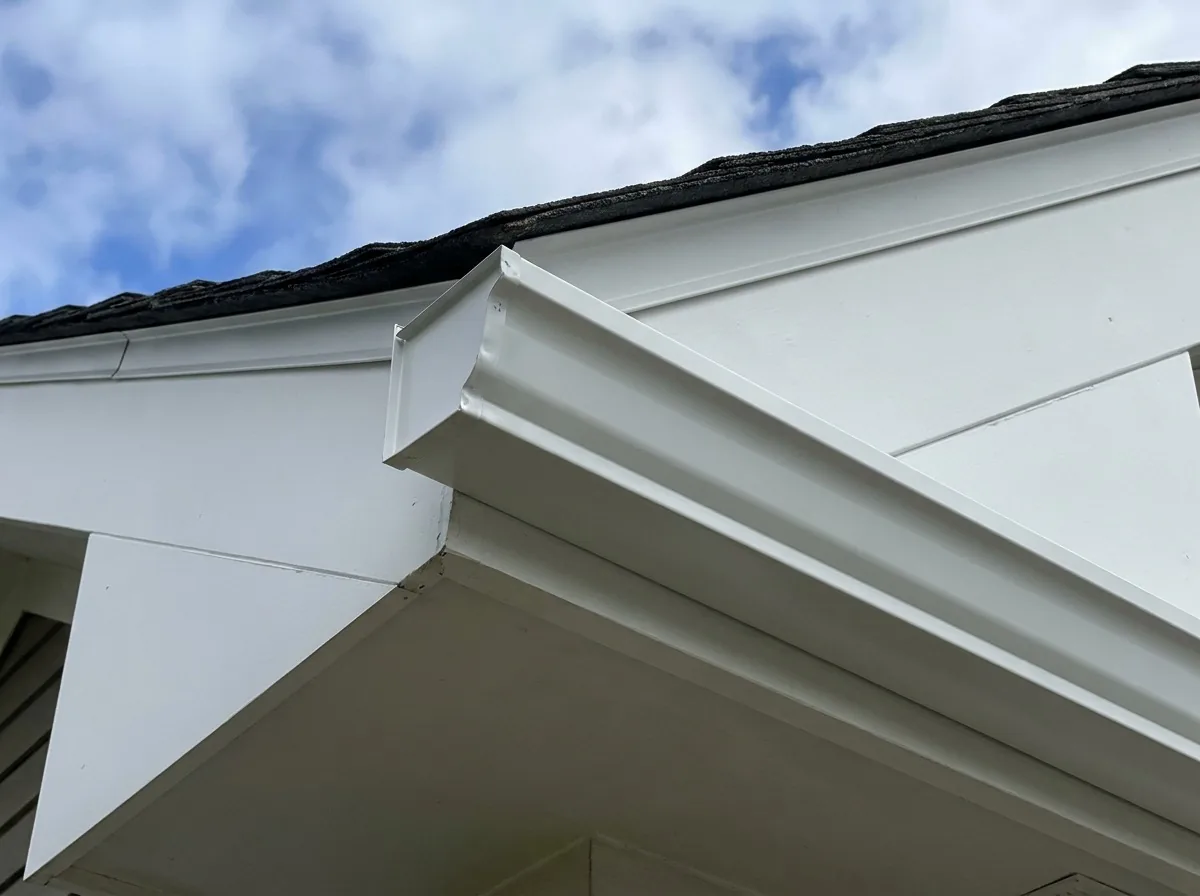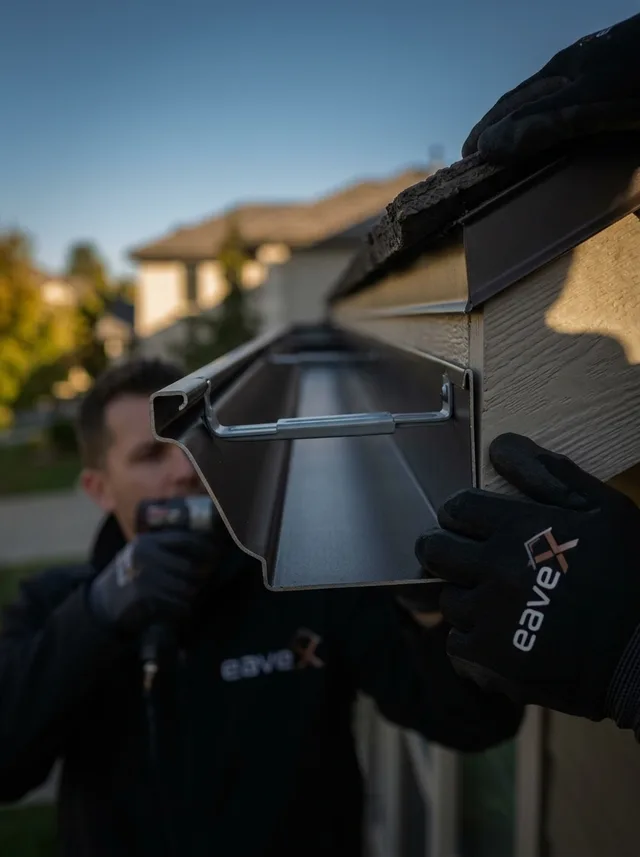
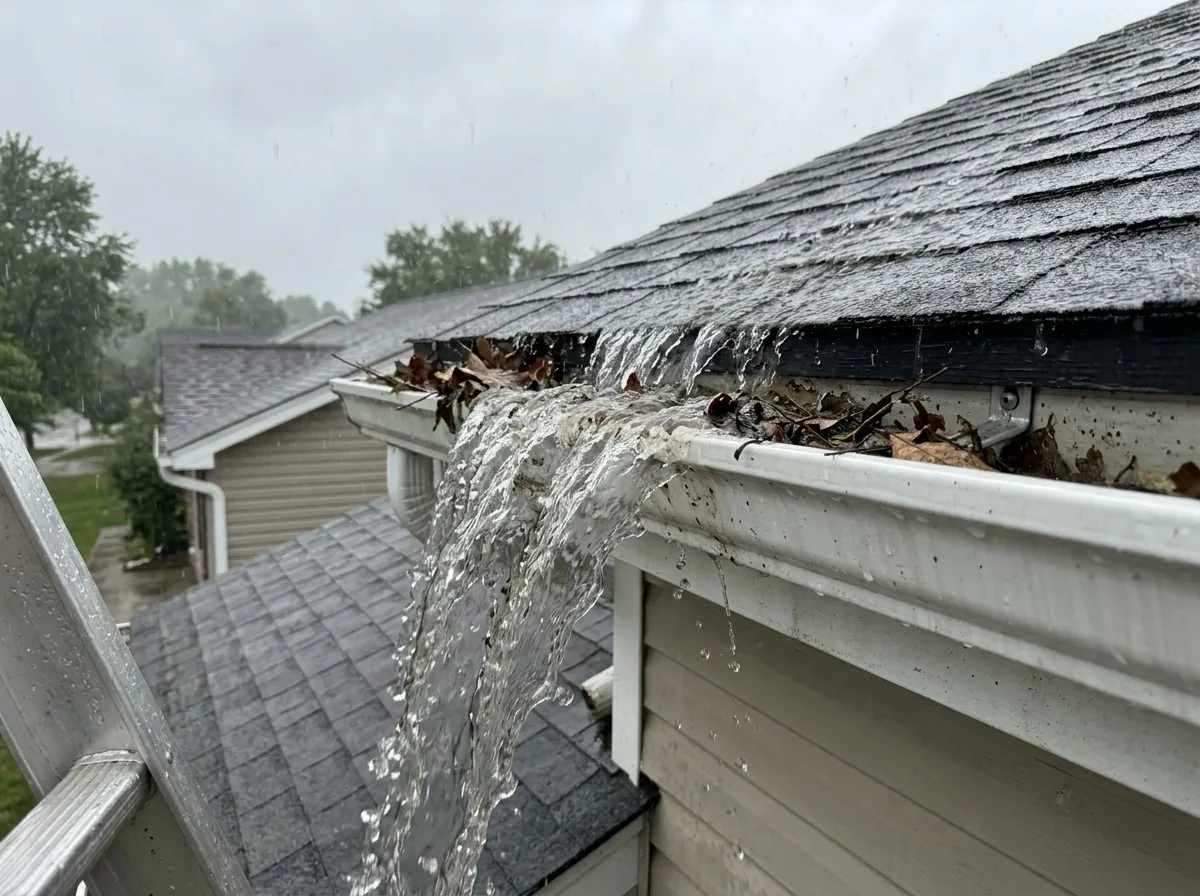
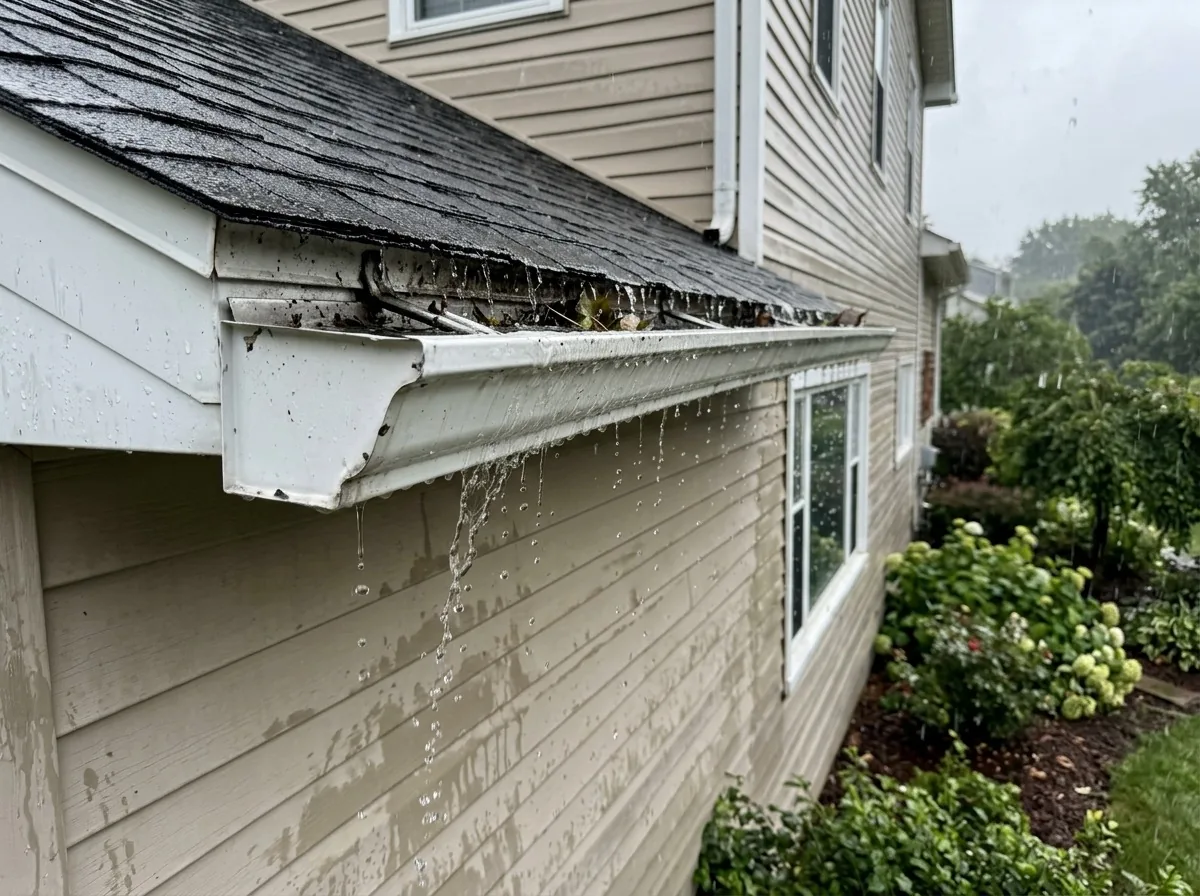
If you see sagging runs, rust holes, water pooling near the foundation, peeling paint on fascia, erosion under downspouts, ice dams building up every January, or plants growing in the channel, your gutters are telling you something. In Minnesota, small problems turn into fascia rot and basement seepage faster than most people expect. If the trough is past patching, seamless gutter installation on a free measurement usually costs less than another winter of wet fascia. Packed channels: gutter cleaning first—budget with our gutter cleaning cost in Minnesota guide (2026 market ranges)—then decide repair vs replace.
We inspect hundreds of rooflines around Minneapolis and St. Paul each year. These seven signs show up again and again before a homeowner calls.
Minnesota adds extra stress: freeze-thaw cycles, heavy wet snow, and spring rains that hit before trees fully leaf out. Gutters that barely worked in July fail hard in March.
1. Visible sag or gap behind the gutter
A straight gutter sits tight to the fascia. When you see daylight between metal and wood, hangers have pulled or spacing is too wide for snow load. One sag becomes two after the next heavy wet snow.
Cost of waiting: fascia repair plus full re-hang. Often $400 to $1,200 in wood work before new gutter can even go up.
2. Cracks, rust or holes in the metal
Pinholes from rust usually mean the coating failed or debris sat wet for years. Aluminum does not rust like steel, but steel and older galvanized systems do. Seam leaks on sectional gutters are the classic slow drip behind the board.
Cost of waiting: stained siding, soft fascia, interior wall spots near corners.
3. Water dumping near the foundation
Downspouts should push water at least 4 to 6 feet away from the house. If you see trenches under the outlet or damp basement corners after rain, the system is not completing its job.
Cost of waiting: foundation seepage fixes that run into thousands, not hundreds.
4. Peeling paint or rot on fascia and soffit
Gutters are supposed to catch water before it touches trim. Streaking paint and dark wood mean water is running behind or over the gutter lip. In summer it looks cosmetic. In February the same board holds ice.
Cost of waiting: full fascia and soffit replacement on affected sides.
5. Erosion and mulch wash-out under outlets
Heavy rain should not carve a gully in your landscaping. Splash blocks help, but chronic overflow from clogs or undersized gutters sends a firehose of water off the roof.
Cost of waiting: grading repairs and repeated mulch replacement every season.
6. Ice dams and icicles every winter
Ice dams are a roof heat-loss problem first, but clogged or frozen gutters trap meltwater at the edge. That water backs up under shingles. We see stained ceilings in Maple Grove and Plymouth from the same pattern.
Keeping gutters clean before freeze-up helps. So does proper pitch so standing water does not turn to ice dams in the channel.
Cost of waiting: emergency roof leaks, damaged shingles, interior drywall repairs.
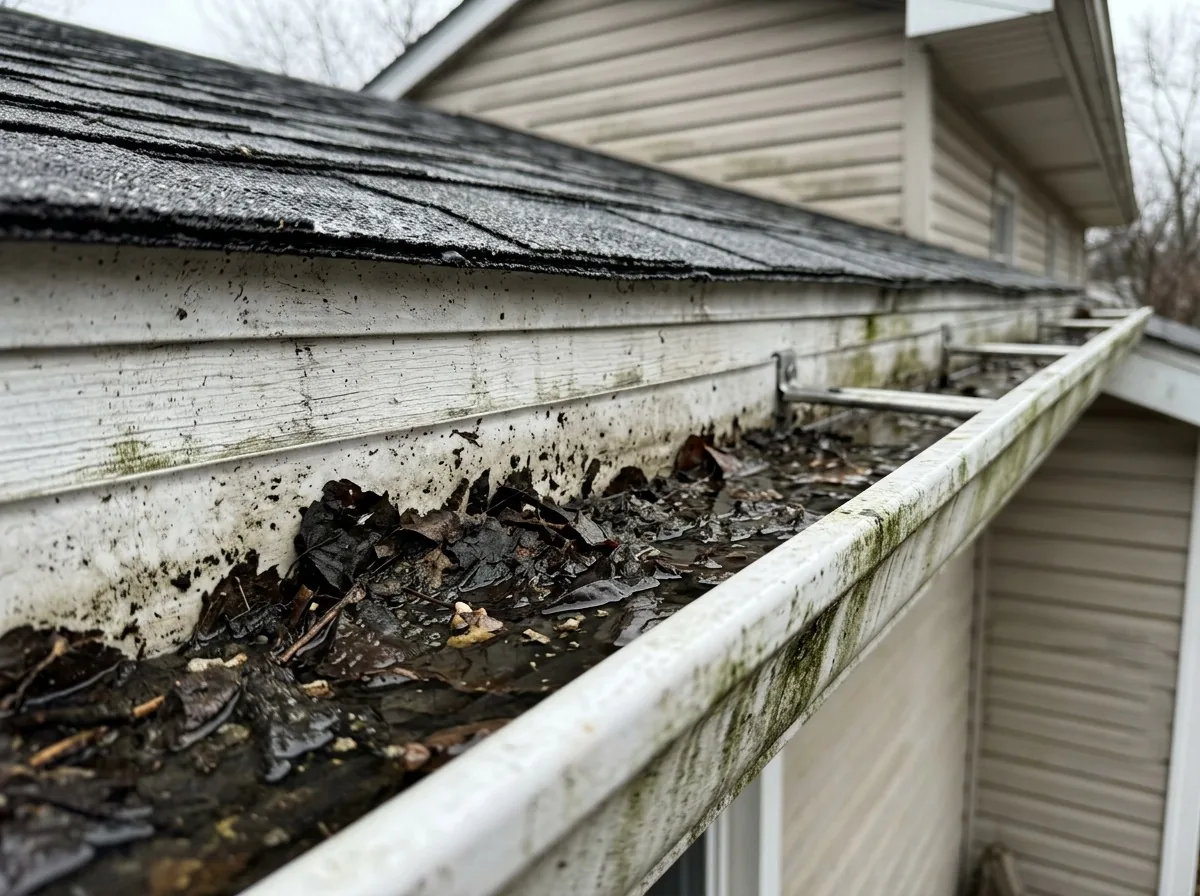
7. Plants or constant debris buildup
If you see grass or weeds sprouting in the gutter, drainage has been blocked long enough for soil to form. Pine needles from Twin Cities yards compact into a mat that holds moisture against the house. If debris is the recurring failure mode — not soft fascia — ask whether are gutter guards worth it in Minnesota payback beats another year of ladder cleanings.
Cost of waiting: accelerated rust, mosquito habitat, overflow on every hard rain.
Repair or replace? How we decide on site
We look at age, material, number of problem spots and fascia condition. One loose hanger on a 5-year aluminum system? Repair. Multiple sags, open seams and soft wood on a 25-year sectional setup? Replacement is usually cheaper than patching every spring.
Partial repairs make sense when the rest of the run is sound. We document with photos so you see what we see from the ladder. If only one corner overflows, adjusting pitch or adding an outlet might fix it without a full tear-off.
When replacement is the answer, we haul away old material, inspect fascia, and form new seamless runs the same day in most cases. Homeowners are often surprised how much faster water drains once pitch and size are corrected.
Our crew handles gutter cleaning and repair and full seamless replacement on the same visit when it makes sense. You get photos and an honest recommendation, not a one-size-fits-all pitch.
DIY checks from the ground
You do not need a ladder to spot trouble. Walk the perimeter after a rain: look for overflow at corners, stains on siding, and whether downspout splash pads overflow. In winter, icicles confined to one short section often mean a local clog, while ice along the whole eave points to ventilation or insulation issues upstairs.
Photograph problem areas when you see them. Date-stamped photos help insurance claims after wind or hail, and they give us a head start before we arrive with ladders.
Schedule a free inspection
Walk your home twice a year: once after leaves fall, once after snow melts. Catch a failing gutter in October and you beat the ice dam season. For a step-by-step timeline on how to prepare your gutters for a Minnesota winter, see our seasonal checklist.
We offer free on-site inspections across the Twin Cities with a written quote if work is needed. Most appointments are within 24 to 48 hours.
Book a free inspection or call (763) 313-8516. Planning a full replacement? Start with seamless gutter installation, then read our 2026 seamless gutter cost guide so you know typical Twin Cities ranges before we measure.