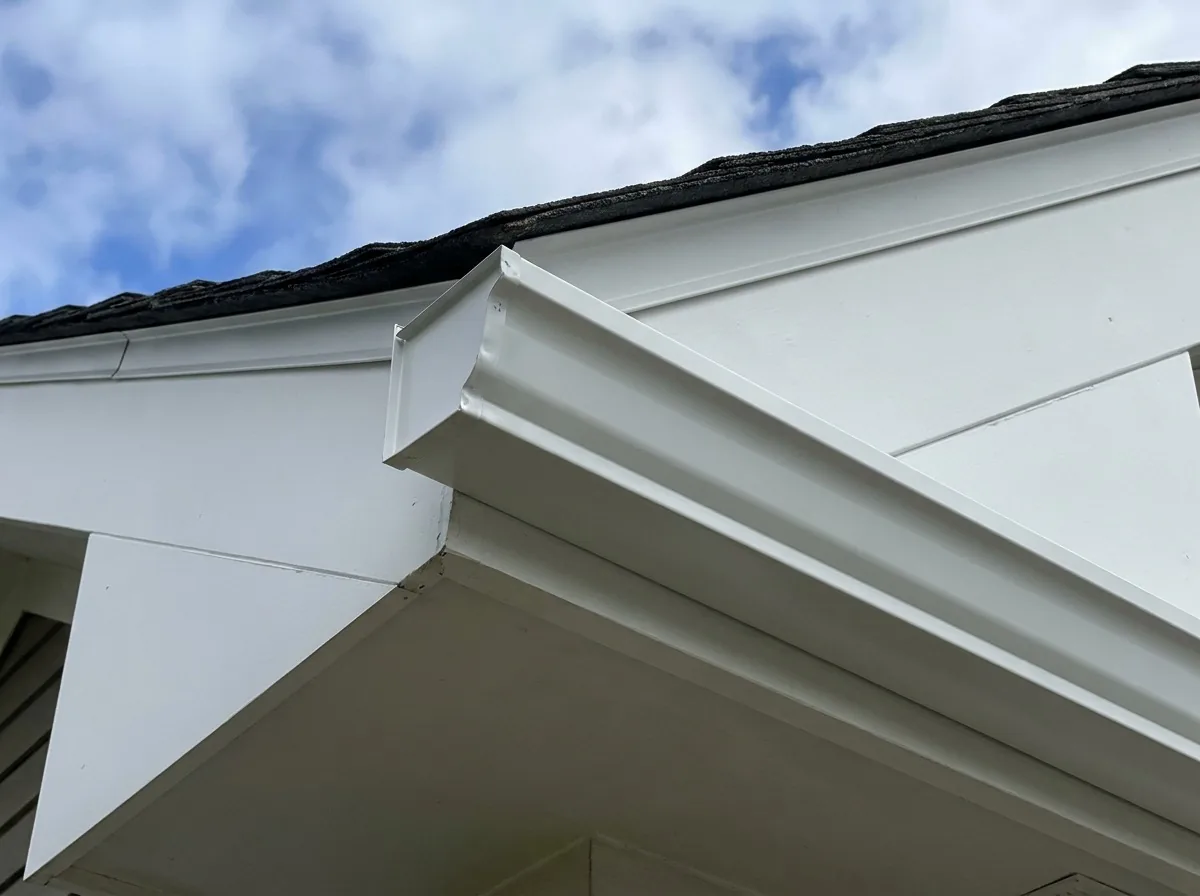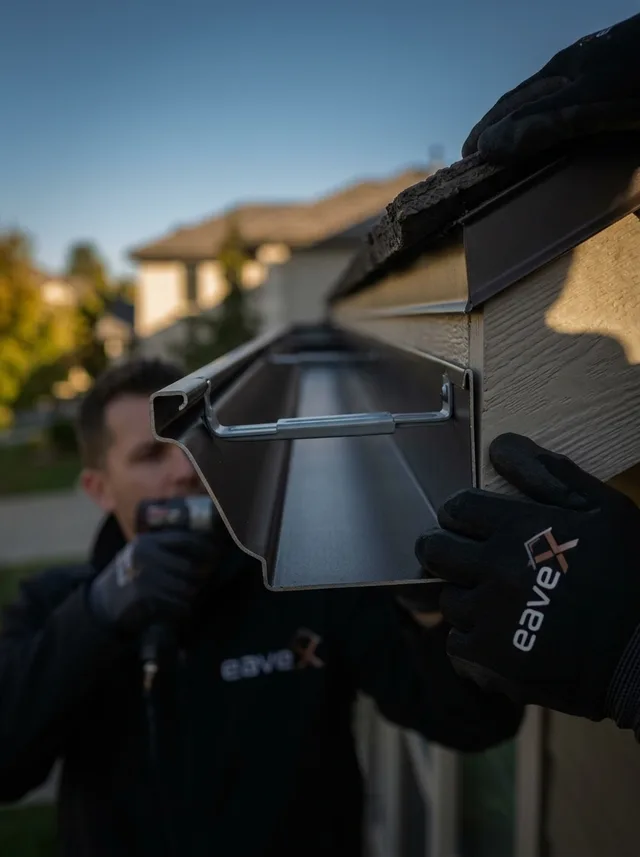
Yes — gutter guards are worth it on many Minnesota homes with maples, oaks, or pines within about 40 feet of the roof, especially if you are tired of two or three ladder climbs a year. They are not magic: you need the right type for snow load and needle debris, and they do not fix ice dams by themselves. For how we spec and install systems on Twin Cities roofs, see our gutter guards and leaf protection service page.
If the troughs are coming off anyway, putting gutter guards on with new gutters is usually one trip, not a retrofit later.
Key takeaways
- On wooded Twin Cities lots, professional cleaning often runs $150–$300 per visit, two to three times a year — roughly $300–$900 annually.
- Typical installed range for quality micro-mesh (stainless steel mesh on an aluminum frame) in the Twin Cities (2026): $6–$12 per linear foot. Final cost depends on run length, stories, fascia condition, and roof type; free on-site measure.
- Simple payback vs cleaning is often 3–5 years on a 150–180 ft home — then you are ahead on maintenance time and ladder risk.
- Guards keep channels open; they do not stop ice dams caused by attic heat loss. Pair with insulation/ventilation fixes when dams are the main complaint.
- Bundling guards with seamless gutter installation usually costs less than two separate mobilizations — ask for a combo quote on the free inspection.
We install micro-mesh systems across Minneapolis, St. Paul, and the north metro from our Albertville shop (5098 Main Ave NE). License BC808261, 13+ years, 1,200+ projects, 5.0 rating. Here is the honest decision framework we walk homeowners through — without overselling.
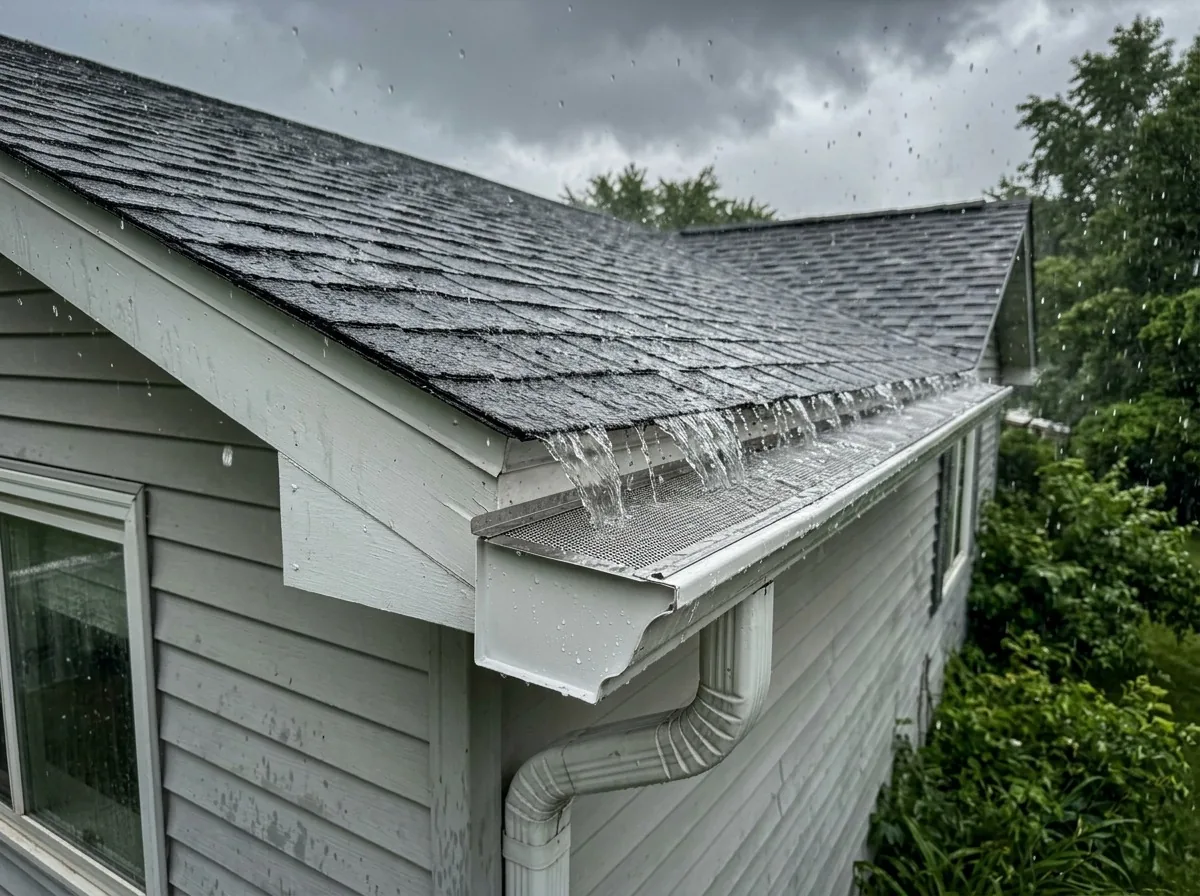
How gutter guard types compare in Minnesota
Minnesota homes need fine debris control and melt drainage — not a one-size cover. The table below is how the common styles behave under Twin Cities canopy, July storms, and January freeze–thaw. We match stainless micro-mesh on an aluminum frame to your eave profile; we do not lock you into a consumer brand name.
| Type | Debris control | MN snow / melt | Best fit |
|---|---|---|---|
| Micro-mesh (stainless on aluminum frame) | Excellent — needles, samaras, grit | Snow sits/melts; meltwater reaches outlets when pitched | Wooded suburbs — our usual pick for gutter guards in Minnesota |
| Screen / perforated covers | Fair — pine needles clog holes | OK if kept clear | Open lots with few trees |
| Foam / brush inserts | Poor — trap seeds, hold moisture | Freeze–thaw turns them into a sod block | Rarely recommended here |
| Reverse-curve / helmet | Mixed | Heavy rain can overshoot; ice can bridge the nose | Some climates; we prefer low-profile mesh on MN roofs |
Do gutter guards work in Minnesota?
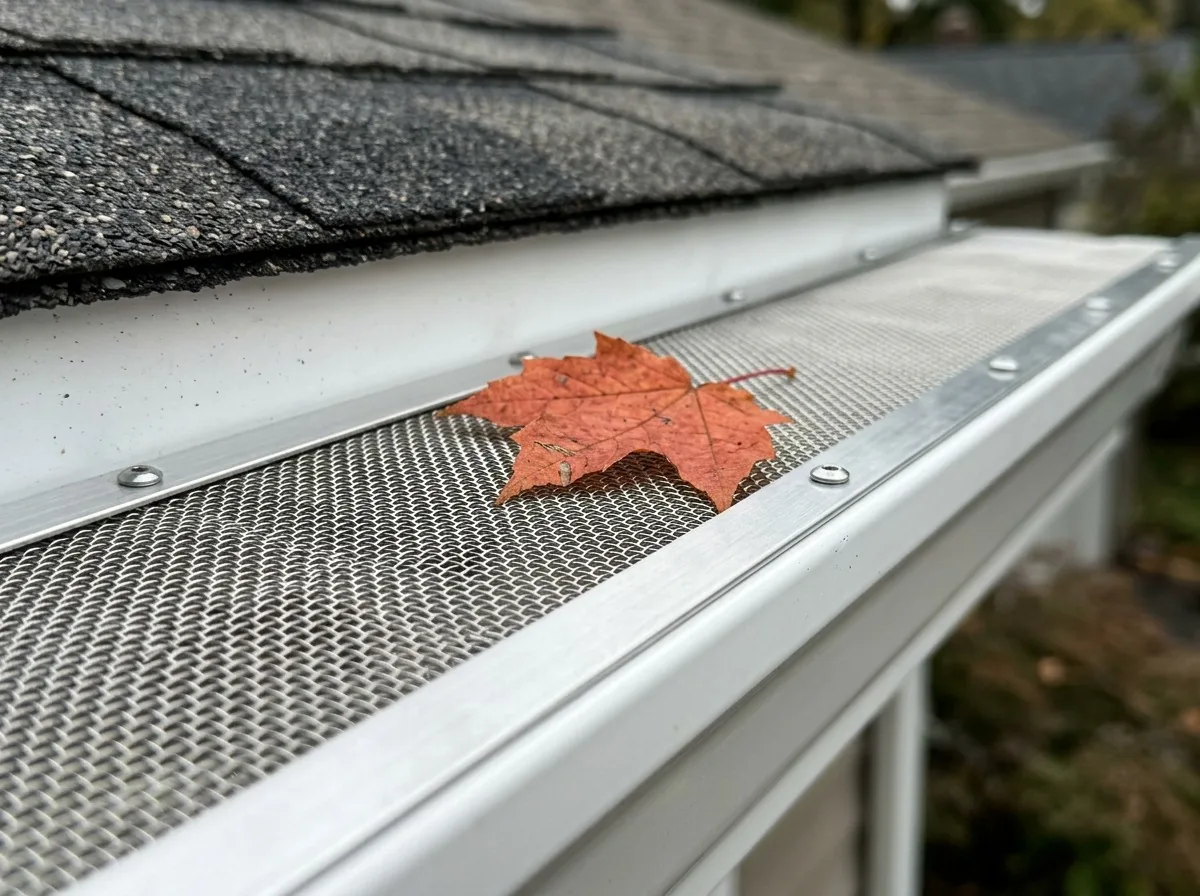
Yes — quality micro-mesh gutter guards work in Minnesota when the trough is pitched correctly and outlets stay clear. They keep maple samaras, oak leaves, and pine needles out of the channel so meltwater can reach the downspout during January thaws. They do not stop ice dams caused by attic heat loss; clog prevention and ice-dam prevention are different jobs.
On wooded Twin Cities lots, homeowners who install gutter guards typically cut ladder cleanings from two or three visits a year down to a light ground-level brush every year or two. That is the practical definition of "working" here — fewer clogs and less overflow, not a set-and-forget roof seal. If you are weighing cover-now vs clean-all-fall, see install gutter guards before fall leaf drop for timing.
Gutter guard cost in Minnesota (Twin Cities, 2026)
These are Minnesota market averages / typical Twin Cities ranges for 2026 — not a fixed EaveX menu. Your written quote depends on linear footage, stories, fascia condition, and roof type. Measure is free.
| Scope (Twin Cities, 2026) | Typical range |
|---|---|
| Professional cleaning (per visit) | $150 – $300 |
| Wooded lot: 2–3 cleanings / year | $300 – $900 / year |
| Micro-mesh guards installed (per ft) | $6 – $12 / ft |
| 160 ft home — guards only (ballpark) | $960 – $1,920 one time |
| Combo: new seamless gutters + micro-mesh | Often less than two separate jobs — ask on estimate |
| Minor fascia repair before guards | Often $200 – $800+ |
| Minnesota market: guards-only on sound 5" gutters | Often $6 – $12 / ft installed (2026) |
| Full project (measure + hangers + micro-mesh, 160 ft) | Often $1,000 – $2,000 before fascia work |
| Gutter guard cost Minnesota — retrofit on sound 5" (2026) | Often $6 – $12 / ft installed |
| Payback vs $400/yr cleaning (160 ft micro-mesh) | Often 3–5 years on Twin Cities wooded lots |
If cleaning was costing you about $400 a year, a $1,200–$1,600 guard install often pays back in 3–5 years. After that you are ahead — with lighter maintenance, not zero maintenance. For a deeper line-item breakdown (stories, fascia, retrofit vs new trough), see how much gutter guards cost in Minnesota. Financing is available from 0% APR (0.00–9.99%) with GreenSky, plan 6124 (not every buyer qualifies for 0%).
Are gutter guards worth the cost in Minnesota before winter?
Often yes on wooded lots when you compare one micro-mesh install to two or three gutter cleaning visits every year through freeze-up. The "worth it" question in Minnesota is really payback math plus ladder risk — not a brand sticker.
| Scenario (Twin Cities, 2026) | Ballpark spend | Notes |
|---|---|---|
| Keep cleaning only (wooded 160 ft) | $300 – $900 / year | Repeats every leaf season |
| Micro-mesh once + light brush | $960 – $1,920 one time, then low upkeep | Typical retrofit range |
| New seamless + micro-mesh same visit | Higher day-one; fewer remobilizations | Best when troughs already fail |
Guards are worth the cost when leaves and needles force overflow before freeze, or when you refuse another November ladder day. They are not worth it as a substitute for fascia and soffit repair on soft boards, or as an ice-dam cure when the attic is the heat source. For snow-specific behavior after leaf drop, read gutter guards for Minnesota snow.
Minnesota snow load: what guards actually do
Guards do not eliminate ice dams. Ice dams form when heat escapes through the roof deck, melts snow, and refreezes at the cold eaves — an insulation and ventilation problem first. What clogged gutters make worse is January overflow: October leaves in the trough turn into ice plugs, so meltwater sheets over the fascia instead of reaching the downspout. For a deeper Twin Cities winter breakdown — micro-mesh vs screens, ice dams, and 2026 cost bands — read gutter guards for Minnesota snow.
A properly pitched micro-mesh system keeps needles and leaf mats out so meltwater can drain when the roof does warm. Check outlets before the first hard freeze and again after March breakup — about ten minutes from the ground with a pole brush. Heavy snow sliding off a steep metal roof is a separate issue (snow retention, hangers, roof plane) — flag avalanching snow on the inspection before adding mesh.
Best gutter guards for snow in Twin Cities suburbs
Search traffic for "best gutter guards for snow" around Ham Lake, Circle Pines, Isanti, and Stillwater is really asking: will covers survive Minnesota freeze–thaw without creating ice curtains? Micro-mesh on a rigid aluminum frame is the usual answer on wooded lots in those suburbs — snow can sit on the mesh, melt, and drain when the roof warms, instead of packing leaves into an ice dam inside an open trough.
Guards are worth it for snow when last winter left ice sheets over the fascia after a clogged January thaw. They are not worth it as a substitute for attic insulation if ice dams form on a clean roof. For suburb-by-suburb snow behavior and open-trough vs mesh comparisons, read gutter guards for Minnesota snow, then book a free measure on our gutter guards page.
Best timing before leaf drop
July through September is the smart window: finish gutter guard installation before peak leaf drop, then you are not climbing ice-slick ladders in November. Pair that with our prepare gutters for Minnesota winter checklist if you are sequencing cleaning, pitch checks, and guards.
Warranty and workmanship
Guards only work when the underlying gutter is pitched correctly. We verify slope, outlets, and hanger spacing on install; our lifetime workmanship warranty covers the hanging system we put on the house.
When guards are not the right call
Be honest about these cases:
- No trees nearby and minimal debris: guards add cost with little benefit.
- Fascia is soft or gutters are undersized: fix the structure first — see fascia and soffit repair.
- Steep roof with heavy snow slide: guards help debris; avalanching snow needs a roof conversation.
- You want zero maintenance forever: someone still needs to check outlets and brush the mesh occasionally.
We tell you when to skip guards. It builds trust and saves you money. If the trough itself is failing, start with our 7 signs your gutters are failing checklist before you shop covers.
Choosing a system for Twin Cities debris
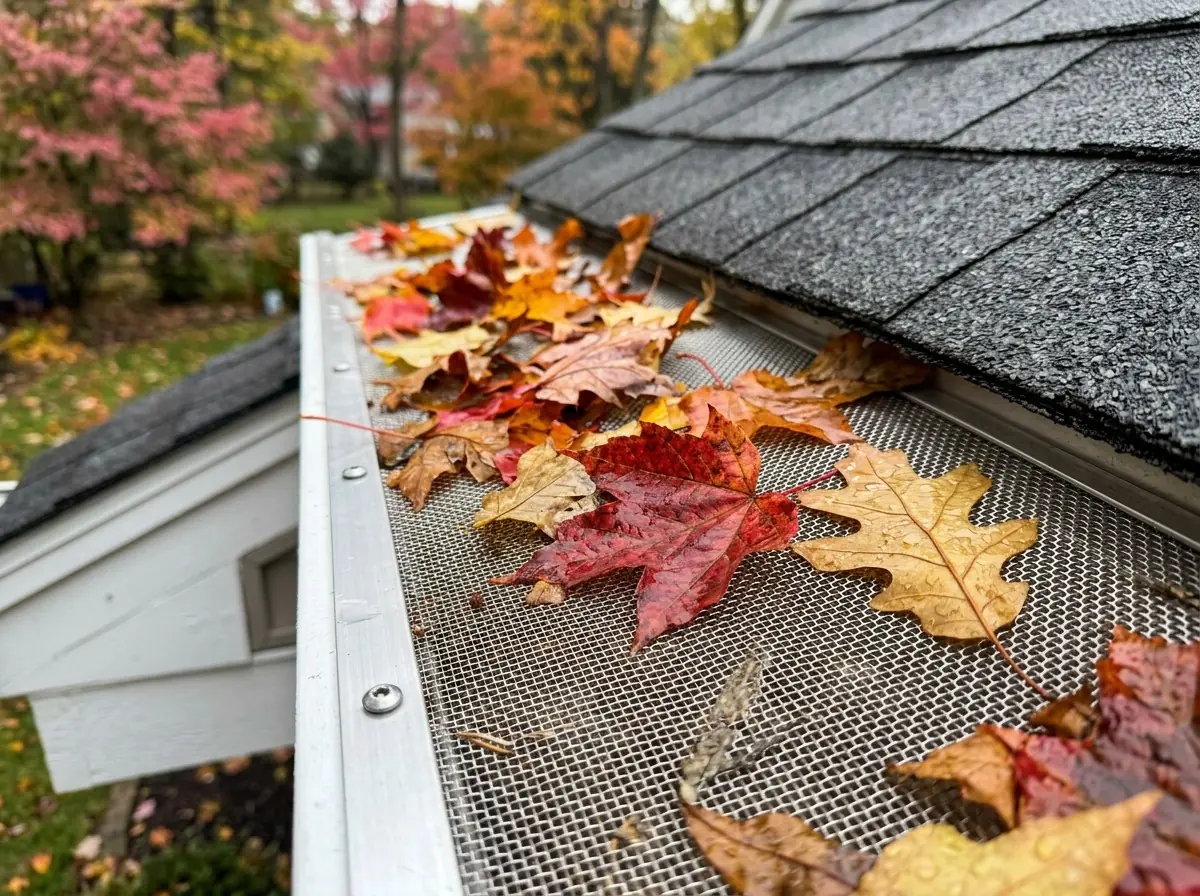
Homes in Plymouth and Maple Grove with white pines need fine micro-mesh, not big-hole screens. Hidden hangers and pitch matter as much as the panel. We hose-test outlets before we leave.
Next step: measure once, decide with numbers
Comparing quotes? Ask what happens when a panel comes off for fascia work, whether price assumes new gutters or retrofit, and hanger spacing for snow load.
We include gutter guards options on every seamless gutter estimate — see seamless gutter cost in the Twin Cities for the trough side. Ready for numbers? Request a free inspection or call (763) 313-8516.