What Happens If You Hang New Gutters on Rotted Fascia in Minnesota?
New gutters hung on rotted fascia in Minnesota usually pull away, overflow, or tear hanger screws within one freeze–thaw season — fix the boards first, then install the troughs.
Key takeaways
- Soft fascia cannot hold hanger screws through Minnesota ice load and wind; new metal on bad wood is a short-lived install.
- Probe boards with a screwdriver before any seamless gutter installation — if the tip sinks more than about a quarter inch, plan fascia and soffit repair first.
- Twin Cities market averages in 2026: fascia board sections often $200–$800+, aluminum wrap full perimeter $1,500–$3,500, and a gutters-plus-boards bundle commonly $2,500–$5,500+ (ranges, not an EaveX fixed menu; free measurement).
- Skipping drip edge or leaving ice-dam melt behind the trough restarts the rot cycle even after new gutters go up.
- Bundling boards and troughs on one visit saves a second scaffold setup.
Why Minnesota fascia fails under new gutters
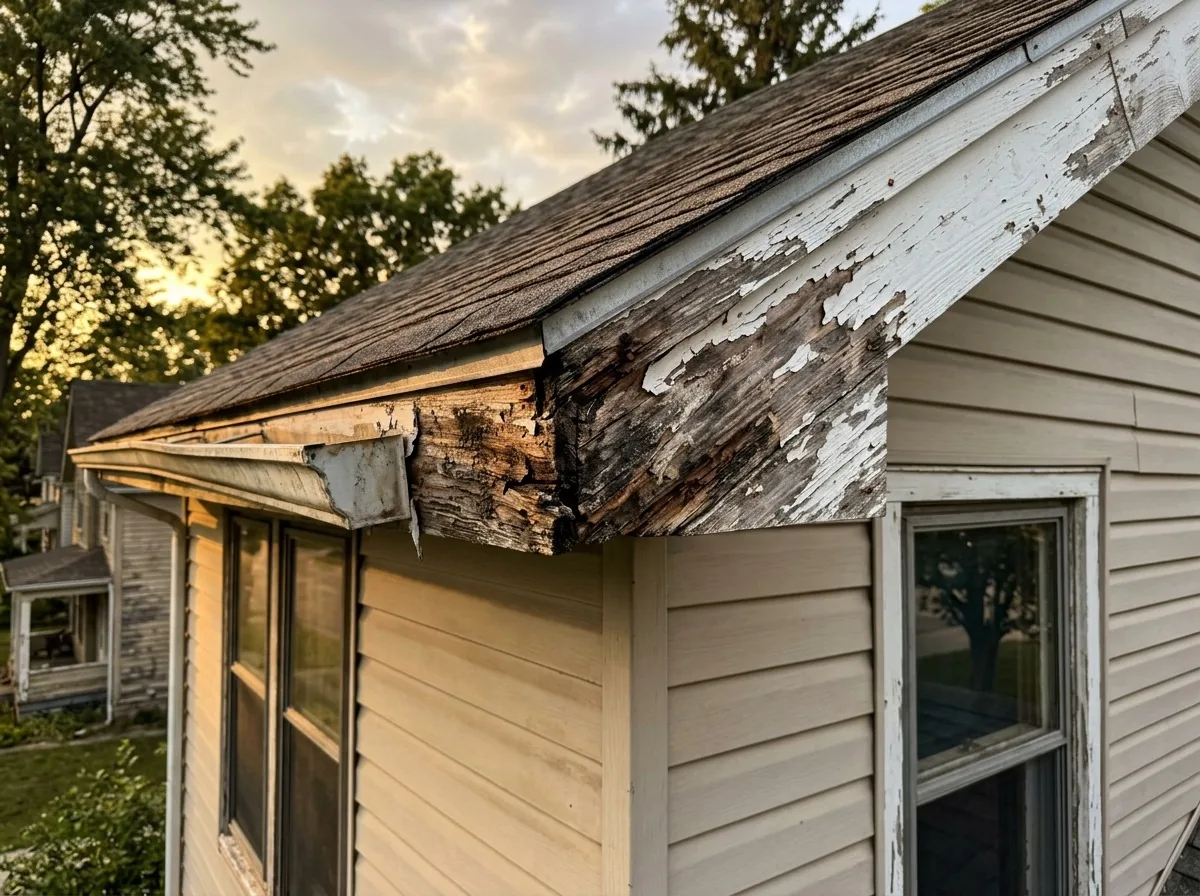
Fascia is the vertical board your hangers bite into. In the Twin Cities, water from clogged troughs, ice dams, and missing drip edge soaks that board all winter. Paint fails, wood softens, and screw threads spin in pulp instead of grain.
When a crew hangs new seamless aluminum on that soft wood, the trough looks straight on day one. By the first heavy thaw — or the first ice-filled trough — hangers elongate the holes, the front lip rolls outward, and water dumps behind the gutter onto the same board that was already failing.
That is why “cheap gutters only” quotes that skip a fascia probe are expensive by spring. For a deeper look at causes and spotting damage early, see our gutters and fascia repair guide.
How to know the fascia is too soft
You can screen most of the problem from the ground, then confirm on a ladder during the free measurement:
- Paint bubbles or peeling on the fascia face
- Dark streaks under the back of the trough
- Daylight between gutter and board
- Soft give when you press a screwdriver tip into the wood
- Sagging soffit panels on the same elevation
If only one board bay is soft, a sectional fascia repair may be enough before new gutters. If several runs probe soft — common after multi-year ice dams — plan a longer board or wrap scope with the gutter job.
What fails first when gutters go on bad wood
| Failure (Minnesota winters) | What you see | Typical follow-up cost (Twin Cities market, 2026) |
|---|---|---|
| Hanger screws pull out | Gap behind trough, visible daylight | Re-hang + fascia section $400–$1,200 |
| Trough rolls forward | Overflow onto siding in spring rains | Partial re-level or full re-install |
| Water behind gutter again | Fresh fascia stains within one season | Boards + drip edge + gutters bundle |
| Ice load on soft bay | Bent front lip, pulled corners | Replace run + repair rafter tails if rot spread |
These dollar ranges are Minnesota / Twin Cities market averages for 2026 planning — not a fixed EaveX price list. Final cost depends on linear footage, stories, how far rot moved into rafter tails, and whether soffit panels also need work. Measurement is free.
The right order of work
- Find the water source. Clogs, pitch, ice dams, or missing drip edge — if you only change boards and hang the same overflow pattern, rot returns.
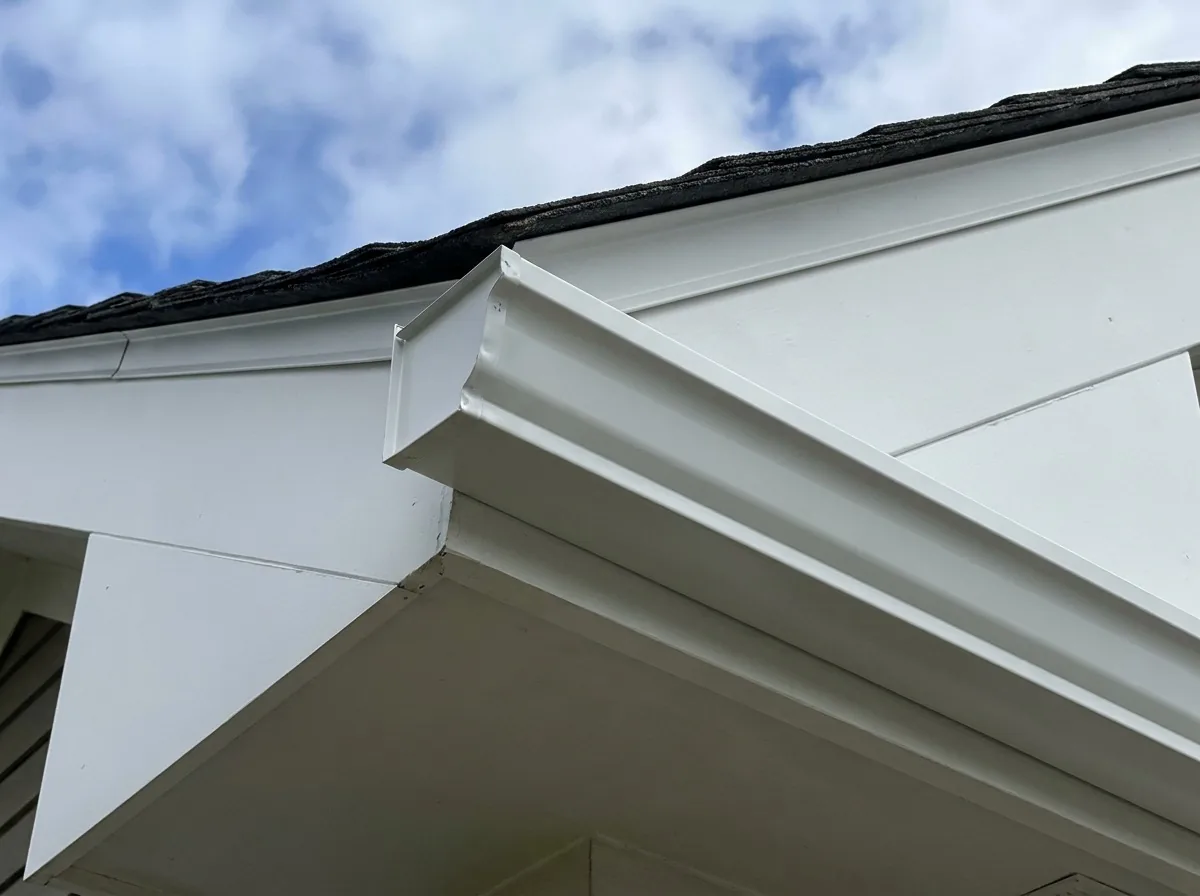
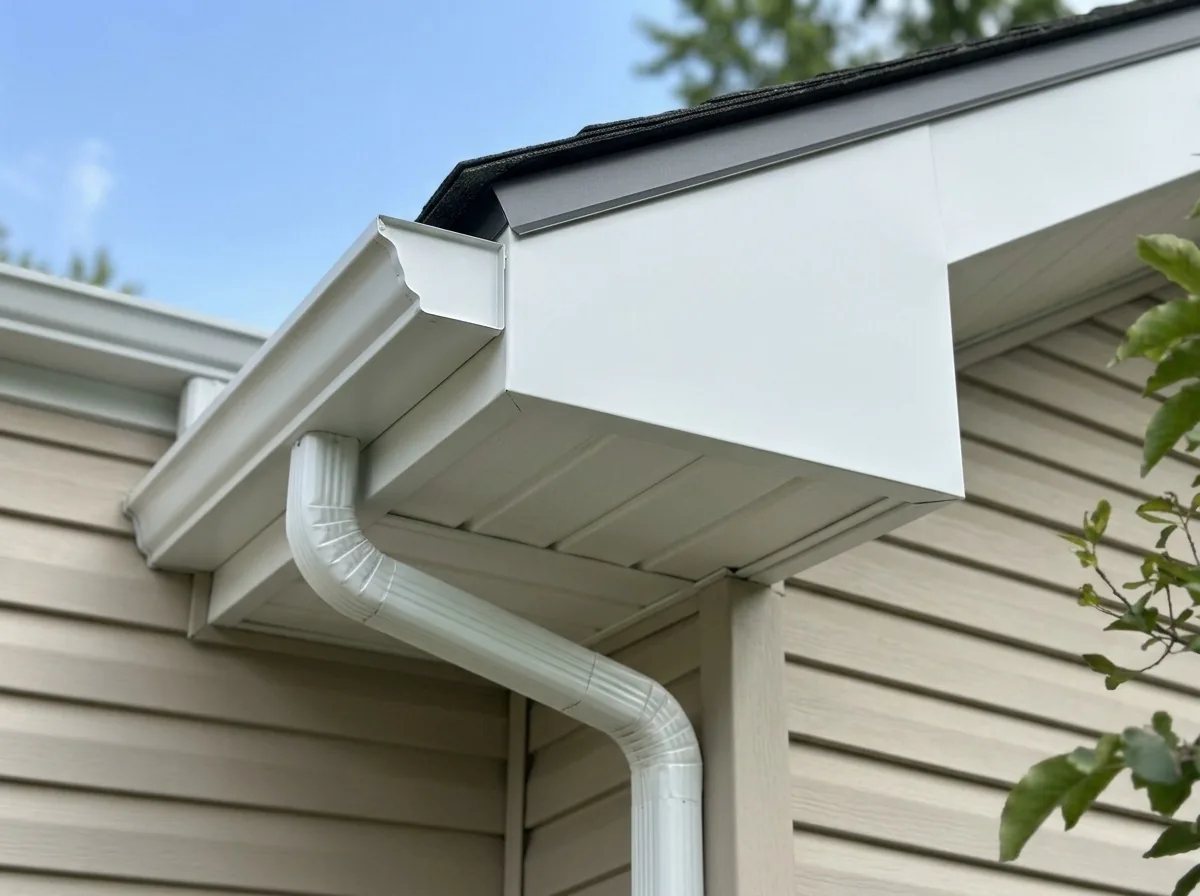
- Replace or wrap soft fascia (and soffit where panels failed). Aluminum coil wrap over sound or new wood is a common Twin Cities choice for freeze–thaw durability.
- Install drip edge where it is missing so water sheds into the trough, not down the board face.
- Hang seamless gutter installation sized for the roof (often 5-inch or 6-inch K-style) with hangers into solid wood, typically spaced for Minnesota ice load.
- Set downspout discharge away from the foundation so meltwater does not re-soak the eave line.
If you are deciding wrap versus full board swap before new troughs, compare options in wrap or replace fascia.
Twin Cities 2026 cost ranges (planning table)
| Scope | Typical range (market average) |
|---|---|
| Probe + one fascia board (8–16 ft) | $200 – $500 |
| Fascia + soffit on one elevation | $600 – $1,500 |
| Full-perimeter aluminum fascia wrap | $1,500 – $3,500 |
| Seamless gutters only (sound fascia) | about $8 – $14 per linear foot |
| Gutters + fascia repair bundle (full perimeter) | $2,500 – $5,500+ |
A ranch with sound boards might only need troughs. A two-story with ice-dam history often needs boards and metal on the same day. For per-foot gutter pricing detail, use the seamless gutter cost guide. Financing is available from 0% APR (0.00–9.99%) with GreenSky, plan 6124 — not every buyer qualifies for 0%; ask on the estimate.
City notes: Albertville base and Twin Cities eaves
EaveX is based in Albertville (Wright County) and works the Twin Cities metro. Older Maple Grove, Plymouth, and Minneapolis ranches with original painted fascia show the soft-board problem most often after wet winters. Newer builds can still fail early if drip edge was skipped or gutters overflowed for years. Townhome and walkout elevations need extra probe points at inside corners where ice backs up first.
We complete 1,200+ projects, hold a 5.0 rating, 13+ years in Minnesota, and license BC808261.
Ice dams, leaf season, and why timing matters
Late summer through October is the window most Twin Cities homeowners replace troughs — after heat, before leaf drop and freeze. That is also when soft fascia is easiest to spot: paint failure shows, and you are not chiseling ice out of the trough to reach hangers.
If you wait until after the first ice dam, water has already sat behind the gutter for days. Boards that felt “a little soft” in August can be pulp by March. Installing new metal in November on boards you never probed is how homes end up with a second gutter invoice the following spring.
Pair the install calendar with gutter cleaning before leaf drop if troughs are still staying, or move straight to boards-plus-seamless if the wood fails the probe. Guards help after the system is sound — micro-mesh on a sagging, soft-fascia run only hides an overflow problem until the next thaw.
What a proper fascia-first install looks like on site
A careful crew will pull a short test section, probe neighboring bays, and photograph soft spots before ordering trough colors. They check rafter tails when rot smells musty or the screwdriver finds deep give. They confirm soffit vent paths so attic intake is not sealed shut during the wrap.
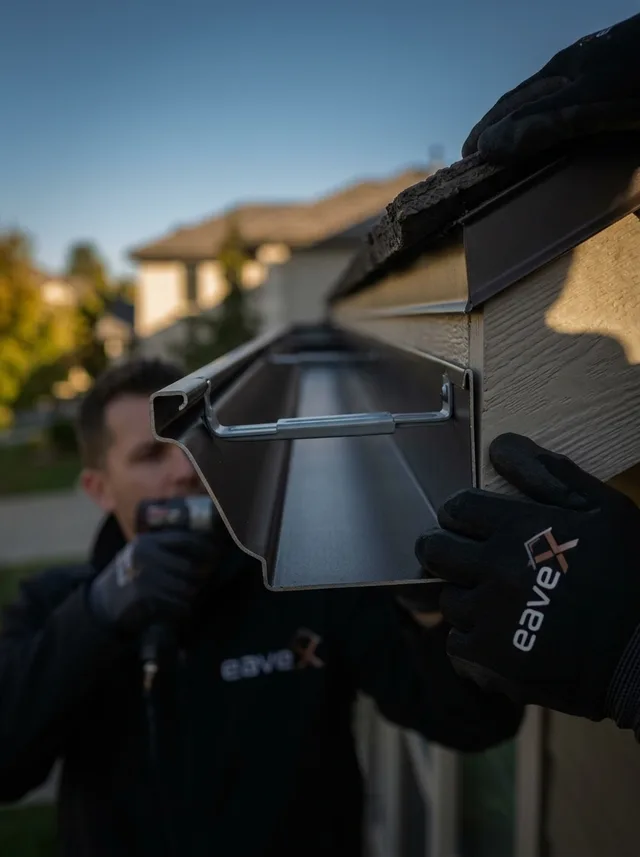
Hanger choice matters once wood is solid again: hidden hangers into sound fascia at spacing meant for Minnesota ice (often tighter than mild-climate defaults). Expansion allowances at long runs keep seamless aluminum from oil-canning when temperatures swing from below zero to a March thaw.
Color-matched fascia wrap and gutter finishes keep the eave looking intentional — especially on two-tones common in Plymouth and Maple Grove subdivisions. None of that cosmetics work holds if the first screw lands in rot.
When “gutters only” is still OK
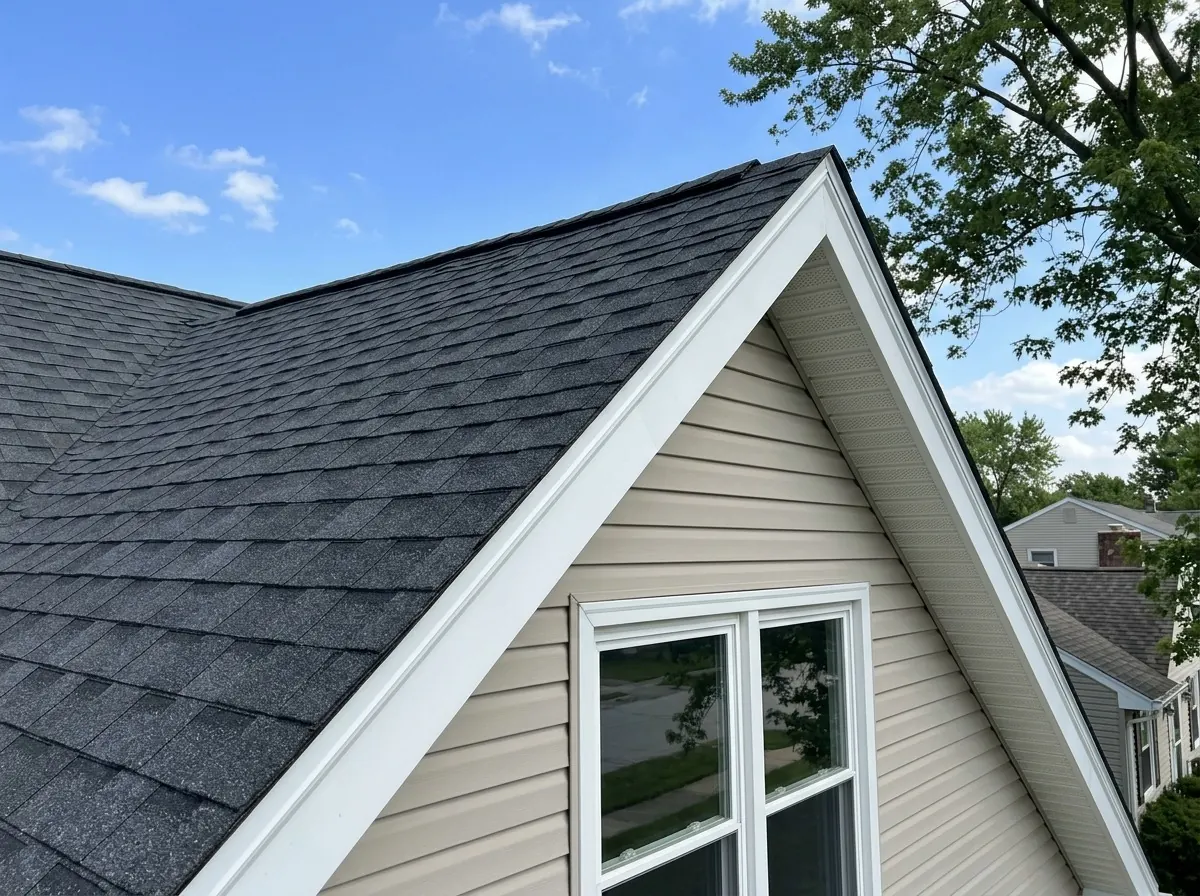
Skip the big fascia job only when every bay probes solid, paint is intact, soffit vents are clear, and drip edge is present. Even then, budget a few board feet of contingency — opening the eave can reveal a soft spot the screwdriver missed from the ground.
If hangers are loose but wood is sound, a re-hang or gutter repair vs replacement decision may be enough without full boards. Soft wood changes that call immediately.
Free inspection
Do not buy new troughs on soft boards. A free inspection probes the perimeter, checks drip edge and soffit vents, and quotes boards and gutters as one sequence so you are not paying for scaffold twice.
Free inspection / free estimate: call (763) 313-8516. Start with fascia and soffit repair or seamless gutter installation — we will tell you which comes first on your house.