Fascia and soffit rot in Minnesota primarily because water gets trapped behind gutters that are clogged, improperly pitched, or pulling away from the house — fixing the gutter problem first, then replacing the boards, is the only way to make the repair last.
Key takeaways
- Fascia board replacement costs $200–$800+ per section in the Twin Cities (2026), depending on length, material, and access height.
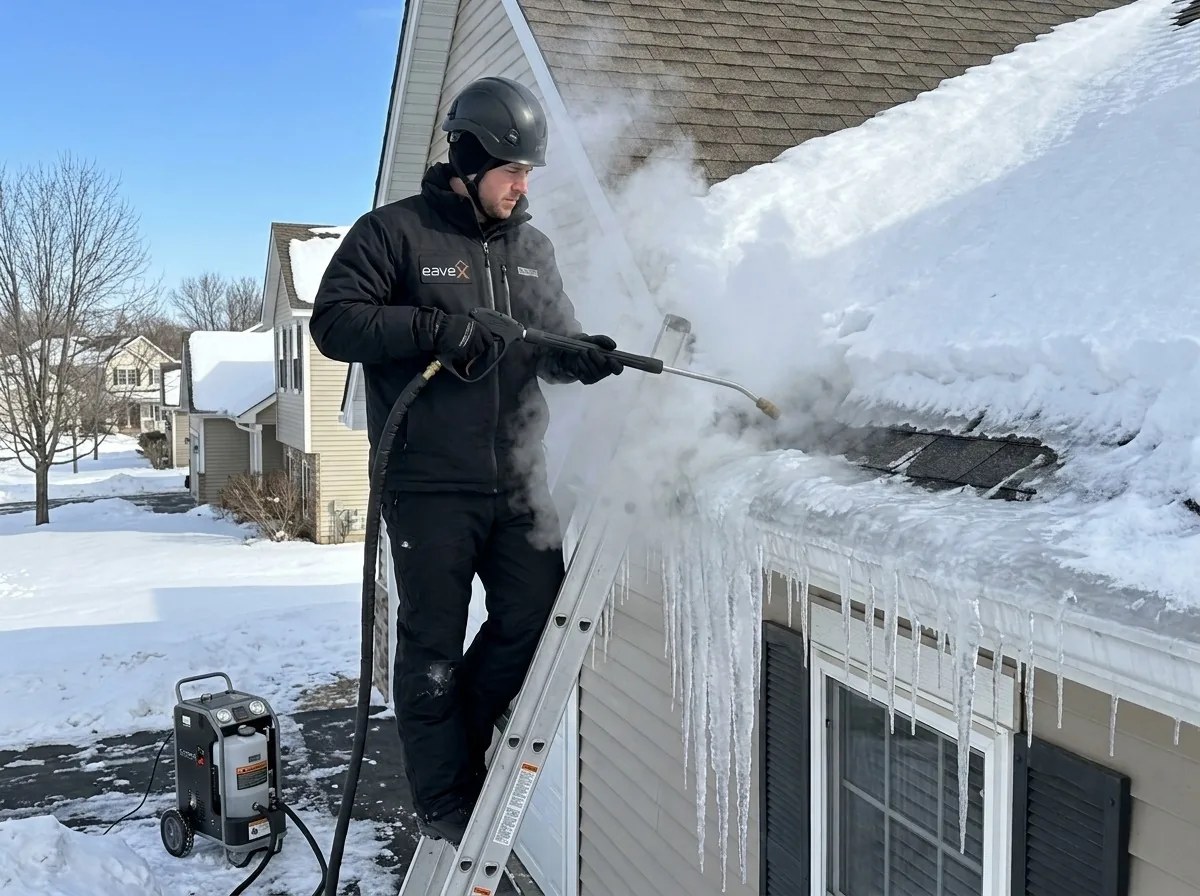
- The root cause is almost always water: failed gutter seals, ice dam melt, or missing drip edge let moisture sit behind the trough and soak the wood.
- Soft fascia makes gutter hangers fail — if fascia is rotted, new gutters will sag within one season.
- Soffit damage (holes, sagging panels, missing vent screens) invites pests, traps attic moisture, and kills ventilation.
- Bundling fascia/soffit repair with seamless gutter replacement saves a second scaffold setup and second mobilization cost.
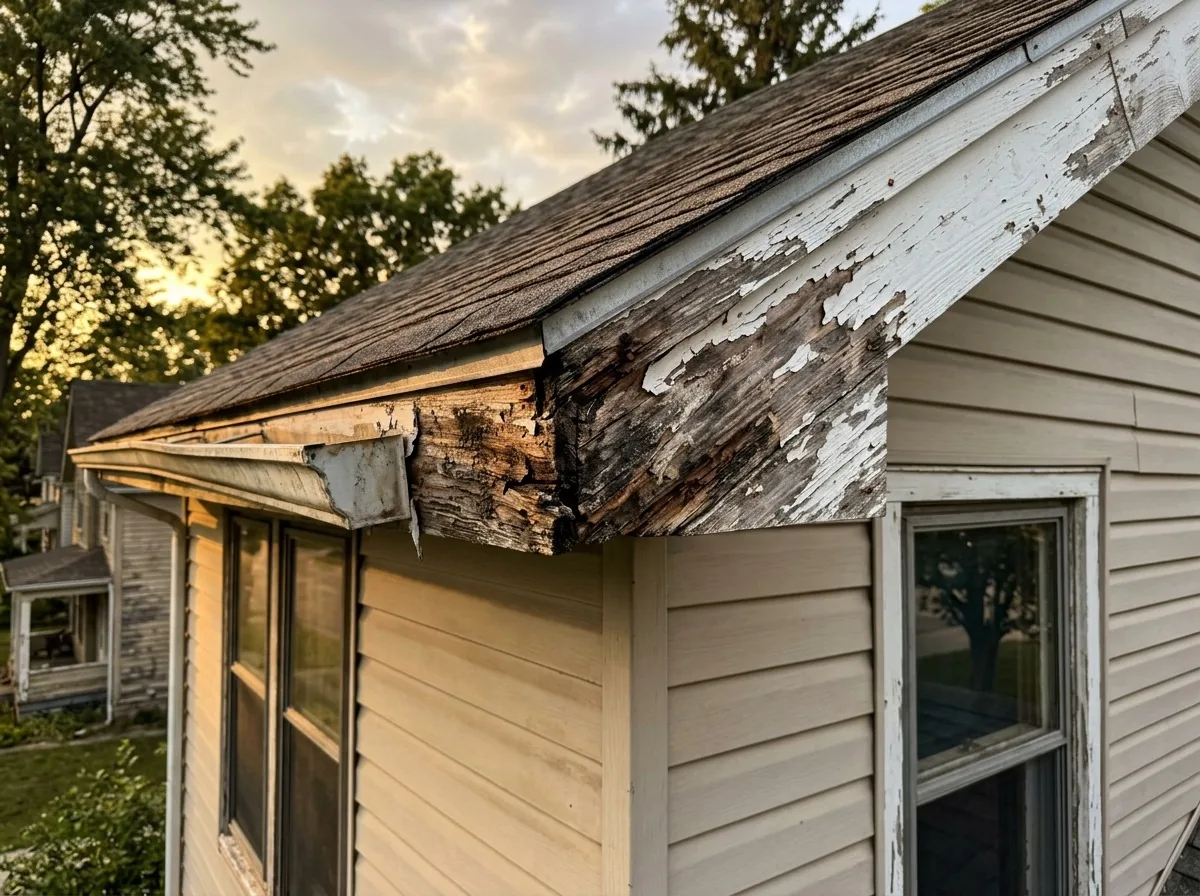
What fascia and soffit actually do
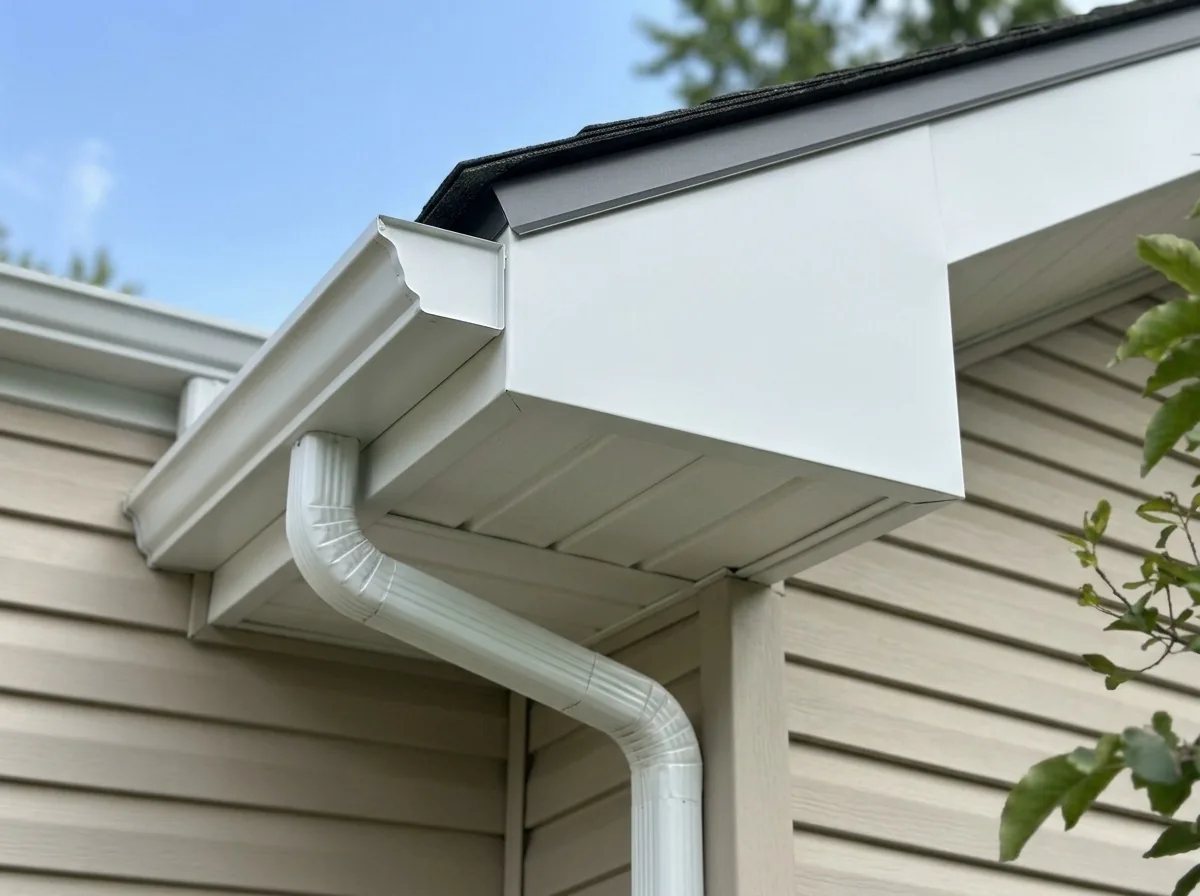
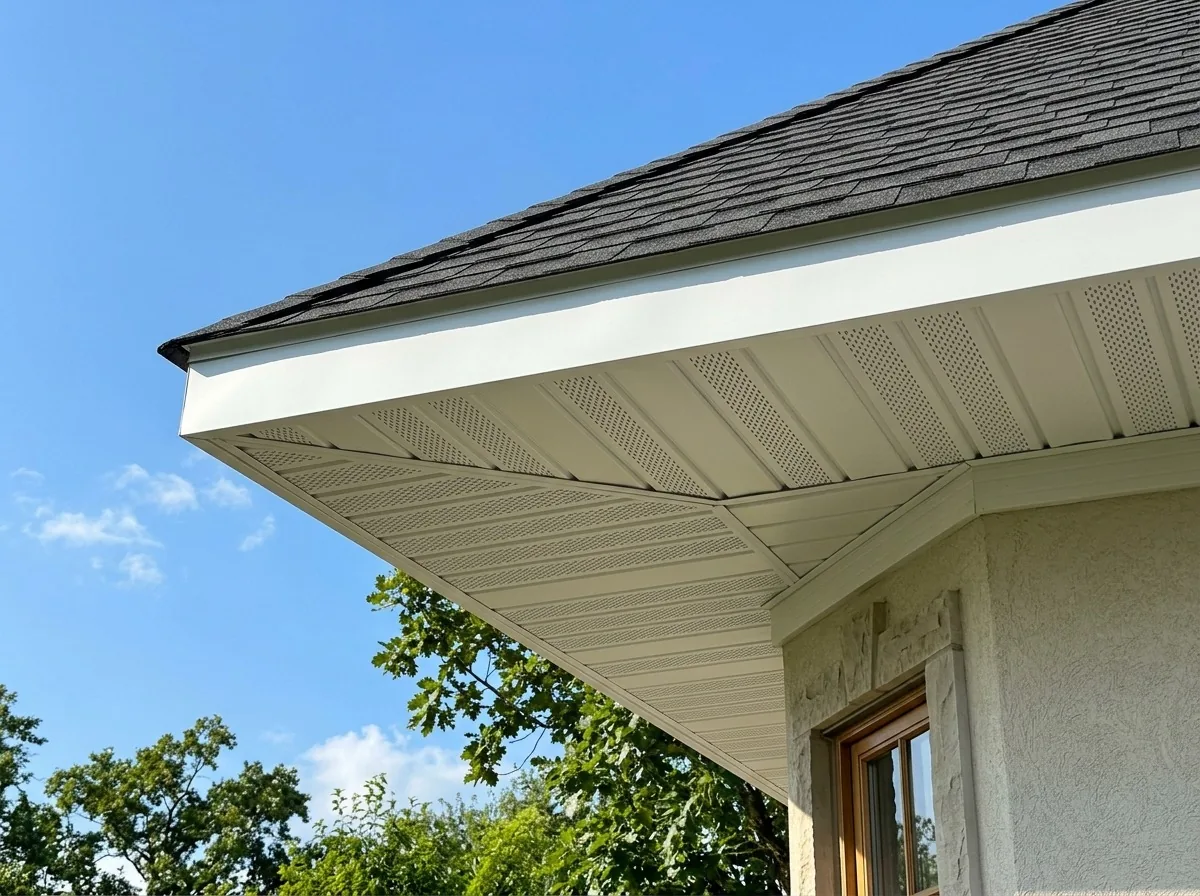
Fascia is the vertical board running along the roofline edge — the board your gutters mount to. Soffit is the horizontal panel underneath the eave, closing the gap between the fascia and the exterior wall. Together they form a sealed envelope around the rafter tails, keeping weather out and ventilation flowing.
When either fails, water enters rafter tails and wall cavities. A board fix that starts near $200 (Twin Cities market range) can climb past $1,000 if rot reaches framing through one more winter.
Animals exploit soffit gaps as small as two inches — squirrels, starlings, and wasps peak in April–May and again in October.
Common causes of damage in Minnesota
| Cause | How it damages fascia/soffit | Prevention |
|---|---|---|
| Clogged gutters | Water backs up behind trough, soaks fascia for hours | Clean gutters 2x/year or install gutter guards |
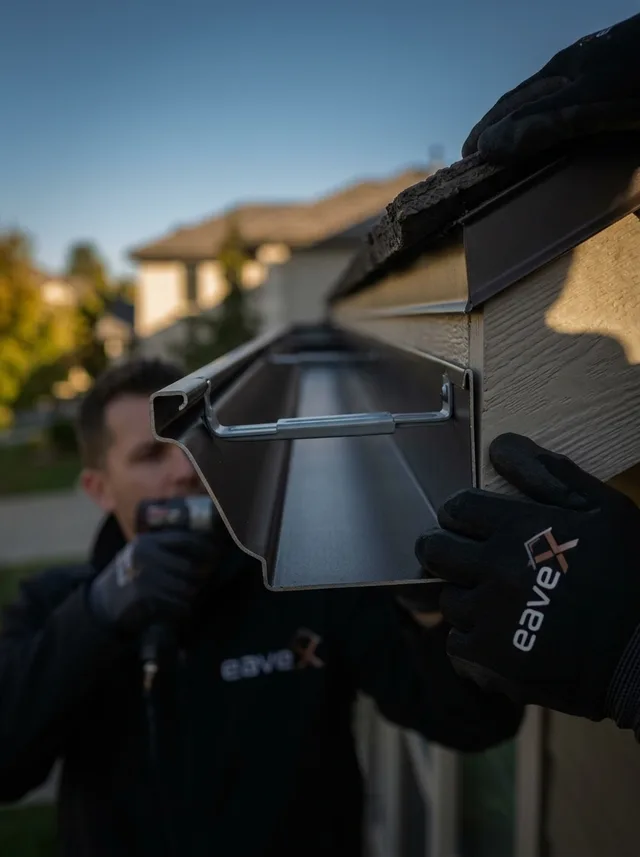
| Gutter pulled away from house | Exposes fascia face to direct rain and snowmelt | Re-hang with proper hanger spacing (24" for MN) |
| Ice dams | Meltwater pools behind gutter, saturates board repeatedly | Attic insulation R-49+ and soffit-to-ridge ventilation |
| Missing drip edge | Water runs down fascia face instead of dripping into trough | Install drip edge under first shingle row |
| Woodpecker or pest holes | Punctures soffit panels, exposes cavity | Repair + vent screens, seal entry points |
| Age (25+ year paint cycle) | Paint fails, bare wood absorbs moisture every storm | Repaint or wrap with aluminum coil stock |
Minnesota's freeze–thaw widens every crack: October seepage becomes a March split. Catching damage before winter matters more here than in milder climates.
How to spot the damage early
You do not need a ladder for the first check. From the ground, look for:
- Paint bubbles or peeling on the fascia face — moisture is trapped behind the paint film and pushing outward.
- Dark streaks or stains running from the gutter line downward — water is escaping from the back edge of the trough.
- Sagging soffit panels — a panel dropping from its channel means the nailing strip or J-channel behind it has rotted or pulled away.
- Daylight visible under the eave — a soffit panel has fallen away or was never replaced after prior work.
- Wasp or bee activity at the eave line — insects entering the soffit cavity indicate a breach.
With a ladder, push a screwdriver into the fascia at several points along each run. If the tip sinks more than a quarter inch, that board is rotted and must be replaced before any gutter work. Pay special attention to the areas directly behind gutter joints and downspout outlets — these get the most water exposure.
Gutters and fascia repair in Minnesota
Gutters and fascia repair belong on the same work order on most Minnesota homes: the trough mounts to the fascia, so water that overflowed or ice that backed up usually softens the board before the metal fails. If you only patch the gutter and leave soft wood, hangers pull again within one freeze–thaw season.
Typical Twin Cities market ranges in 2026 for a combined gutters and fascia repair (not an EaveX fixed menu — final price depends on run length, stories, fascia condition, and roof edge access; measurement is free) run about $800–$2,200 for one elevation and $2,500–$5,500+ when the full perimeter needs boards plus new seamless troughs. Start with fascia and soffit repair if the wood is soft, or seamless gutter installation when the troughs are past patching.
Repair costs in 2026
| Repair scope (Twin Cities, 2026) | Estimated cost |
|---|---|
| Replace one fascia board (8–16 ft, primed wood) | $200 – $500 |
| Replace fascia + soffit on one side of house | $600 – $1,500 |
| Full perimeter fascia wrap (aluminum coil stock) | $1,500 – $3,500 |
| Soffit panel replacement (per section) | $150 – $400 |
| Rafter tail repair (if rot reached framing) | $300 – $800 per rafter |
| Fascia + soffit + seamless gutters (bundled) | $2,500 – $5,000+ |
| Gutters and fascia repair (one elevation) | $800 – $2,200 |
| Gutters and fascia repair (full perimeter bundle) | $2,500 – $5,500+ |
All prices are 2026 Twin Cities metro estimates. Final cost depends on linear footage, number of stories, material choice (wood vs composite vs aluminum wrap), and how much structural repair is hidden behind the existing boards. You will not know the full scope until the old fascia comes off — we quote a range and confirm before proceeding.
Wood vs composite vs aluminum wrap
Three material options for fascia replacement, each with trade-offs:
Primed wood (pine or engineered wood board). Lowest upfront cost. Needs painting within 30 days of installation and repainting every 8–12 years. In Minnesota, freeze–thaw and UV degrade paint faster than in milder states, so maintenance cycles skew shorter.
Composite or PVC board. Mid-range cost. Will not rot, does not need painting, and handles moisture well. Slightly more flexible than wood, which means it can deflect behind heavy gutter loads if not properly backed. Works well for fascia that is hard to access for future maintenance (three-story sections, dormers).
Aluminum coil wrap over wood. The existing or new wood board stays in place; the installer wraps it with color-matched aluminum coil stock. The metal sheds water, blocks UV, and eliminates repainting. This is the most popular option in the Twin Cities because it combines the structural rigidity of wood with the maintenance freedom of metal. Cost runs $1,500–$3,500 for full-perimeter wrapping. See wrap or replace fascia before new gutters go up.
Why you should bundle with gutter work
If your fascia is rotted, your gutters are coming down for the repair regardless. Replacing fascia alone and rehanging old gutters means you set up scaffold twice and pay two mobilization fees when the gutters inevitably need replacement a year or two later. If the trough is already rolling off the board, read gutters pulling away from the house for hanger, ice, and soft-fascia fixes before you order boards alone.
Bundling fascia and soffit repair with seamless gutter installation on a single visit saves that second trip. The new gutters sit on solid, level boards from day one, and the entire roofline edge gets a coordinated finish — matching colors, tight fit, no gaps.
Need a sense of what the gutter side of that bundle costs? Our seamless gutter cost guide covers 2026 pricing per linear foot for the Twin Cities.
Financing available from 0% APR (0.00–9.99%) with GreenSky, plan 6124 — ask during the estimate for the rate you qualify for.
Soffit ventilation: the hidden function
Soffit panels are not just cosmetic — they house the intake vents that pull cold outside air into the attic. Without proper soffit ventilation, attic heat builds up, melts roof snow, and causes ice dams. Damaged soffit panels with blocked or missing vents break this airflow loop.
During soffit replacement, each bay should be checked for a clear vent path — vented panels go in wherever they are missing. This is a cheap add-on during soffit work and pays back in reduced ice-dam risk every winter.
When to call
Do not wait until fascia rot spreads to rafter tails — that repair jumps from hundreds to thousands. A free inspection checks every board around the perimeter, identifies the water source causing the rot, and gives you a written price for fixing both the cause and the damage.
Free inspection / free estimate: call (763) 313-8516. EaveX: 1,200+ projects, 5.0 rating, 13+ years, license BC808261. See our fascia and soffit repair for details, or start with seamless gutters if the whole system needs attention.