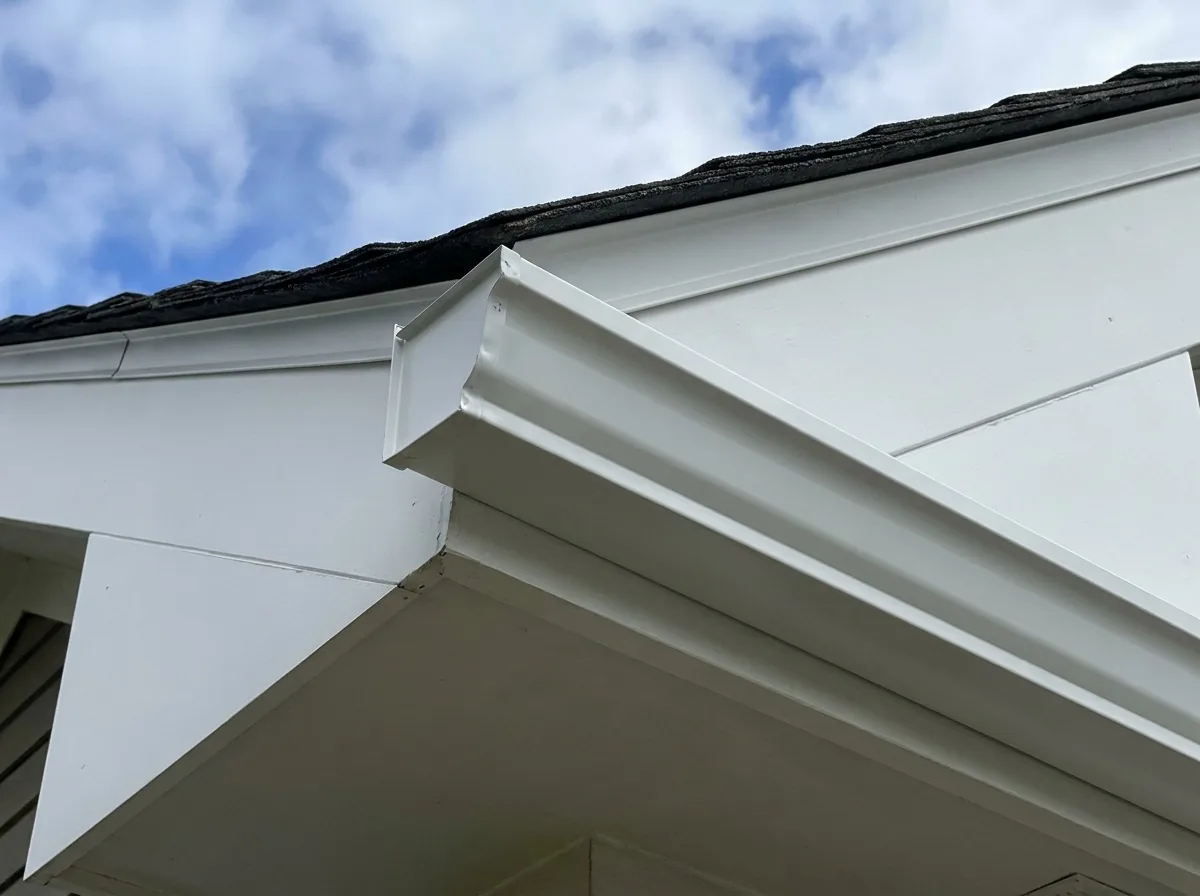
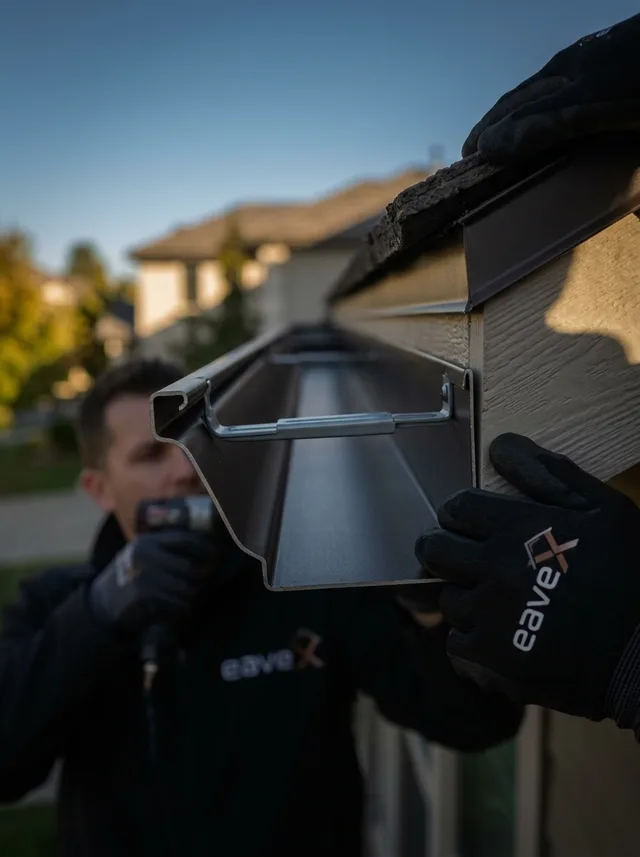
Gutter guards can ice over in Minnesota winters when meltwater refreezes on the cover—especially on north eaves after a thaw—but a properly pitched micro-mesh system on sound seamless gutters usually sheds better than an open trough packed with frozen leaf mash. The cover does not create ice dams by itself; reverse pitch, clogged outlets, and soft fascia do.
Key takeaways
- Gutter guards freezing usually means a thin ice sheet on the mesh or rail after melt–refreeze—not a solid block filling the trough.
- Open gutters full of wet leaves freeze into heavy plugs that yank hangers; clean micro-mesh reduces that load.
- Twin Cities 2026 market averages for micro-mesh gutter guards often run about $8–$20 per linear foot installed (not an EaveX price list).
- Fix pitch, outlets, and fascia before you blame the cover—see fascia and soffit repair when boards are soft.
- EaveX: 1,200+ projects, 5.0 rating, 13+ years, license BC808261. Financing from 0% APR (0.00–9.99%) with GreenSky, plan 6124—not every buyer gets 0%.
What “gutter guards freezing” looks like on a Twin Cities house
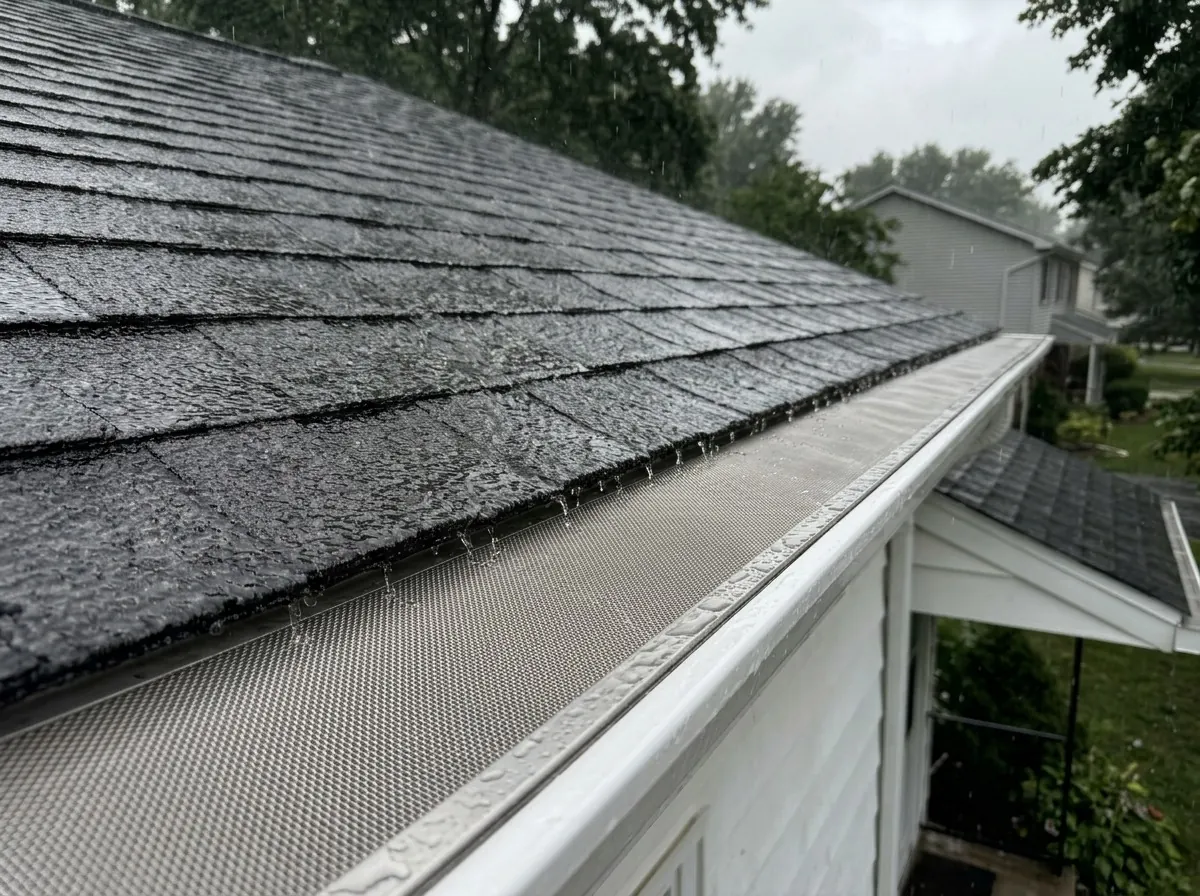
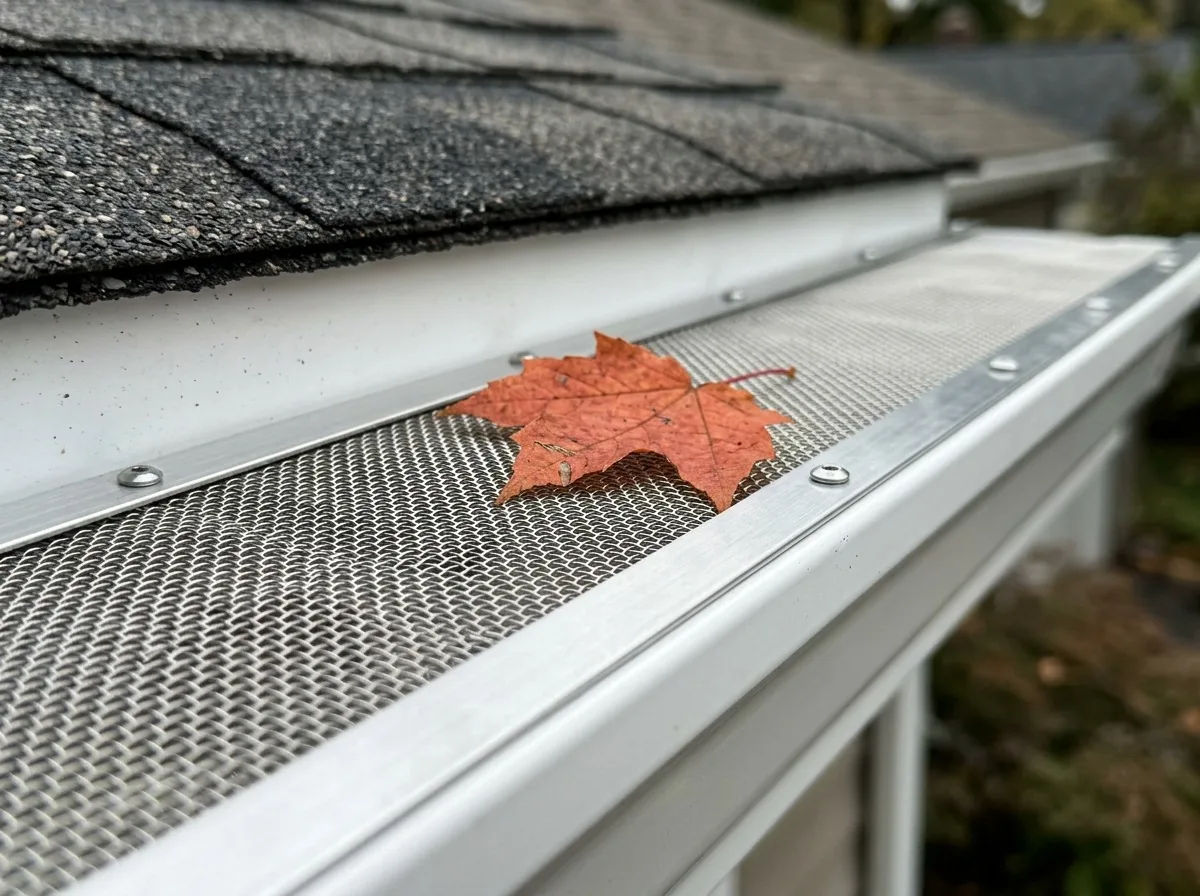
After a sunny mid-winter day, melt runs to the eave, hits cold metal, and can glaze the top of stainless micro-mesh or an aluminum rail overnight. You may see a clear sheet that slows entry until the next thaw. That is different from an open K-style trough jammed with oak mash that turns into a solid ice beam and pries hangers out of the fascia.
If water is sheet-flowing over the front lip while the mesh looks clear, the problem is usually pitch, an outlet plugged below the cover, or ice dam backup from a warm attic—not “the guard froze shut forever.” Walk the eave after the next melt and note which elevations glaze first; north and shaded walls hold ice longest in Minnesota. Photograph the same corner on a thaw afternoon and again at 6 a.m.—that before/after pair tells you whether you have surface glaze or a trough that never drained.
Micro-mesh vs open troughs when Minnesota freezes
| Setup | Freeze behavior (typical MN) | Maintenance before hard freeze |
|---|---|---|
| Open 5-inch K-style with leaf mash | Heavy ice plugs, hanger pull | Fall gutter cleaning critical |
| Open trough, cleaned late October | Can still ice at outlets | Flush every downspout |
| Stainless micro-mesh on sound seamless | Surface glaze possible; trough stays lighter | Brush top debris; check outlets |
| Screen/hood style with large openings | Debris bridges, then ice mats | Clean more often than micro-mesh |
| Guards on reverse-pitch / soft fascia | Glaze + overflow regardless of cover | Fix trough/boards first |
Market install bands for quality micro-mesh in the Twin Cities (2026) commonly sit near $8–$20/lf; open troughs with no cover trade that cost for more ladder days. Final numbers depend on run length, stories, roof edge, and whether fascia needs work—free measurement confirms scope. These figures are Minnesota market averages, not an EaveX price list.
Why ice dams and frozen guards get blamed together
Ice dams form when heat escapes the attic, snow melts, and water refreezes at the cold eaves. A guard sitting on that eave can show ice on top while the real driver is insulation, ventilation, or a trough that cannot drain. Removing guards mid-winter rarely fixes attic-driven dams; addressing drainage and, when needed, professional steam removal is the safer path—see our ice dam removal Minneapolis guide for steam-vs-wait cost bands.
If hangers already walk out each spring, ice on any cover is a symptom of soft wood. Do not screw new mesh onto spongy fascia—pair covers with seamless gutter installation or board repair so fasteners bite solid stock. Homeowners in the north metro who fought ice dams last January should also skim ice dam removal in Maple Grove and Ham Lake for local timing notes before winter staffing fills up.
Will gutter guards freeze shut and overflow?
They can glaze and slow entry for hours after a thaw, especially under thick roof snow. They should not turn into a sealed lid that traps a full trough of water if outlets are open and the run pitches toward downspouts. Overflow curtains that return every melt usually mean: (1) outlets clogged under the cover, (2) reverse pitch, (3) too few downspouts for the roof area, or (4) ice dam backup from the roof deck.
A quick homeowner check on a 30°F morning after yesterday’s melt: look for daylight at end caps, tug the front lip for hanger play, and confirm downspouts throw water 4–6+ feet from the foundation. If the mesh is glazed but the downspout elbow is dry, clear the outlet path before you schedule a full tear-off. Never chip ice off mesh with a roof shovel—you will tear the screen and dent the trough; wait for melt or call a crew with proper tools.
Twin Cities cost bands if you add or replace guards before winter (2026)
| Item | Typical Twin Cities market band (2026) | Notes |
|---|---|---|
| Micro-mesh guards on existing sound gutters | $8–$20/lf | Clean troughs first |
| Guards bundled with new seamless | Often lower mobilization than two trips | Same ladder day |
| Fall cleaning only (no guards) | $150–$350 typical home | Last chance before freeze |
| Fascia repair with new hang | $18–$35/lf boards | When wood is soft |
| Two-story staging add-on | Higher labor than ranch | Ask for that line item |
October is still a practical install window in the metro: coil is available, crews can work, and you want covers on before wet November snow. If leaf drop is peaking, clean first—see clean gutters before installing guards—then seat micro-mesh so frozen mash never builds inside. Bundling guards with a fall clean is usually cheaper than a January emergency ladder day on icy driveways.
What actually prevents freeze problems on Minnesota eaves
- Sound pitch to every outlet and enough downspouts for the roof.
- Clean troughs (or clean mesh tops) before the first hard freeze.
- Hard fascia and hidden hangers that survive ice load—compare gutter guards for Minnesota snow for snow-load context.
- Attic-side ice-dam control where heat loss is obvious (icicles every January on the same wall).
- Realistic expectations: surface glaze happens; solid trough ice from leaf plugs is what wrecks hangers.
EaveX matches stainless micro-mesh or aluminum-frame systems to the roof edge—we do not push a single catalog brand. On a free measure we check pitch, outlets, fascia hardness, and whether guards belong on this trough or after a seamless swap. Ask for line items (clean, guards, fascia, gutters) so you can phase work if the first hard freeze arrives before a full replace.
Homes in Maple Grove, Blaine, and Roseville
Wooded north-metro lots in Maple Grove, Blaine, and Roseville see the same freeze–thaw glaze on covers plus heavier oak litter. Pricing still follows linear feet and access, not a city surcharge. If last winter left ice curtains on one elevation only, we often clean, reseat hangers, and add mesh on that run first rather than covering a failing sectional system house-wide.
Shaded ranch eaves behind mature spruce in Blaine behave differently from a wind-swept two-story in Roseville—staging and leaf species change the quote more than the ZIP code. Bring photos of last year’s ice line to the free measure so we size outlets and guard type to the wall that failed, not a generic “whole house” package.
Get a free measure before the hard freeze
Call (763) 313-8516 or request a free inspection. We will tell you whether frozen overflow is a guard issue, a pitch/outlet issue, or soft fascia—and whether micro-mesh gutter guards or new seamless gutter installation is the right next step. License BC808261. Serving the Twin Cities from 5098 Main Ave NE, Albertville, MN.