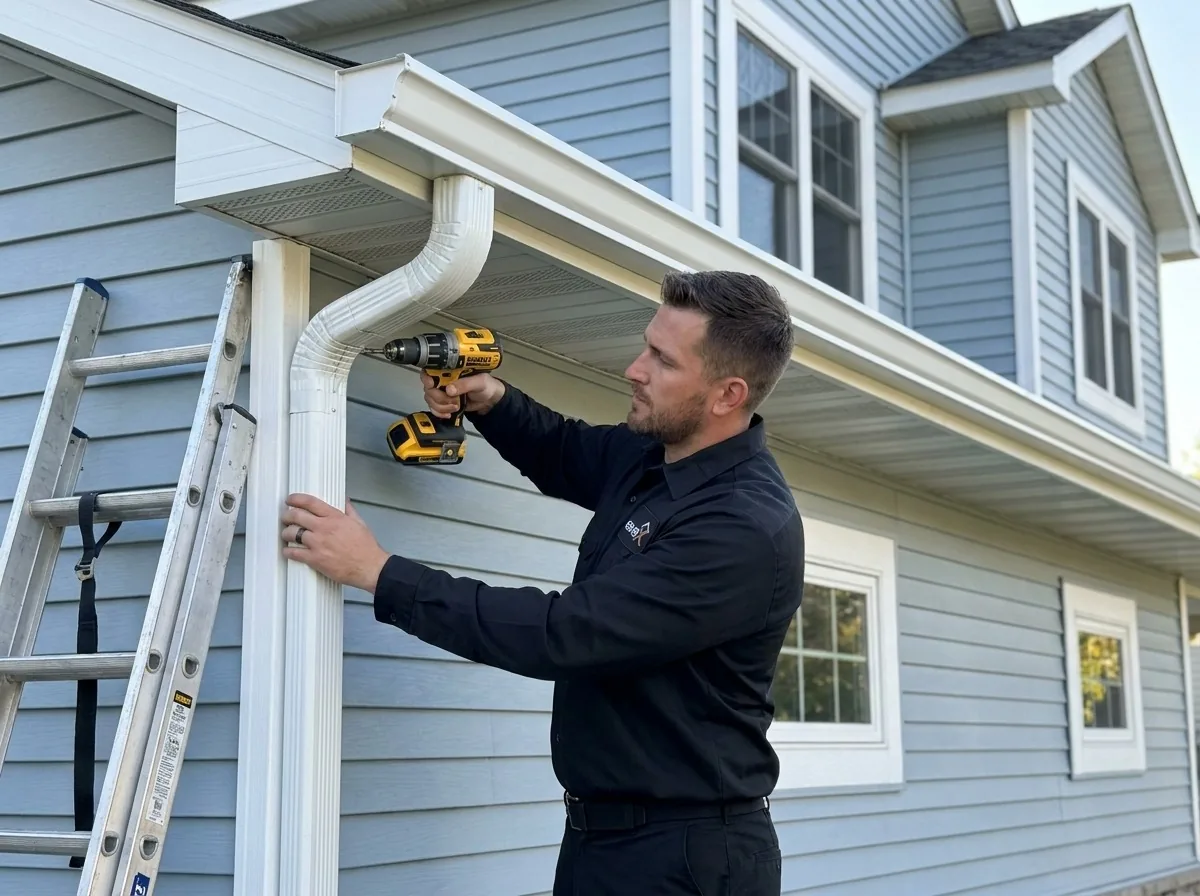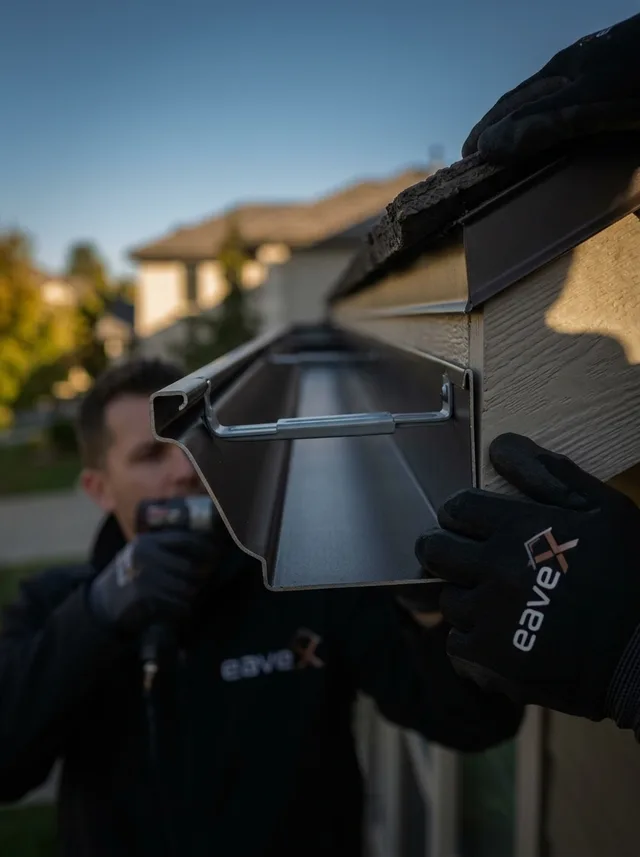
Yes — install gutter guards before peak fall leaf drop in Minnesota if your lot sits under maple, oak, or pine within about 40 feet of the roof. Waiting until November usually means you clean a full mat of leaves first, then cover a wet trough in cold weather. For how we size micro-mesh systems on Twin Cities homes, see our gutter guards service page.
Key takeaways
- Twin Cities leaf drop runs roughly late September through early November; oaks often finish last.
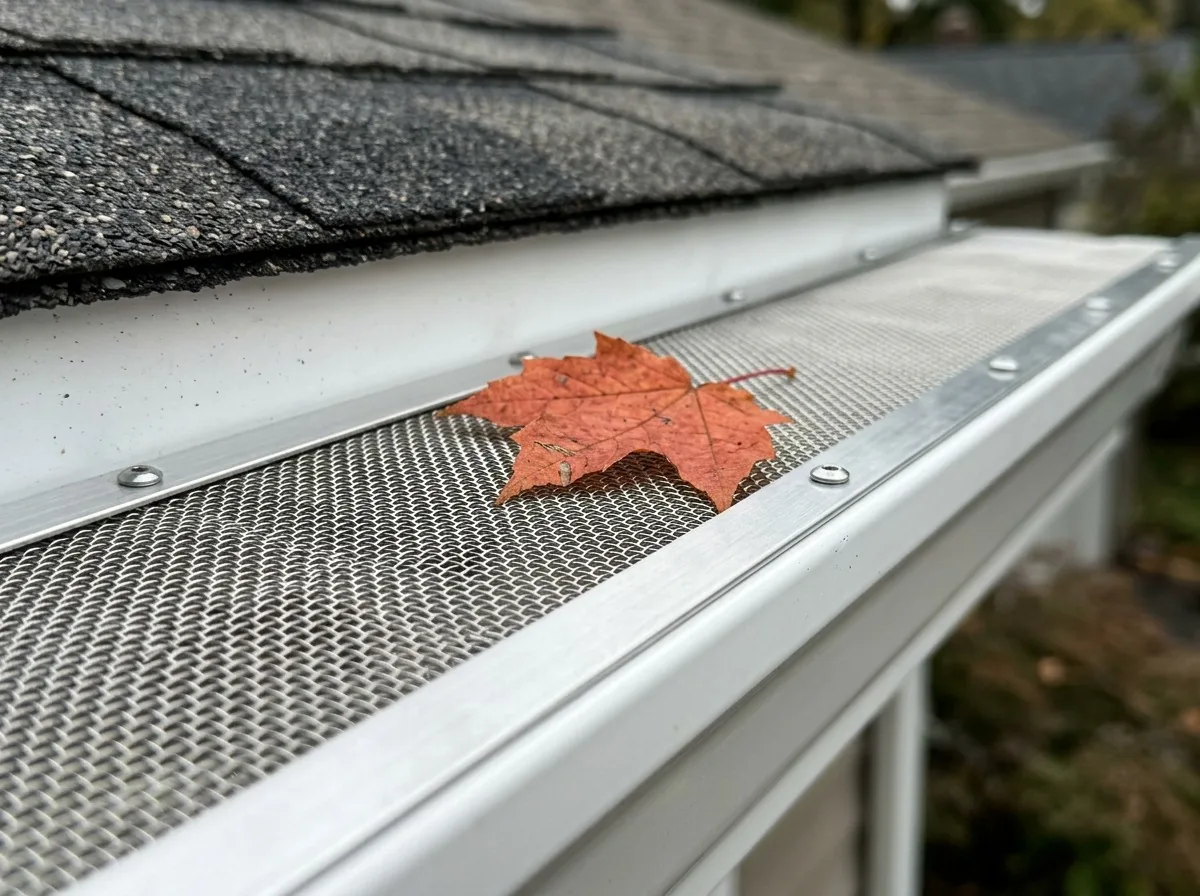
- Micro-mesh (stainless steel mesh on an aluminum frame) installed in August–early October usually beats a same-season clean-then-cover scramble.
- Typical Twin Cities (2026) installed range for quality micro-mesh: $8–$20 per linear foot. Final cost depends on run length, stories, fascia condition, and roof type; measure is free.
- Guards cut ladder cleanings; they do not replace gutter cleaning the day you cover a dirty trough.
- Bundling guards with seamless gutter installation on the same visit often costs less than two mobilizations before freeze-up.
We stage fall guard installs from our Albertville shop (5098 Main Ave NE) across Minneapolis, St. Paul, and the north metro. License BC808261, 13+ years, 1,200+ projects, 5.0 rating. Here is the timing framework we use with homeowners — without pretending every lot needs covers.
Why leaf-drop timing matters in Minnesota
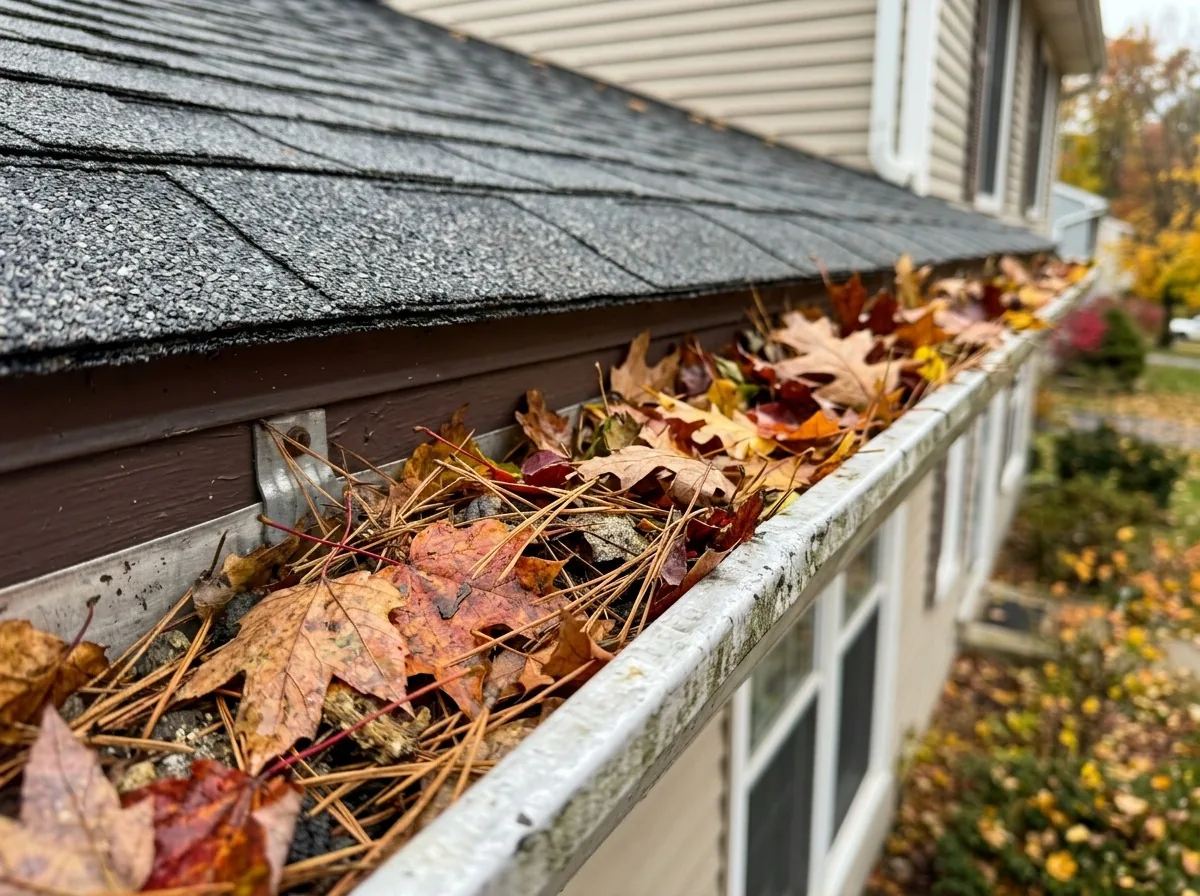
Minnesota trees do not drop on one Saturday. Soft maples and ash often shed in late September. Oaks in suburbs like Maple Grove and Plymouth can keep raining leaves into the first or second week of November. If you hang open troughs through that window, you climb ladders twice — or you install mesh on top of a leaf pack and create an ice plug later.
Installing gutter guards before the heavy weeks means meltwater still reaches the outlets when January thaws start. That is the practical win: fewer overflow sheets over fascia, not a promise of zero maintenance. Homeowners who wait for “the last leaf” often book into freeze warnings, when hanger screws bite poorly and wet fascia softens under foot traffic.
Before vs after leaf drop: what changes
| Timing | What you gain | What you risk |
|---|---|---|
| August – mid-September | Dry eaves, easier hangers, mesh ready for peak drop | Early oaks still drop after install — light brush later |
| Late September – early October | Catches most maple/ash drop; still workable weather | Oak-heavy lots may need one ground brush in November |
| After full leaf drop (late Oct–Nov) | Trough is empty when you cover | Cold metal, wet fascia, ice risk, rushed schedule |
| Mid-winter | Rarely a good idea | Ice, unsafe ladders, frozen outlets |
These are planning bands for Twin Cities homeowners in 2026, not a rigid calendar. Your tree mix and roof pitch decide the week. Two-story ranches with limited ladder access should move earlier — November wind and wet decks make a simple cover job feel like a roofing day.
Do you still clean before guards go on?
Yes. Debris under a new panel turns into a frozen dam the first hard freeze. Our rule is simple: clean gutters before installing guards, pitch-check outlets, then hang micro-mesh. If the trough is soft, undersized, or pulling away, quote seamless gutter installation and fascia and soffit repair on the same ticket.
A dirty cover job is one of the fastest ways to make homeowners think "guards do not work." The system works when the channel underneath is open and pitched. If you already cleaned in early October and oaks refilled the troughs, scoop again before the panels go on — that second pass is cheaper than steaming ice in January.
Cost context if you install before fall (2026)
These are typical Twin Cities market averages for 2026 — not an EaveX price list. Your written quote depends on linear footage, stories, fascia condition, and roof type. Measure is free.
| Scope (Twin Cities, 2026) | Typical range |
|---|---|
| Professional cleaning before guards | $150 – $350 per visit |
| Micro-mesh guards installed | $8 – $20 / lf |
| 160 ft home — guards only (ballpark) | $1,280 – $3,200 |
| Combo: new seamless gutters + micro-mesh | Often less than two separate mobilizations |
| Minor fascia repair before hangers | Often $200 – $800+ |
| Wooded lot: 2–3 cleanings / year without guards | Often $300 – $900 / year |
If you are comparing payback vs two or three cleanings a year, read are gutter guards worth it in Minnesota. Financing for larger packages is available from 0% APR (0.00–9.99%) with GreenSky, plan 6124 — not every buyer qualifies for 0%. A written estimate after measuring beats any online calculator: stories, inside corners, and soft fascia move the number more than brand stickers.
When waiting until after leaf drop is smarter
Skip the early install if:
- Fascia is soft and you need boards replaced first — covers will not fix rot.
- Gutters are sectional, leaking, or undersized — hang new seamless troughs, then mesh.
- You already booked a deep clean in late October and the crew can cover the same day after scooping.
- The lot has almost no canopy — guards add cost with little debris benefit.
Honesty here saves money. We will tell you when to wait. If paint is peeling at the eave or hangers pull out with finger pressure, fix structure first — then revisit mesh timing on the free inspection.
How this ties to winter and snow
Guards installed before leaf drop keep channels clearer for January melt — they do not stop ice dams caused by attic heat loss. For snow-specific mesh behavior in east-metro suburbs, see gutter guards for Minnesota snow. Pair the install with our prepare gutters for Minnesota winter checklist so outlets get a final check before freeze-up.
If last winter left ice curtains on a clean roof, ask about insulation and ventilation — not only another cover panel. Micro-mesh still needs a yearly look: brush seed mats off the surface from the ground with a soft pole so meltwater can find the outlets during freeze–thaw weeks.
Retrofit vs new gutters on the same visit
Many Twin Cities homes can take micro-mesh on sound 5-inch or 6-inch troughs. If hangers are loose or seams leak, we often recommend new seamless runs first. See can you install gutter guards on existing gutters and should you install guards with new gutters. One scaffold day in September beats two trips in November sleet.
Hidden hangers, correct pitch, and clear outlets matter as much as the mesh itself. A cover on a back-pitched trough still overflows — timing before leaf drop cannot fix geometry. We hose-test outlets before we leave so you see water leave the eave, not sheet over the fascia.
Book the free inspection before peak drop
September is the practical window for most wooded lots. Call (763) 313-8516 or request a free inspection on our gutter guards page. We measure runs, check fascia, and tell you whether to cover now, clean-and-cover the same day, or replace troughs first — with clear Twin Cities 2026 ranges, not a hard sell.
If cleaning alone will hold you through one more season, we will say so and point you to gutter cleaning. If mesh plus new troughs is the smarter spend before snow, you leave with one plan and one schedule — not three competing quotes.