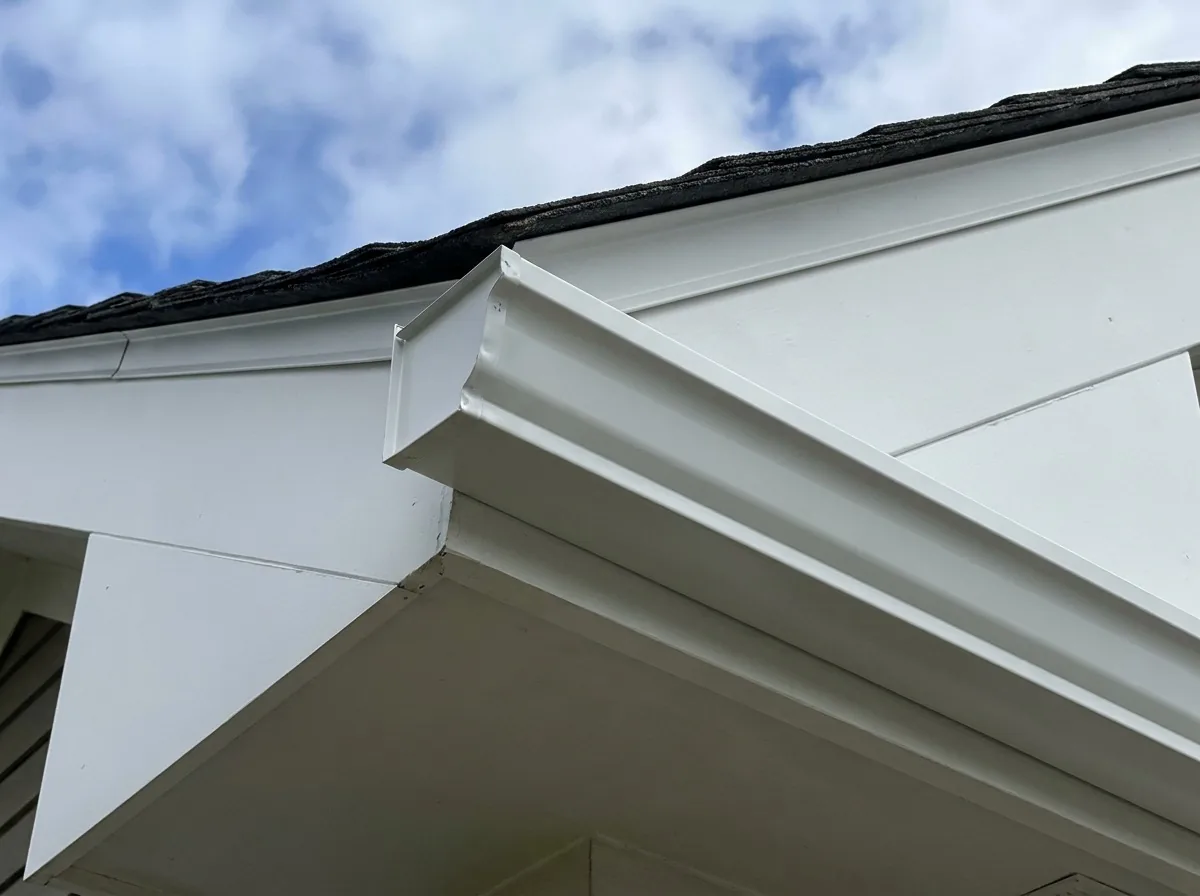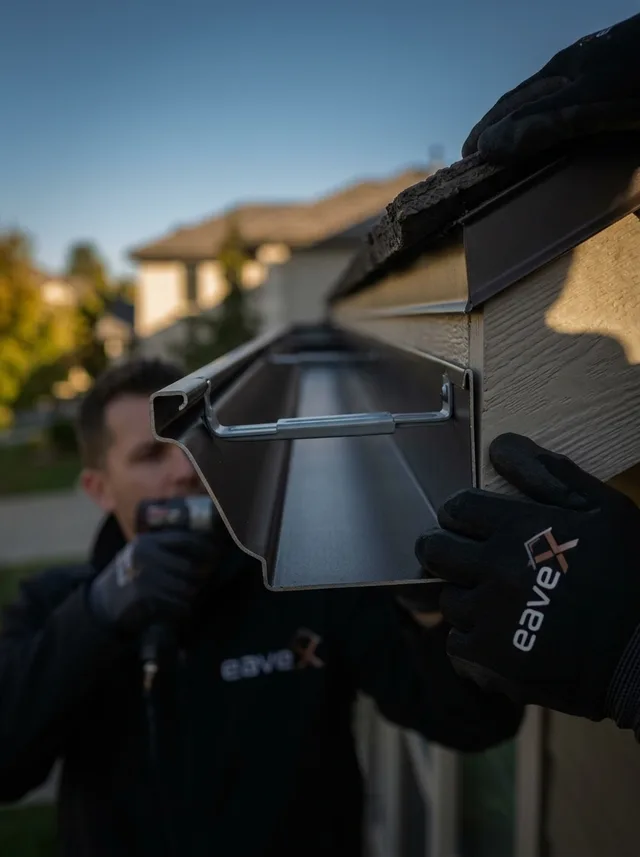
Yes—clean Minnesota gutters before installing gutter guards. Debris left under micro-mesh or screen-style covers traps moisture, kills pitch, and is one of the fastest ways for a new system to overflow in the first fall storm.
Key takeaways
- Clean first, then install. Guards are not a way to hide an already packed trough.
- Minnesota leaf drop plus freeze-thaw makes trapped wet debris freeze into ice plugs under covers.
- Typical range in the Twin Cities (2026): $150–$350 for a standard clean, $8–$20/lf for mesh-style guards (market averages, not an EaveX price list).
- Combine cleaning with gutter guards or new seamless gutter installation when hangers, pitch, or fascia are already weak.
- Final scope depends on run length, stories, fascia condition, and roof type; EaveX confirms it on a free measurement.
Why cleaning first matters in Minnesota
Open gutters in the Twin Cities collect maple seeds, oak leaves, shingle grit, and pine needles from late summer through hard freeze. If you clamp a cover over that mix, water still has to move under the mesh to the downspout. Compacted sludge raises the water line, slows flow, and freezes into solid plugs when overnight lows drop. That is why “guards failed after one winter” complaints so often start as a prep problem, not a product problem.
A clean trough lets you verify pitch, hanger spacing, and outlet capacity before the cover goes on. You can see reverse slope, pulled fasteners, and soft fascia while the edge is still open—details that disappear the moment mesh hides the channel.
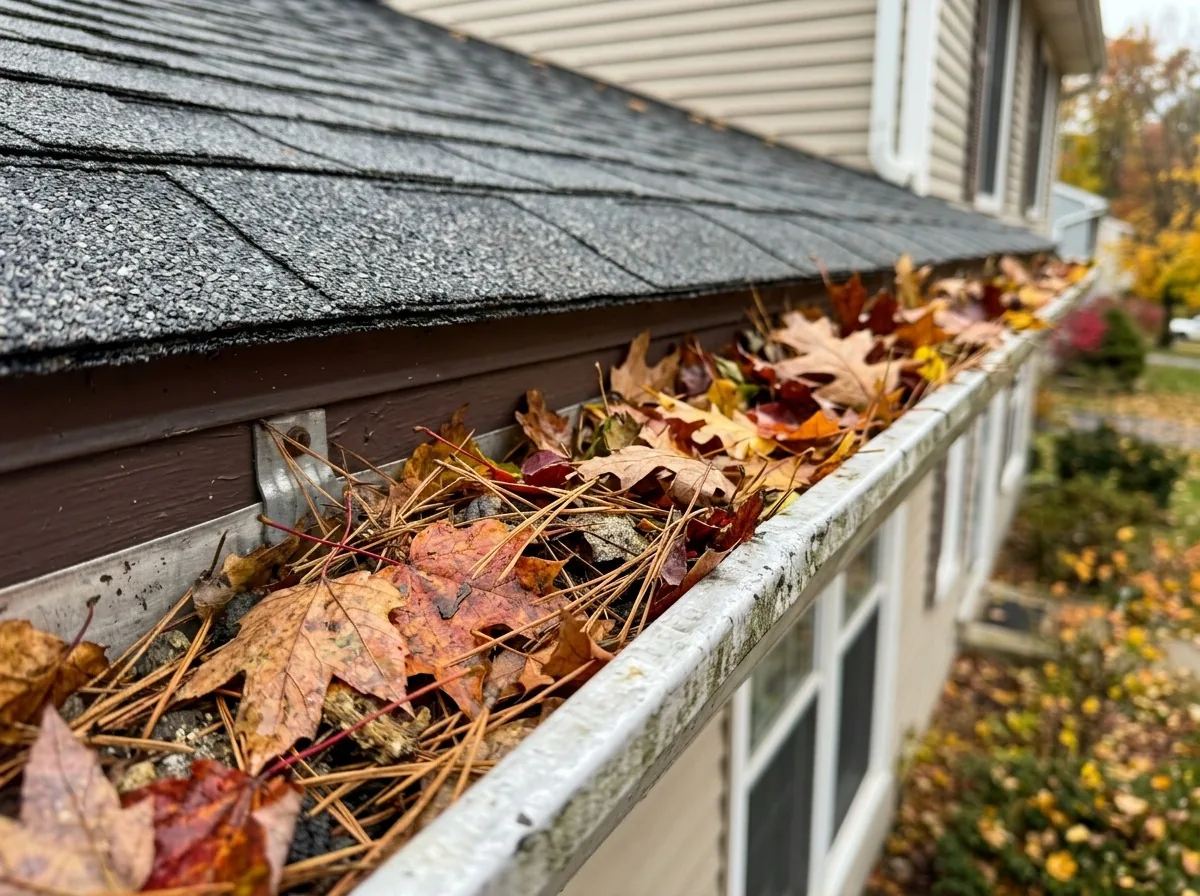
What a proper pre-guard cleaning includes
A Minnesota prep clean is more than scooping leaves into a bucket—empty the trough, prove the outlets flow, and inspect the edge while you can still see it:
- Remove loose debris from every run and downspout boot.
- Flush outlets until water sheets clean at the discharge point.
- Check seams, end caps, and hanger pull-away while the trough is empty.
- Note low spots, reverse pitch, and fascia soft spots before covers hide them.
- Confirm downspout count and discharge distance still make sense for the roof area.
- If rot or pulled hangers show up, schedule fascia and soffit repair before you pay for covers.
Clean-then-guard vs install-over-debris
| Approach | Typical Twin Cities outcome | Best when |
|---|---|---|
| Clean, inspect, then install micro-mesh / stainless mesh on aluminum frame | Water moves under the cover; fewer year-one callbacks | Existing gutters are sound and pitched |
| Install covers over packed trough | Early overflow, frozen under-mesh ice, foul odor | Almost never—skip this shortcut |
| Clean + minor hanger/pitch tune-up, then guards | Stable flow through leaf drop and melt | Older seamless runs with a few low spots |
| Clean + replace gutters, then guards same project | New capacity + protection in one mobilization | Sectional leaks, soft fascia, or undersized troughs |
Market context for 2026 planning: a one-story clean often lands near $150–$250, two-story or heavy pack $250–$350+ (Minnesota market average). Mesh-style guards commonly run $8–$20 per linear foot installed in the Twin Cities, depending on material and roof edge access. A typical 150–200 lf ranch that needs both services often pencils in the low thousands for covers plus a few hundred for the clean—still market averages, not EaveX pricing. Your number depends on length, stories, fascia, and roof type, and the measurement is free.
Timing: late summer through leaf drop
July–September is the practical window to clean, repair pitch, and install covers before the heaviest Twin Cities leaf drop. Waiting until everything is already buried in wet leaves means you pay for a heavier clean and still risk freeze problems if the trough was never emptied under the new cover. Homes with dense oak or maple canopy should not leave a month-long gap between the flush and the install day. Wooded north-metro lots (Cedar, Andover, St. Francis) should also weigh gutter guards snow Cedar MN timing before leaf drop so mesh goes on while eaves are still dry.
If you already cleaned in early summer and storms have been quiet, a light re-flush right before guard day is usually enough. After a big August storm—or if downspouts are spitting dirty water—schedule a full clean and see gutter cleaning cost in Minnesota for market bands; coordinating gutter cleaning and guard day on the same mobilization keeps the water channel clear when the cover goes on.
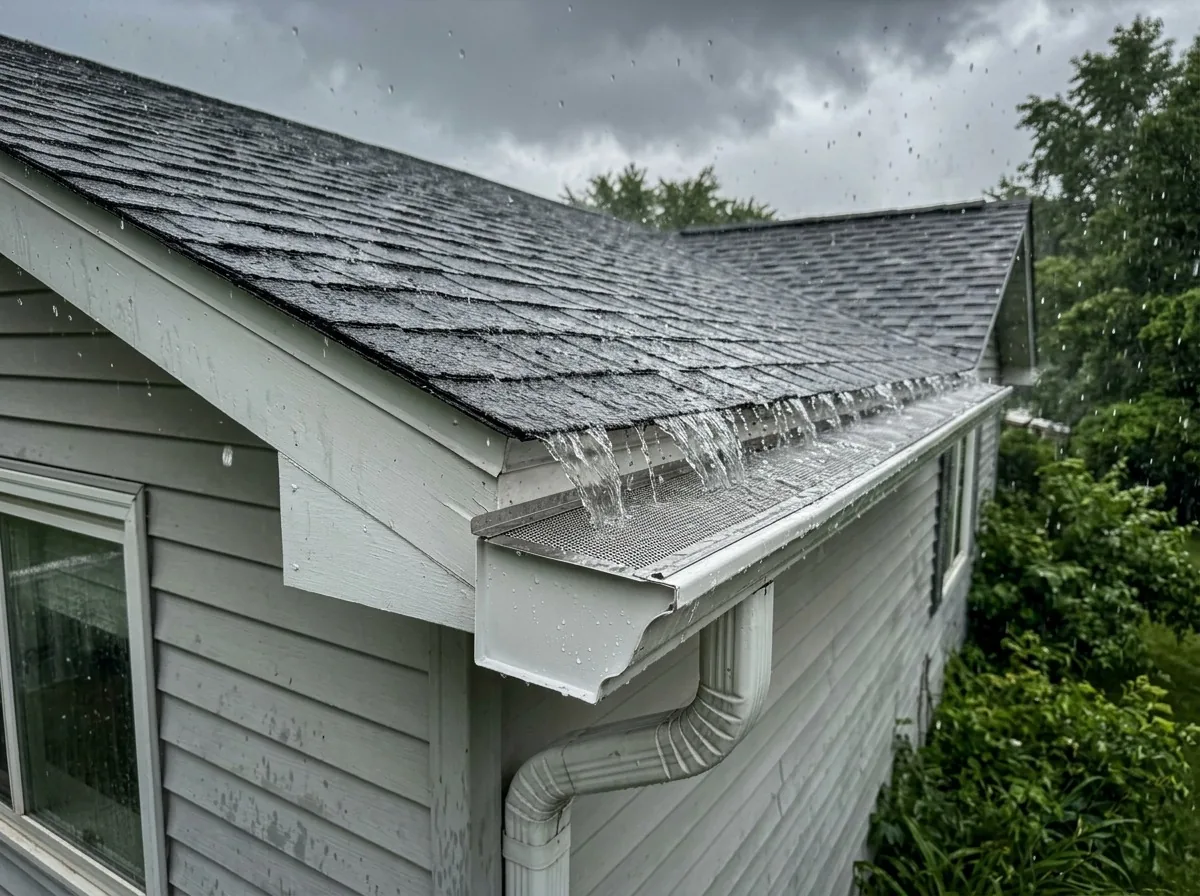
Do guards replace future cleaning?
No. Quality micro-mesh and stainless steel mesh on a rigid aluminum frame cut how often you climb a ladder, but Minnesota grit still lands on top of the cover and needs an occasional brush-off after seed drop or a hail-grit storm. The point of cleaning before install is to start with a clear water channel underneath—not to promise zero maintenance forever.
For snow-country performance and payback context, compare this prep step with gutter guards for Minnesota snow and are gutter guards worth it in Minnesota. Those articles cover winter behavior and cost math; this one is specifically about the prep sequence that makes either choice work.
When to clean, replace, then guard
Skip “guards only” if you see soft fascia, seams dumping at every joint, or gutters pulling away from the board. Covers add weight and wind load; they do not straighten a failing run. Plan seamless gutter installation, correct fascia, clean the work area, then install climate-appropriate mesh in one project so you are not paying two ladder days. If the trough itself is done, hang covers on the new runs the same day — see install gutter guards with new gutters so you do not pay a second ladder visit.
Homes near Albertville, Maple Grove, and Plymouth often mix oak and maple litter with steep roof valleys—capacity and outlet count matter as much as cover type. Budget structural work while the edge is open; pulling covers later to rebuild fascia costs more. Stay with generic climate-fit options (micro-mesh, stainless steel mesh, aluminum frame). A free inspection maps the sequence before you choose materials.
What “clean enough” looks like on install day
On guard day the trough should be free of sludge mats, the downspouts should take a hose flush without backing up, and hangers should sit tight to sound wood or wrapped fascia. If water still pools in a low bay after flushing, fix pitch first—covers will not create slope. A five-minute hose test per elevation beats guessing after the mesh is clipped on.
Photograph problem bays before the mesh goes on. That record helps you (and your installer) confirm the system started dry and pitched, which is the real Minnesota warranty against early overflow complaints when freeze-thaw hits in November and March.
How this ties to ice and overflow risk
Debris under a new cover is not just a smell issue. Wet organic mats hold water against the back of the trough and against the fascia board, which is how rot accelerates after a “protect the gutters” project. Overflow at the eaves also feeds ice dams on shaded north elevations—another reason the clean-and-inspect step belongs before any cover hardware.
If your house already shows winter ice lines at the roof edge, fix drainage capacity and discharge distance as part of the same visit. Guards help with debris; they do not replace correct pitch, outlet count, or runoff directed away from the foundation.
Ready for a clean-then-guard plan?
Book a free inspection with EaveX. We check debris load, pitch, fascia, and whether micro-mesh on an aluminum frame is the right next step for your Twin Cities roof edge. Call (763) 313-8516 to schedule.
EaveX has completed 1200+ projects, holds a 5.0 rating, and brings 13+ years under Minnesota license BC808261. Financing is available from 0% APR (0.00–9.99%) with GreenSky, plan 6124 (not every buyer qualifies for 0%).