How Much Does Gutter Replacement Cost in Minnesota? (2026)
Gutter replacement in Minnesota typically costs $8–$16 per linear foot in the Twin Cities market in 2026 when you include tear-off of the old system—most 150–200 ft homes land roughly $1,500–$3,500+ before optional guards or fascia work. Final price depends on run length, stories, fascia condition, and roof type; a free on-site measure is the only accurate number.
Key takeaways
- Twin Cities market averages (2026) for full replacement (remove + new seamless): about $8–$16/lf; add-ons change the total.
- A common 1,800–2,200 sq ft rambler with ~160–180 lf of eave often quotes in the $1,600–$2,900 band before fascia or guards.
- Tear-off alone usually adds $1–$3/lf; soft or rotten fascia commonly runs $15–$40/lf in Minnesota market averages (2026).
- Minnesota winters punish undersized, sagging, or leaking systems—replacement before leaf drop and freeze-thaw saves spring foundation and ice-dam headaches.
- EaveX: 1,200+ projects, 5.0 rating, 13+ years, license BC808261; financing available from 0% APR (0.00–9.99%) with GreenSky, plan 6124 (not every buyer qualifies for 0%).
What “gutter replacement” includes in a Twin Cities quote
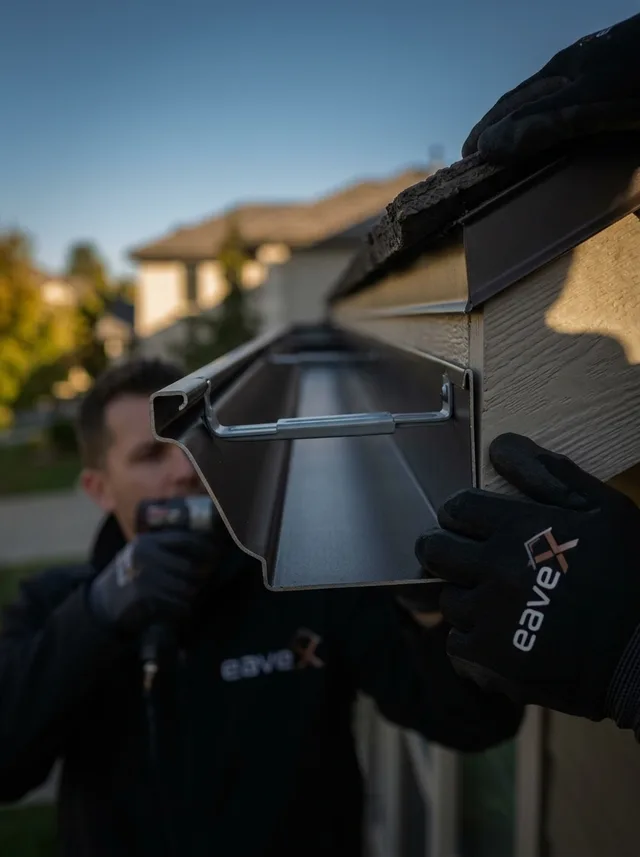
Replacement is not the same as a first-time install on new construction. A proper Minnesota job usually covers safe tear-off, haul-away, inspection of the fascia and drip edge, new seamless troughs sized for your roof, hangers, outlets, elbows, and downspouts routed clear of the foundation.
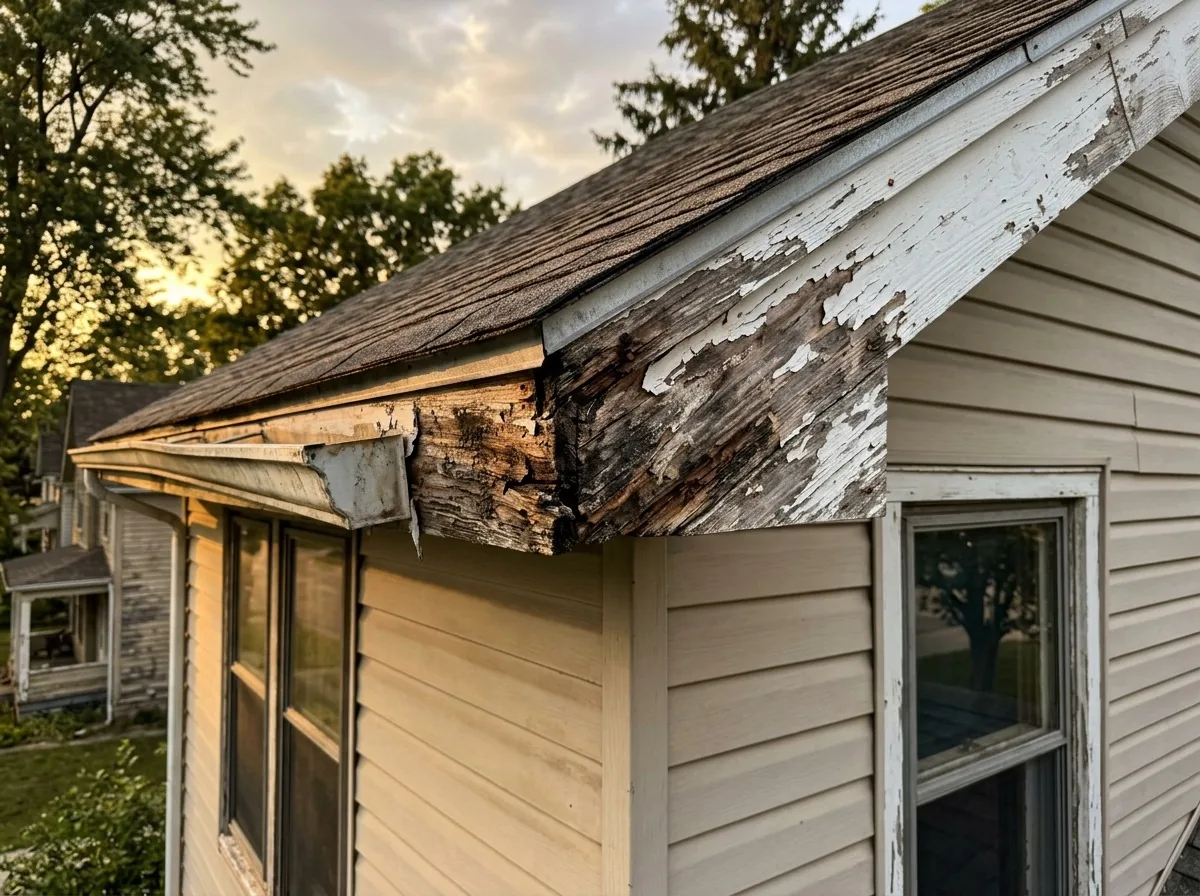
If hangers have pulled, paint is peeling at the eave, or water has stained siding below outlets, expect the estimate to discuss fascia boards or drip-edge tweaks—not only shiny new metal. That is why two homes with the same linear footage can quote thousands apart.
2026 Twin Cities gutter replacement price ranges
These figures are typical Twin Cities / Minnesota market averages for 2026, not an EaveX price list. Your total depends on linear footage, stories, fascia condition, roof type, and access; we confirm everything on a free inspection.
| Scope (market average, 2026) | Typical range | Notes |
|---|---|---|
| Full seamless replacement (tear-off + new) | $8–$16 / lf | Most common homeowner path |
| Tear-off / haul-away only (component) | $1–$3 / lf | Built into full replacement quotes |
| New seamless install (no tear-off) | $8–$14 / lf | New builds or empty eaves |
| Fascia board repair/replace | $15–$40 / lf | Soft wood, paint failure, pulled hangers |
| Micro-mesh / stainless mesh guards (add-on) | $6–$12 / lf | Often priced with a new system |
| Gutter installation near me (no tear-off) | $8–$14 / lf | Empty eaves / new seamless only |
| Typical near-me ranch install (~160 lf) | $1,400–$2,500 | Before guards or fascia; market 2026 |
| Typical 160–180 lf ranch total | $1,600–$2,900+ | Before major fascia or multi-story extras |
| 6-inch seamless replacement (tear-off + new) | $10–$16 / lf | About $2–$4/lf above matching 5-inch; Twin Cities market 2026, not an EaveX price |
| Typical ranch near Cedar, MN (6-inch, ~160–180 lf) | $1,800–$2,900 | Same freeze-thaw as Ham Lake / Andover; free measurement, not a company ranking |
| Gutter replacement cost near me (full tear-off) | $8–$16 / lf | Same 2026 Twin Cities band; “near me” does not change the metal |
| Two-story / complex roof extras | +$300–$1,200+ | Lifts, steep pitches, long downspout runs |
A 200 lf two-story colonial with soft fascia on the north elevation can push past $4,000 in market averages once wood and staging are in—while a simple ranch with sound boards may sit near the low end of the band.
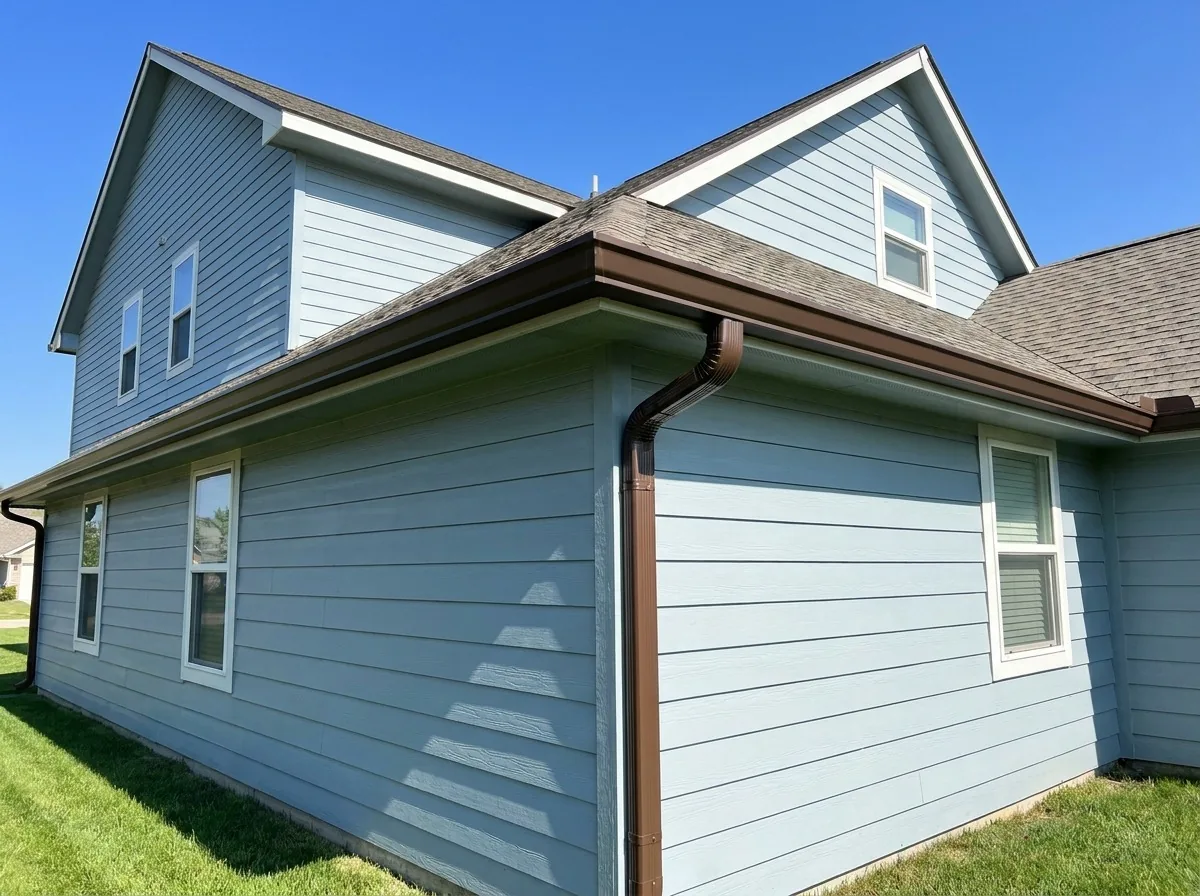
6-inch gutter replacement near Cedar, MN
A search for a 6-inch gutter company in Cedar, MN is a size-and-cost question, not a “best company” ranking. Cedar is in Anoka County, north of the Twin Cities, with the same freeze-thaw and spring melt as neighboring Ham Lake and Andover. There is no Cedar city page on this site. The job is still a measured seamless gutter installation on your actual eave.
Most north-metro ranches are fine on 5-inch. Move to 6-inch when the roof is steep, the runs are long, or meltwater overflows the front lip. Twin Cities market averages for 2026 put 6-inch gutter replacement about $2–$4 per linear foot above a matching 5-inch tear-off, usually inside $10–$16/lf. A 160–180 lf ranch often lands roughly $1,800–$2,900 before heavy fascia or guards. That is a Minnesota market range, not an EaveX price list. Final gutter replacement cost depends on run length, stories, fascia condition, and roof type; a free inspection is the only accurate number.
Gutter installation cost near me vs full replacement in Minnesota
Homeowners searching gutter installation cost near me usually want a first-time or empty-eave seamless price; replacement adds tear-off, haul-away, and often fascia fixes that a new-build install skips. Twin Cities market averages in 2026 put new seamless gutter installation around $8–$14/lf, while full replacement (remove + new) commonly lands $8–$16/lf—same metal, different scope.
A “near me” ranch quote of ~$1,400–$2,500 for ~150–180 lf of 5-inch seamless (no tear-off) is a different job than replacing sagging, leaking troughs on soft fascia. Final totals still depend on run length, stories, fascia condition, and roof type; free measurement is how we pin the number for your address.
What drives the price up or down
Linear footage, corners, and stories move the quote first. More eave and miters mean more labor; two-story walls, steep pitches, and tight side yards push you toward the high end of the per-foot band. Long unbroken runs favor seamless aluminum and fewer joint leaks.
Fascia, trough size, and material matter next. Soft boards from Minnesota freeze-thaw will not hold hangers—pair troughs with fascia and soffit repair when wood is compromised. Upsizing to 6-inch for heavy melt or storms costs more but cuts overflow (5-inch vs 6-inch); most homes use ~0.027–0.032-inch aluminum (aluminum vs steel). Heavy oak/maple/needle load is why many add micro-mesh or stainless steel mesh in an aluminum frame during replacement instead of a second trip.
Replacement vs repair: when paying for new makes sense
Choose repair when damage is local: a loose hanger, one crushed section, a separated corner, or a single outlet that can be rebuilt. Choose replacement when troughs are wavy end-to-end, seams leak in multiple spots, color is chalked through, or the system is undersized for today’s roof and Minnesota storms.
If you are still weighing options, read gutter repair vs replacement. Lifespan context helps too: well-kept seamless aluminum often runs 20–30+ years here—see how long seamless gutters last in Minnesota—but ice, nail holes, and ignored clogs shorten that window.
Why Minnesota timing matters (August–October window)
Late summer through early fall is the sweet spot for replacement. Crews can work dry eaves before oak and maple drop, and you enter winter with open outlets and correct pitch (about 1/4 inch per 10 feet toward downspouts on a typical install).
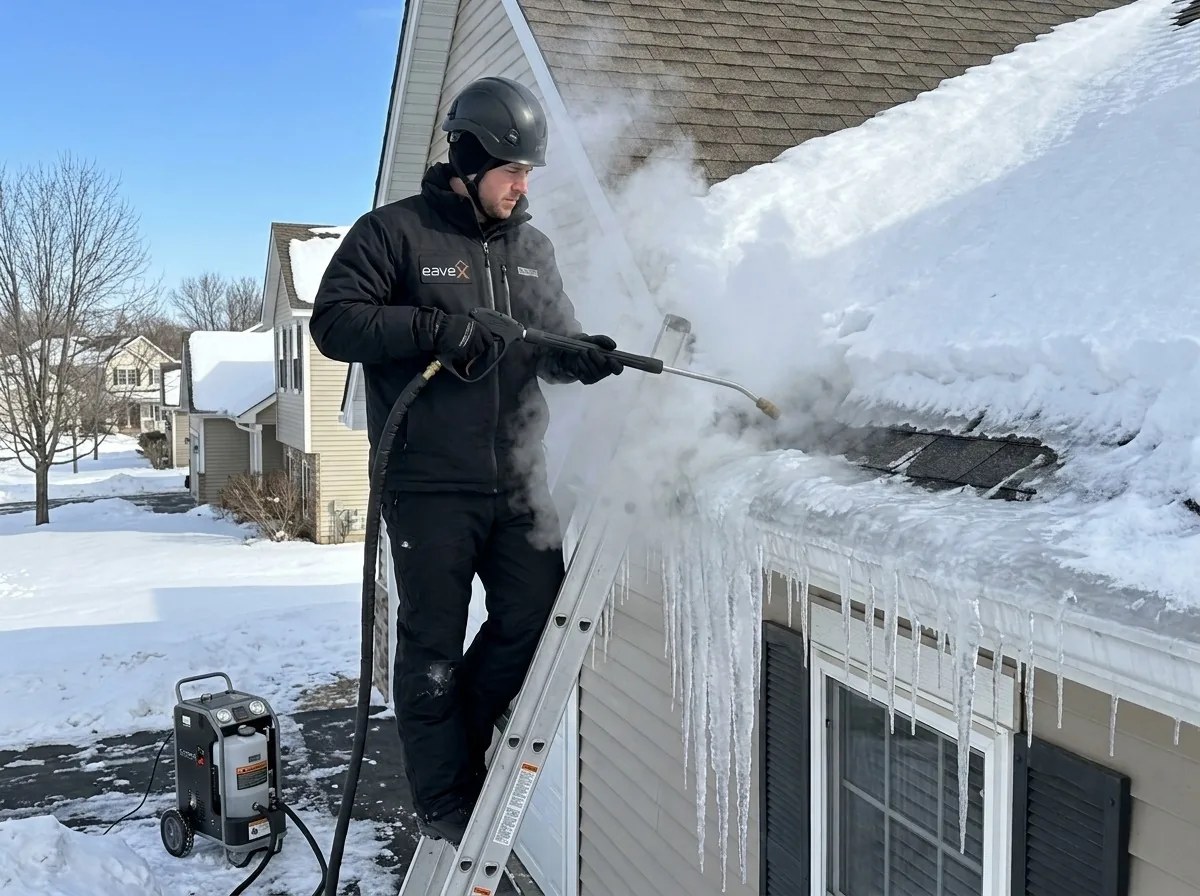
Waiting until November leaves you racing freeze-thaw. Clogged or low-pitch troughs feed ice at the eave; ice dams then shove water under shingles. Replacement will not fix attic insulation problems, but a clean, sized, pitched system is part of keeping meltwater off the fascia.
Downspouts, drainage, and foundation risk
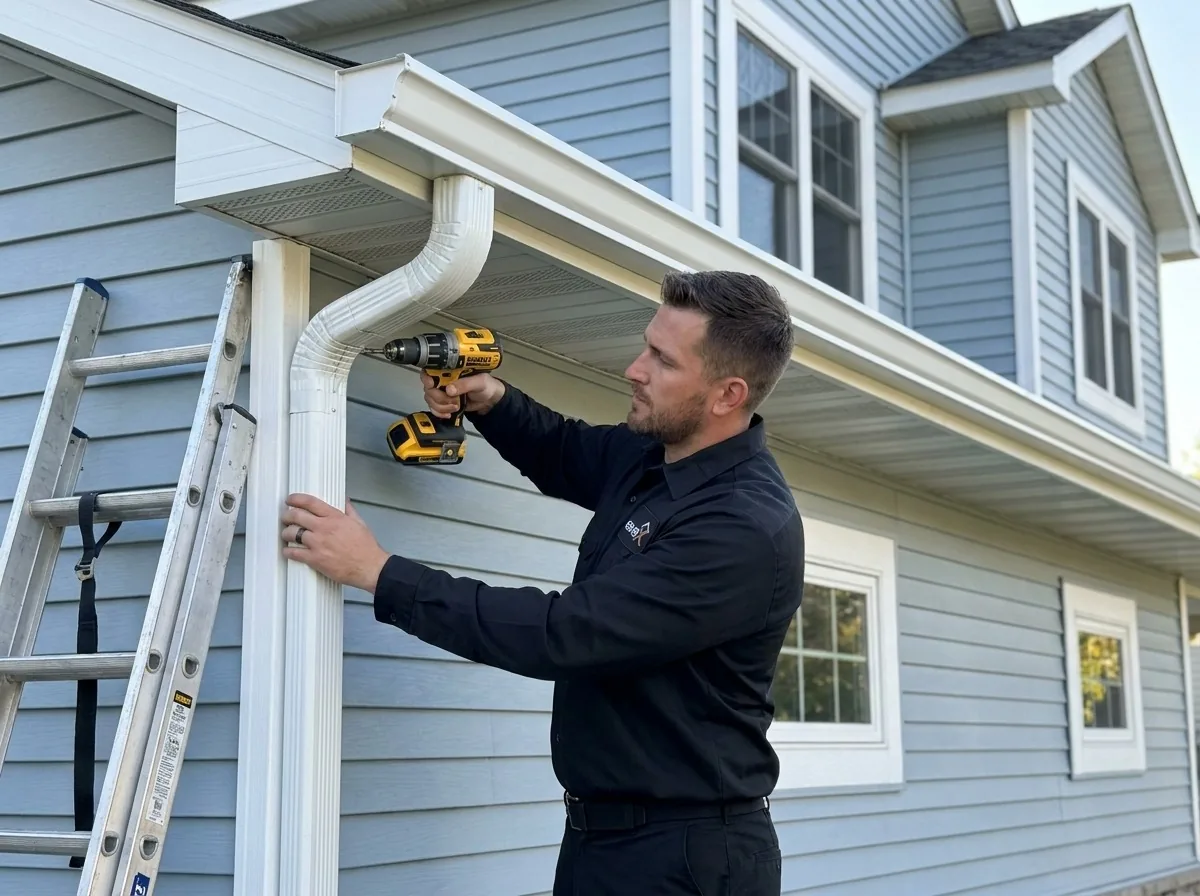
New troughs without good discharge still dump water at the foundation. Twin Cities clay soils expand when wet; splashback stains and basement humidity often trace to short elbows or buried, crushed pipe.
Plan on extending water 4–6+ feet from the foundation where grade allows, with outlets large enough for 6-inch troughs when you upsized. Buried drains need cleanouts; surface extensions need winter attention so ice does not block the first thaw. For new seamless systems end-to-end, start with our seamless gutter installation page.
Sample cost scenarios (illustrative market math)
These teaching examples use 2026 Twin Cities market bands—not bids. Pitch, valleys, bay windows, and deck conflicts still move the number.
| Scenario | Rough scope | Illustrative band |
|---|---|---|
| A — Simple ranch, sound fascia | ~165 lf, 5-inch, 1-story, tear-off; ~$10/lf mid | ~$1,650; +micro-mesh ~$8/lf ≈ +$1,320 |
| B — Two-story, 6-inch, light fascia | ~190 lf @ ~$13/lf + ~40 lf fascia @ ~$25/lf | ~$2,470 gutters + ~$1,000 fascia |
| C — Ranch + guards | Scenario A + stainless micro-mesh full run | Price guards in the same visit when canopy is heavy |
DIY replacement vs hiring a licensed crew
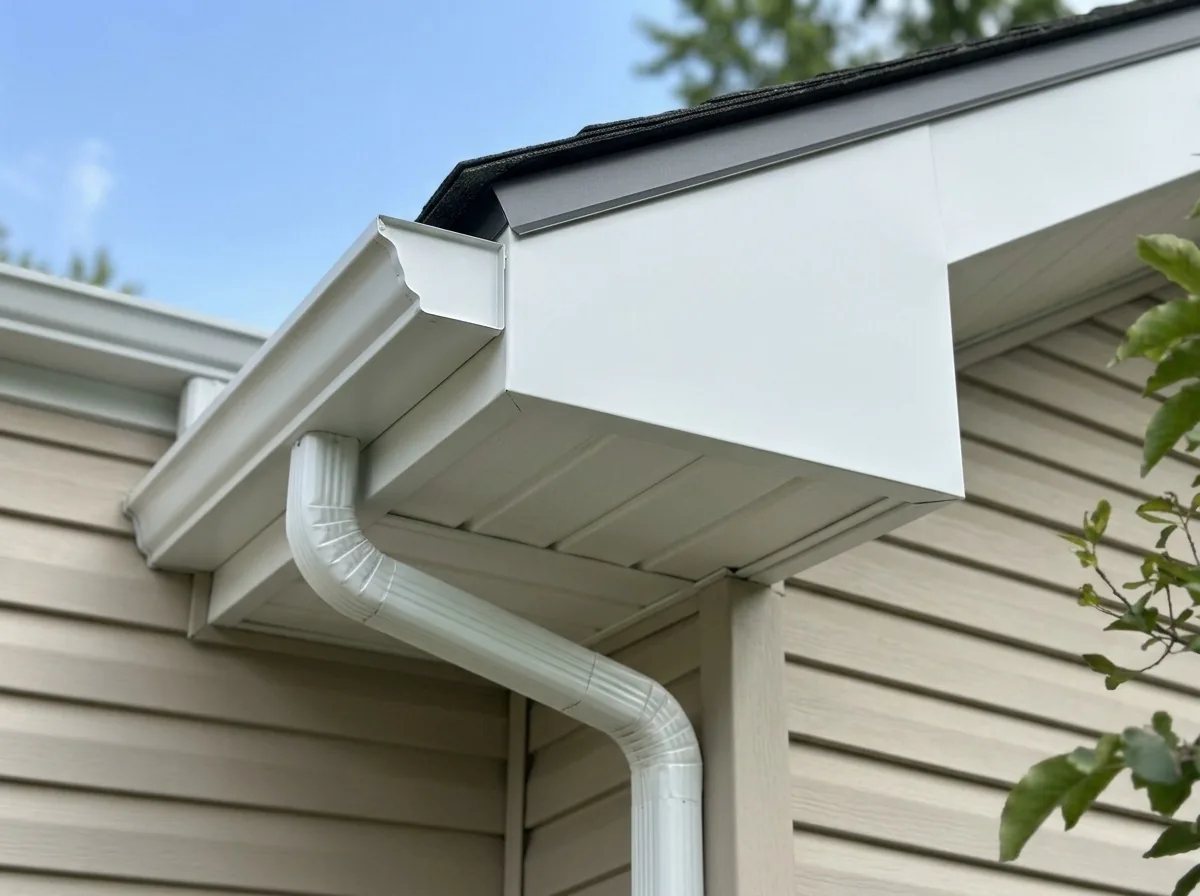
Box-store sectional kits look cheaper per piece, but Minnesota ice loads punish seams and light hangers. Two-story ladder work, custom miters, and matching pitch across long runs are where DIY jobs leak by the second winter.
Pros roll seamless troughs on site, set hanger spacing for snow load, and tie downspouts into real drainage. Compare trade-offs in DIY vs hiring a pro for gutter installation. EaveX is licensed BC808261 with 13+ years on Minnesota roofs—not a weekend crew flipping aluminum.
Financing and what a free inspection covers
Larger replacements (multi-story, fascia, guards) are easier to spread with financing from 0% APR (0.00–9.99%) with GreenSky, plan 6124—rates depend on credit; not every buyer qualifies for 0%. On a free inspection we measure footage, check fascia and drip edge, note stories and access, review downspout discharge, and talk through 5- vs 6-inch and optional mesh—you leave with a scoped quote, not a phone guess.
Homes in Maple Grove and Albertville face the same freeze-thaw and leaf load as the rest of the metro; local pitch and canopy still change the bill.
How to compare quotes without getting burned
Ask every bidder for linear footage, trough size, metal thickness, hanger type/spacing, tear-off inclusion, fascia findings, downspout count and discharge plan, and warranty in writing. Be wary of a rock-bottom number that skips haul-away or “fixes” soft fascia with longer screws only.
If cost for a new seamless install (no tear-off) is your main question, use our seamless gutter cost Twin Cities guide. If fall clogs are the pain, pair replacement planning with gutter cleaning cadence or gutter guards on the new system.
Ready for a free inspection?
If your troughs sag, leak at every seam, or overflow in every storm, get numbers before Minnesota winter locks the eaves in ice. Call (763) 313-8516 or request a free inspection—EaveX, license BC808261, 1,200+ projects, 5.0 rating, 13+ years serving Twin Cities homeowners.