Rehanging gutters in Minnesota typically costs less than a full seamless replace when the fascia is still solid—Twin Cities 2026 market averages often land around $4–$9 per linear foot for a hidden-hanger re-hang and pitch reset, while a full seamless gutter installation more often runs $8–$14/lf. Soft wood flips the job: fix fascia and soffit repair first ($15–$40/lf market band), then hang new troughs. Final cost depends on run length, stories, fascia condition, and roof type; free measurement.
Key takeaways
- Re-hang = new hidden hangers ~24 inches, pitch reset, keep the existing trough if metal is sound and fascia is hard.
- Replace = continuous 0.027-inch aluminum when spikes, joints, or soft wood make a re-hang a short-term patch.
- Twin Cities 2026 market bands (not an EaveX price list): re-hang $4–$9/lf; seamless replace $8–$14/lf; fascia $15–$40/lf; optional micro-mesh gutter guards $8–$20/lf.
- September–October is the last clean window before freeze-up—wet leaf mats load every hanger before ice arrives.
- EaveX: 1,200+ projects, 5.0 rating, 13+ years, license BC808261; financing from 0% APR (0.00–9.99%) with GreenSky, plan 6124 (not every buyer qualifies for 0%).
We work from Albertville (5098 Main Ave NE) across the Twin Cities. Below is how rehang pricing actually breaks down here—and when a “cheap re-hang” becomes a full replace.
What “rehang gutters” means on a Minnesota house
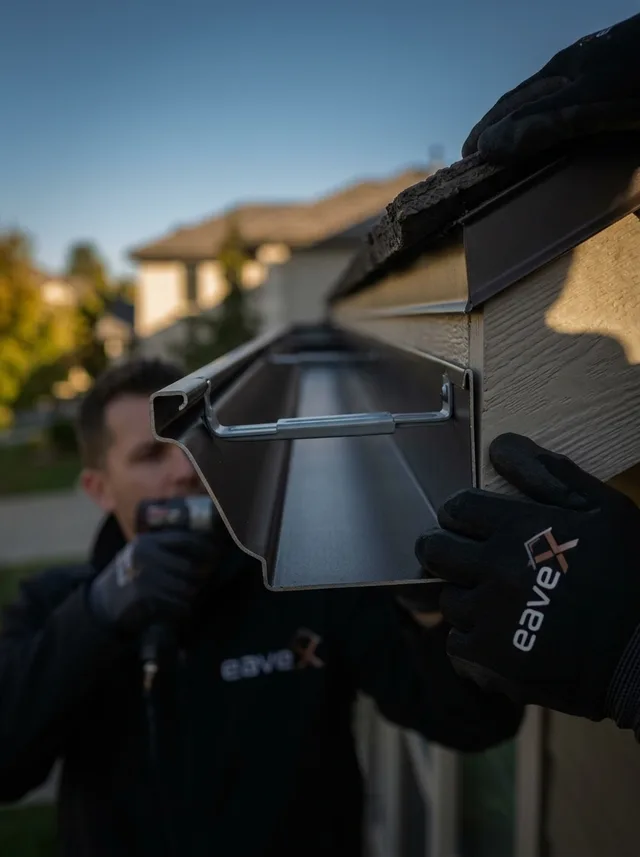
A re-hang keeps the trough (or most of it) and rebuilds the fastening: pull failing spike-and-ferrule nails, set hidden hangers into solid fascia or rafter tails, and restore pitch so water runs to the outlets. It is the right path when the aluminum is still straight, seams are not splitting, and you can press the fascia without it feeling spongy.
If the trough is dented, rusted through, or rolling off soft boards, you are past a re-hang. That is gutter repair vs replacement territory—and often a new seamless run. For the why behind gaps at the drip edge, see why gutters pull away from the house.
Twin Cities rehang cost ranges (2026)
| Job scope | Typical Twin Cities path (2026) | Market range (not EaveX pricing) |
|---|---|---|
| Short section, hard fascia, trough OK | Re-hang + pitch reset | Often $150–$600 on-site (or $4–$9/lf) |
| Full elevation, spikes out, wood solid | Hidden hangers ~24" across the run | $4–$9/lf |
| Soft / stained fascia + sagging trough | Fascia first, then new seamless | Fascia $15–$40/lf + trough $8–$14/lf |
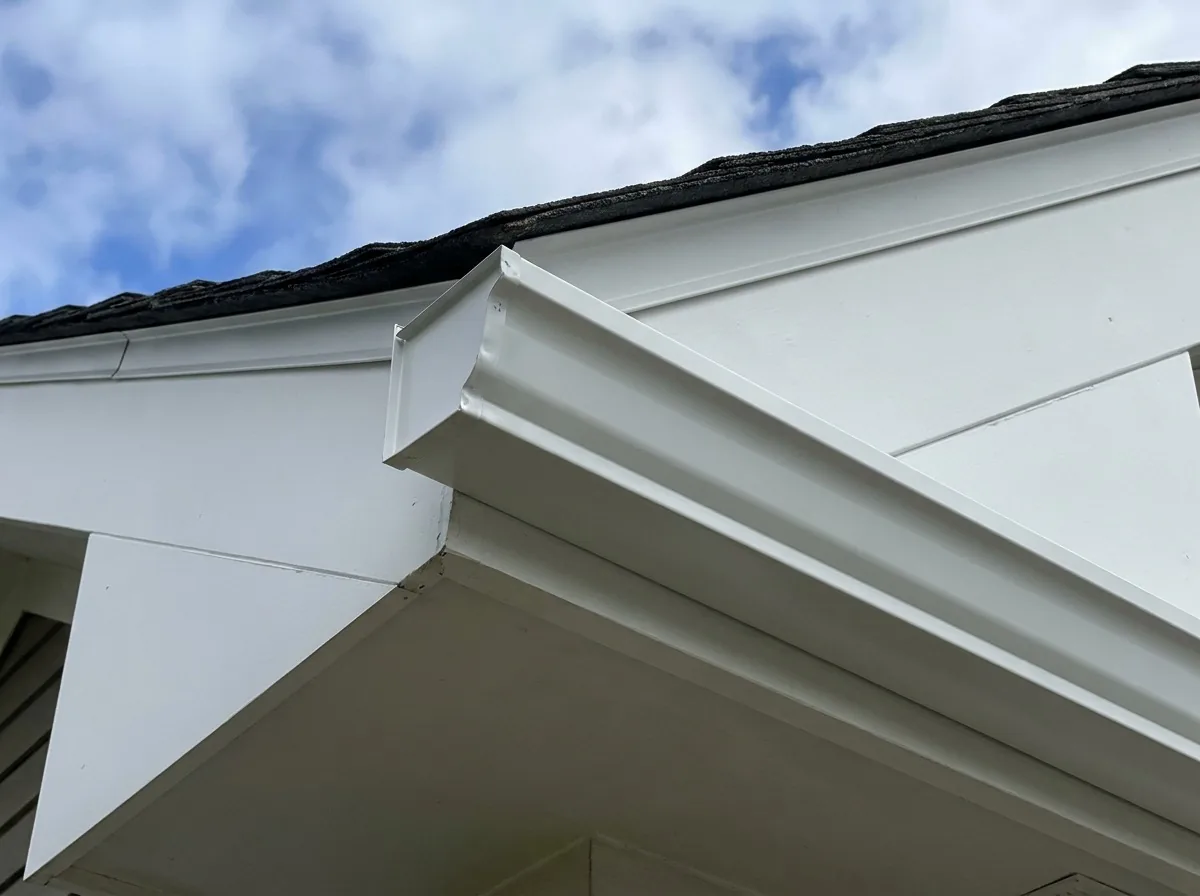
| 150–200 lf home, full seamless replace | Continuous 0.027" aluminum, new hangers | Often $1,400–$3,800 before fascia |
| Add micro-mesh after clean | Guards on sound trough | $8–$20/lf (2026 market avg) |
Ranges are Minnesota / Twin Cities market averages for 2026. Final cost depends on run length, stories, fascia condition, and roof type; free measurement. Two-story eaves, inside corners, and wrap vs paint-grade fascia all move the quote—that is why a ladder guess from the driveway is usually wrong.
When a re-hang is enough—and when it is not
Re-hang works when fascia is hard, the trough is not cracked or heavily corroded, and only hangers and pitch failed. Spike kits from 1980s–2000s sectional runs work out after freeze–thaw; swapping to hidden hangers into solid wood usually stops the roll-forward for Minnesota winters.
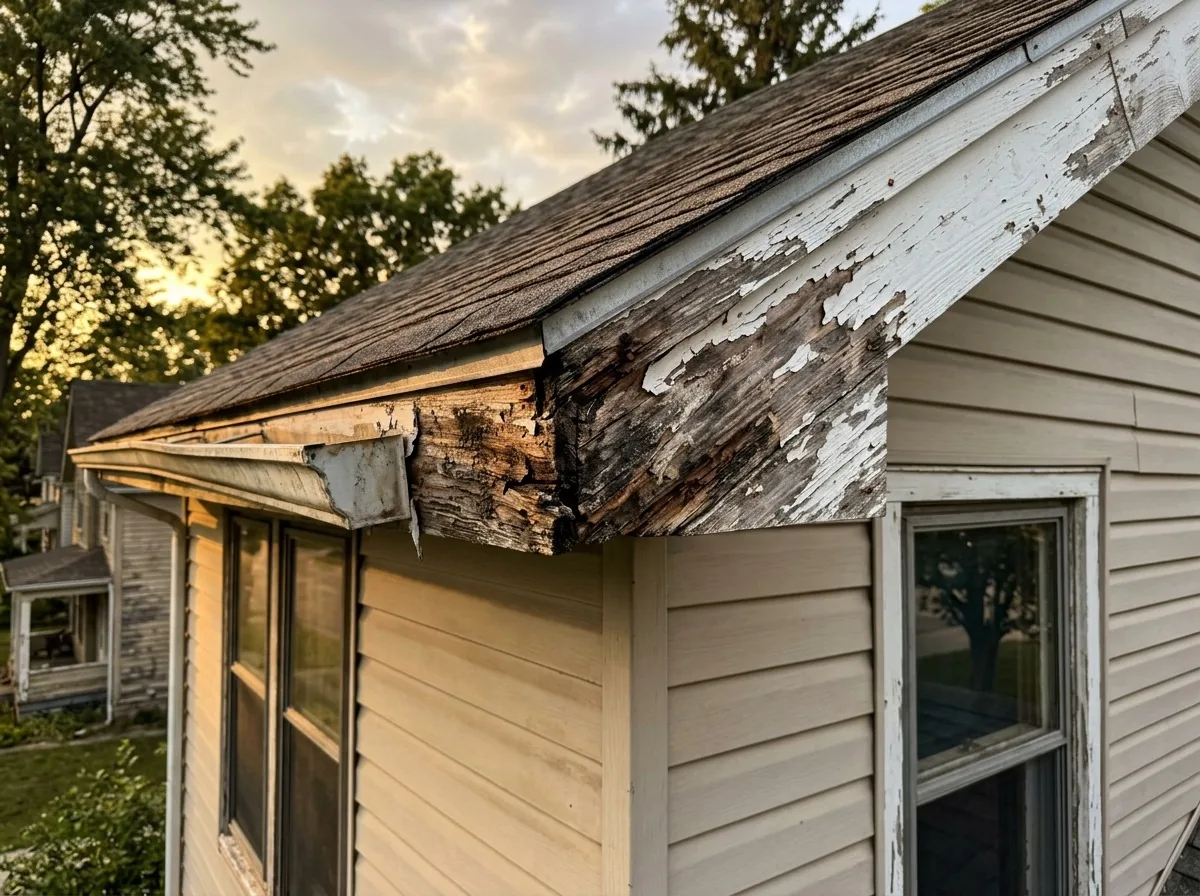
Skip a re-hang when the board is soft, wavy, or dark under the paint. Screws will not bite. New aluminum on rotten fascia pulls off again by the next February—see what happens if you hang new gutters on rotted fascia. Decide wrap or replace fascia before you spend money on hangers alone.
Why Minnesota winters make rehang pricing swing
Ice in a clogged trough plus roof-edge snow loads every fastener. A packed 5-inch K-style run with icicles hanging off the front edge can yank spikes that were only friction-fit decades ago. Leaf mats in September add the same weight before the first hard freeze—so a run that looked fine in July starts to sag during oak and maple drop.
Fall gutter cleaning (typical Twin Cities 2026 clean $150–$350 for a standard home, market average) cuts that load before a re-hang. Micro-mesh gutter guards help after the trough is clean and the hangers are sound—they do not replace soft fascia. Keep downspouts throwing melt 4–6 feet from the foundation so splash does not keep wetting the bottom of the board.
Rehang vs full seamless replacement cost
A full seamless gutter swap on a typical 150–200 lf Twin Cities home often lands roughly $1,400–$3,800 in the $8–$14/lf band (2026 market), before fascia or guards. A re-hang on hard wood is usually a smaller invoice because you keep the metal and only rebuild fastening and pitch.
Choose replace when sectional joints keep opening, the trough is undersized for the roof (many steep or multi-valley homes move to 6-inch), or more than one elevation is rolling forward on soft boards. Compare full-replace bands in our gutter replacement cost guide and lifespan notes in how long seamless gutters last. Financing is available from 0% APR (0.00–9.99%) with GreenSky, plan 6124—not every buyer qualifies for 0%. Do not treat any of these figures as an EaveX price list; we measure on site.
What drives the quote up or down
Labor and access move Twin Cities rehang pricing as much as liner footage. A single-story ranch with clear driveway access is faster than a two-story colonial with locked gates and steep north eaves that hold ice. Inside miters, bay windows, and long continuous runs need more hangers—about every 24 inches, tighter where ice loads the eave—so the per-foot band can sit at the high end of $4–$9/lf even when fascia is hard.
Material choice matters less on a pure re-hang (you keep the trough) and more when the inspection flips to replace: 0.027-inch aluminum is the common residential gauge here; thicker stock and color-matched outlets add cost. Bundling micro-mesh after a clean is optional—price it separately so you can compare gutter guards cost against another year of leaf cleaning.
What a free rehang inspection checks
We check hanger type and spacing, fascia hardness, pitch to outlets, downspout throw, and whether ice or leaf load is the trigger. You leave with a clear re-hang vs replace path—not a one-size pitch. Height, inside corners, and wrap vs paint-grade fascia all move the total.
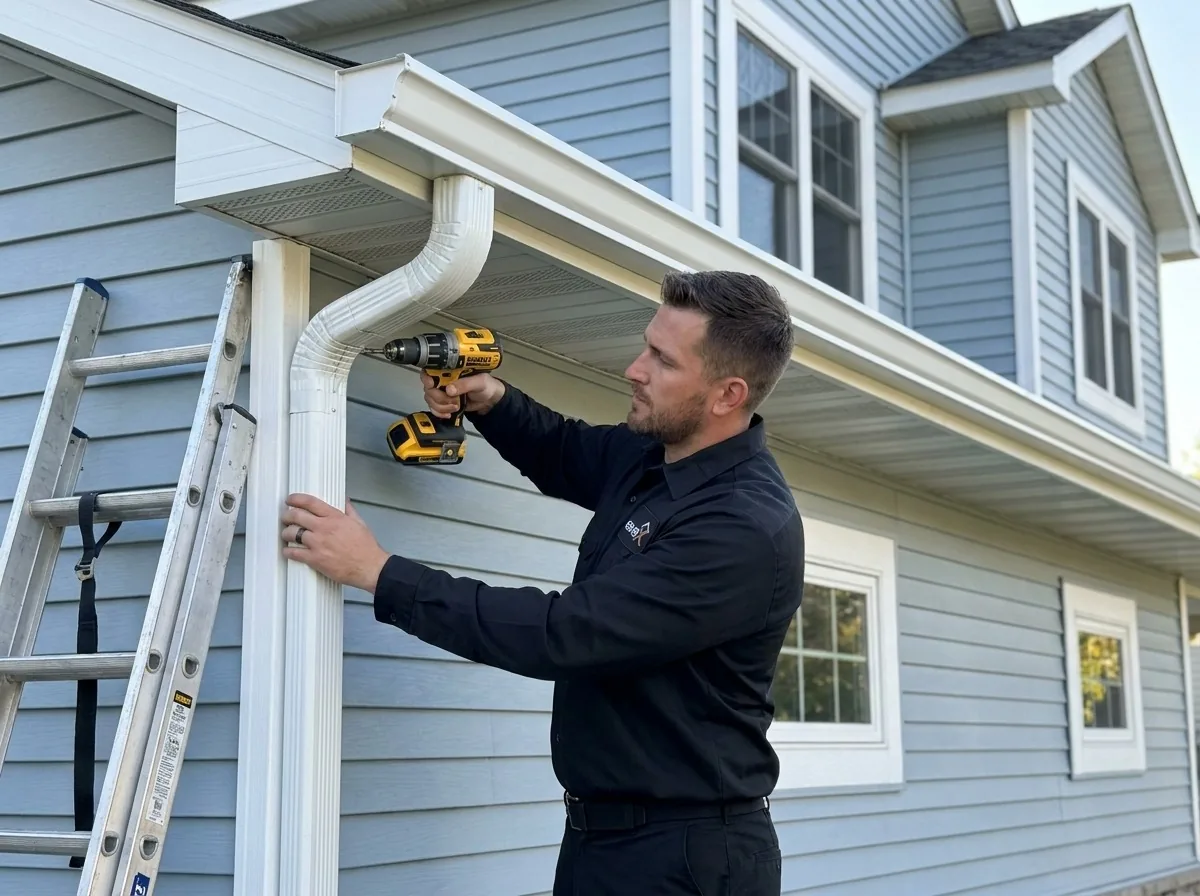
If you already see daylight behind the trough this September, get it measured before wet leaves turn the channel into an ice beam. A one-day re-hang on sound fascia—or a seamless swap where the wood is gone—is cheaper than spring drywall from a winter of leaks.
DIY screws vs a proper rehang
A couple of deck screws into solid wood can buy a week. They do not restore pitch across a long eave, they do not fix rot, and a ladder on leaf-slick or ice-season eaves is how people get hurt. DIY vs hiring a pro covers why random fasteners fail here by February.
If the board is soft, you are fastening into nothing. Call for a free inspection rather than loading more ice onto a trough that is already walking off the house. A measured re-hang with hidden hangers about every 24 inches is the Minnesota-proof version of “just screw it back.”
Ready for a free inspection?
EaveX will tell you honestly whether a re-hang will hold through a Minnesota winter or whether fascia and new troughs are the real fix. Call (763) 313-8516 or request a free inspection online. We serve Minneapolis, St. Paul, Albertville, Maple Grove, Plymouth, and the surrounding metro from 5098 Main Ave NE, Albertville. License BC808261.