How Much Do 6-Inch Seamless Gutters Cost in Minnesota? (2026)
Six-inch seamless aluminum gutters in the Twin Cities typically cost about $10–$16 per linear foot installed in 2026 — a step above standard 5-inch runs — because the trough, hangers, and 3×4 downspouts move more water on steep or high-volume roofs. That band is a Minnesota market average, not an EaveX price list; length, stories, fascia condition, and roof type set your number after a free measurement.
Key takeaways
- Twin Cities market average for 6-inch seamless aluminum installs: about $10–$16/lf in 2026 (vs roughly $8–$14/lf for comparable 5-inch).
- A typical 150–180 lf ranch often lands near $1,600–$2,900; two-story or complex roofs run higher.
- Upsize when 5-inch overflows in summer storms, valleys dump into one run, or you are already replacing troughs before winter.
- Pair 6-inch troughs with 3×4 downspouts and sound fascia — soft boards need repair first.
- EaveX (license BC808261): 1,200+ projects, 5.0 rating, 13+ years; financing from 0% APR (0.00–9.99%) with GreenSky, plan 6124 — not every buyer qualifies for 0%.
What “6-inch seamless” means on a Minnesota roof
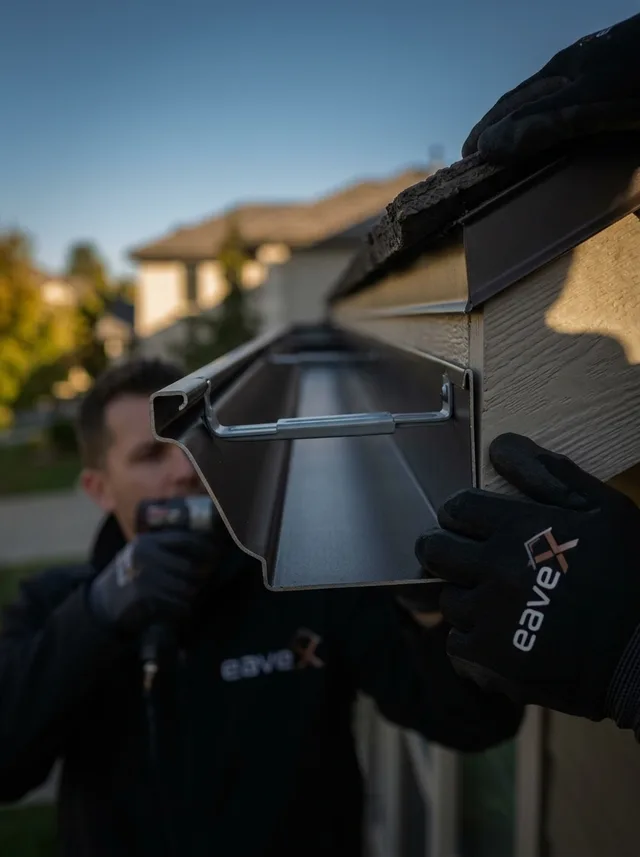
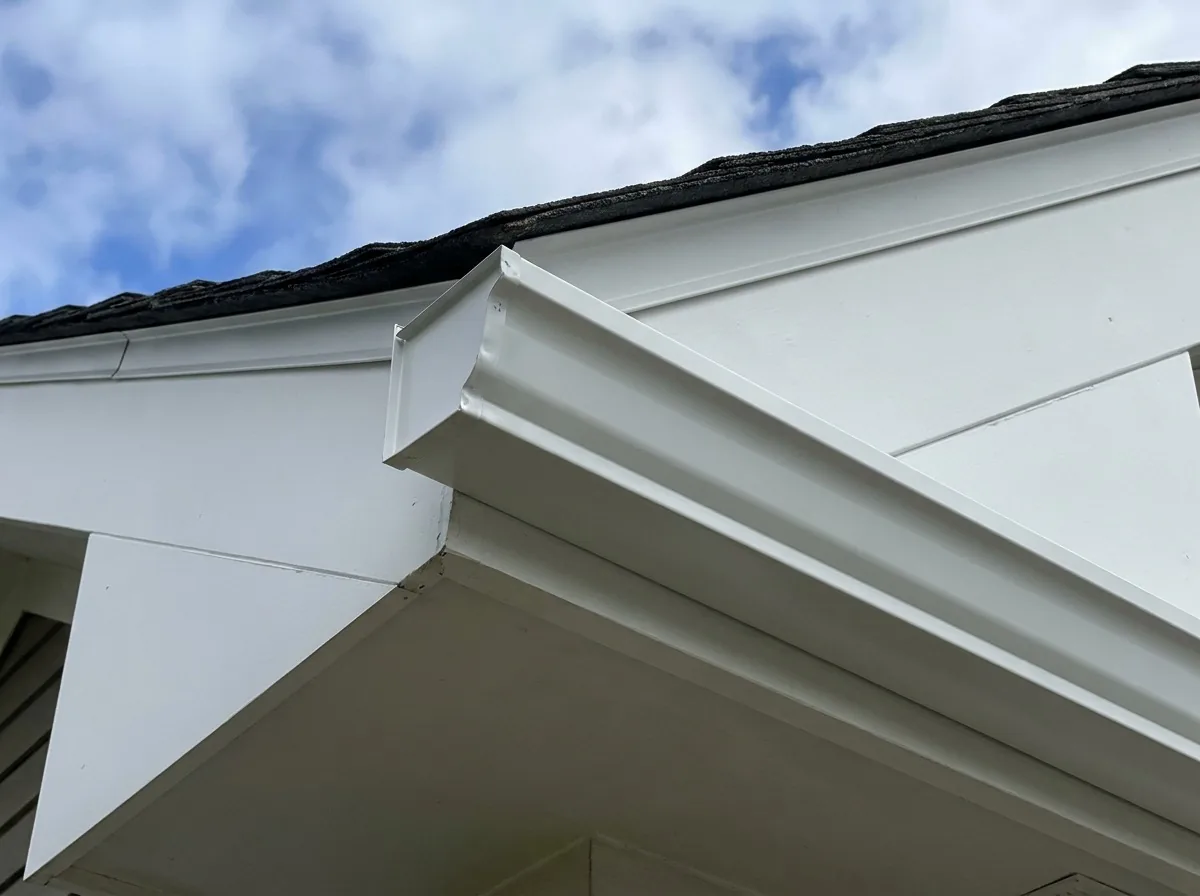
A 6-inch K-style trough is rolled on site from a single coil, so the long runs have no seams every 10 feet. The taller face and deeper pocket hold more water than 5-inch during Twin Cities cloudbursts and spring melt. Seamless still needs correct pitch, hanger spacing, and outlets — size alone does not fix a sagging or clogged system.
Minnesota freeze-thaw is why the “seamless” part matters as much as the width. Sectional joints open when ice expands; a continuous coil avoids those leak points on long eaves facing northwest winds. If you are comparing materials first, start with our seamless gutter installation page, then decide 5-inch vs 6-inch for your roof area.
2026 Twin Cities price ranges for 6-inch seamless gutters
| Scope (illustrative) | Typical Twin Cities market range (2026)* |
|---|---|
| 6-inch seamless aluminum, installed $/lf | $10–$16 / lf |
| Comparable 5-inch seamless aluminum $/lf | $8–$14 / lf |
| Upsize premium vs same-length 5-inch | About +$2–$4 / lf |
| Single-story ranch ~150–180 lf (6-inch) | $1,600–$2,900 |
| Two-story / complex roof ~180–220 lf | $2,400–$4,200+ |
| Add gutter guards (micro-mesh) | Often +$8–$20 / lf |
| Fascia repair needed before hang | Often +$18–$35 / lf of board |
*Minnesota market averages for 2026 — not an EaveX price list. Final cost depends on linear footage, stories, fascia condition, and roof type. Free inspection.
Cedar, Roseville, Vadnais Heights, and similar north-metro roofs that dump large valleys into one eave are common upsize candidates. Search phrases like “best 6 inch gutter company Cedar MN” usually mean homeowners who already overflowed a 5-inch run — capacity and pitch matter more than the company slogan.
Labor and access explain most of the spread inside the band. A single-story rectangle with clear ladder access sits near the low end; a two-story colonial with steep pitches, bay corners, and painted fascia sits near the high end even at the same linear footage.
When 6-inch is worth the upgrade (and when it is not)
Upsize if you see regular overflow at valleys, if the back roof is a wide rectangle that dumps into one trough, or if you are replacing gutters anyway and the old 5-inch always iced at the eave after leaf pack. Homes with large asphalt planes, multiple dormers feeding one corner, or mature oaks over the back run are classic Twin Cities candidates.
Skip the upsize on short, low-volume front runs of a simple ranch with light tree cover — 5-inch done right still works for many Twin Cities homes. Oversizing a tiny porch eave just to “match the back” rarely pays; mix sizes only when a contractor can keep outlets and expansion consistent. Read the sizing decision in depth in 5-inch vs 6-inch gutters in Minnesota and should you upsize to 6-inch when replacing — this page is the cost view once you already lean toward 6-inch.
What drives a 6-inch quote up or down
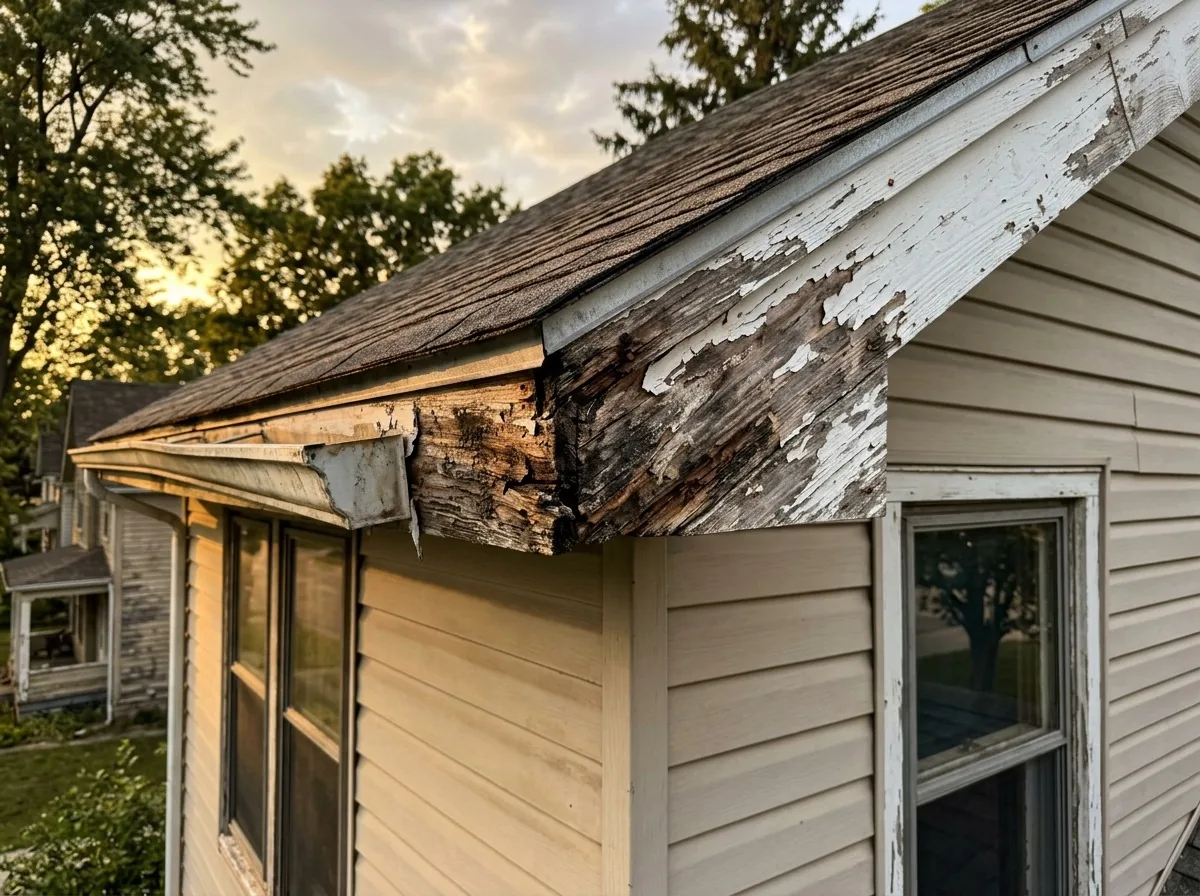
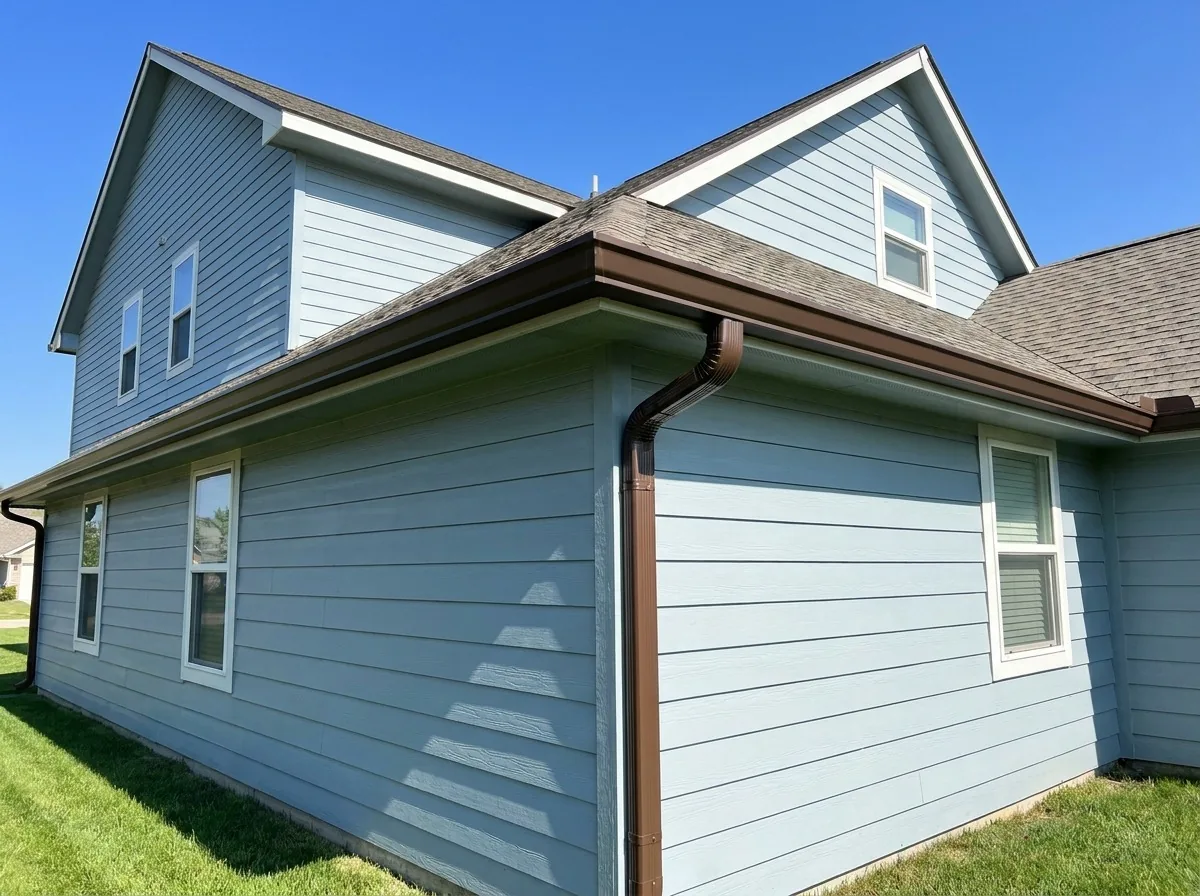
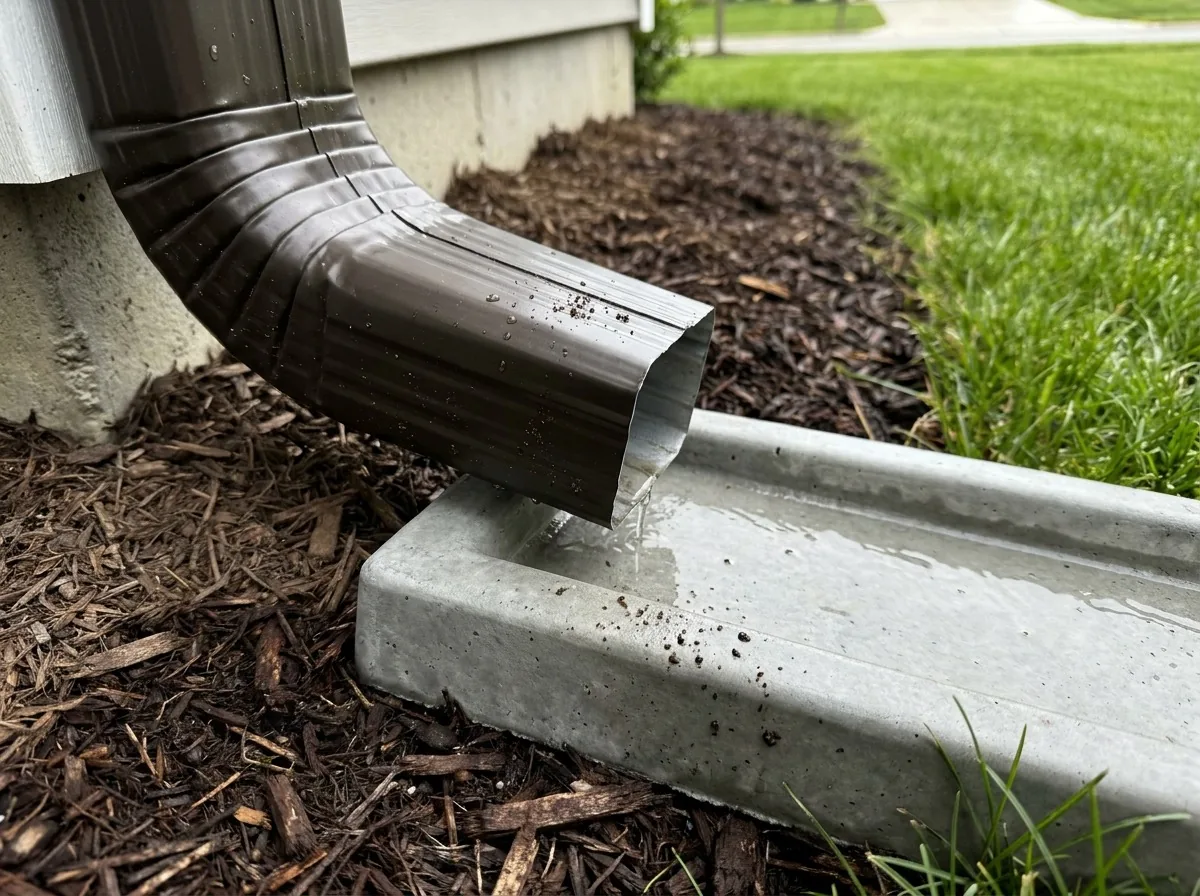
Stories and access. Two-story peaks and steep pitches add ladder time and safety gear. Corners and miters. Every inside/outside corner is a fabrication step. Fascia. Rotted or cupped boards must be fixed with fascia and soffit repair before new hangers — hanging 6-inch on soft wood fails faster under Minnesota ice load. Downspouts. Plan on 3×4 outlets and enough drops so water leaves the foundation; see how many downspouts a Minnesota house needs. Color and bundling. Matching guards or a full replacement package can change the per-foot math vs trough-only.
Hidden hangers every ~24 inches are the Minnesota default on quality installs. Spike-and-ferrule leftovers from the 1990s do not hold a deeper, heavier 6-inch trough through ice lenses. If a bid keeps old spikes, ask why.
6-inch seamless vs sectional (and vs “install near me” quotes)
Sectional 6-inch still has seams every section — freeze-thaw pries those joints in Minnesota. Seamless 6-inch costs more per foot than builder-grade sectional, but you are paying for fewer leak points on long eaves. When a “gutter installation cost near me” quote looks cheap, check whether it is 5-inch sectional, missing fascia work, or skipping 3×4 downspouts.
For full-system replacement ranges (any size), see gutter replacement cost in Minnesota. For metro-wide seamless bands, see seamless gutter cost in the Twin Cities. Side-by-side construction differences are covered in seamless vs sectional gutters.
Timing: install 6-inch before leaf drop and freeze-up
Late August through early October is still the practical Twin Cities window: crews can work safely, and the new trough is clean before oak and maple pack the eave. Waiting until after the first hard freeze often means spring queues and wet basements from the next thaw.
If you also want covers, combine gutter guards with the hang so hangers are sized once. Schedule gutter cleaning only if the old trough is still in place through leaf drop — new seamless should start the winter empty.
Sample market math (not a bid)
| Home example | Rough LF | 6-inch market band (2026)* |
|---|---|---|
| Single-story ranch, simple rectangle | 160 lf | $1,600–$2,560 |
| Split-level, moderate corners | 180 lf | $1,980–$2,880 |
| Two-story colonial, steep pitches | 200 lf | $2,400–$3,500+ |
| Ranch + micro-mesh guards bundled | 160 lf | Often $2,900–$5,100+ combined |
*Illustrative Minnesota market math using $10–$16/lf for troughs (guards priced separately in the combined row). Your free measurement may land outside these bands if fascia, peaks, or drainage add scope.
How to compare 6-inch quotes without surprises
Ask every bidder: aluminum gauge (0.027 vs 0.032), hanger type and spacing, downspout size, outlet count, fascia repairs included or excluded, and whether the price is trough-only or turnkey. A low $/lf that excludes outlets, elbows, and haul-away is not cheaper — it is incomplete.
EaveX puts scope in writing after measuring your roof — license BC808261, 1,200+ projects, 5.0 rating, 13+ years in Minnesota. Financing is available from 0% APR (0.00–9.99%) with GreenSky, plan 6124; not every buyer qualifies for 0%.
Ready for a free measurement?
If 5-inch overflows every storm — or you are replacing troughs before Minnesota winter — get a fixed number for 6-inch seamless on your roofline.
Call (763) 313-8516 or request a free estimate. Serving Minneapolis, St. Paul, and Twin Cities suburbs — license BC808261.