Most Minnesota houses need a downspout about every 30–40 feet of gutter—typically four to six outlets on a 150–200 lf Twin Cities home—sized 2×3 inches for 5-inch troughs or 3×4 inches for 6-inch, and dumping 4–6 feet from the foundation.
Key takeaways
- Spacing: one downspout every 30–40 linear feet; use the tight end on steep roofs, metal, and oak/maple lots.
- Size: 2×3-inch outlets with 5-inch K-style; 3×4-inch with 6-inch (SMACNA pairing).
- Throw: keep discharge 4–6 feet off the foundation—short builder elbows soak basements.
- Pitch: about 1/4 inch per 10 feet toward each outlet so water does not pond and freeze.
- Extra outlets on an existing Twin Cities run typically land around $100–$300 installed in 2026 (market average, not an EaveX price). Full seamless gutters still run about $8–$14/lf.
- EaveX: 1,200+ projects, 5.0 rating, 13+ years, license BC808261; financing from 0% APR (0.00–9.99%) with GreenSky, plan 6124 (not every buyer qualifies for 0%).
We hang from Albertville (5098 Main Ave NE) across Minneapolis, St. Paul, and the west/north metro. The ranges below are Twin Cities / Minnesota market averages for 2026, not our price list. Your total depends on run length, stories, fascia condition, and roof type; the measure is free.
The 30–40 foot rule (and why Minnesota sits on the tight end)
Sheet-metal practice pairs one outlet with about 30–40 feet of trough. Peak design rainfall here is roughly 3–4 inches per hour (NOAA Atlas 14 / SMACNA context), so a 50-foot run into a single 2×3 is how summer storms sheet over a “clean” eave. Minnesota belongs on the tight end of that band.
Oak and maple mats plus freeze–thaw make a long run that worked in June overtop in October. If water already sheets over the front edge in a 1-inch rain, you are short on outlets or undersized—see why gutters overflow in Minnesota.
How many downspouts for a typical Twin Cities house
A ranch with 150–180 lf of eaves usually wants four to five downspouts. A two-story with valleys at 200+ lf often needs five to seven, especially when one elevation takes a whole roof plane.
Count corners and valleys, not just total footage. Two long walls dumping into one corner outlet is how Hanover and Maple Grove colonials overflow on the driveway side while the back eave looks fine from the yard.
2×3 vs 3×4: match the downspout to the trough
Five-inch K-style pairs with a 2×3-inch rectangular downspout. Six-inch pairs with 3×4-inch. Dropping a 6-inch trough into a 2×3 outlet bottlenecks the system—you paid for volume and then choked it at the corner.
On steep or metal roofs, or when one outlet serves more than about 1,400–2,000 sq ft of drainage area, step up to 6-inch plus 3×4. The 5-inch vs 6-inch gutter guide covers trough capacity; this page is the outlet count and throw.
Downspout spacing and size at a glance (2026)
Use this as a starting map, then confirm on a free measure. Roof pitch, valleys, and tree cover move the count more than interior square footage.
| House / roof | Typical lf | Downspouts | Outlet size | Minnesota note |
|---|---|---|---|---|
| Ranch, modest pitch | 150–180 | 4–5 | 2×3 on 5-inch | Default Twin Cities layout |
| Two-story colonial | 180–220 | 5–7 | 2×3 or 3×4 | Give valleys their own outlet |
| Steep / metal / large plane | 200+ | 6–8 | 3×4 on 6-inch | ~40% more trough volume |
| Wooded oak/maple lot | any | +1 vs open lot | same size | Leaf mats choke the drop first |
Ranges are Minnesota market planning numbers for 2026, not an EaveX price list. Final layout depends on run length, stories, fascia condition, and roof type; free measure on site.
Dump 4–6 feet from the foundation
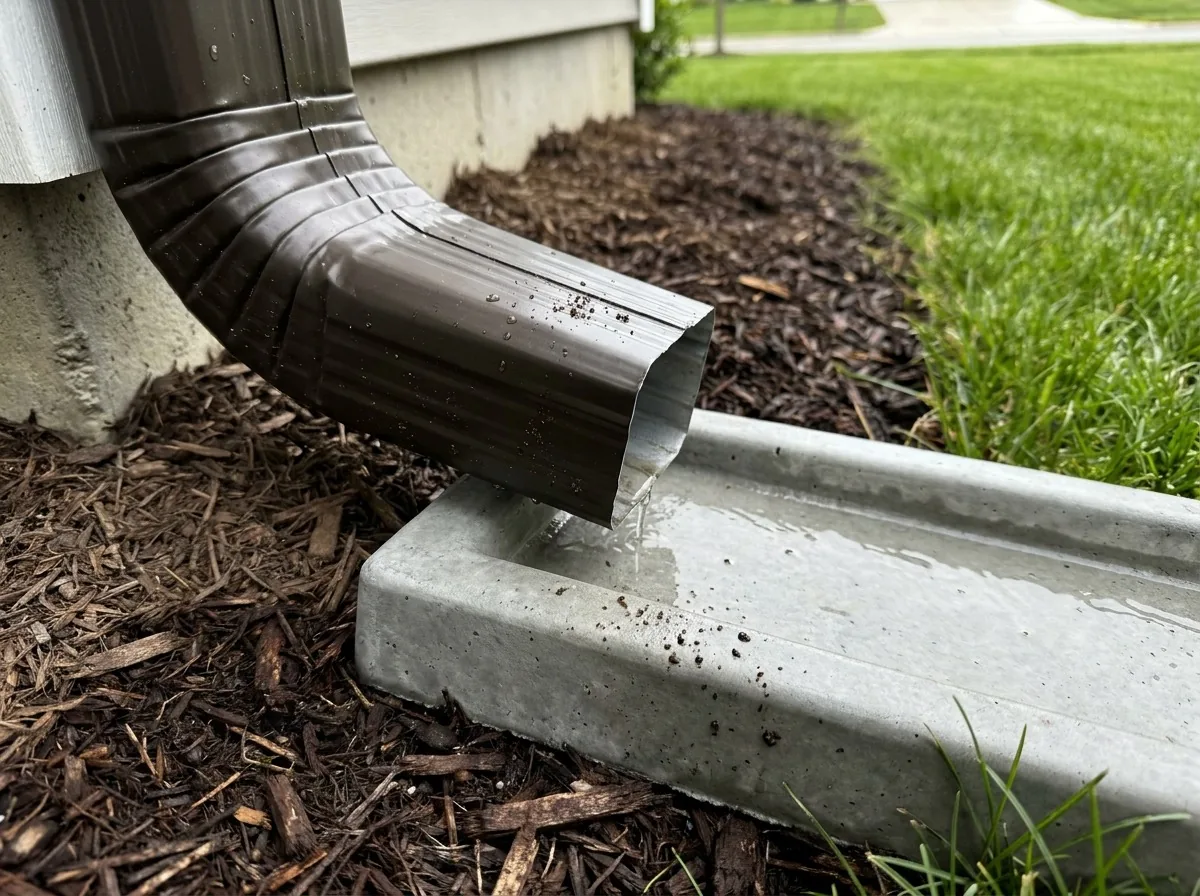
Short builder elbows that splash at the slab are a basement problem, not a “gutter” problem. Keep discharge 4–6 feet out with a splash block, a rigid extension, or a buried line that actually has slope and a daylight outlet.
HOA rules that ban visible extensions do not cancel freeze–thaw. If the pipe has to go underground, it still needs that 4–6 ft throw before it enters the ground, plus a cleanout—otherwise you hid the clog, you did not fix the water.
Why freeze–thaw clogs outlets first
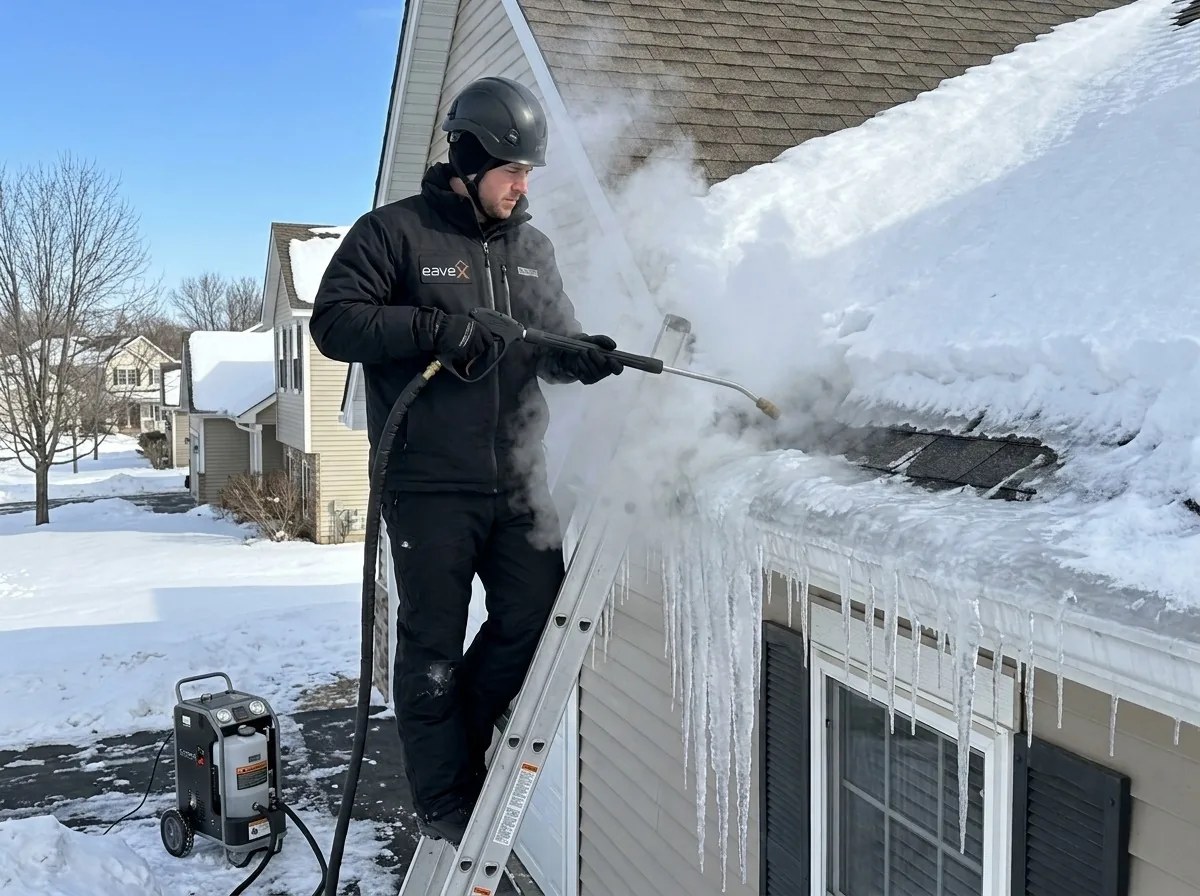
Ice forms at the drop, not in the middle of a pitched run. Seed pods and shingle grit pack the outlet first. A gutter cleaning that skips the downspout flush leaves the overflow you called about—typical Twin Cities cleaning still runs about $150–$350 in 2026 for a single-story (market average).
Micro-mesh gutter guards (stainless steel mesh on an aluminum frame) cut leaf mats that freeze into plugs. They do not replace a yearly brush-off, a crushed elbow, or attic ventilation for ice dams—read ice dam prevention in Minnesota.
Extra downspouts vs a bigger trough
If one elevation overtops and the rest of the house is fine, adding an outlet on that run is usually the cheaper fix. If every wall sheets over in a modest storm, you need 6-inch plus 3×4, not one more undersized 2×3.
Do not stack two 2×3 drops on a trough that is already too small for the roof plane. Capacity is trough size times outlet size times pitch. The 5-inch vs 6-inch choice and the downspout count have to match, or you spend twice.
Underground drains vs above-grade extensions
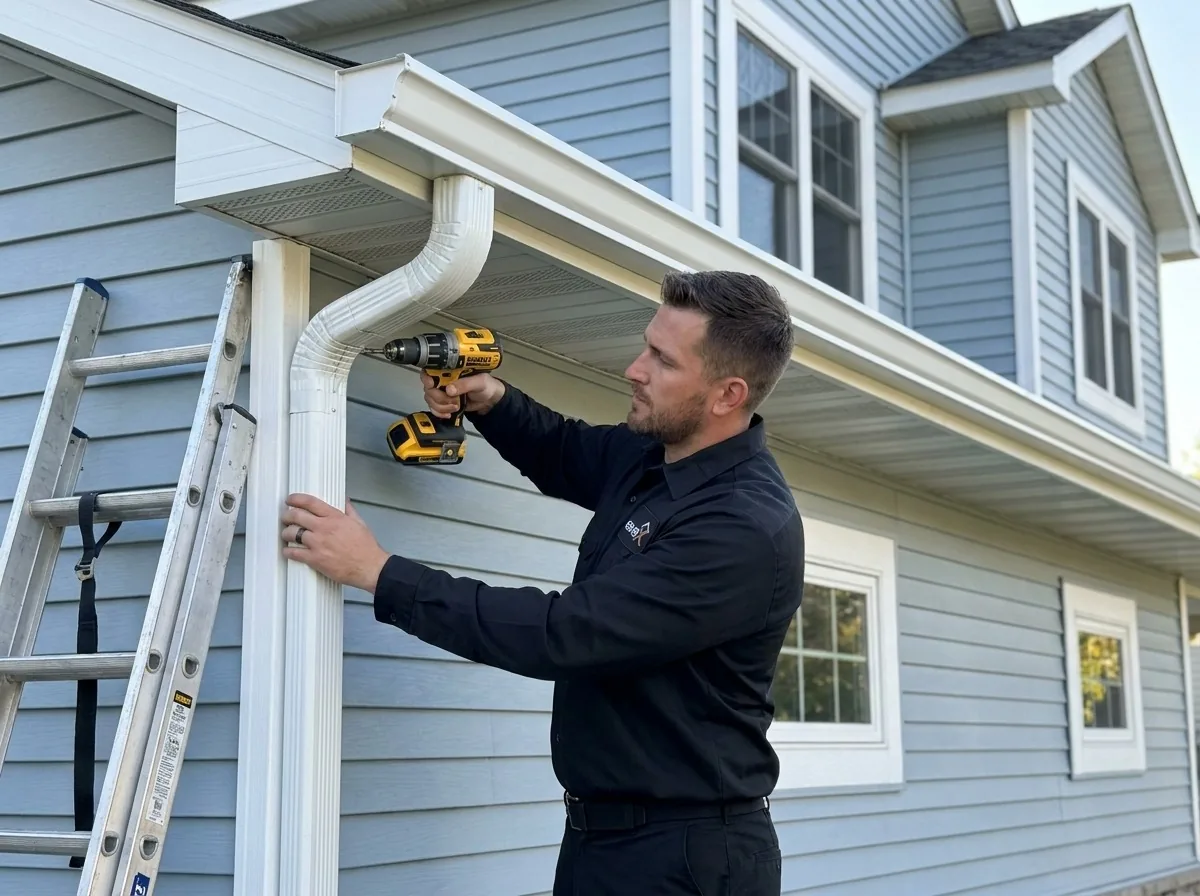
Buried drains look tidy and freeze if they lack slope, a cleanout, and a daylight or storm-sewer tie-in that still flows in January. Above-grade 4–6 ft extensions are the Minnesota default because you can see a freeze and clear it without digging.
If you bury, use rigid pipe—not cheap corrugated that kinks—and keep a cleanout at the elbow. A pretty yard drain that ices shut just moves the overflow to the foundation corner you were trying to protect.
What extra downspouts cost in Minnesota in 2026
Adding an outlet on an existing Twin Cities run typically lands around $100–$300 installed in 2026 (Minnesota market average), including elbows, straps, and a 4–6 ft throw. Second-story drops, color-matched coil, and buried drains sit higher. These are market averages, not an EaveX price list; your total depends on run length, stories, fascia condition, and roof type, and the measure is free.
A full seamless gutter installation still runs about $8–$14/lf in 2026 for 5-inch (often $1,400–$3,800 on 150–200 lf before guards or fascia). Six-inch often sits closer to $11–$16/lf. Extra outlets are a line item on the quote—ask for the count. Financing is available from 0% APR (0.00–9.99%) with GreenSky, plan 6124; not every buyer qualifies for 0%. See seamless gutter cost in the Twin Cities for the whole-house band.
When a “clean” gutter still overflows
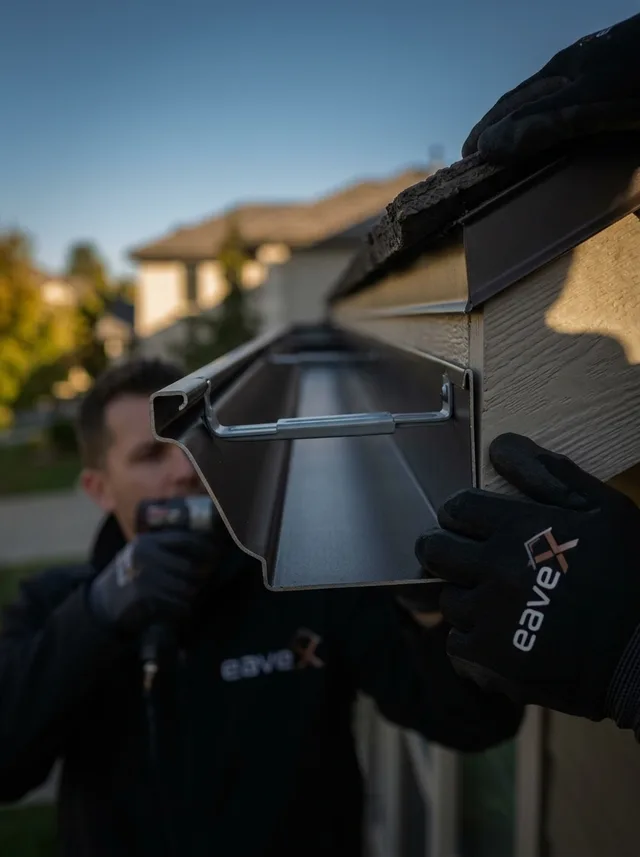
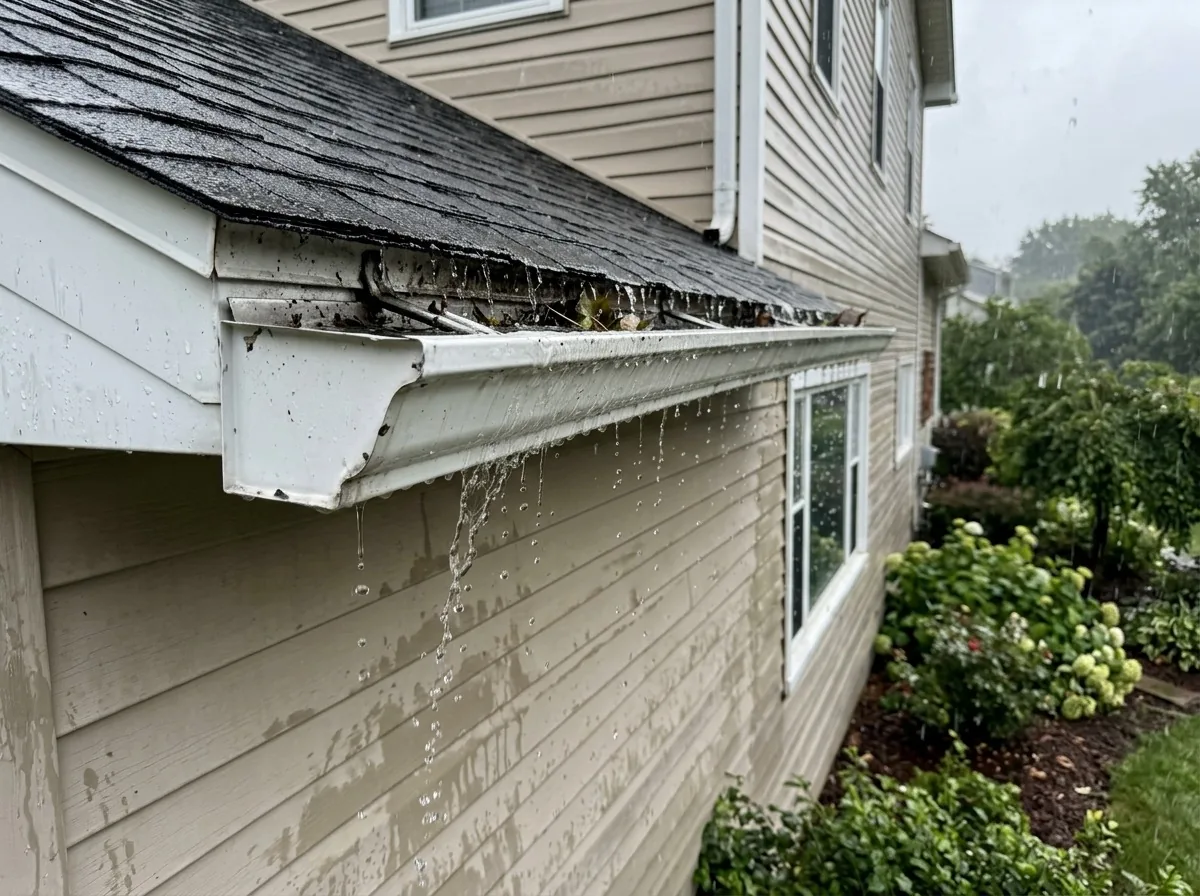
Pitch should be about 1/4 inch per 10 feet toward each outlet. A sag between hangers ponds water until it ices and overtops. Spikes that pulled from fascia dump the run before the downspout ever sees volume—check why gutters pull away from the house.
Stripes on siding, mulch washed off a foundation corner, and icicles hanging from one outlet while the next is dry are the usual tells. Those are signs your gutters are failing, not a reason to buy a longer hose.
August–October: add outlets before leaf drop
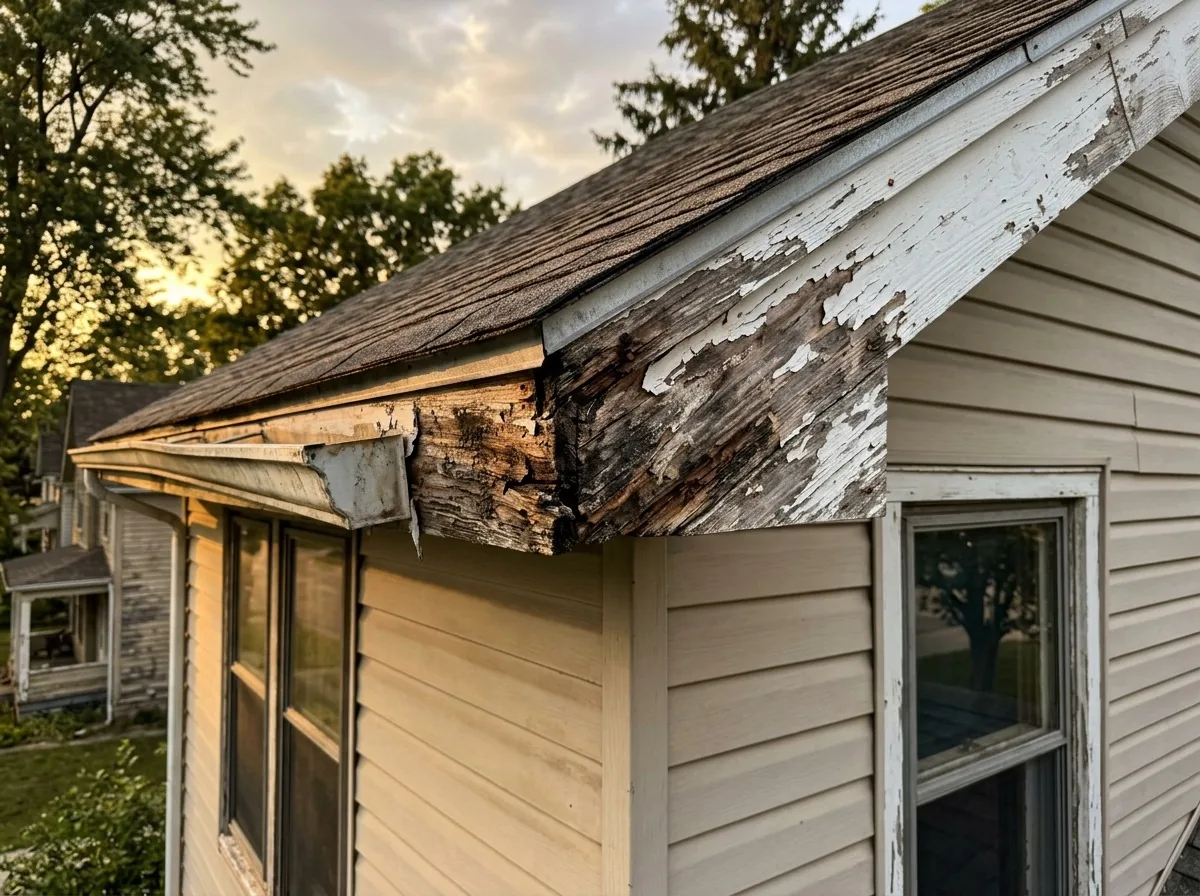
July–September is install season here; October is last call before hard freeze. Adding a downspout in August is a one-day clip-on for most single-story eaves. Waiting until a January ice plug is how a missing outlet becomes fascia and soffit damage.
From Albertville we set this layout on Hanover, Maple Grove, and the rest of the west/north metro. If you already see stripes on siding or puddles at the slab, book the measure now—not in March. Pair new outlets with a fall gutter cleaning cost in Minnesota so the first leaf drop does not pack the drop you just added.
Ready for a free inspection?
EaveX will count your eaves, check fascia, and tell you whether you need another outlet, a 3×4 upsize, or a full seamless run—with clear numbers, not a one-size pitch. Call (763) 313-8516 or request a free inspection online. We serve Minneapolis, St. Paul, Maple Grove, Hanover, and the surrounding metro from our Albertville shop. License BC808261.