Gutters pull away from a Minnesota house when ice, leaf weight, or freeze–thaw loosens spike hangers—or when the fascia behind them has gone soft—so the trough sags, gaps at the roof edge, and dumps water down the siding.
Key takeaways
- Spike hangers on older sectional runs work out of the wood after Minnesota freeze–thaw. Hidden hangers into solid fascia (about every 24 inches, tighter on long ice-loaded eaves) hold better.
- Soft or water-damaged fascia cannot hold any hanger. New troughs on rotten boards pull off again within a season.
- Ice in a clogged trough plus roof-edge snow is extra weight along the eave. Clear debris and keep downspouts throwing 4–6 feet from the foundation.
- Typical Twin Cities 2026 market ranges: fascia and soffit repair work often $15–$40/lf; seamless gutter replacement $8–$14/lf (a 150–200 lf home often $1,400–$3,800 before fascia). Final cost depends on run length, stories, fascia condition, and roof type; free measure.
- EaveX: 1,200+ projects, 5.0 rating, 13+ years, license BC808261; financing from 0% APR (0.00–9.99%) with GreenSky, plan 6124 (not every buyer qualifies for 0%).
We work from Albertville (5098 Main Ave NE) across the Twin Cities. Below is what actually pulls a run off the house here—and what to do before freeze-up.
Why Minnesota gutters pull away from the fascia
A gutter is only as tight as the wood and fasteners behind it. Spike-and-ferrule kits common on 1980s–2000s sectional runs expand and contract all winter; the spike loosens, the trough rolls forward, and you see a dark gap between the back of the gutter and the drip edge. Once pitch is gone, water sits, ice grows, and the next thaw yanks the run farther off.
If you already spotted peeling paint, a wavy trough, or daylight behind the gutter, treat it as a fastening-and-fascia problem. The signs your gutters are failing checklist covers related clues; this article is the deep dive on pull-away specifically.
Ice load and old spike hangers
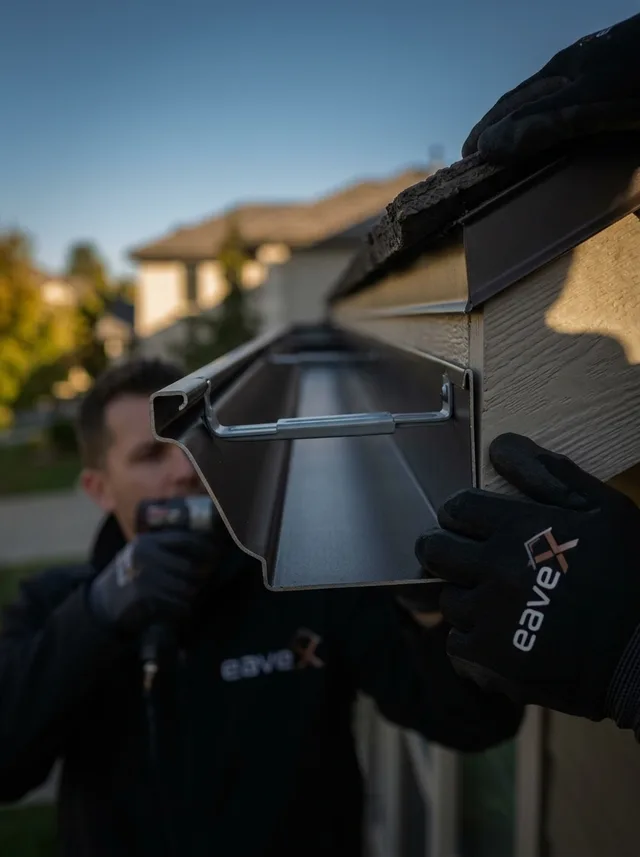
Twin Cities winters stack snow on the eave, then melt–refreeze cycles fill the trough. Ice is heavy; a packed 5-inch K-style run plus icicles hanging off the front edge loads every hanger. Spikes that were only friction-fit into fascia decades ago back out. Hidden hangers that screw into solid fascia or rafter tails—spaced about 24 inches, closer on long or north-facing eaves—resist that pull.
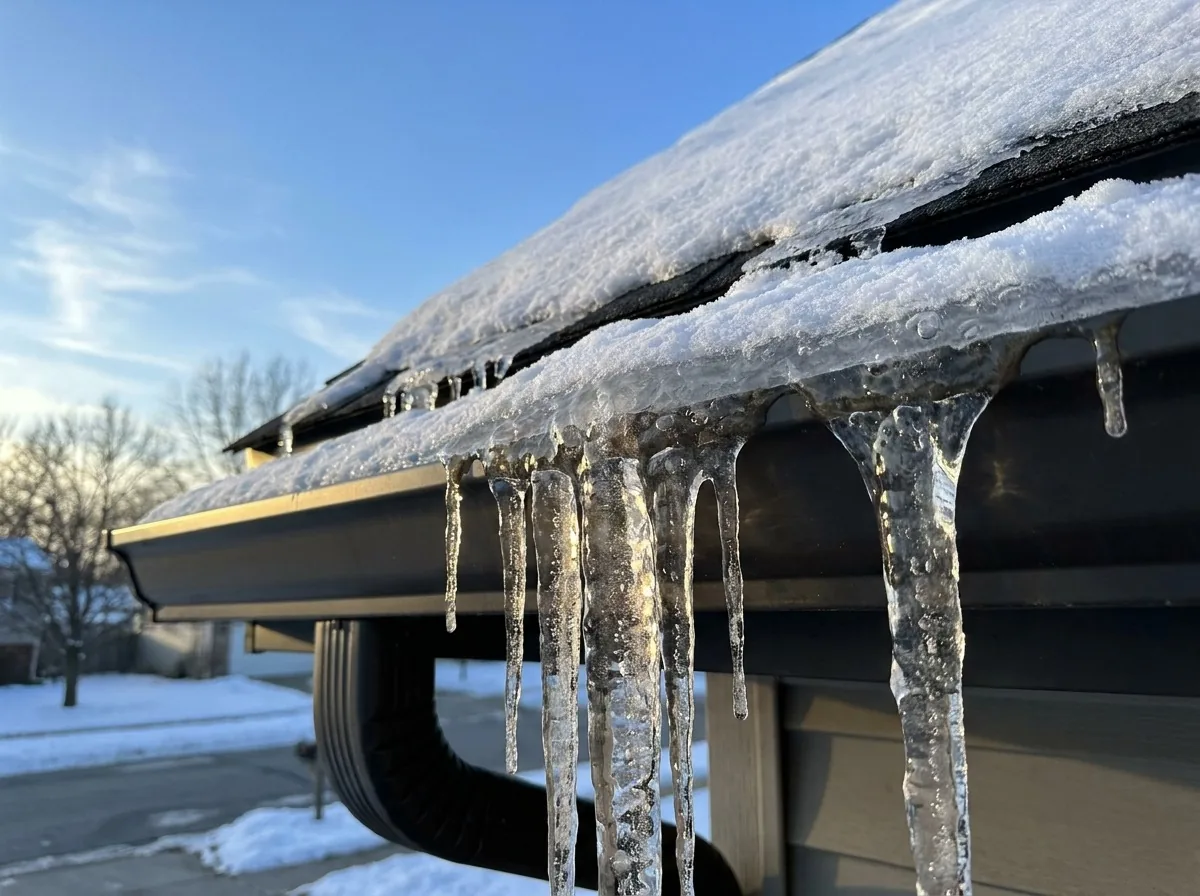
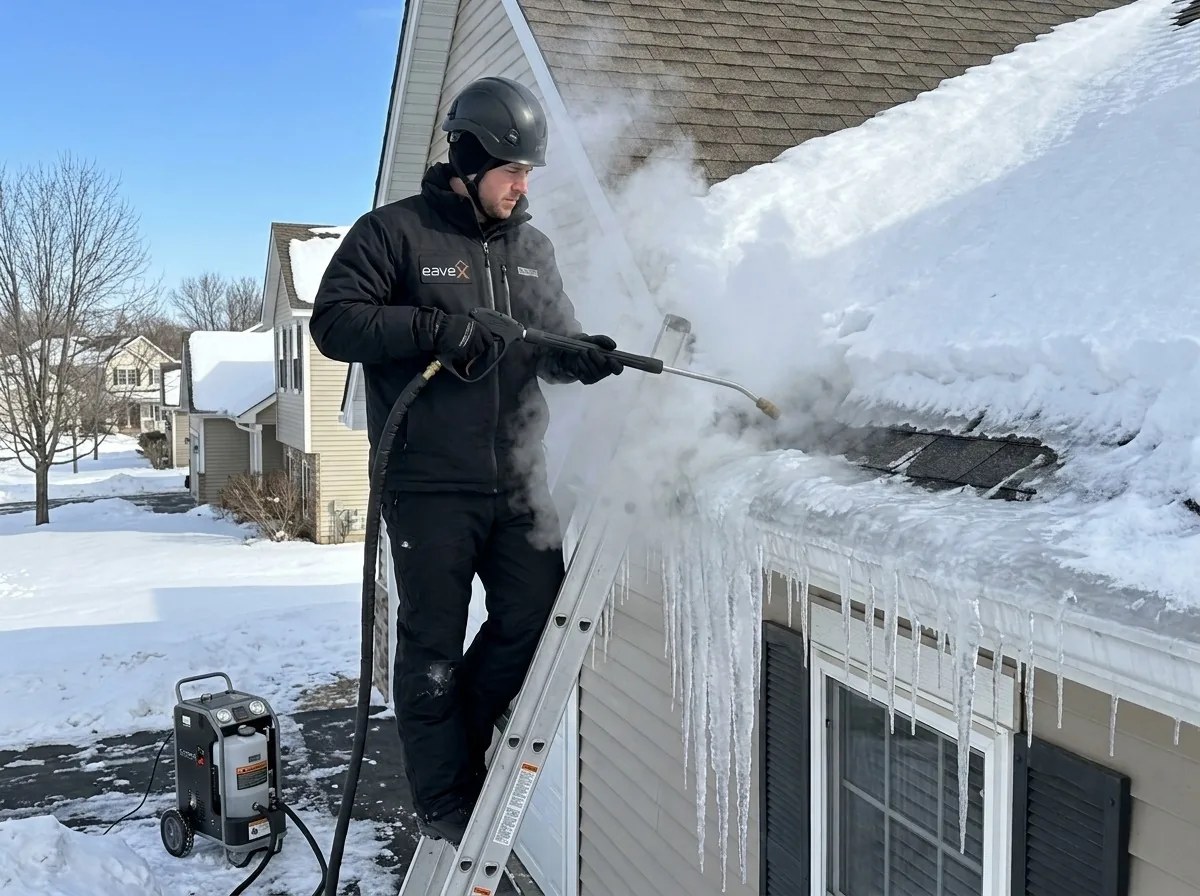
Ice dam removal is the emergency call when ice is already at the roof edge. It does not replace hangers or fascia. After the ice is gone, the trough still needs to be re-hung or replaced, or it will pull again on the next freeze.
Soft fascia is usually the real failure
Press the board behind a sagging run. If it feels spongy, dark, or the paint bubbles in a line under the eave, the wood has been wet for a long time—overflow, ice dams, or a leaking joint. Screws and spikes will not bite. You fix fascia and soffit repair first, then hang a new continuous trough. Putting fresh aluminum on rotten wood is how the same gap comes back next February. If the board is soft, decide whether to wrap or replace fascia before new hangers go in.
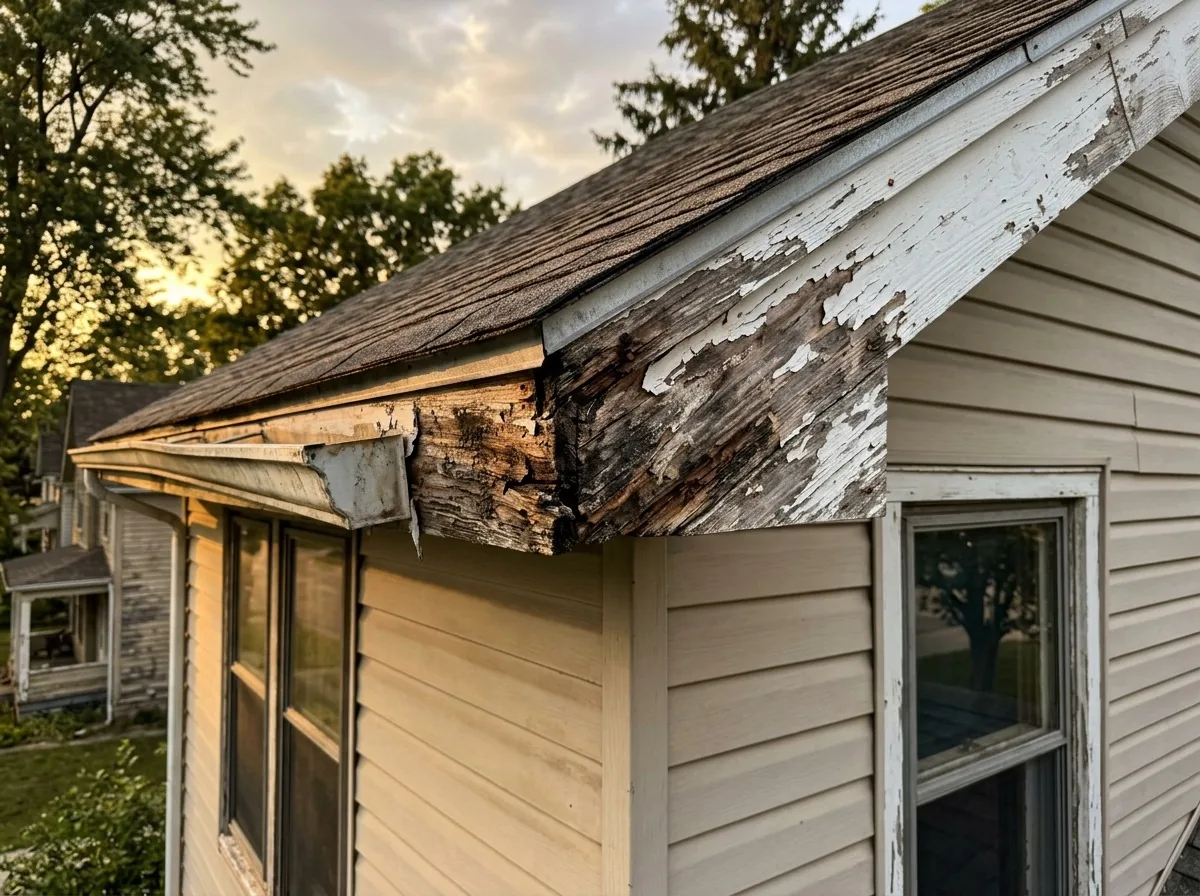
Typical fascia/soffit work in the Twin Cities market (2026) often lands around $15–$40 per linear foot, depending on height, wrap vs. wood replacement, and how far rot has traveled into the soffit. That is a Minnesota market average, not an EaveX price list; your total depends on run length, stories, fascia condition, and roof type, and the measure is free. See fascia and soffit damage repair if the boards themselves are the question.
Clogs and ice dams add weight
Leaves, shingle grit, and seed pods turn into a dam. Water stands, freezes, and the trough becomes an ice beam hanging off failing spikes. Fall gutter cleaning before leaf drop (typical Twin Cities 2026 clean $150–$350 for a standard home, market average) cuts that load. Ice dams themselves start in the attic and at the roof edge—read ice dam prevention—but a pulling gutter makes melt dump behind the fascia and into the wall.
Downspouts that dump at the foundation keep soil wet and splash the bottom of the siding. Extend outlets 4–6 feet out, and keep elbows tight so the whole assembly does not twist the end of the run.
Hidden hangers vs spikes
Spike-and-ferrule hardware was the default on sectional kits for decades. Each freeze–thaw cycle wiggles the spike a little; after enough Minnesota winters the ferrule sits proud and the trough leans. Hidden hangers clip inside the trough and screw back into solid fascia or rafter tails, so the load goes into wood that can actually hold a thread.
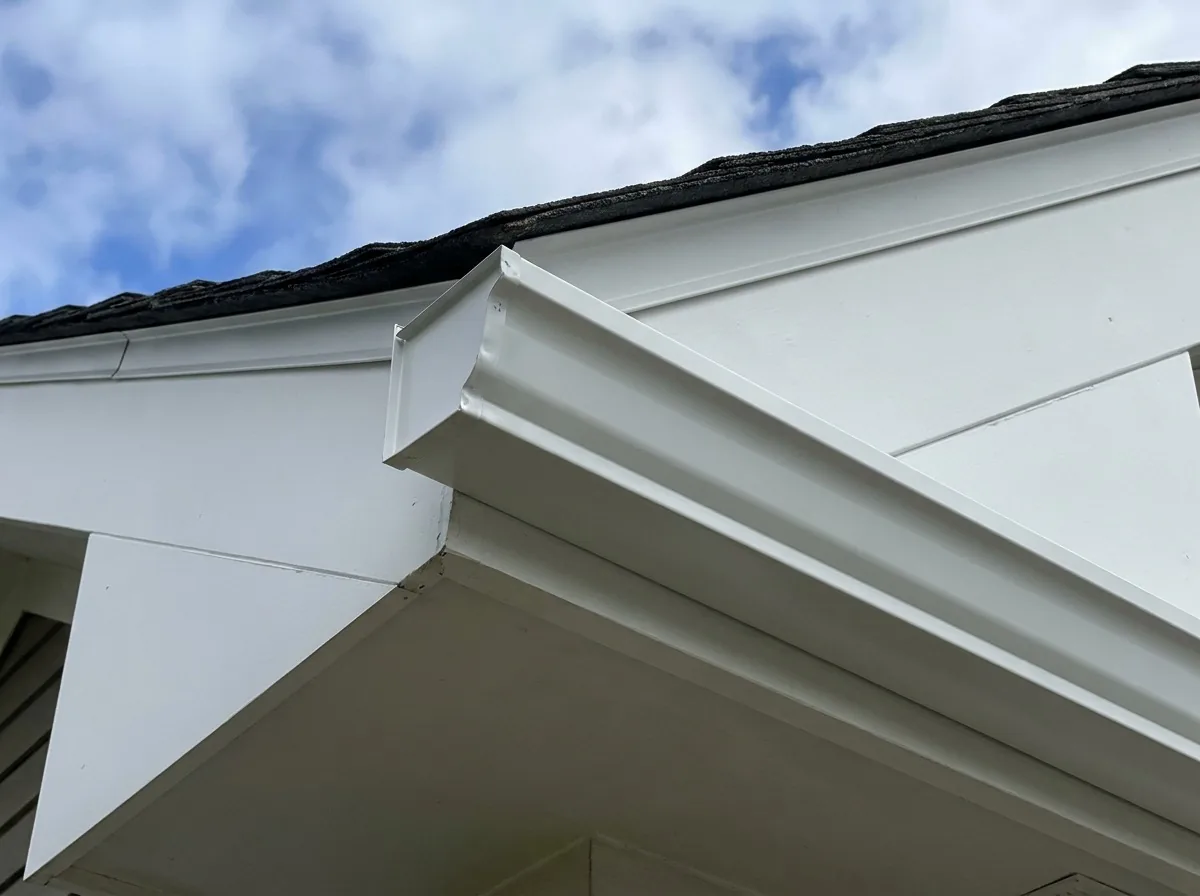
On a typical residential eave we space hangers about 24 inches, then tighten that on long runs, inside corners, and north-facing elevations that hold ice. Pair them with 0.027-inch seamless gutter installation so there are no sectional joints to open when the trough moves. Spikes in soft wood will not catch up to that setup.
How to tell what is actually failing
Walk the eave from the ground (binoculars help). A dented or split trough is a metal problem. Spikes standing out or missing ferrules are a fastener problem. A wavy or stained fascia line is a wood problem. A run that pulls only at corners often means sectional joints plus one bad spike; a whole elevation rolling forward usually means the fascia is done.
If only one short section is loose and the board is hard, a re-hang with hidden hangers can be enough. If several elevations sag, or you can push a screwdriver into the fascia, skip spot screws and plan gutter repair vs replacement with new boards.
Why do Minnesota gutters sag away from the roof edge?
A sagging trough and a trough pulling away from the fascia are the same failure at different stages. Mid-run dips show hangers that stretched or backed out under ice and leaf weight; a visible gap at the drip edge means the back edge has already left the roof plane. In September, wet leaf mats add that load before the first freeze—so a run that looked almost fine in July starts to roll forward during leaf drop.
If the board behind the sag is still hard, seamless gutter installation with hidden hangers about every 24 inches (tighter on long ice-loaded eaves) usually restores pitch in one visit. Soft wood means fascia and soffit repair first—new aluminum on rotten fascia will sag again. Leaf load is also why many Twin Cities homes pair a re-hang with micro-mesh gutter guards after fall gutter cleaning, not instead of fixing hangers.
What a pulling gutter does to siding and the foundation
Once the back edge leaves the drip edge, roof water sheets down the siding instead of into the trough. Paint peels, OSB at the eave stays wet, and splash at grade soaks the foundation. That is the same moisture path that shows up later as ice at the roof edge and stained basement walls—not a cosmetic gap.
Fixing the hangers without fixing pitch or outlets just moves the leak. Keep downspouts throwing melt 4–6 feet from the slab, and do not wait for spring if you already see a dark stripe under the eave this August.
Repair vs replace when a run is pulling off
| What you see | Typical Twin Cities path (2026) | Market range (not EaveX pricing) |
|---|---|---|
| One loose section, hard fascia | Re-hang with hidden hangers | Less than a full replace; on-site quote |
| Spikes backing out, wood still solid | New hangers + pitch reset, or new seamless run | Seamless $8–$14/lf |
| Soft/stained fascia, trough sagging | Fascia (and often soffit) + new seamless gutters | Fascia $15–$40/lf + trough $8–$14/lf |
| Ice at roof edge + pulling gutter | Ice removal, then fascia/gutter, not ice alone | Ice work $350–$1,200+; then trough/fascia as above |
| Mid-run sag, hard fascia, trough still against the board | Re-hang + pitch reset with hidden hangers | Often less than a full replace; on-site quote |
| Sag or gap plus leaf mat / seed pods before fall freeze | Clean, then re-hang or replace; optional micro-mesh guards | Cleaning $150–$350; trough $8–$14/lf; guards $8–$20/lf (2026 market avg) |
| 150–200 lf house, full replace + some fascia | Continuous 0.027-inch aluminum, hidden hangers ~24" | Often $1,400–$3,800 for troughs before fascia |
Ranges are Minnesota / Twin Cities market averages for 2026. Final cost depends on run length, stories, fascia condition, and roof type; free measurement.
Typical Twin Cities cost ranges (2026)
A full seamless gutter replacement on a typical 150–200 lf home often lands roughly $1,400–$3,800 installed in the $8–$14/lf band (2026 Twin Cities market), before guards or fascia. Add fascia boards in the $15–$40/lf band where wood is soft. Financing is available from 0% APR (0.00–9.99%) with GreenSky, plan 6124—not every buyer qualifies for 0%.
Do not treat those figures as an EaveX price list. Height, inside corners, wrap vs. paint-grade fascia, and whether you bundle micro-mesh gutter guards (stainless steel mesh on an aluminum frame) all move the total. We measure on site.
Should you screw it back yourself?
A couple of screws into solid wood can buy a week. They do not restore pitch, they do not fix rot, and a ladder on ice-season eaves is how people get hurt. DIY vs hiring a pro for gutter installation covers why sectional kits and random screws fail here by February.
If the board is soft, you are fastening into nothing. Call for a free inspection rather than loading more ice onto a trough that is already walking off the house.
Fix it before freeze-up
September through October is the last clean window: leaf drop loads every hanger, crews can still work the eave safely, and you want fasteners and fascia tight before the first hard freeze. Waiting until March usually means another winter of water behind the siding and a bigger fascia job.
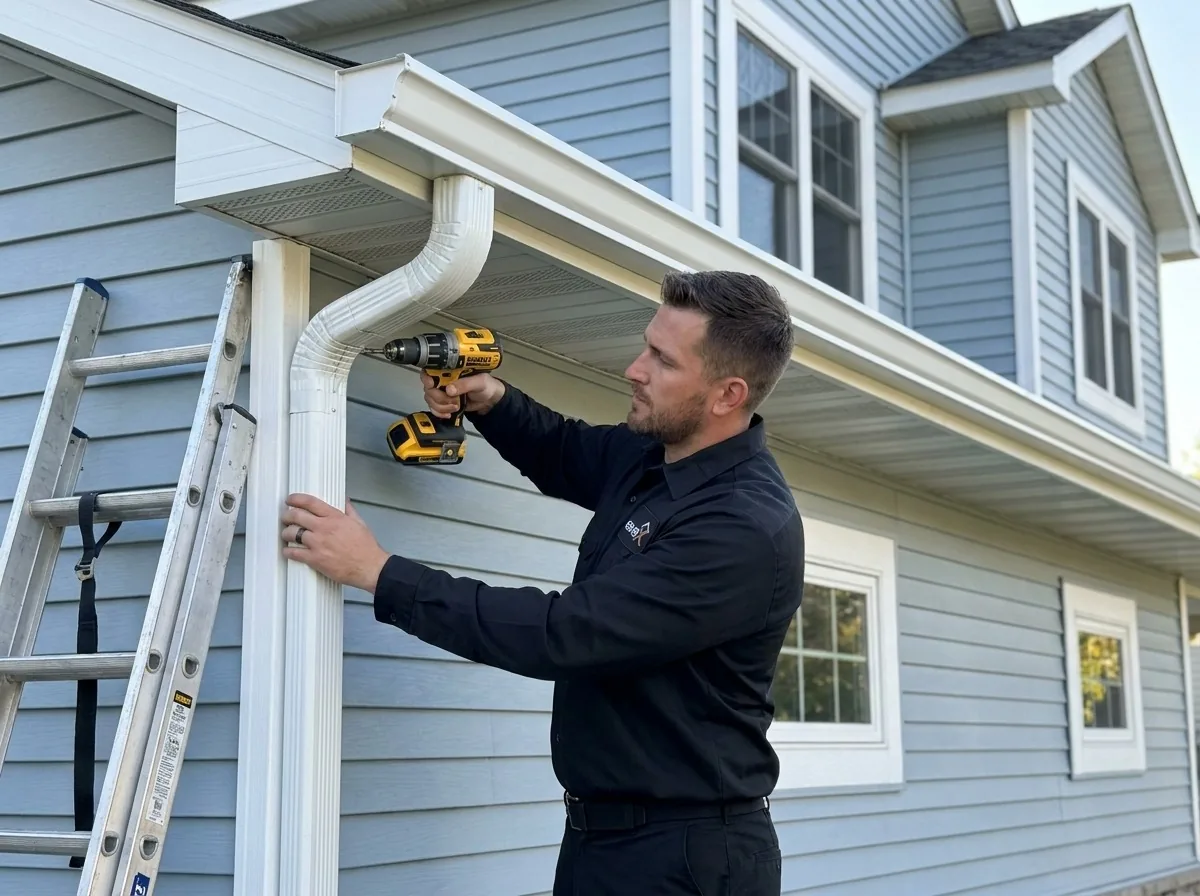
If you already see a sag or gap this September, get it measured now—before wet leaves turn the trough into an ice beam. A one-day seamless swap with hidden hangers and sound fascia is a lot cheaper than spring drywall repairs from a winter of leaks.
Ready for a free inspection?
EaveX will check hangers, pitch, and fascia, then give you a clear repair-or-replace path—not a one-size pitch. Call (763) 313-8516 or request a free inspection online. We serve Minneapolis, St. Paul, Albertville, Maple Grove, Plymouth, and the surrounding metro from our shop at 5098 Main Ave NE, Albertville. License BC808261.