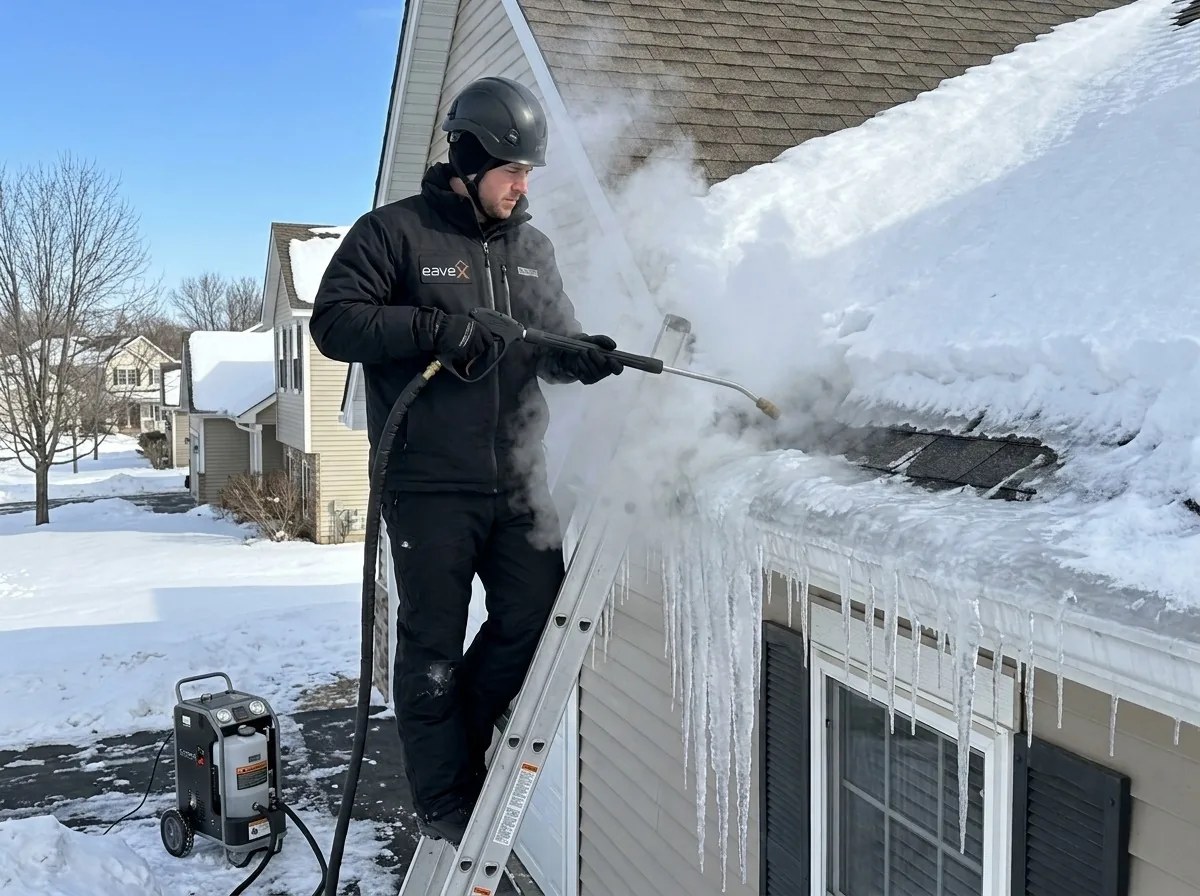
Repair a gutter when the problem is isolated — one leaking seam, a loose hanger, a dented section — and the rest of the system still drains correctly. Replace when damage is widespread, seams leak in multiple spots, or the troughs have sagged past the point where re-pitching fixes the flow.
Key takeaways
- A single-section repair typically costs $150–$450 in the Twin Cities (2026); full seamless gutter replacement runs $1,400–$2,800 for an average ranch.
- Sectional gutter joints are the weak point — every seam is a future leak. Seamless systems eliminate most joints.
- If you have repaired the same run more than twice, replacement costs less over 10 years than continued patching.
- Soft or rotted fascia boards behind the gutter must be fixed first, regardless of whether you repair or replace.
- Financing is available from 0% APR (0.00–9.99%) with GreenSky, plan 6124 — not every buyer qualifies for 0%.
When repair makes sense
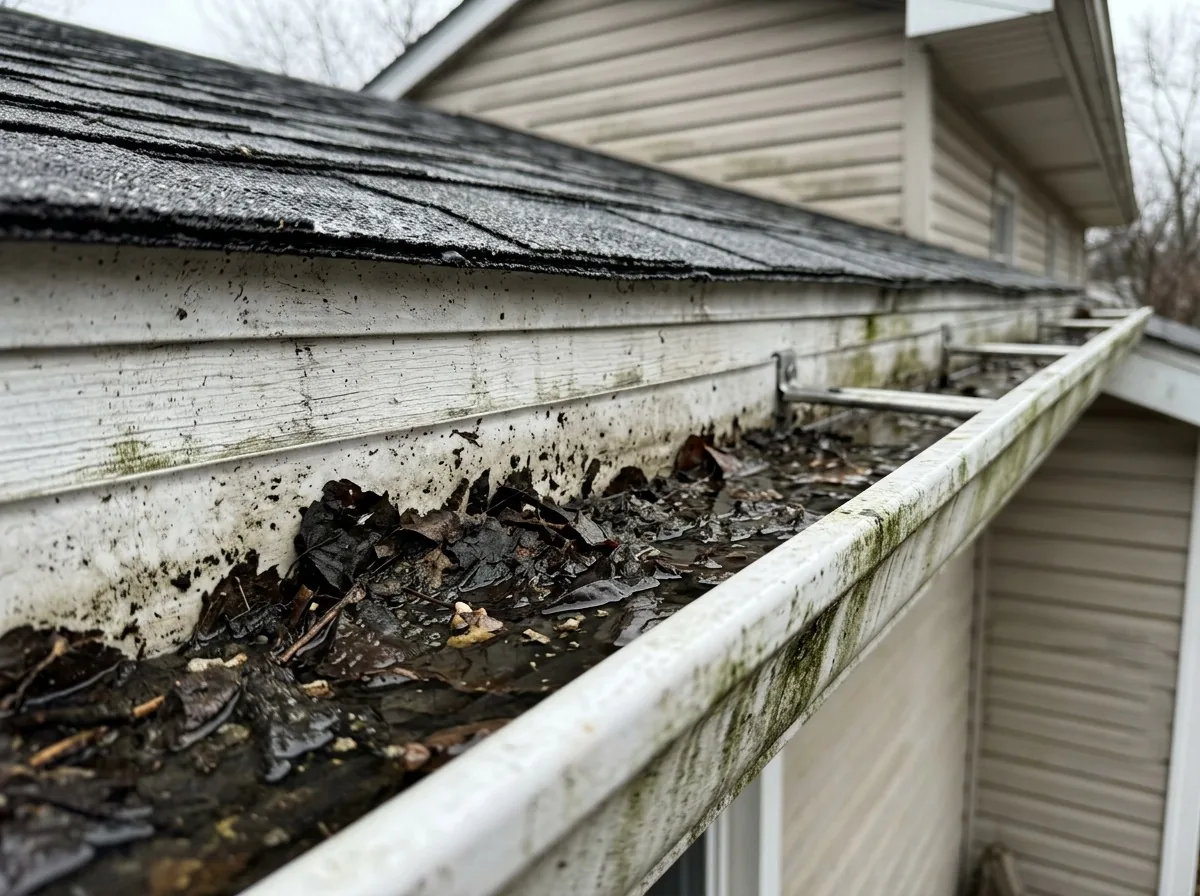
Repair is the right call when the gutter system is structurally sound and the issue is localized. Common repair jobs include re-sealing a leaking miter joint, replacing a crushed downspout elbow, reattaching a section that pulled away during a storm, or patching a small hole caused by a tree branch.
If the gutters are less than 10 years old, made of aluminum in decent condition, and the fascia is solid behind them — a targeted repair extends their useful life without the cost of a full swap. Most single-point repairs take under two hours and cost a fraction of a full replacement.
Age alone is not a death sentence for gutters. Aluminum does not rust the way steel does. A 20-year-old seamless run with one bad hanger needs a hanger replacement, not a full tear-off. But a 20-year-old sectional system with three leaking joints is a different calculation entirely — the butyl caulk degrades at every seam simultaneously, and fixing one joint just moves the stress concentration to the next weakest point.
Signs that point toward repair
- One leaking seam or miter, with the rest of the system draining cleanly.
- A single section dented or crushed by a ladder, branch, or ice chunk — the adjacent sections are straight and intact.
- A downspout elbow cracked or disconnected — the gutter run above it is fine.
- Hangers loosened on one run, but the fascia is solid when probed with a screwdriver.
When replacement is the better investment
Replacement makes financial sense when the system has reached the end of its useful life or when the cost of serial repairs overtakes the cost of starting fresh. Current Twin Cities ranges for a full tear-off are in our gutter replacement cost guide (2026 market averages, not a price list). Concrete signs that point toward a full replacement:
- Sagging along multiple runs — hangers have failed or fascia is soft behind several sections, not just one.
- Three or more prior repairs on the same run — the system is aging out one patch at a time, and each fix buys less time than the last.
- Visible rust or corrosion — steel and galvanized gutters corrode from the inside out at every joint, and once the metal thins past a critical point, the next ice load cracks the run open.
- Water pooling near the foundation after every moderate rain — the system is not carrying water away from the house, which means foundation damage is accumulating with each storm.
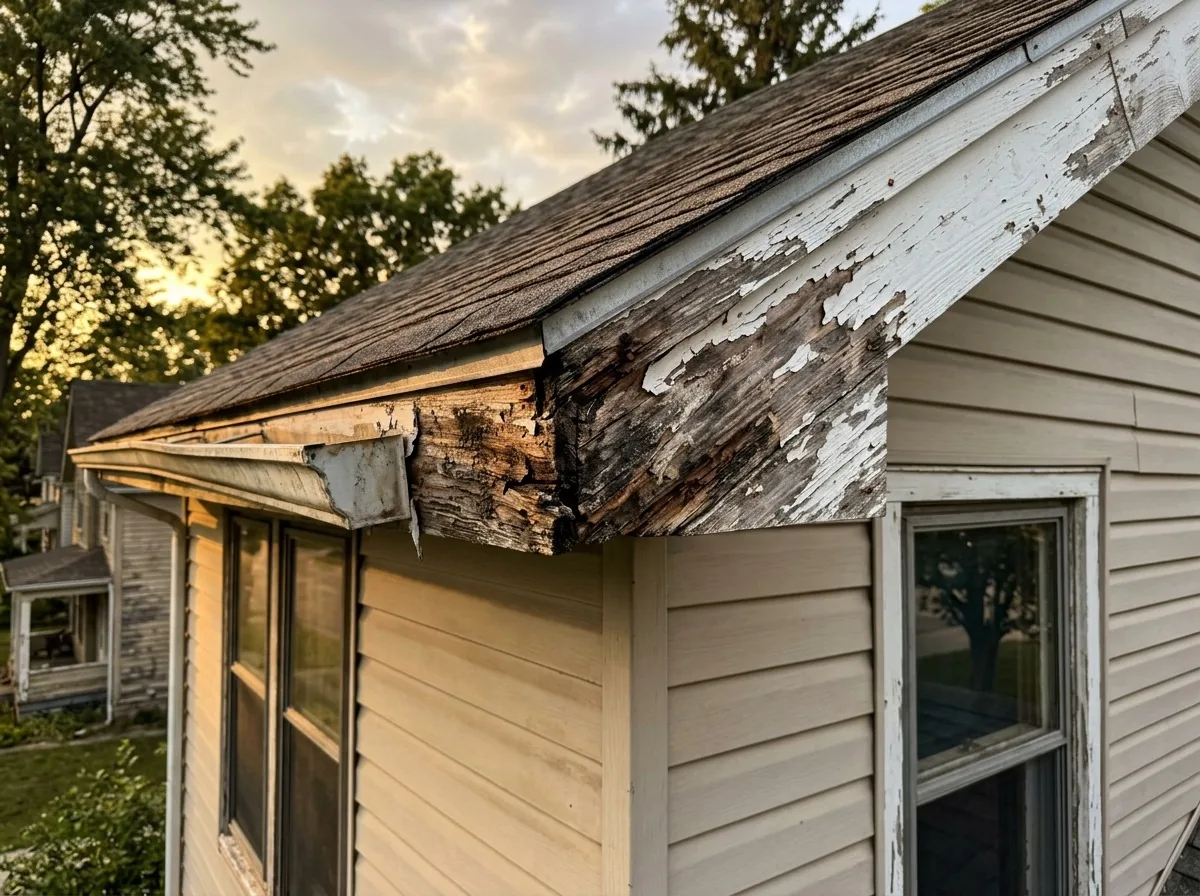
- Fascia rot behind the troughs — you need to pull the gutters down anyway to access the rotted boards. This is the clearest signal that repair is a false economy.
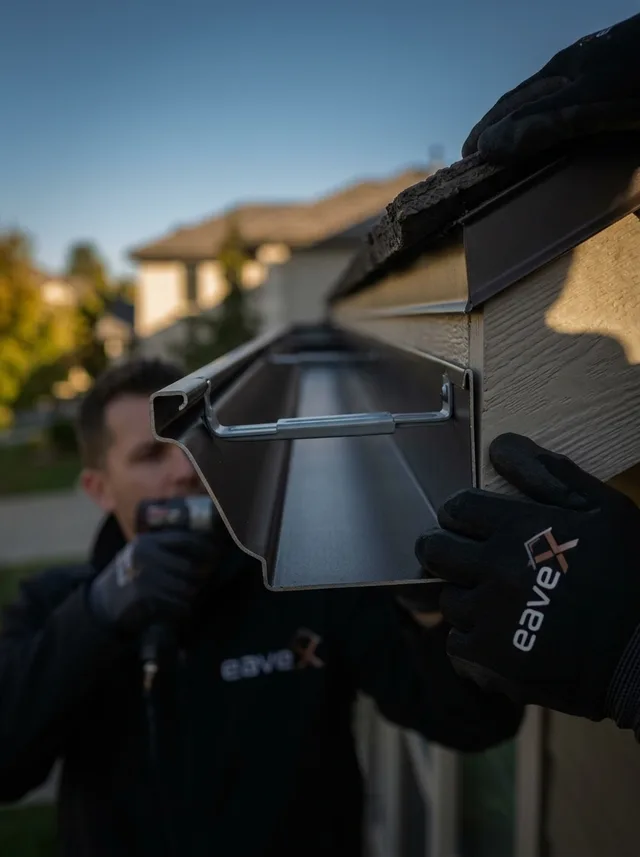
Sectional gutters from big-box stores have factory joints every 10 feet. Each joint expands and contracts through Minnesota's freeze–thaw cycles — roughly 20 crossings per winter — cracking caulk and opening leaks progressively. Seamless gutter installation forms each run on site from a single coil to the exact length of your roofline, with joints only at corners and downspout outlets. Fewer joints means fewer callbacks over the 20–30 year lifespan.
Our cost guide for seamless gutters breaks down 2026 pricing per linear foot so you can compare before the inspection visit.
Cost comparison: repair vs replacement in 2026
| Scenario (Twin Cities, 2026) | Estimated cost | Lifespan added |
|---|---|---|
| Seal one leaking seam | $150 – $250 | 2–4 years |
| Replace a 10-ft damaged section | $200 – $450 | 3–5 years |
| Re-hang and re-pitch sagging run | $300 – $600 | 2–3 years |
| Full seamless aluminum replacement (150–180 ft) | $1,400 – $2,800 | 20–30 years |
| Replacement + fascia repair | $1,800 – $3,600 | 20–30 years |
| Replacement + gutter guards | Add $6–$12/ft | Reduces cleaning to near zero |
All prices are 2026 metro estimates. Your home gets a written fixed price after on-site measurement — no change orders, no surprises.
The 10-year math: repairs stack up fast
Homeowners often default to repairs because the one-time cost is lower. But stacking repairs adds up faster than most people expect. Consider a 25-year-old sectional system on a ranch with 160 linear feet of gutters:
- Year 1: seal two seams ($400)
- Year 3: replace a 10-ft section ($350) + re-hang a sagging run ($450)
- Year 5: two more seam failures ($400) + a downspout replacement ($200)
- Year 7: another seam failure, plus fascia discovered soft during inspection ($1,200 combined)
By year 7 you have spent roughly $3,000 in repairs, and the remaining sections of the system are the same age as the ones that already failed. They are next. A seamless replacement at Year 1 would have cost $1,400–$2,800 (typical Twin Cities range) and lasted 20–30 years with minimal maintenance. The math flips surprisingly fast — usually by the third repair call.
The fascia factor
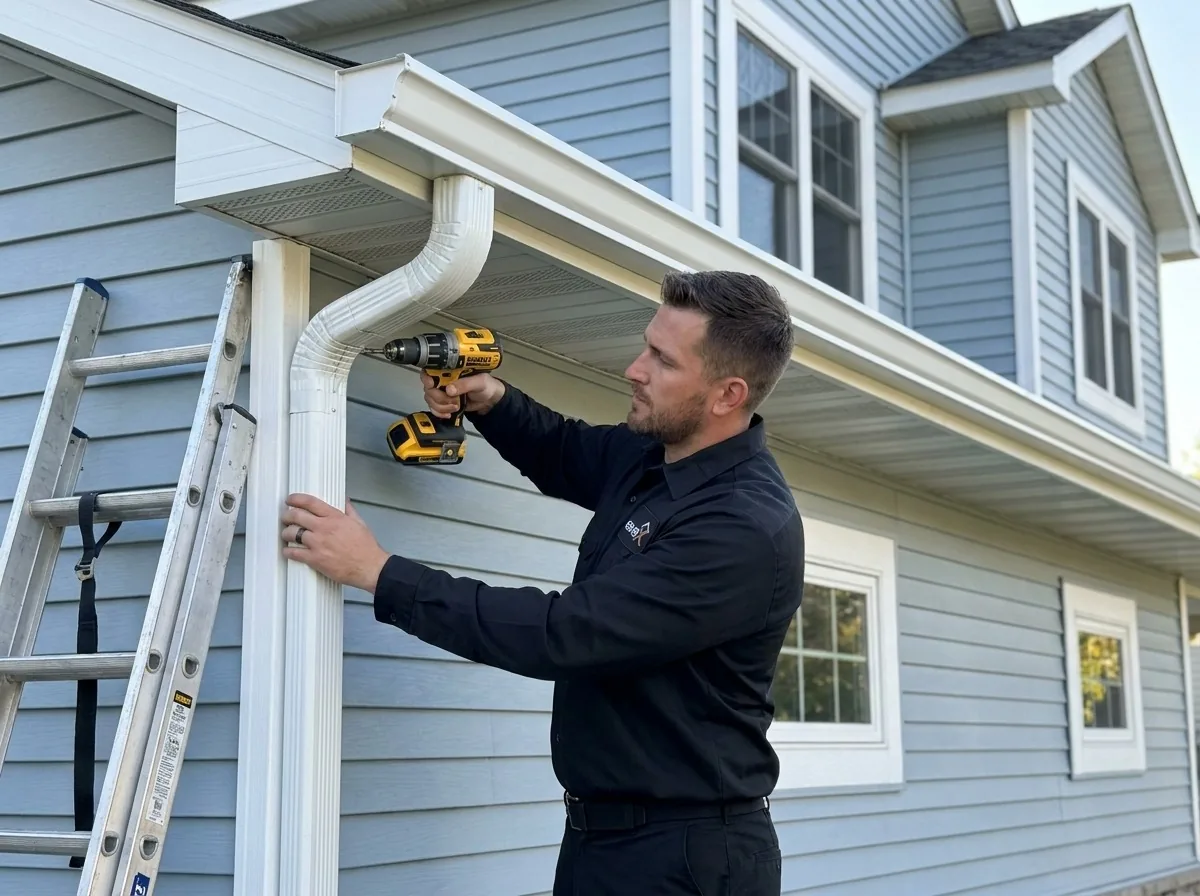
If the boards behind the trough feel soft, you are in gutters and fascia repair territory — not a clip-and-patch job. Soft wood means hangers will not hold through another Minnesota winter.
Gutters are only as strong as the board they hang on. If fascia is soft, cupping, or showing paint bubbles, new gutters will sag within one or two Minnesota winters. Any gutter inspection should include a fascia check. We recommend fascia and soffit repair before hanging new gutters if the wood is compromised.
Ignoring bad fascia turns a 20-year gutter job into a 3-year callback. The incremental cost of replacing a few fascia boards during gutter work is far less than a second mobilization later — one scaffold setup covers both jobs, one crew trip, one invoice.
Impact on your home's foundation
This is the part homeowners underestimate. Gutters exist to move water away from the foundation, not just off the roof. A failing system dumps hundreds of gallons per storm within 18 inches of the foundation wall. Over two or three seasons, that saturates the backfill soil, increases hydrostatic pressure against the wall, and leads to basement moisture, efflorescence on block, and in severe cases, horizontal cracking that requires structural repair costing $5,000–$15,000+.
A gutter replacement at $1,400–$2,800 (typical Twin Cities range, 2026) is not a roofline upgrade — it is the cheapest foundation protection you can buy. If you are already seeing damp basement walls, erosion trenches in the landscaping below the drip line, or white mineral deposits on interior basement walls, the gutter system has been failing for at least one season.
How to get a clear answer
Skip guessing. A free inspection puts a tape measure on your roofline and checks every run, hanger, downspout, and fascia board. In 20 minutes you know whether repair is enough or replacement saves money over the next decade. We will give you both options with real numbers.
Free inspection / free estimate: call (763) 313-8516. EaveX: 1,200+ projects, 5.0 rating, 13+ years, license BC808261. Start with our seamless gutter installation page for details on materials and process, or read our guide to gutter guards if you want to cut maintenance on the new system.