Spike and Ferrule vs Hidden Hangers in Minnesota: Which Holds Through Winter? (2026)
Hidden hangers into solid fascia every about 24 inches hold Minnesota gutters through ice and leaf load better than old spike-and-ferrule nails—spikes loosen in soft pine, open a gap at the roof edge, and dump meltwater behind the trough.
Key takeaways
- Spike-and-ferrule: a long nail through the front lip, ferrule, and into the fascia—common on builder-grade and sectional kits; fails first under Twin Cities ice.
- Hidden hangers: clips screwed into solid fascia behind the trough, usually every ~24 inches (tighter on long or ice-loaded eaves).
- Soft or cupped fascia must be fixed first—new hangers in rotten wood loosen within a season. See fascia and soffit repair.
- Typical Twin Cities market pricing for a full seamless gutter installation wraps hangers into the $8–$14/lf install band (2026 market average, not an EaveX price list).
- EaveX: 1,200+ projects, 5.0 rating, 13+ years, license BC808261; financing from 0% APR (0.00–9.99%) with GreenSky, plan 6124 (not every buyer qualifies for 0%).
If your trough is pulling away from the house, start with why Minnesota gutters pull away—this guide is the hanger fork of that problem.
What spike-and-ferrule hangers are
A spike-and-ferrule hanger drives a long nail through the outer gutter lip, through a metal tube (the ferrule) inside the trough, and into the fascia board. The ferrule keeps the nail from crushing the gutter profile. Builders liked them because they were fast on sectional kits.
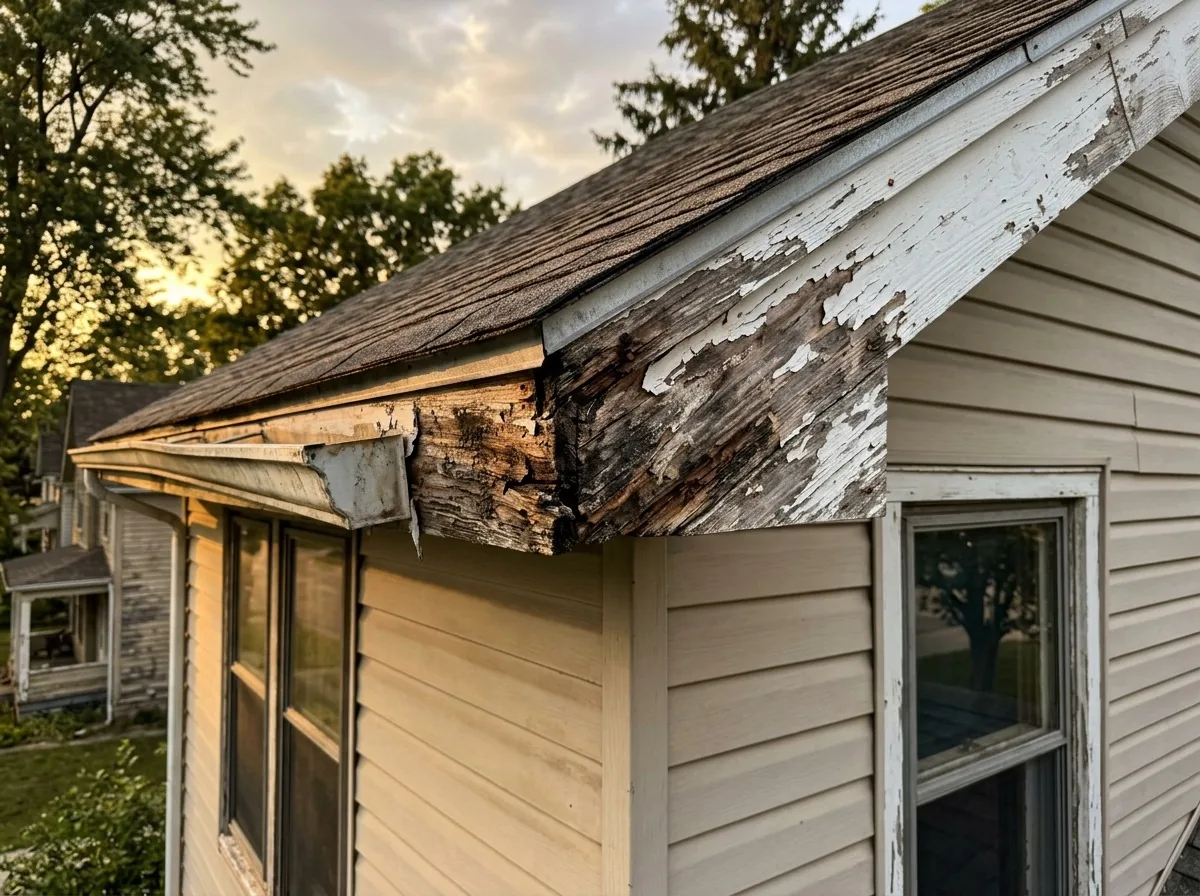
In Minnesota that shortcut ages poorly. Ice expands in a clogged trough, leaf mats add weight, and the spike works like a lever in soft pine fascia. Once the nail loosens, the front lip drops, pitch dies, and water runs behind the gutter onto the fascia and siding. You see daylight between the trough and the drip edge long before the aluminum itself “fails.”
What hidden hangers are
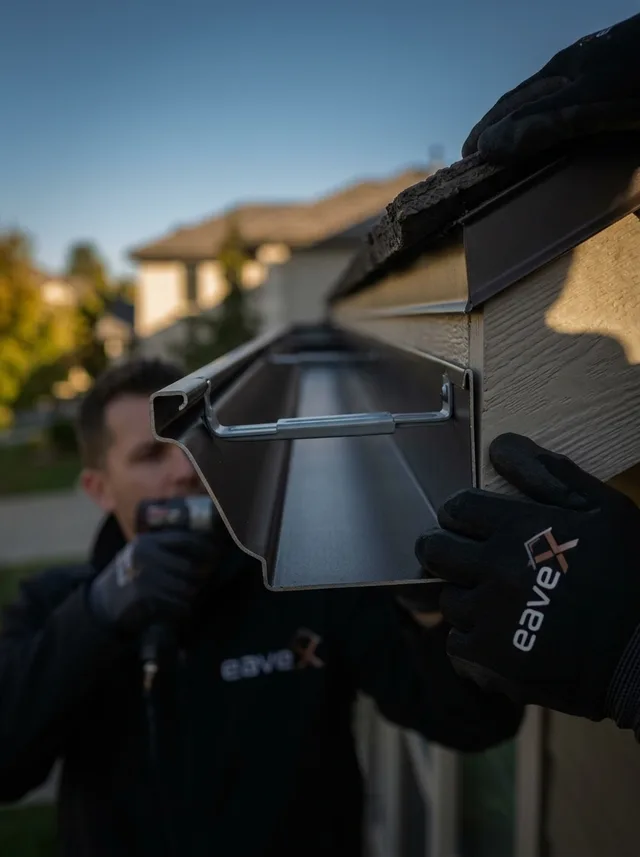
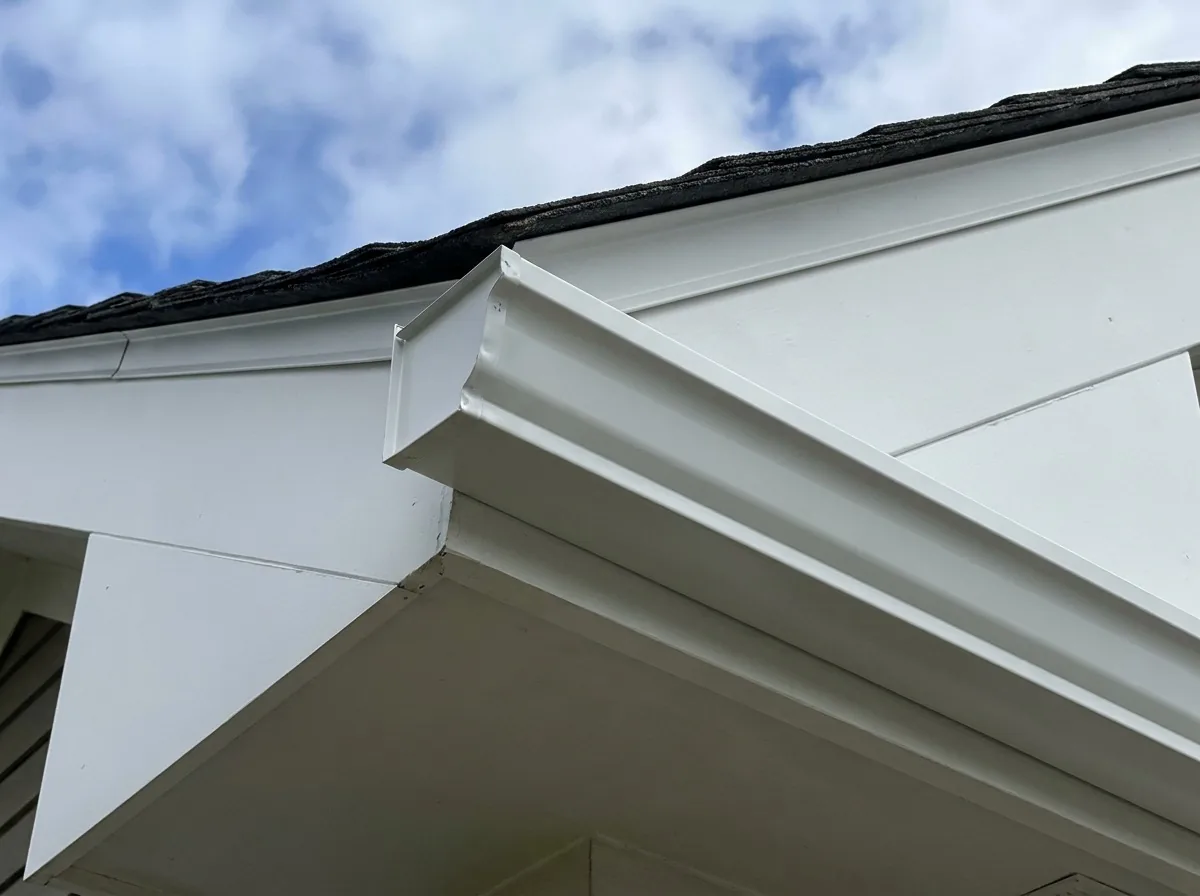
Hidden (or “invisible”) hangers clip over the gutter bead and screw into the fascia behind the trough. Nothing sticks through the front face, so the profile stays clean and the load transfers into the board instead of levering the lip.
On Twin Cities seamless gutter installation we typically set hidden hangers about every 24 inches, closer on long north eaves or where ice dams have been a problem. The trough still needs pitch (about 1/4 inch per 10 feet) and clear outlets—hangers hold the system; they do not replace cleaning or attic ventilation.
Why Minnesota winters punish spikes
Freeze–thaw is the stress test. Meltwater sits in a low spot, freezes overnight, and expands. A spike already half-backed out of pine cannot resist that pry. Oak and maple mats hold moisture against the trough all fall, so January ice starts on a wet, heavy eave—not a dry empty one.
Spike failures also show up after a warm-up: the trough sags, overflow stripes the siding, and the fascia darkens. That pattern is why we retire spike-and-ferrule on most tear-offs rather than “just nailing it back.” Screwing a loose spike tighter into soft wood is a one-season patch. If boards are soft, cupped, or water-stained, schedule fascia and soffit repair before any new hangers go in.
Spike vs hidden hangers: quick comparison (2026)
| Factor | Spike-and-ferrule | Hidden hangers |
|---|---|---|
| How it mounts | Long nail through lip + ferrule into fascia | Clip + screw into fascia behind trough |
| Ice / leaf load | Lever action loosens spikes in soft wood | Load into solid board; better for MN winters |
| Typical spacing | Often every 3–4 ft on builder jobs | About every 24 in (tighter on long eaves) |
| Front lip look | Nail heads visible | Clean face, color-matched clips |
| Best with | Short shed / temporary kit | Continuous seamless coil on sound fascia |
| Common Twin Cities failure | Pull-away gap, lost pitch, fascia stains | Rare if fascia is solid and spacing is right |
| Fix when failing | Usually replace hangers + check fascia | Retighten/replace individual clips if needed |
Cost notes Twin Cities homeowners see in 2026
Hanger choice is rarely a separate line item when you replace the whole trough. A full seamless aluminum install in the Twin Cities typically lands about $8–$14 per linear foot installed in 2026 market averages (not an EaveX price list), with hidden hangers included. A “spike it back” service call might look cheaper for one afternoon—until the next thaw opens the same gap.
If fascia needs replacement, expect roughly $15–$40/lf for fascia and soffit work in the same 2026 Twin Cities market band before new gutters hang. Add optional micro-mesh gutter guards (often $8–$20/lf market) after the trough is sound so leaf weight does not reload the eave. Your total depends on run length, stories, fascia condition, and roof type; the measure is free.
How far apart should hangers be in Minnesota?
Rule of thumb for hidden hangers here: about 24 inches on center, then tighten to 16–18 inches on long runs, steep roofs, or eaves that ice every winter. Spikes spaced every three or four feet on a 1990s builder install were never sized for Twin Cities ice load—they were sized for a fast close.
More hangers do not fix rotten fascia. If a screwdriver sinks into the board behind a loose spike, stop and repair wood first. Continuous coil on soft boards fails as fast as the kit it replaced—see seamless vs sectional gutters when you are also retiring mid-run joints.
When a spike “repair” is still temporary
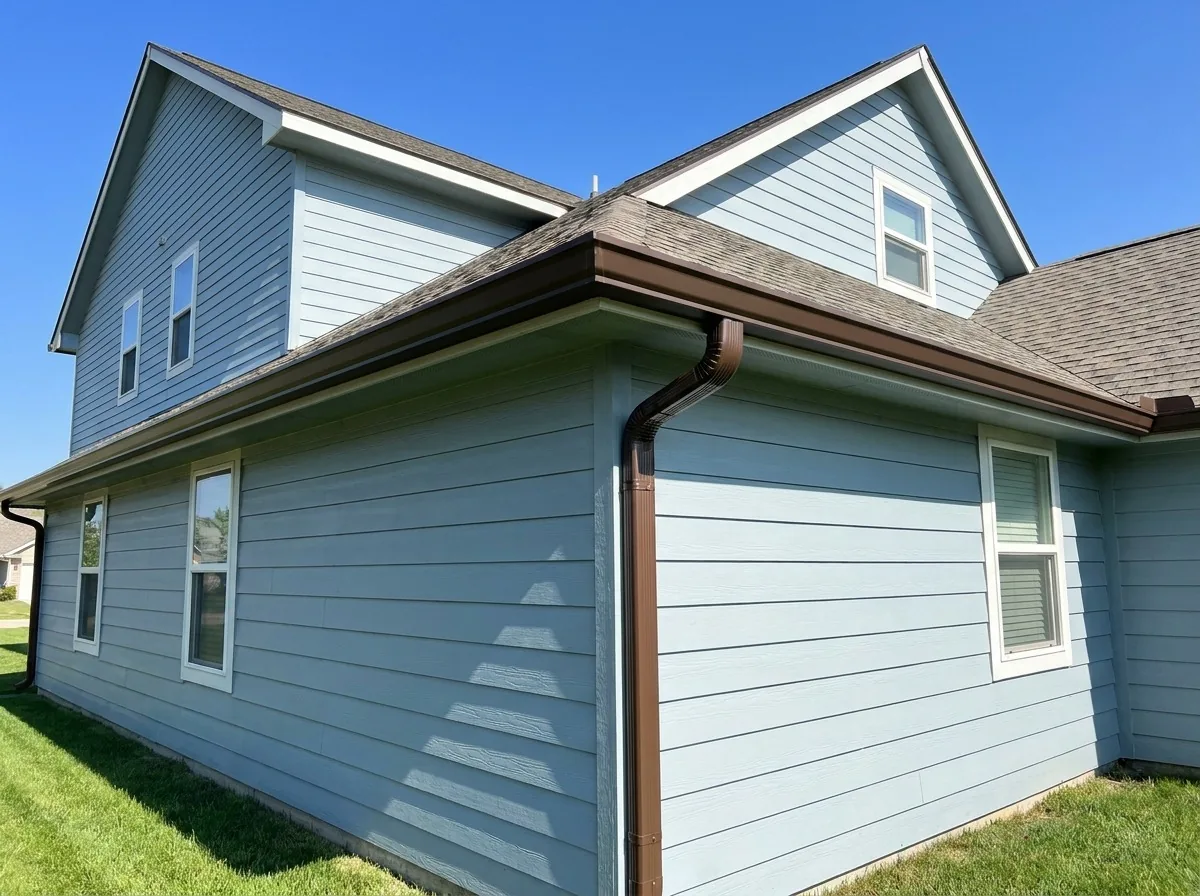
You can sometimes reset one or two spikes on a short single-story run with solid oak or dense fascia if winter is two weeks away and you only need to stop a drip. Treat that as triage.
Do not spike-repair a two-story colonial with daylight along the entire eave, cupping boards, or overflow into the flower beds. That job needs tear-off, fascia check, and hidden hangers on continuous coil—ideally in August–October before leaf drop and freeze-up. Pair the visit with gutter cleaning if mats are already stacked in the trough.
Hangers, guards, and ice dams—what hangers cannot fix
Hidden hangers keep the trough on the wall; they do not stop ice dams that start with attic heat and a frozen roof edge. Clear outlets and sound pitch still matter, and micro-mesh gutter guards only help after the hang is solid. If icicles form every January on a “tight” eave, read ice dam prevention in Minnesota and check insulation and ventilation—not just another row of spikes.
The same visit is a good time to retire sectional slip joints. Mid-run connectors open in freeze–thaw even when hangers are new. Pairing continuous coil with hidden hangers is the Minnesota default we hang from Albertville across the metro—market totals still depend on length, stories, fascia, and roof type after a free measure.
Ready for a free inspection?
EaveX will check hanger type, fascia condition, and pitch on site and tell you whether spikes can wait or the eave needs a real hang—with clear numbers, not a one-size pitch. Call (763) 313-8516 or request a free inspection online. We serve Minneapolis, St. Paul, Maple Grove, Plymouth, and the surrounding metro from our Albertville shop (5098 Main Ave NE). License BC808261.