Seamless gutters on a typical 2,000 sq ft Minnesota house usually land around $1,200–$3,500+ in the Twin Cities market (2026) before fascia work—most ranch footprints need about 140–200 linear feet of trough at $8–$14 per foot, while two-story or multi-valley roofs push footage and labor higher. Those bands are Minnesota market averages, not an EaveX price list; final cost depends on run length, stories, fascia condition, and roof type, confirmed on a free measurement.
Key takeaways
- Square footage is a starting clue, not a bid: gutters are priced by linear feet of eave, not by living-area sq ft alone.
- A common 2,000 sq ft ranch often needs ~150–180 lf; a two-story colonial with wings can need 200–250+ lf.
- Twin Cities 2026 trough band: $8–$14/lf for continuous 0.027-inch aluminum seamless gutter installation.
- Soft fascia often adds $15–$40/lf for fascia and soffit repair before new hangers will hold through freeze–thaw.
- EaveX: 1,200+ projects, 5.0 rating, 13+ years, license BC808261; financing from 0% APR (0.00–9.99%) with GreenSky, plan 6124 (not every buyer qualifies for 0%).
We measure from Albertville (5098 Main Ave NE) across Minneapolis, St. Paul, and the north and west metro. Below is how a “2,000 sq ft house” quote actually gets built here.
Why sq ft alone does not set the gutter price
Online calculators multiply living area by a magic number and spit out a total. Minnesota eaves do not work that way. A compact two-story with a simple rectangle can need fewer feet of gutter than a sprawling 2,000 sq ft rambler with three gables, a garage bump-out, and a covered porch.
What matters is the drip-edge length that has to catch roof water, plus corners, outlets, and height. That is why two neighbors with the same tax-assessed square footage can see quotes hundreds of dollars apart after a ladder measure.
Typical linear feet on a 2,000 sq ft Twin Cities home
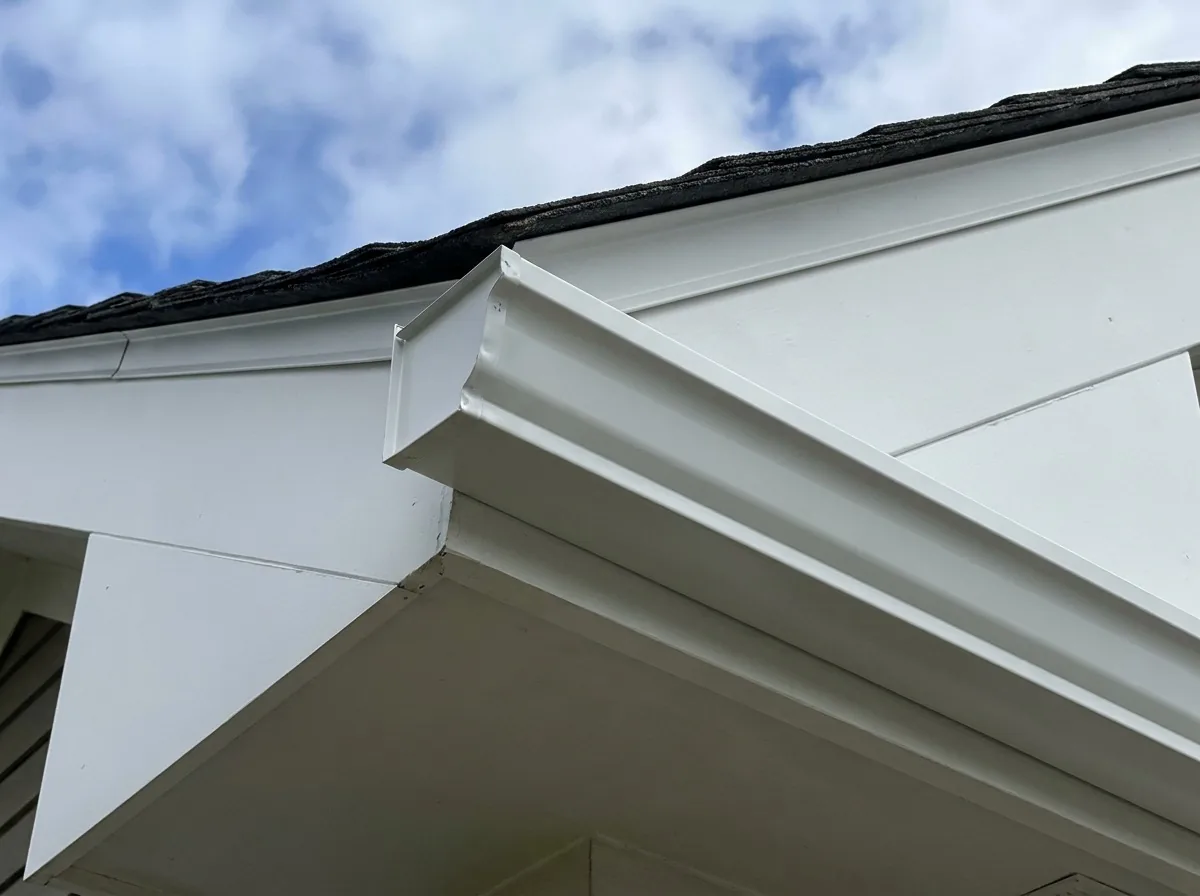
Use these as planning ranges for 2026—then measure. A single-story ranch with attached garage often sits near 150–190 lf. Add a screened porch or wraparound eave and you cross 200 lf. Two-story homes with hip roofs and valleys commonly land 180–240 lf of trough even when the heated footprint is still ~2,000 sq ft.
Steep north pitches and deep overhangs do not always add feet, but they add time: more hangers, careful pitch, and safer access. Inside miters and bay windows also add labor without showing up in the sq ft number on Zillow.
Twin Cities cost table for a ~2,000 sq ft house (2026)
| Scope (Twin Cities market, 2026) | Typical path | Market range (not EaveX pricing) |
|---|---|---|
| Ranch ~150–180 lf, hard fascia | New 5- or 6-inch seamless aluminum | Often $1,200–$2,500 |
| Two-story / complex ~200–240 lf | Continuous 0.027" trough + hangers ~24" | Often $1,800–$3,500+ |
| Soft or stained fascia first | Board repair/replace, then new trough | Fascia $15–$40/lf + trough $8–$14/lf |
| Upsize 5" → 6" on steep/multi-valley | Higher capacity K-style | Usually still inside $8–$14/lf band; footage drives total |
| Add micro-mesh after clean | Guards on sound new or existing trough | $8–$20/lf (2026 market avg) |
| Fall clean only (no new gutters) | Leaf/debris drop before freeze | Often $150–$350 for a standard home |
Ranges are Minnesota / Twin Cities market averages for 2026. Final cost depends on run length, stories, fascia condition, and roof type; free measurement. Compare the per-foot band in our seamless gutter cost Twin Cities guide and full-replace notes in gutter replacement cost.
5-inch vs 6-inch on a 2,000 sq ft roof
Many Twin Cities ranch roofs shed fine into 5-inch K-style when pitch is modest and valleys are few. Steep roofs, long valleys, and leaf-heavy lots (oak and maple) overflow 5-inch mid-span during summer storms—those homes often move to 6-inch when replacing. Upsizing is a capacity decision, not a square-footage rule; see 5-inch vs 6-inch gutters and when to upsize to 6-inch.
Either size is formed on site as continuous aluminum so you avoid the leak joints of sectional kits. Gauge for most homes here is 0.027-inch; thicker stock is a conversation for long ice-loaded eaves, not a default upsell tied to sq ft.
Fascia and hangers: the hidden line items
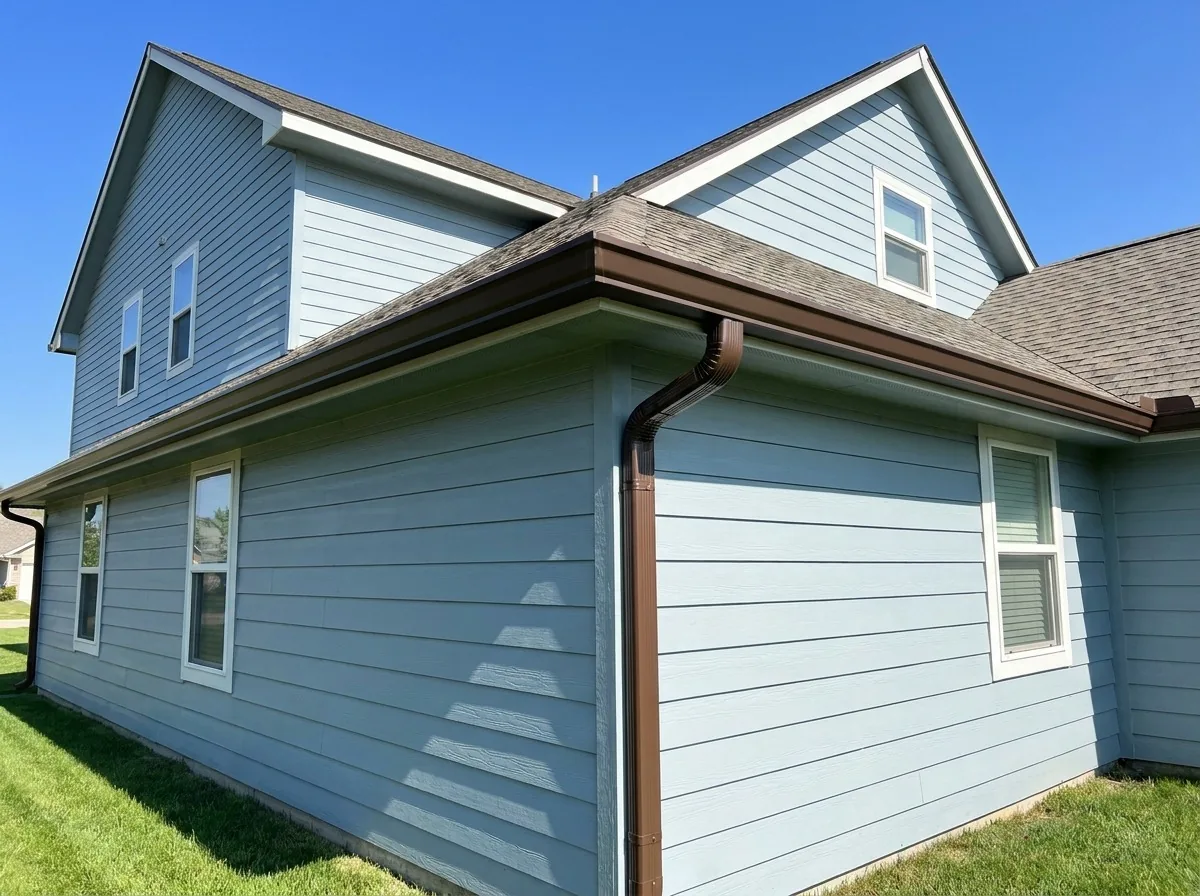
If the board under the old trough is soft, dark, or wavy, new screws will not hold a Minnesota winter. Budget fascia and soffit repair in the $15–$40/lf market band (2026) before or with the gutter swap—see new gutters on rotted fascia and wrap or replace fascia.
Hidden hangers about every 24 inches (tighter where ice loads the eave) beat old spike-and-ferrule nails that work loose after freeze–thaw. A re-hang alone can land $4–$9/lf when the trough is still sound—see gutter repair vs replacement and why gutters pull away—but most 2,000 sq ft quotes we see in fall are full seamless replacements once sectional joints and soft wood show up together.
Downspouts, discharge, and winter load
A 2,000 sq ft roof still needs enough outlets so melt does not pond at mid-span. Rule of thumb: an outlet about every 30–40 feet of run, then throw water 4–6 feet off the foundation. Undersized or frozen downspouts feed ice at the lip and kick off ice-dam season—pair new troughs with a clear discharge plan (how many downspouts).
Optional micro-mesh gutter guards after a clean cut leaf mats that load hangers before the first hard freeze. Guards do not replace attic air sealing for ice dams; they keep the channel clearer so pitch and outlets can do their job. Fall gutter cleaning on a house this size often sits near the $150–$350 Twin Cities market band (2026) when you are not replacing the trough yet.
What a free measurement checks on a 2,000 sq ft home
We walk the eaves, count inside corners, probe fascia hardness, note stories and access, and map outlets. You leave with footage and a clear replace-vs-repair path—not a driveway guess from tax records. Height, locked gates, and wrap vs paint-grade fascia all move labor even when square footage matches the neighbor’s.
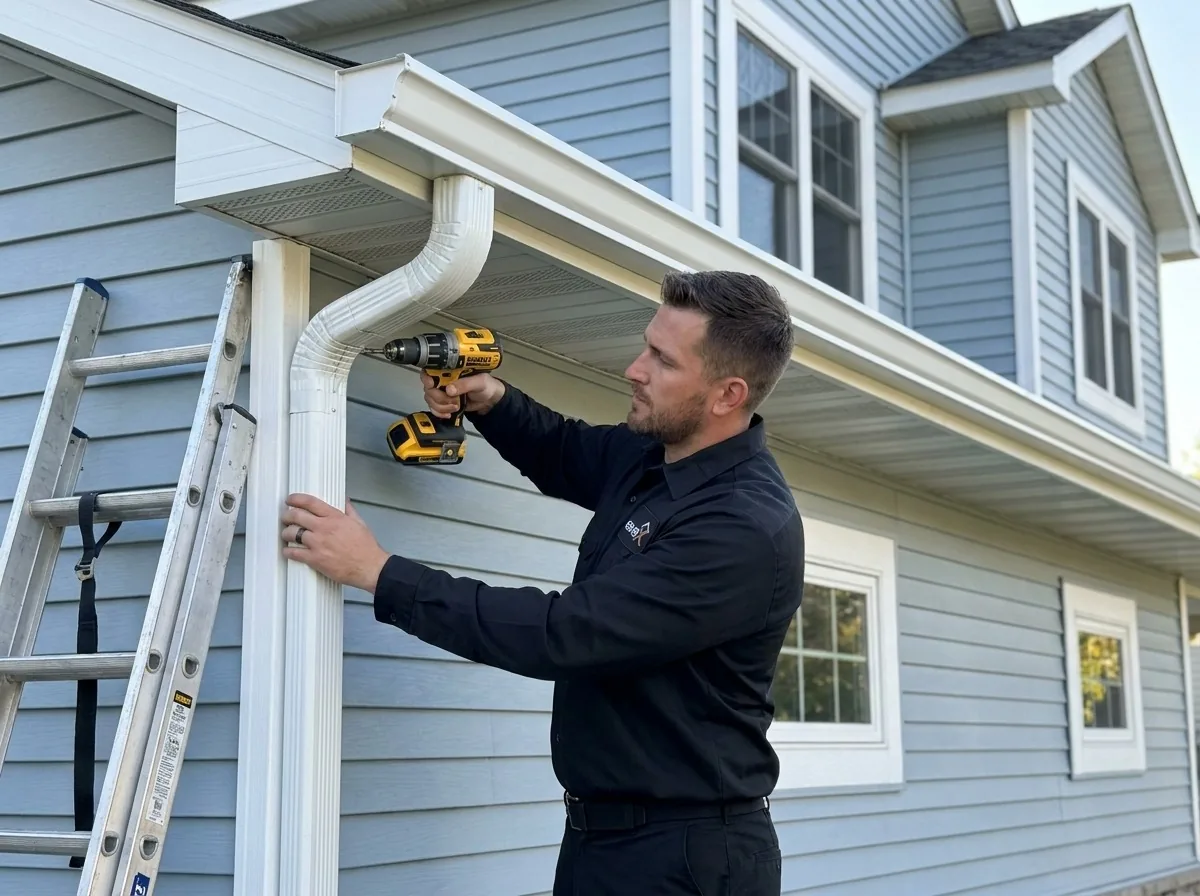
September–October is the last clean install window before freeze-up for most metro streets. If your 2,000 sq ft home still has sectional seams opening or troughs rolling forward, measure now rather than waiting for January ice to set the schedule.
One-day install reality for a 2,000 sq ft footprint
Most Twin Cities seamless jobs on a straightforward ranch finish in one day once fascia is ready: form continuous aluminum on site, hang, cut outlets, and set downspouts. Two-story eaves, locked side yards, or same-day fascia sistering can push into a second visit. Color-matched outlets and end caps are included in a normal scope; custom collector boxes and long buried drains are separate line items.
If you are replacing sectional steel that already leaks at every joint, expect the crew to pull the old trough, probe the board, and only then hang new metal. That sequence is why a phone quote from square footage alone under-shoots real Minnesota jobs—and why the free measurement lists footage, stories, and wood condition before you sign.
Ready for a free measurement?
EaveX will translate your footprint into real linear feet and a Minnesota-proof scope—seamless troughs, hangers, outlets, and fascia only where the wood needs it. Call (763) 313-8516 or request a free inspection online. We serve Minneapolis, St. Paul, Maple Grove, Plymouth, Albertville, and the surrounding metro from 5098 Main Ave NE, Albertville. License BC808261.