Should You Upsize to 6-Inch Gutters When Replacing in Minnesota? (2026)
Upsize to 6-inch gutters when you replace if your Minnesota roof dumps water faster than 5-inch troughs can carry—steep pitches, multiple valleys, large roof area, or chronic overflow in storms—even after a thorough clean. Many Twin Cities ranches still do fine on 5-inch K-style; the call is capacity vs cost, not fashion. Final sizing depends on roof square footage, pitch, valleys, and downspout count; a free measure settles it.
Key takeaways
- 5-inch handles many single-story Twin Cities roofs; 6-inch adds roughly ~40% more trough capacity and pairs better with heavy melt and multi-valley plans.
- Twin Cities market averages (2026) for seamless gutter installation run about $8–$14/lf (new) and $8–$16/lf for full replacement—6-inch often sits toward the high end of the band, not a separate “menu price.”
- Upsizing without enough downspouts (or upsizing outlets) still overflows—plan discharge 4–6+ feet from the foundation.
- Soft fascia must be fixed before either size; hangers on rotten wood fail in the first ice season—see fascia and soffit repair.
- EaveX: 1,200+ projects, 5.0 rating, 13+ years, license BC808261; financing from 0% APR (0.00–9.99%) with GreenSky, plan 6124 (not every buyer qualifies for 0%).
When 5-inch still makes sense on a Minnesota home
Keep 5-inch if your roof is modest, pitch is moderate, valleys are few, and overflow only happens when troughs are packed with oak leaves. A clean 5-inch system with correct pitch (~1/4 inch per 10 feet toward outlets) and enough downspouts outperforms a dirty 6-inch every time.
If stains under the eave appear only after weeks of skipped gutter cleaning, fix maintenance first. Upsizing is for roofs that still sheet water after outlets are open and pitch is verified with a hose test.
When upsizing to 6-inch pays off at replacement
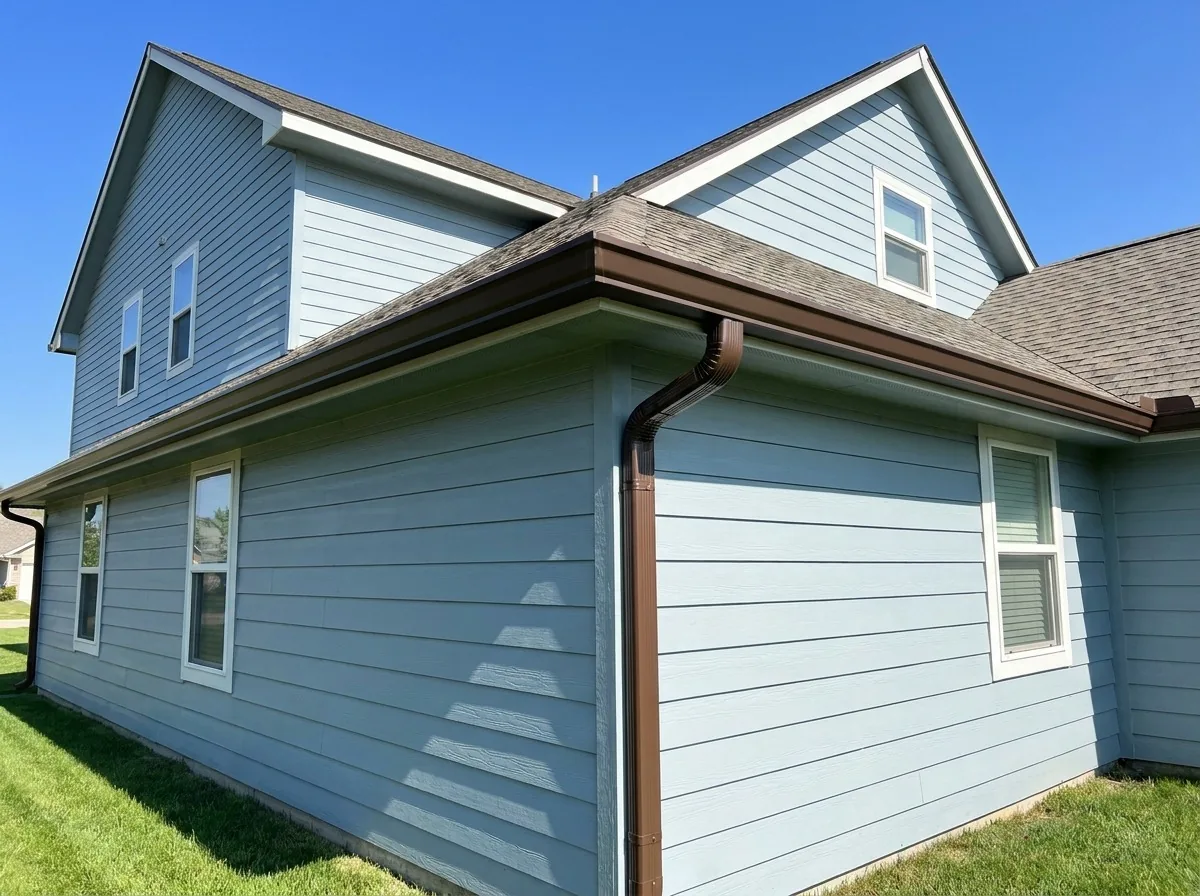
Choose 6-inch when storms send sheets over the front edge even with clear outlets, when two roof planes share one long run, or when ice-season melt overwhelms a 5-inch trough. Multi-story colonials, walk-outs with tall walls, and homes with deep valleys are common Twin Cities candidates.
Replacement day is the cheap moment to upsize: tear-off already exposes fascia, hangers, and outlets. Retrofitting 6-inch later means another mobilization and another round of ladder time. Compare the full sizing math in 5-inch vs 6-inch gutters in Minnesota and price context in gutter replacement cost in Minnesota.
Capacity and cost deltas (Twin Cities market 2026)
These figures are typical Twin Cities / Minnesota market averages for 2026, not an EaveX price list. Your total depends on linear footage, stories, fascia condition, and roof type; free inspection confirms the scope.
| Choice (market average, 2026) | Typical range / note | Best for |
|---|---|---|
| Stay on 5-inch seamless replace | Often mid of $8–$16/lf band | Modest ranch, few valleys, good downspout count |
| Upsize to 6-inch on replace | Same band, often +$1–$3/lf vs 5-inch on same house | Steep roofs, multi-valley, chronic storm overflow |
| Downspout / outlet upsized with 6-inch | Budget outlets + extensions | Prevents bottleneck at the elbow |
| Micro-mesh guards add-on | $6–$12/lf typical | Oak/maple/needle lots—mesh after sizing is right |
| Illustrative 170 lf ranch, 5→6 | Roughly +$170–$500 metal/labor delta | Before fascia; measure still required |
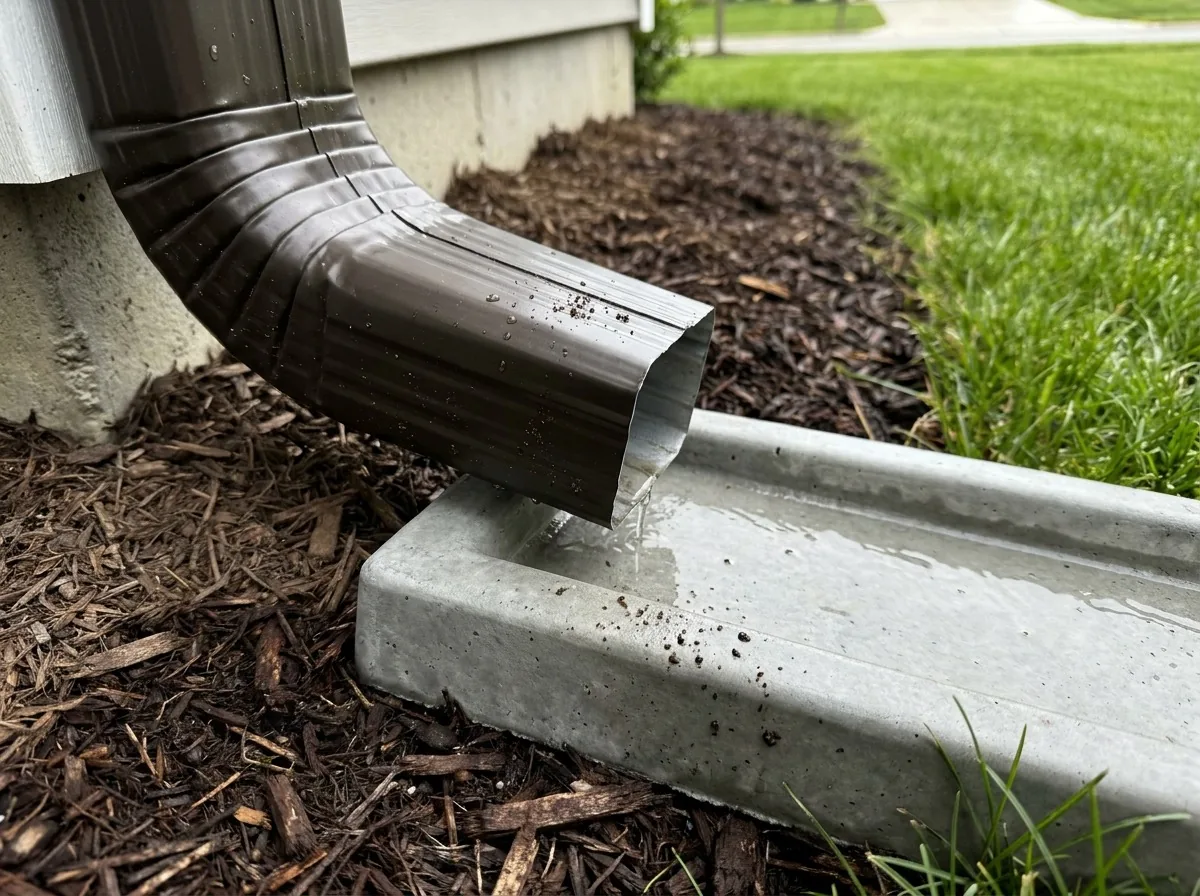
A 6-inch trough that dumps into a crushed 2×3 downspout still overflows. Upsize the water path end-to-end, then talk gutter guards if leaf load—not brand names—is the second problem.
Signs your current 5-inch system is undersized
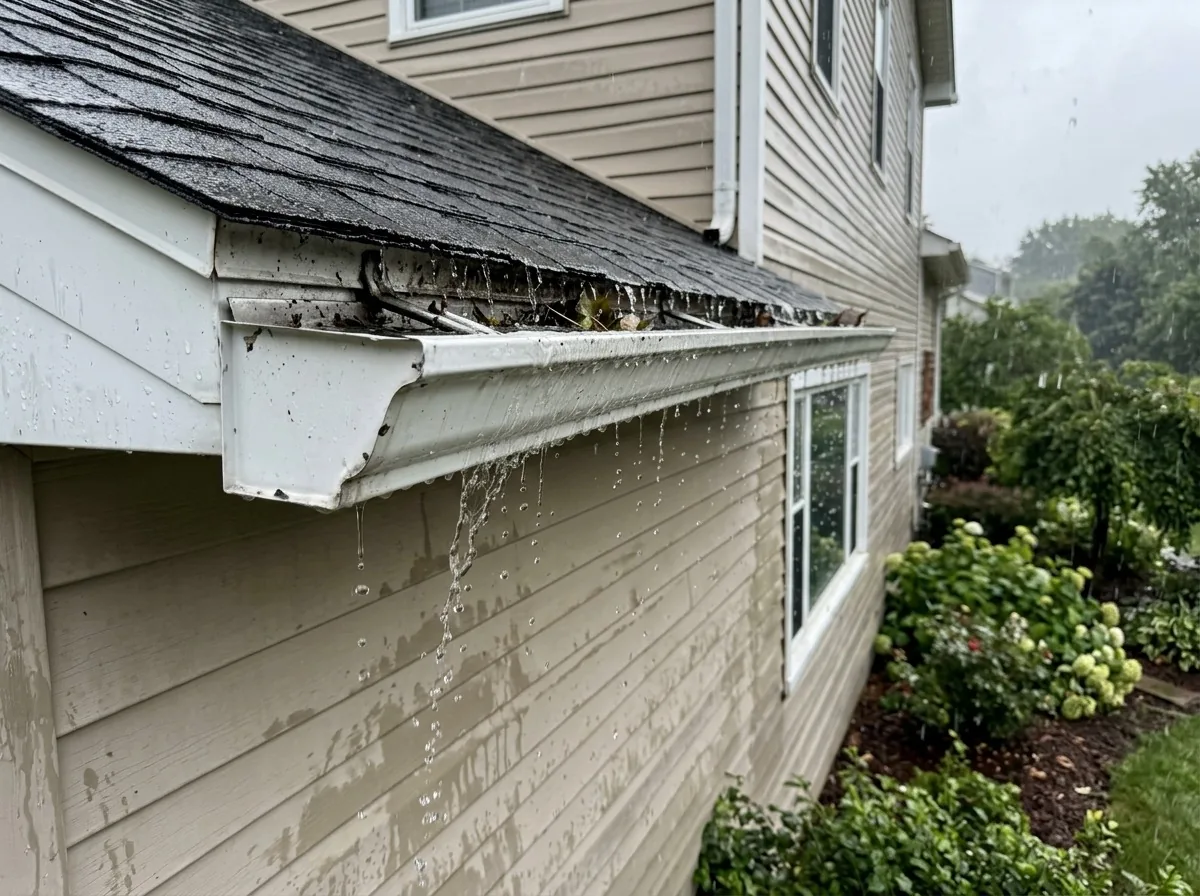
Watch for water sheeting over the front lip during a 20–30 minute downpour while outlets run clear, wet stripes on siding below the trough mid-run (not only at corners), and mulch washed away under long eaves after every storm. Those patterns point to capacity or pitch—not just a clog.
Also note ice shelves that form along the entire eave after a thaw while downspouts stay open: melt arrived faster than the trough could move it. Pair that observation with roof geometry before you blame “Minnesota weather” alone.
Minnesota climate: melt, ice, and leaf load
Spring melt and fall storms push the trough harder than a calm June rain. Ice that forms in a clogged 5-inch run can pry hangers and feed ice dams at the eave—upsizing helps only if pitch and outlets stay open through freeze-thaw.
Heavy maple and oak drop still fills any size trough. Micro-mesh or stainless steel mesh in an aluminum frame cuts cleaning frequency; it does not replace capacity. Pair sizing with fall cleaning cadence—see when to clean gutters before fall and prepare gutters for winter.
Downspouts, hangers, and fascia when you go wider
6-inch troughs need outlets and elbows that match. Hidden hangers at snow-aware spacing beat old spikes; soft fascia must be repaired or replaced so fasteners bite. Skipping wood work is how “new” gutters pull away by February.
If boards are soft, schedule fascia and soffit repair with the trough swap. For lifespan context on seamless aluminum, read how long seamless gutters last in Minnesota. Plan discharge 4–6+ feet from the foundation on clay Twin Cities soils so the wider trough does not simply move the wet spot closer to the basement wall.
Seamless aluminum: why size and thickness travel together
Most Twin Cities replacements use painted 0.027–0.032-inch seamless aluminum K-style formed on site. Upsizing the profile without sound coil thickness or hanger schedule still sags under ice. Seamless runs remove joint leaks that sectional 5-inch kits add every ten feet—useful when you are already paying for tear-off.
If you are choosing metal type as well as size, skim aluminum vs steel gutters in Minnesota. For Twin Cities ballpark numbers before you upsize, see seamless gutter cost in the Twin Cities. For most homes here, aluminum + correct size + solid fascia beats a heavier metal on soft boards.
How we size your eaves on a free inspection
We measure eave runs, note pitch and valleys, count downspouts, probe fascia, and check overflow stains. You get a written scope: stay on 5-inch, upsize to 6-inch, fix wood, and optional mesh—priced as Twin Cities market reality for 2026, with free measurement and no phone guess.
Financing is available from 0% APR (0.00–9.99%) with GreenSky, plan 6124—not every buyer qualifies for 0%. License BC808261. Homes from Albertville (5098 Main Ave NE) through Minneapolis, St. Paul, and the west metro get the same sizing rules: roof first, then trough, then guards.
Choosing capacity is only half the call—also compare seamless vs sectional gutters before you hang a taller kit with the same mid-run joints.
Free inspection: pick the right size before leaf drop
August through early October is the window to replace and upsize before oak drop and freeze. Call (763) 313-8516 or request a free inspection—EaveX, 1,200+ projects, 5.0 rating, 13+ years on Twin Cities roofs.