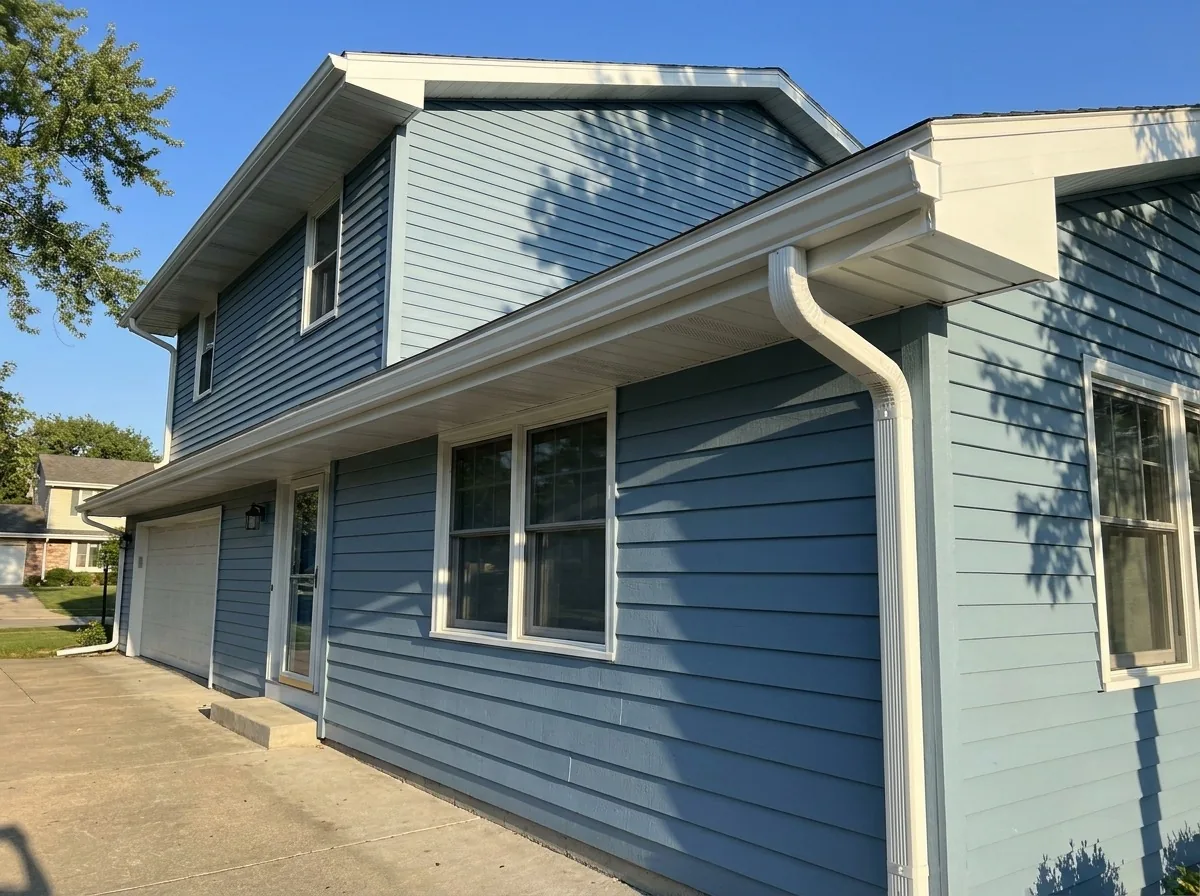
Seamless aluminum gutters on Twin Cities homes typically last 20–30 years when hangers, pitch, and fascia stay sound — shorter if spikes pull out, ice pries the trough, or the fascia rots underneath. Lifespan is less about the metal sheet and more about Minnesota freeze–thaw, snow load, and whether the system was hung right the first time. If you want a run-by-run check on your house, start with a seamless gutter installation free inspection.
Key takeaways
- Quality 0.027-inch seamless aluminum K-style gutters often reach 20–30 years in Minnesota with proper hangers and pitch; thin sectional systems and soft fascia fail sooner.
- Twin Cities stress factors: ice dams, ice weight in clogged troughs, spike-and-ferrule pull-out, and maple/pine debris that keeps water sitting against the fascia.
- Typical market ranges for full replacement in the Twin Cities (2026): about $8–$14 per linear foot for seamless aluminum installed — final cost depends on run length, stories, fascia condition, and roof type; measure is free.
- Repair makes sense for isolated leaks or short runs; full replace wins when seams, sag, or soft wood show up on more than one elevation.
- Financing is available from 0% APR (0.00–9.99%) with GreenSky, plan 6124 (not every buyer qualifies for 0%). License BC808261, 13+ years, 1,200+ projects, 5.0 rating.
EaveX installs from Albertville (5098 Main Ave NE) across Minneapolis, St. Paul, and the west/north metro. Below is how we estimate remaining life on a Minnesota eave — with numbers, not slogans.
What “lifespan” means on a Minnesota roof
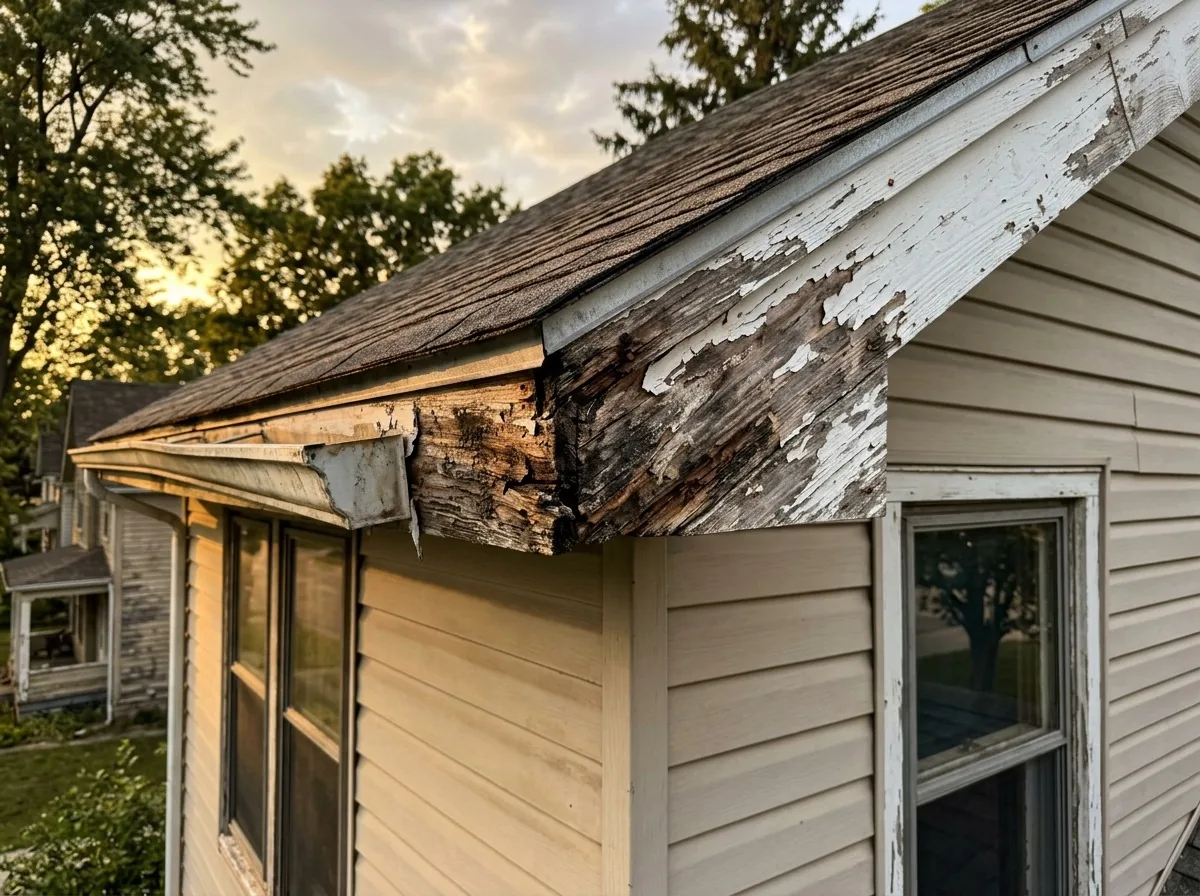
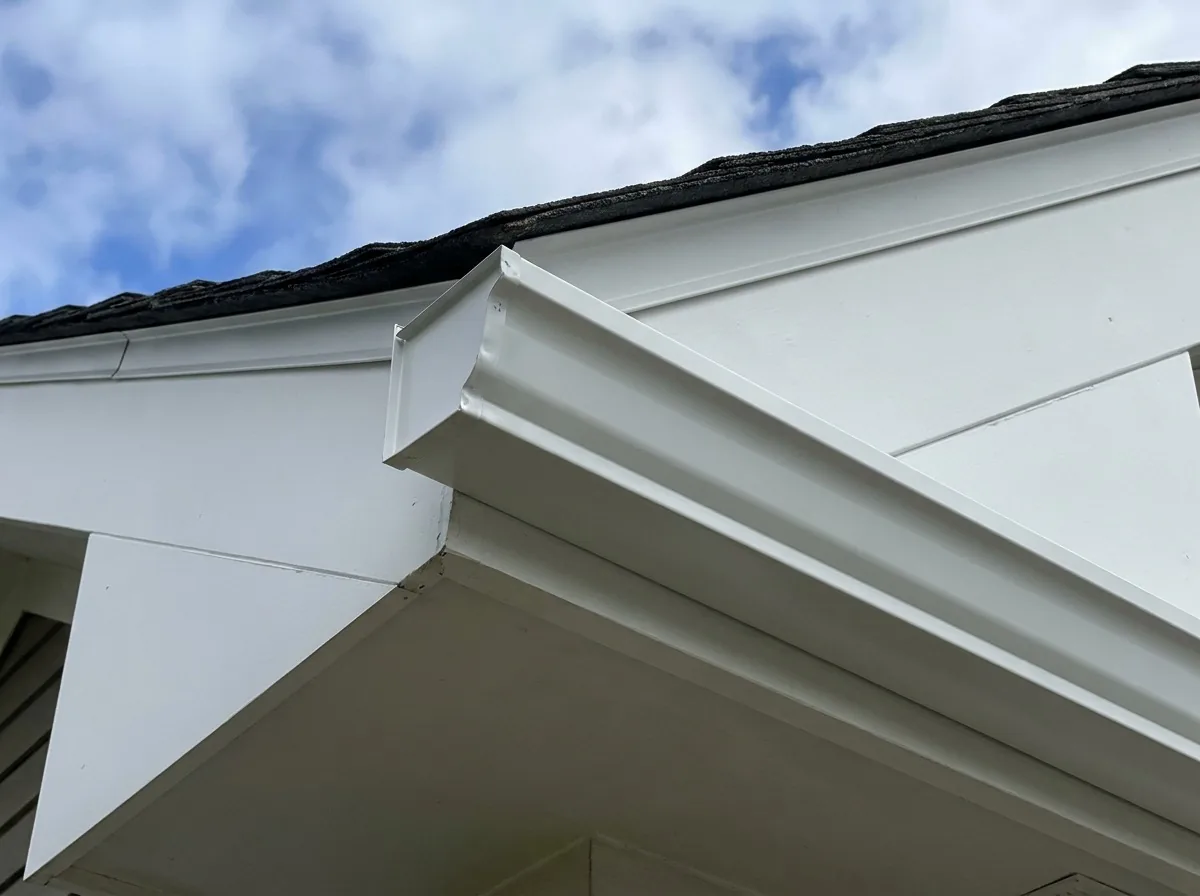
Manufacturers quote long material life for painted aluminum coil. In practice, the system fails when hangers loosen, the trough pulls away from the fascia, seams open, or soft wood behind the gutter lets fasteners spin. A 25-year coil on rotten fascia is still a two-season problem.
Minnesota adds freeze–thaw cycles, ice dams, and heavy wet snow that sectional systems were never designed to hold. That is why seamless runs with hidden hangers outlast old spike-and-ferrule installs on the same street.
Typical lifespan by material (Twin Cities)
These are field ranges we see on Twin Cities homes — not a warranty promise for every roof. Climate, pitch, and maintenance matter more than brand stickers.
| System | Typical Twin Cities lifespan | Notes |
|---|---|---|
| Seamless aluminum, 0.027", hidden hangers | 20–30 years | Most common residential upgrade in 2026 |
| Seamless aluminum, 0.032", hidden hangers | 20–30+ years shape retention | Premium stiffness on tall / ice-heavy eaves |
| Seamless aluminum, thinner coil / sparse hangers | 10–18 years | Pull-away and wave common after ice seasons |
| Sectional / DIY kit gutters | 8–15 years | Seams leak; ice finds every joint |
| Galvanized steel (older stock) | 15–25 years | Rust at seams and outlets; heavy |
| Copper (rare residential) | 40+ years | Premium cost; still needs solid fascia |
If your trough is still aluminum but the hangers are spikes every four feet, expect the trough to outlast the hanging system. We often replace hangers and re-pitch without replacing every foot of metal — when the coil itself is still sound.
How long do aluminum seamless gutters last in Minnesota?
Aluminum seamless gutters on Twin Cities homes typically last 20–30 years when you use residential 0.027-inch (or thicker) coil, hidden hangers, and sound fascia. That is the same answer most homeowners want when they search “aluminum seamless gutters Minnesota” or “how long do seamless gutters last”—the metal lasts if the hanging system and wood behind it last.
Thinner coil, spike hangers, or soft pine fascia commonly cut that window to 10–18 years after repeated ice seasons. Steel lasts in a different failure mode (rust at seams and outlets); aluminum fails when it waves, pulls away, or the board behind it rots. For the install path, start with seamless gutter installation rather than patching sectional joints one more winter.
| Aluminum seamless setup (MN field ranges) | Typical life | What shortens it |
|---|---|---|
| 0.027" coil + hidden hangers + solid fascia | 20–30 years | Ice dams + clogged troughs + soft wood |
| 0.032" coil + hidden hangers + solid fascia | Often holds shape longer on tall eaves | Same climate killers if fascia fails |
| Any coil + spikes / soft fascia | 10–18 years common | Pull-away after freeze–thaw |
Do 6-inch seamless gutters last longer in Minnesota?
Six-inch seamless gutters do not automatically outlast 5-inch—they last longer only when the extra capacity keeps ice and overflow off the fascia during Minnesota melt and cloudbursts. On Twin Cities homes with large roof planes, porch adds, or steep pitches, a correctly hung 6-inch K-style run often protects the wood longer because water leaves the eave instead of sitting against it. The coil gauge and hangers still set the metal’s life; size mainly protects the board behind it.
Homeowners searching “6 inch seamless gutters Minnesota” usually want capacity and longevity in one answer. Upsize when roof area or ice overflow demands it—not because 6-inch aluminum is a different alloy. Compare size choices in our 5-inch vs 6-inch gutters guide, then book seamless gutter installation for a measured recommendation.
| Size (seamless aluminum, MN field ranges) | Capacity role | Lifespan effect |
|---|---|---|
| 5-inch K-style | Most ranches / moderate planes | 20–30 yrs with solid hangers + fascia |
| 6-inch K-style | Large planes, steep pitches, ice overflow | Same metal life; often fewer fascia-soak events |
| 5-inch undersized for the roof | Overflow / ice on fascia | Soft wood shortens system life to 10–18 yrs |
What shortens gutter life in Minnesota winters
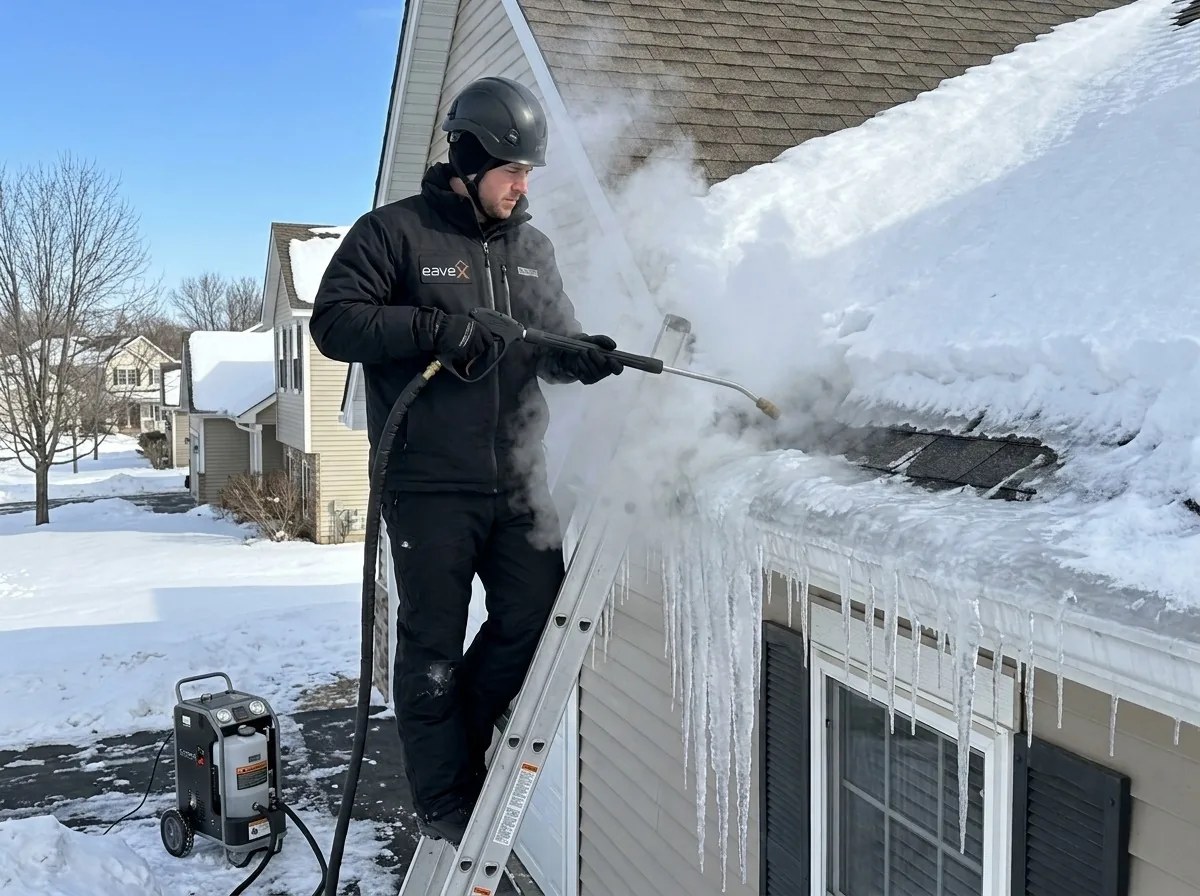
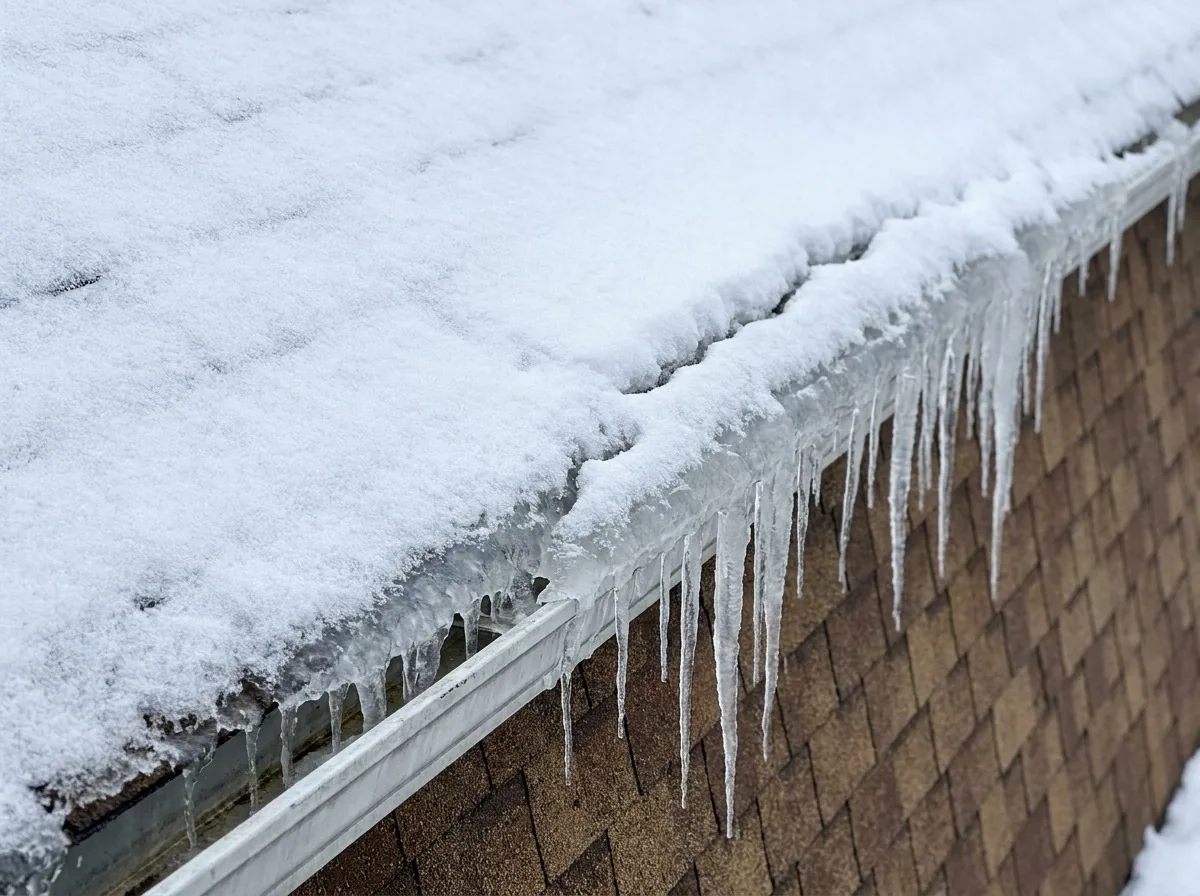
Ice dams form from attic heat loss, not from “bad gutters” alone — see our ice dam prevention guide for Minnesota. Damaged gutters make the water path worse: clogged troughs hold ice, overflow soaks fascia, and freeze–thaw pries hangers out of soft wood.
October leaf mats that sit until March are a second killer. Standing water rusts outlets, stains siding, and keeps the back edge wet against the fascia board. That is why July–September is the smart window to fix pitch, add gutter guards in Minnesota, or replace failing runs before leaf drop.
Signs your gutters are near the end
Walk the perimeter after a hard rain or March melt and look for:
- Gaps between the back of the gutter and the fascia
- Waves, dips, or standing water more than ½ inch deep after drain-down
- Visible seams leaking on sectional systems
- Soft or stained fascia wood — often needs fascia and soffit repair before new gutters Decide whether to wrap or replace fascia before the hang.
- Downspouts that dump against the foundation instead of 4–6 feet out
Our 7 signs your gutters are failing checklist covers the same walkthrough in more detail. If three or more elevations show pull-away, you are usually past spot-repair territory.
Repair vs replace: the lifespan decision
Spot repair works for a single loose hanger, a crushed corner, or one leaking joint on an otherwise straight, pitched run. Full replacement wins when seams, sag, or soft fascia show on multiple walls — or when you want to upsize from 5-inch to 6-inch for roof area. For the full decision tree, see gutter repair vs replacement. Timing the swap before leaf drop and freeze: when should you replace seamless gutters in Minnesota.
Bundling new seamless troughs with micro-mesh guards on one visit usually costs less than two mobilizations. Ask for that combo line on the estimate if trees sit within about 40 feet of the roof.
Twin Cities replacement cost context (2026)
These are typical Twin Cities / Minnesota market ranges for 2026 — not an EaveX price list. Final cost depends on linear footage, stories, fascia condition, and roof type. On-site measure is free; you get a fixed written quote.
| Scope (Twin Cities, 2026) | Typical market range |
|---|---|
| Seamless aluminum gutters installed | $8 – $14 per linear foot |
| 160 ft ranch — gutters only (ballpark) | $1,280 – $2,240 |
| Minor fascia repair before hang | Often $200 – $800+ |
| Micro-mesh guards add-on | $6 – $12 per linear foot |
| Combo gutters + guards | Often less than two separate jobs |
For a deeper price breakdown, see how much seamless gutters cost in the Twin Cities. If you are comparing full tear-off quotes, use our gutter replacement cost in Minnesota guide (includes gutter installation cost near me vs replace). Financing is available from 0% APR (0.00–9.99%) with GreenSky, plan 6124 — not every buyer qualifies for 0%.
How we extend life on install day
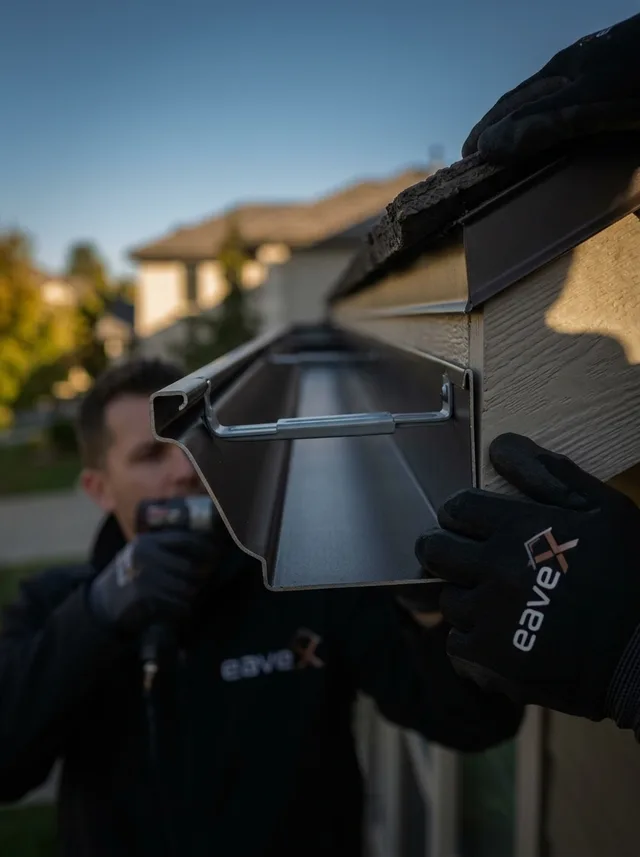
We hang seamless aluminum with hidden hangers at spacing suited to Minnesota snow load, set pitch toward outlets, and size downspouts for the roof plane — not a one-size kit. Where fascia is soft, we fix wood first so new fasteners bite. Where debris is heavy, we discuss micro-mesh (stainless mesh on an aluminum frame) so meltwater can still reach the outlet.
Homes in Maple Grove and Plymouth with mature canopy get the same hanging standard as open prairie lots — the difference is outlet count and whether guards make sense for needles year-round.
Maintenance that actually adds years
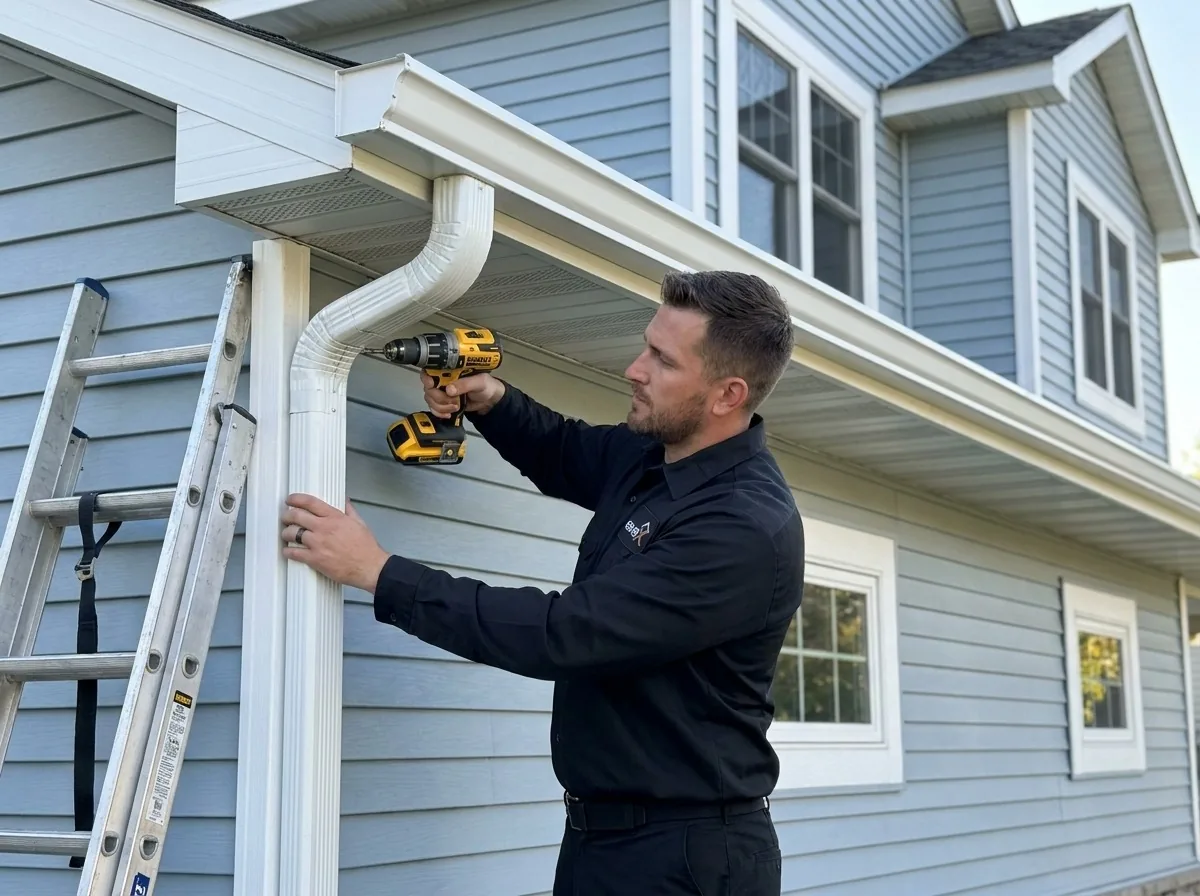
You do not need monthly ladder climbs. You do need:
- Clear outlets before the first hard freeze and after spring breakup (or install guards and brush the mesh yearly).
- Keep downspout extensions aimed away from the foundation.
- Call for a look if you see new gaps, stains, or ice sheets over the fascia — early gutter cleaning or hanger work is cheaper than fascia replacement.
Pair that with our prepare gutters for Minnesota winter checklist each fall.
Next step: get a remaining-life read on your eaves
Bring photos of any pull-away, soft fascia, or overflow stains — or skip the guesswork and request a free inspection. We measure runs, check hangers and wood, and tell you straight whether repair, re-hang, or full seamless gutter replacement is the smarter spend.
Call (763) 313-8516 or book online. License BC808261. Written quote after the measure — usually within 24–48 hours on site.