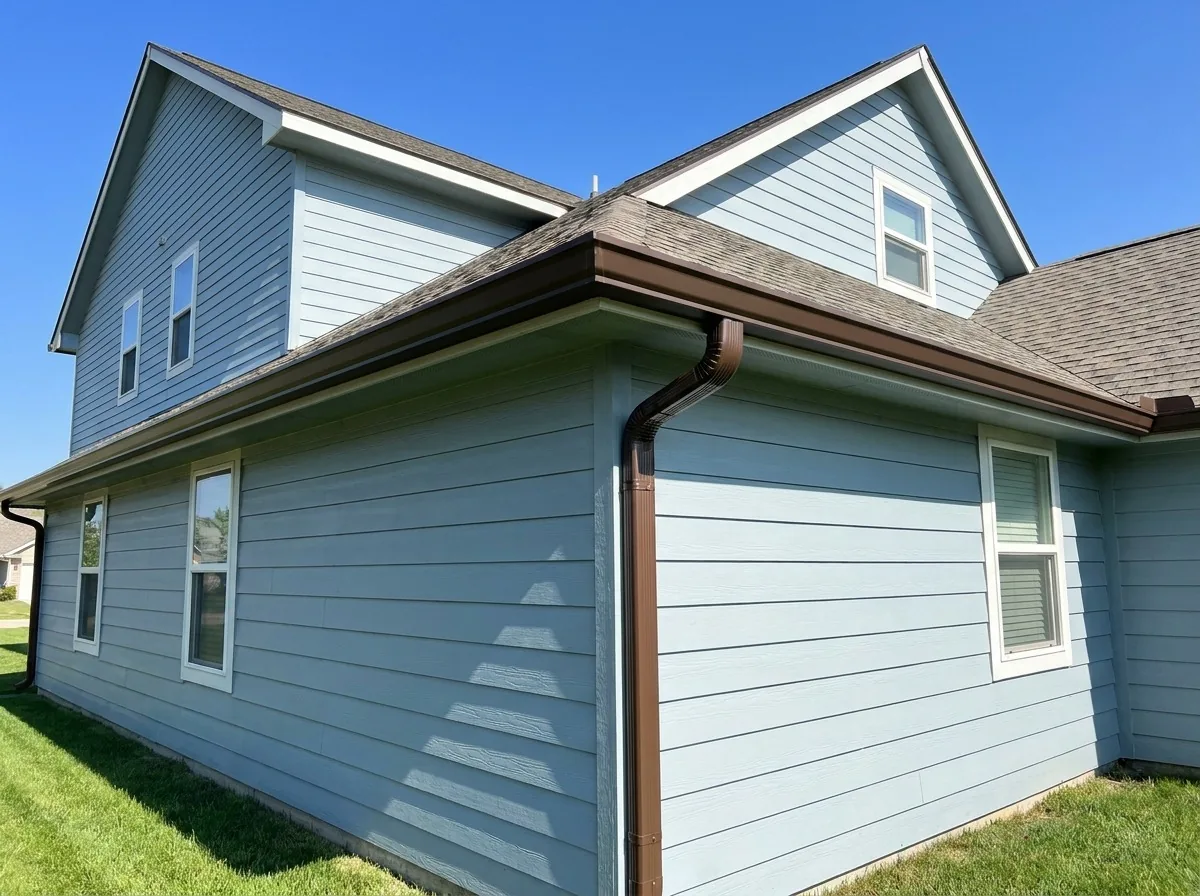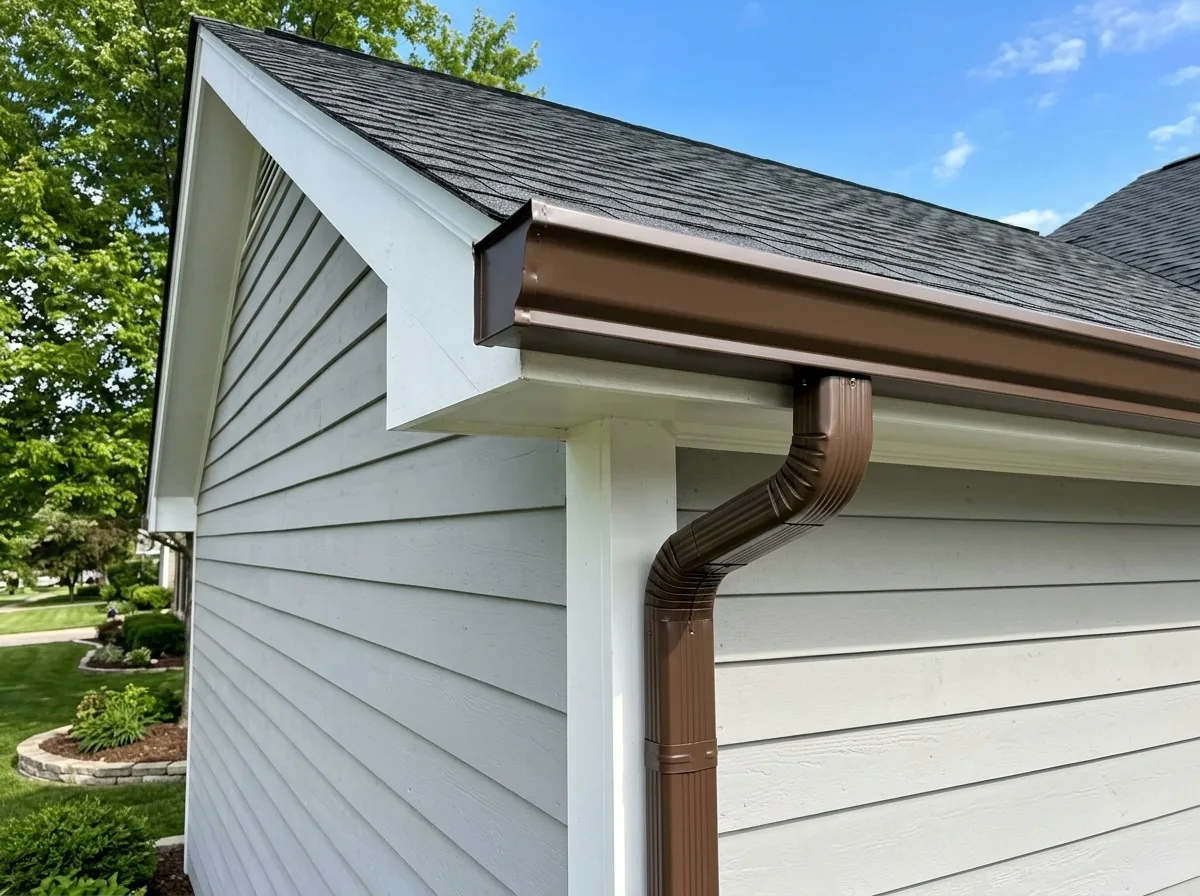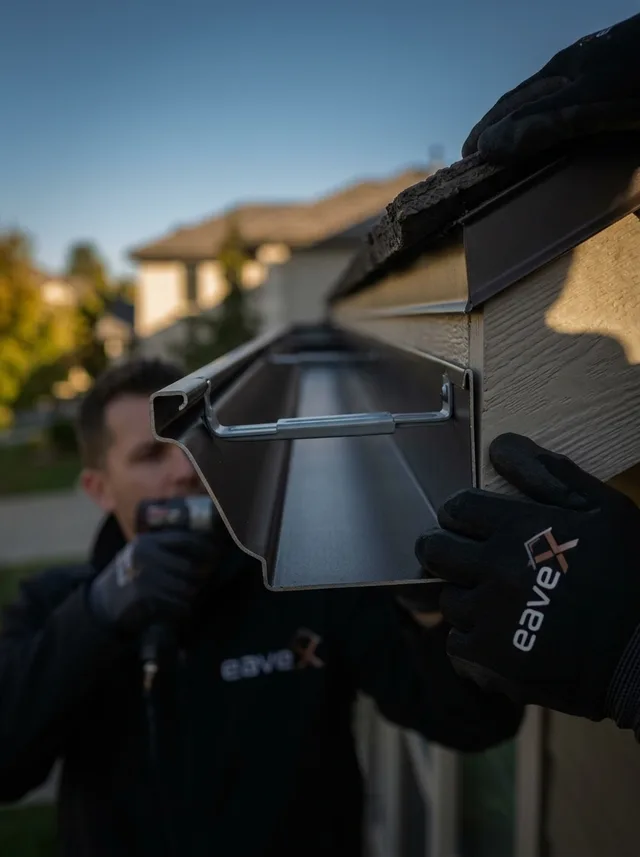
Seamless gutters can still leak in Minnesota—usually at outlets, end caps, miters, or behind the trough when hangers loosen or fascia softens—not because the long run has a mid-seam like a kit. Continuous coil removes the every-10-foot connector problem; it does not erase bad pitch, clogged downspouts, or ice that pries fittings. If water is staining siding after a thaw, start with a free seamless gutter installation inspection rather than another tube of sealant.
Key takeaways
- Seamless ≠ leak-proof forever. Long runs have no mid-joints; corners, outlets, and hangers still need Minnesota-grade detailing.
- Most Twin Cities “seamless leaks” are standing water + freeze–thaw, soft fascia, or clogged outlets—same climate load that opens sectional kits faster.
- Typical market ranges in 2026: seamless aluminum about $8–$14/lf installed; fascia repair often $15–$40/lf; micro-mesh guards about $6–$12/lf—market averages, not an EaveX price list; measure is free.
- Fix pitch and wood first; resealing the same low spot every spring is a money pit.
- Financing is available from 0% APR (0.00–9.99%) with GreenSky, plan 6124 (not every buyer qualifies for 0%). License BC808261, 13+ years, 1,200+ projects, 5.0 rating.
EaveX works from Albertville (5098 Main Ave NE) across Minneapolis, St. Paul, and the west/north metro. Below is how seamless leaks actually show up on Twin Cities eaves—and what to do before leaf drop and the first hard freeze.
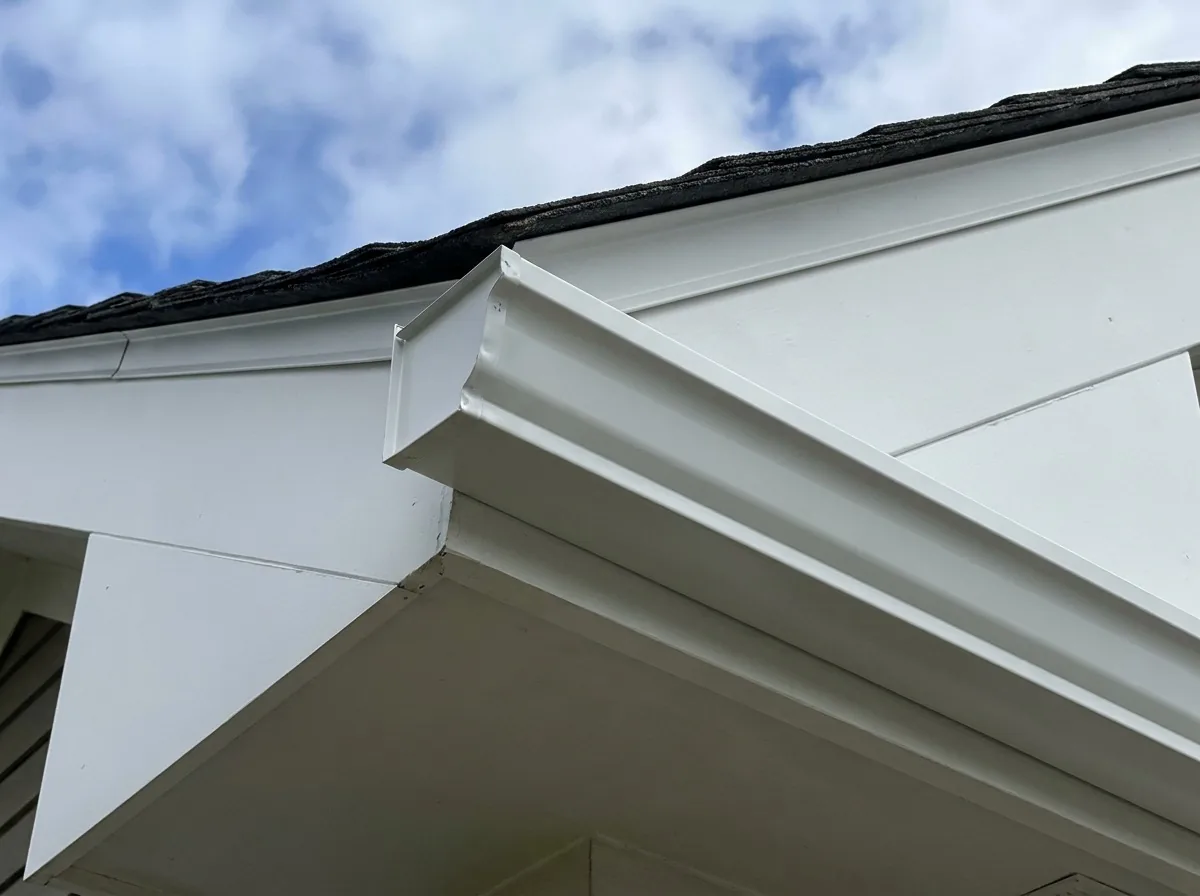
Where seamless systems actually leak
Walk the house after a hard rain or March melt. Mark every wet stripe. On continuous aluminum you will almost never find a mid-run slip joint—the failure is usually:
- Outlets and downspout miters that lost sealant or pulled when ice expanded
- End caps that were never crimped/sealed for freeze–thaw
- Inside/outside corners fabricated on site and stressed by snow load
- Back-edge overflow when the trough pulls 1/8 inch off the fascia
- Hidden rot behind hangers so the whole run sags into a pond
If the trough is full of oak mats and water sheets over the front lip, that is overflow—not a “seam.” Clear the run or schedule gutter cleaning, then reassess. For the kit-vs-coil decision itself, see seamless vs sectional gutters in Minnesota.
Why Minnesota freeze–thaw finds every weak fitting
Minnesota winters mean repeated melt–refreeze at the eave, not one pretty snow. Water sits in a low spot, freezes, expands, and pries anything that was only glued. Road-salt splash on lower elbows speeds corrosion on cheap fittings. Oak and maple hold moisture against corners all fall.
Seamless coil still needs about 1/4 inch of pitch per 10 feet and clear outlets. Without pitch, you built a skating rink in a trough—continuous or not. Ice dams that start in the attic will dump melt over the face of any gutter; clear troughs help, but they do not replace attic ventilation—read ice dam prevention in Minnesota. Homeowners sometimes blame “thin aluminum” after February—dent resistance and gauge matter, but a 0.027–0.032-inch run with hidden hangers fails less often than a thicker kit with open connectors. Gauge trade-offs are covered in 0.027 vs 0.032 aluminum gutter gauge.
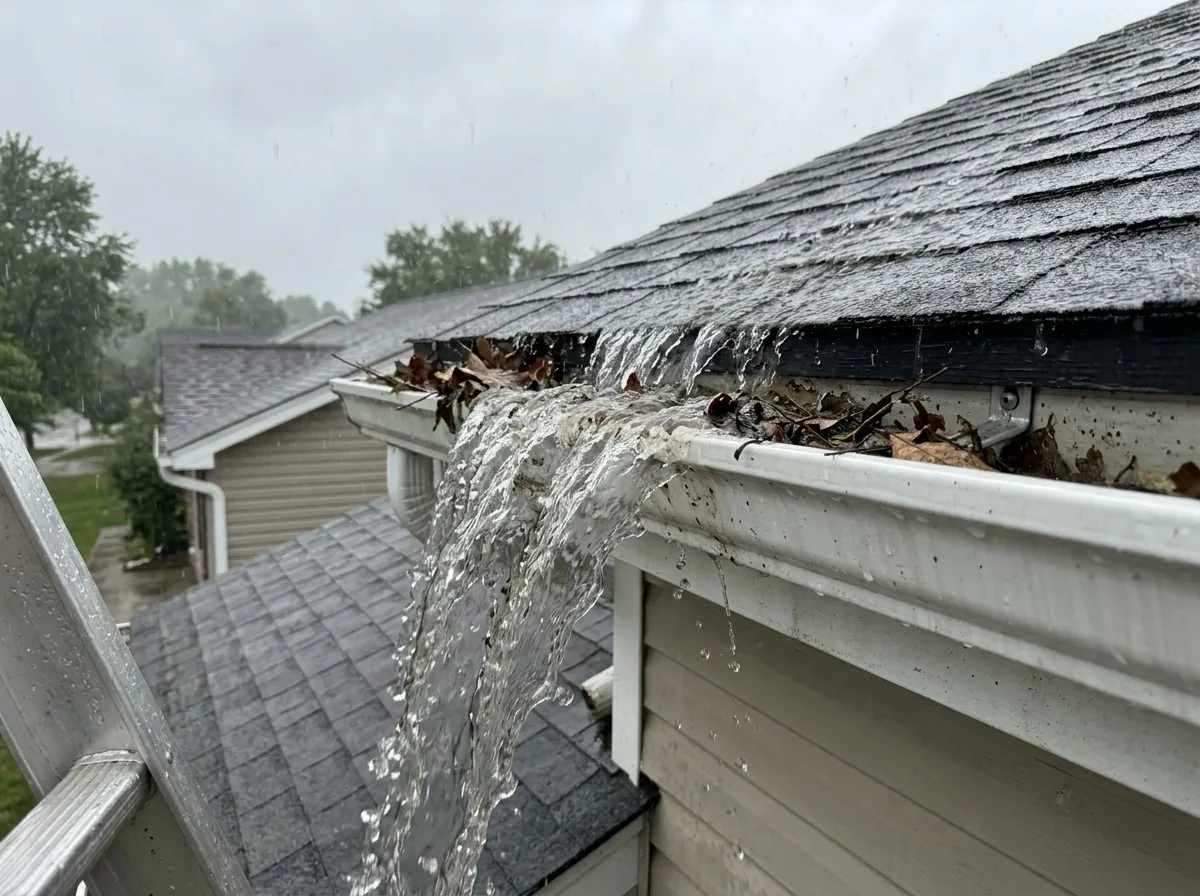
Leak source vs what usually fixes it (2026)
| What you see | Likely cause | Typical Twin Cities fix (2026 market) |
|---|---|---|
| Wet stripe at one corner only | Open miter / end-cap seal | Reseal or remake corner; confirm hangers |
| Stripe along a long wall | Sag / low spot / soft fascia | Rehang with hidden hangers; repair wood |
| Water behind the trough | Pull-away from fascia | Fascia check + new hangers (~$15–$40/lf wood work common) |
| Sheet overflow in storms | Undersized trough or clogged outlet | Clean; consider 6-inch + bigger downspouts |
| Leak every 8–10 ft on old kit | Sectional connectors | Replace with continuous seamless gutters |
Ranges are Minnesota market averages for 2026, not an EaveX price list. Final cost depends on run length, stories, fascia condition, and roof type; free measure on site.
Soft fascia: the leak that looks like “bad gutters”
Hangers screwed into cupped, stained, or soft pine walk out under ice. The painted aluminum can look fine from the driveway while water slips behind the back edge and into the soffit. That is a fascia and soffit repair problem first—new coil on rotten wood repeats the leak within a season. See what happens if you hang new gutters on rotted fascia before ordering more metal.
Pull-away gaps of even an eighth of an inch are enough for melt to track into the eave cavity. If you also see wavy runs or stained soffit vents, treat wood and hangers as one job—not a weekend caulk fix. Our checklist for gutters pulling away from the house pairs well with this walk-around.
Pitch, hangers, and size—not more sealant
Spike-and-ferrule kits pull; hidden hangers into solid wood hold Twin Cities snow better. Spacing is often about every 24 inches, tighter on long or ice-loaded eaves. If summer storms overtop a clean 5-inch run, capacity—not magic sealant—is the issue; compare 5-inch vs 6-inch gutters.
Patching the same outlet three springs in a row usually means the trough is low, the outlet is undersized, or the fascia moved. A written measure beats another caulk trip. Lifespan context for sound aluminum coil is in how long seamless gutters last in Minnesota. When the whole elevation is wavy, use when to replace seamless gutters instead of chasing fittings forever.
Guards help debris—not a cracked outlet
Micro-mesh (stainless steel mesh on an aluminum frame) cuts leaf mats that freeze into ice plugs on wooded Twin Cities lots. Guards do not close an open miter or lift a sagging run. Market range with a full install is often about $6–$12/lf in 2026—not an EaveX price list. Pair guards with sound hangers and clear downspouts dumping 4–6 feet from the foundation. Timing tips: install gutter guards before fall leaf drop.
If overflow only happens when the trough is packed with seed and grit, clean first—then decide on guards. Cost context for cleaning visits is in gutter cleaning cost in Minnesota.
Repair vs replace when leaks keep returning
Repair wins for one crushed corner, one outlet, or a short sag on otherwise straight, pitched coil with solid fascia. Replace when pull-away, waves, or ice overflow show on multiple elevations—or when you are still on builder-grade sectional connectors. Use gutter repair vs replacement for the decision tree. Whole-house pricing context lives in the Twin Cities seamless cost guide and gutter replacement cost in Minnesota.
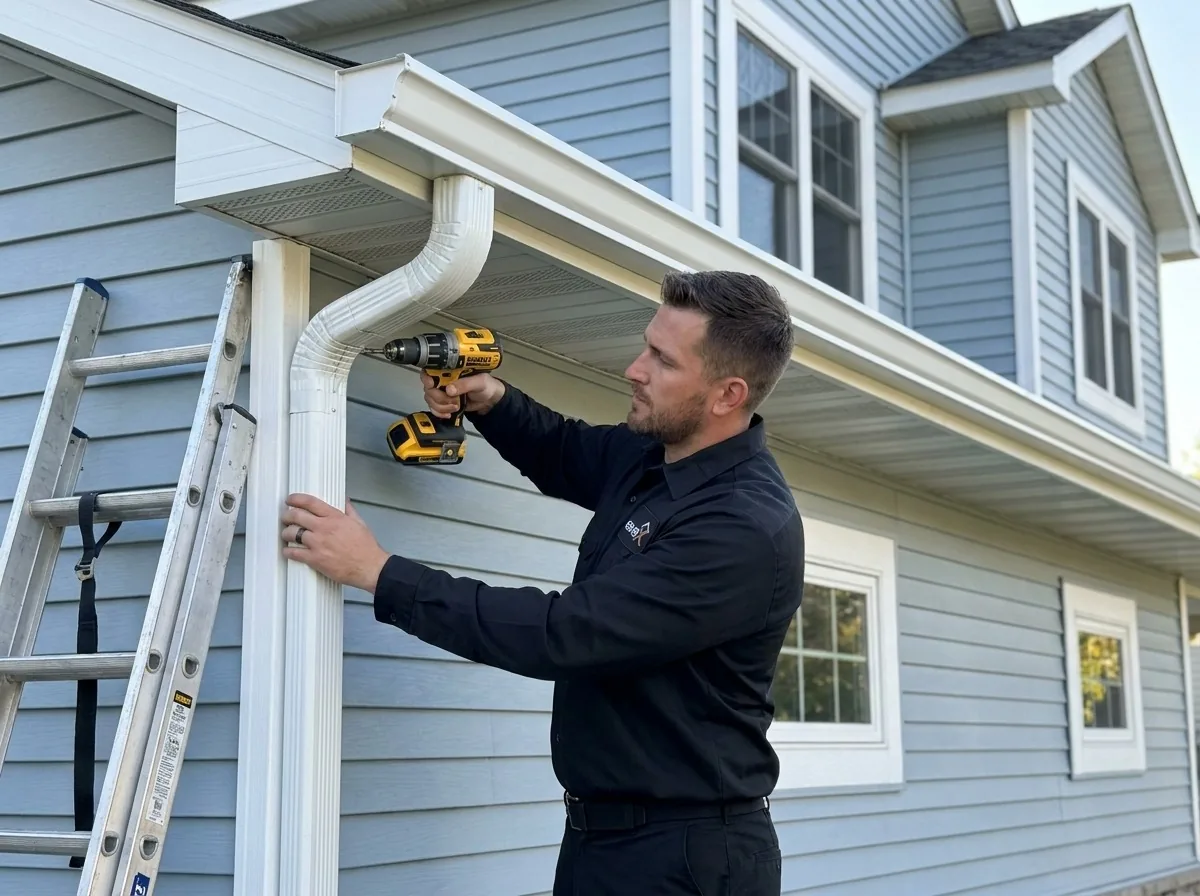
September–October: stop leaks before freeze-up
Late summer through early October is the window to rehang, remake corners, and fix fascia before oak dump and hard freeze. Waiting until a January ice dam turns a few hundred dollars of corner work into soft wood and a spring emergency. We measure eaves in Maple Grove, Plymouth, and the surrounding metro from Albertville.
If you are already seeing stripes on siding after every rain, do not wait for the first freeze—book the measure while crews can still roll coil on open days. Prep steps for winter also sit in prepare gutters for Minnesota winter.
Book the free inspection
EaveX will find whether your “seamless leak” is pitch, wood, an outlet, or a system that should have been continuous coil years ago—with clear numbers, not a one-size pitch. Call (763) 313-8516 or request a free inspection online. License BC808261. Financing from 0% APR (0.00–9.99%) with GreenSky, plan 6124—not every buyer qualifies for 0%.