Should You Install Gutter Guards in November in Minnesota? (2026)
Yes — November is often a better Twin Cities window for gutter guards than mid-September if your oaks have dropped and the trough is empty, as long as install day stays dry and above freezing. Waiting until March leaves an open trough for ice-dam season. Book a free gutter guards measure while the eaves are still bare.
Key takeaways
- A September or early-October guard job beats maple drop. A November job beats oak drop — the leaves that refill a mid-October trough.
- At MSP Airport the median first 24°F night is around November 3 (Minnesota DNR frost table). That hard-freeze line — not the first frosty morning in early October — is what actually closes the install window.
- Typical Twin Cities 2026 market range for micro-mesh guards is about $8–$20 per linear foot installed. That is a Minnesota market average, not an EaveX price list. The total depends on run length, stories, fascia condition, and roof type; the measurement is free.
- The trough still needs gutter cleaning before the mesh goes on. Guards over packed November leaves just lock debris in.
- Financing is available from 0% APR (0.00–9.99%) with GreenSky, plan 6124 (not every buyer qualifies for 0%). License BC808261, 13+ years, 1,200+ projects, 5.0 rating.
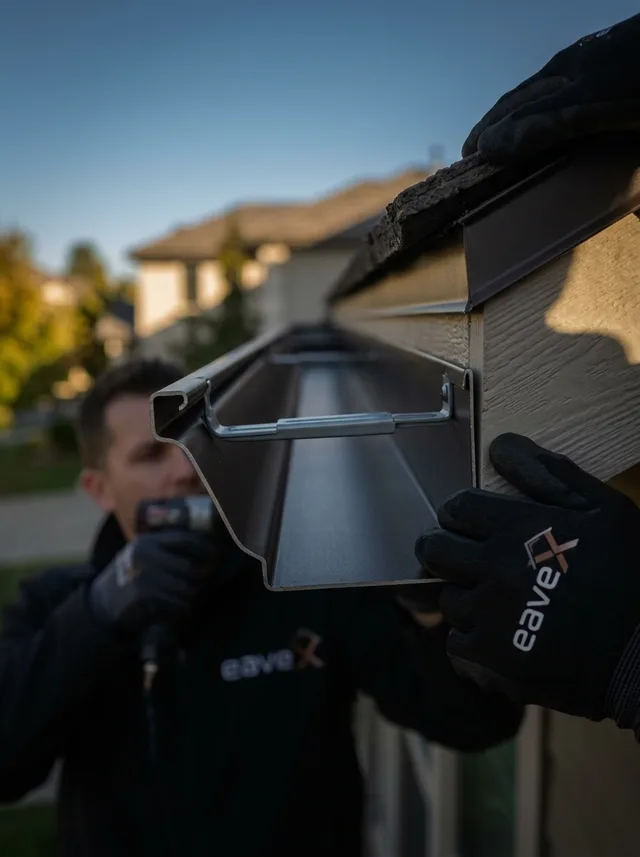
EaveX works from Albertville (5098 Main Ave NE) across Minneapolis, St. Paul, and the west and north metro. The “before leaf drop” question lives in Should You Install Gutter Guards Before Fall Leaf Drop. This page answers the November question only: is it still worth putting mesh on after the oaks let go.
Why November is different from a September guard install
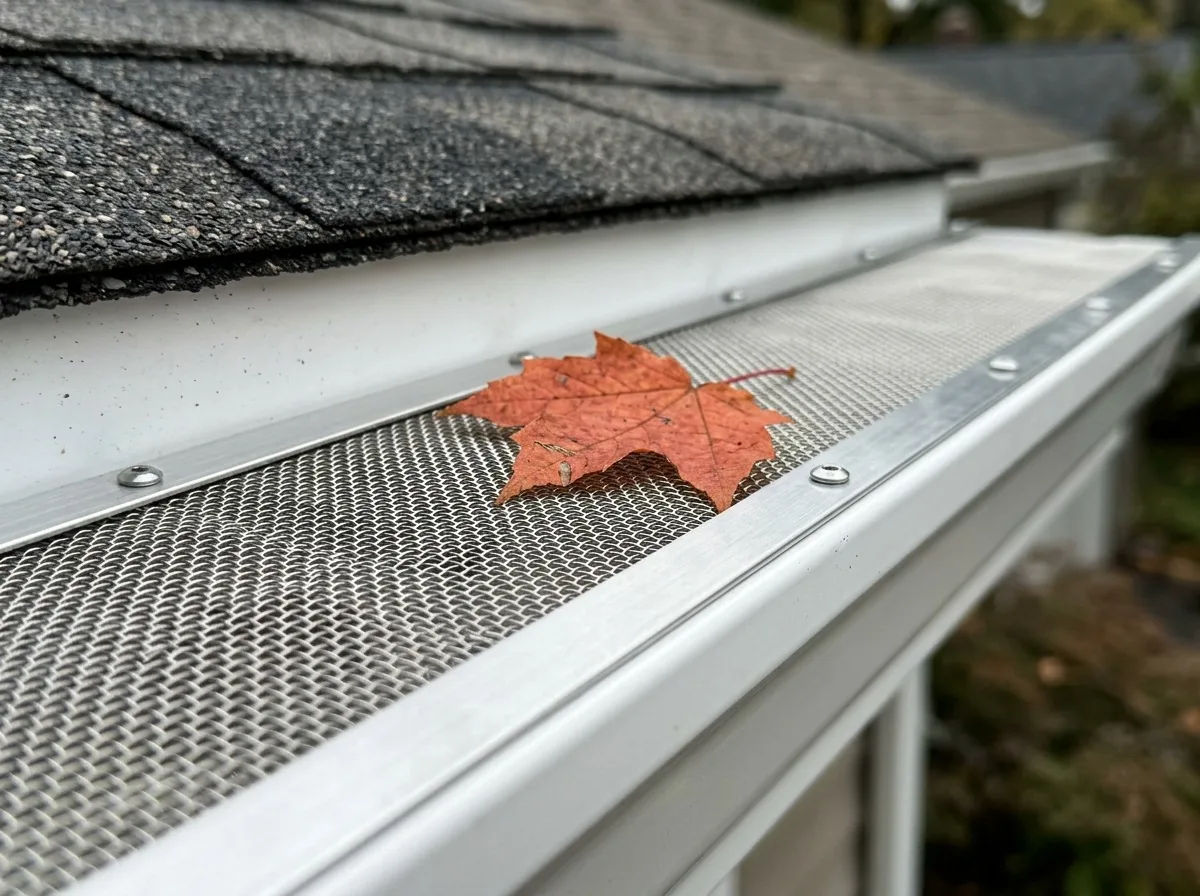
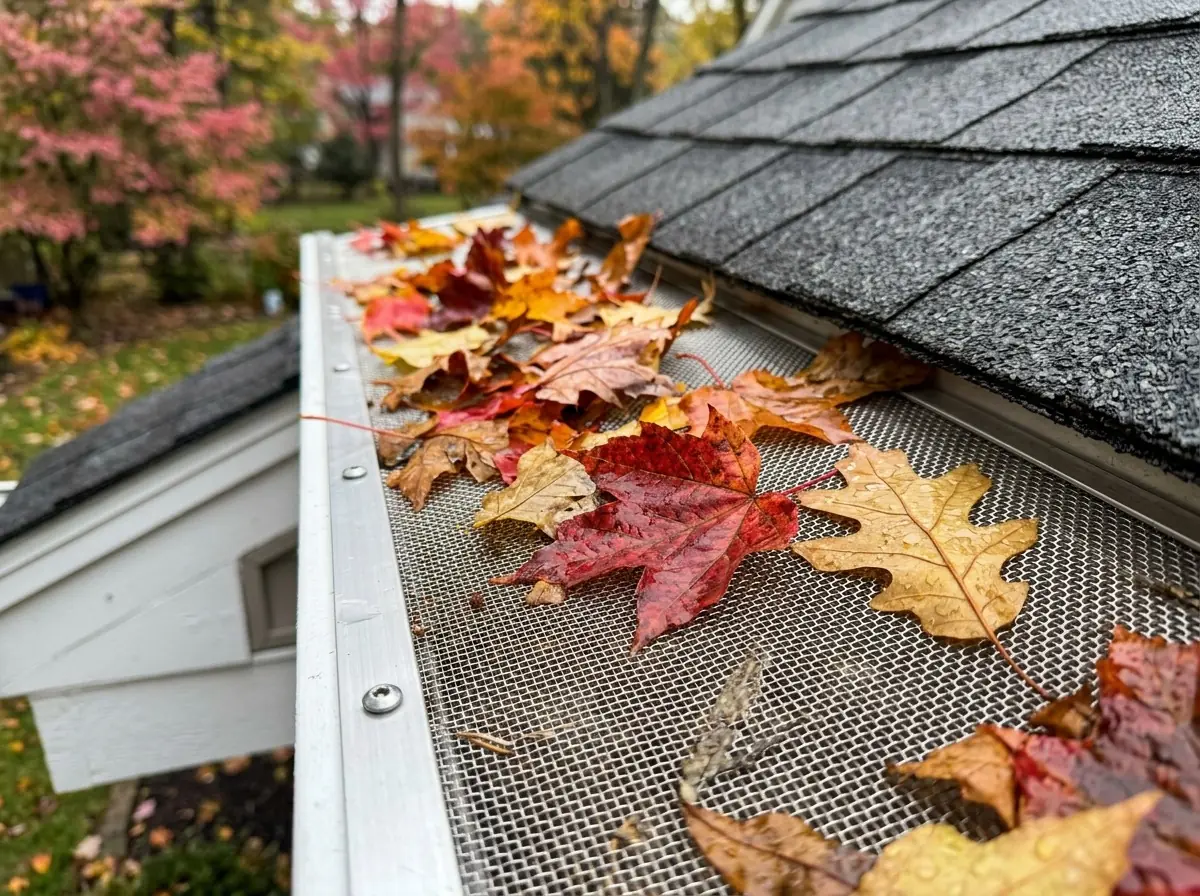
Maple, elm, and ash in the Twin Cities are mostly down by mid-October. Oaks are not. Many metro lots keep dropping leathery oak leaves into the first week of November, and some pin oaks hold brown leaves even later. If you snap stainless mesh onto a 5-inch K-style in late September, those late oak leaves sit on top of the screen. They do not usually go down the downspout — they sit, get wet, and freeze to the mesh on the first 20°F night.
November flips that sequence. The heavy drop is already on the ground. A crew can scoop the trough, check the outlets, and set the frame on a clean run. That is why a November install is not a “late” version of the September job. It is a different timing bet: you trade a longer weather window for a trough that will not refill two weeks later. If your lot is only maple and linden with no oak, September still wins. If you have mature red or bur oak over the north eave in Maple Grove or Andover, November is the visit that actually sticks.
After oak drop vs before maple drop (2026)
| Window | What is usually down | Guard install? | Catch |
|---|---|---|---|
| Mid–late September | Ash, birch; maples just starting | Yes, if you will clean again | Oak and late maple will refill an open trough and sit on new mesh |
| Mid-October | Maple and elm mostly down | Yes on maple-only lots | Oak lots still dropping; first 28°F nights common (MSP median ~Oct 19) |
| Early–mid November, no snowpack | Oaks mostly down | Usually yes on a dry 40°F+ afternoon | Short days; wet fascia or packed snow is a stop |
| After a hard freeze / snow on the roof | Whatever froze in the trough stays | No full mesh job | Spring, or a thaw-day clean only |
These are typical Twin Cities 2026 conditions, not a promise for every lot. A sunny ranch in Blaine keeps a dry afternoon longer than a two-story north face in Plymouth. The free measure is what sorts that — shade, fascia moisture, and tree type — not the calendar square.
How cold is too cold to install gutter guards in Minnesota?
Mesh and an aluminum frame can go on in colder weather than a full seamless gutter installation. The metal still cuts and the hidden hangers still seat around 20°F. What fails is the sealant at end caps and outlets. Most exterior gutter sealants want about 40°F to cure. Below that the bead stays soft, then the first freeze–thaw pops it.
Practical November rule: pick a dry afternoon that climbs through the 40s. If the forecast is a 22°F high with wind, wait for the next thaw day or book spring. Do not chip a frozen leaf mat out of the trough to “make the day work.” Thin 0.027-inch aluminum gets brittle in that cold; prying frozen debris is how you crease a run that was fine in October. If the wood behind the gutter is stained, cupped, or soft, stop. Guards do not fix a rotten board. That is a fascia and soffit repair first, then mesh.
Do you still clean the trough in November before guards go on?
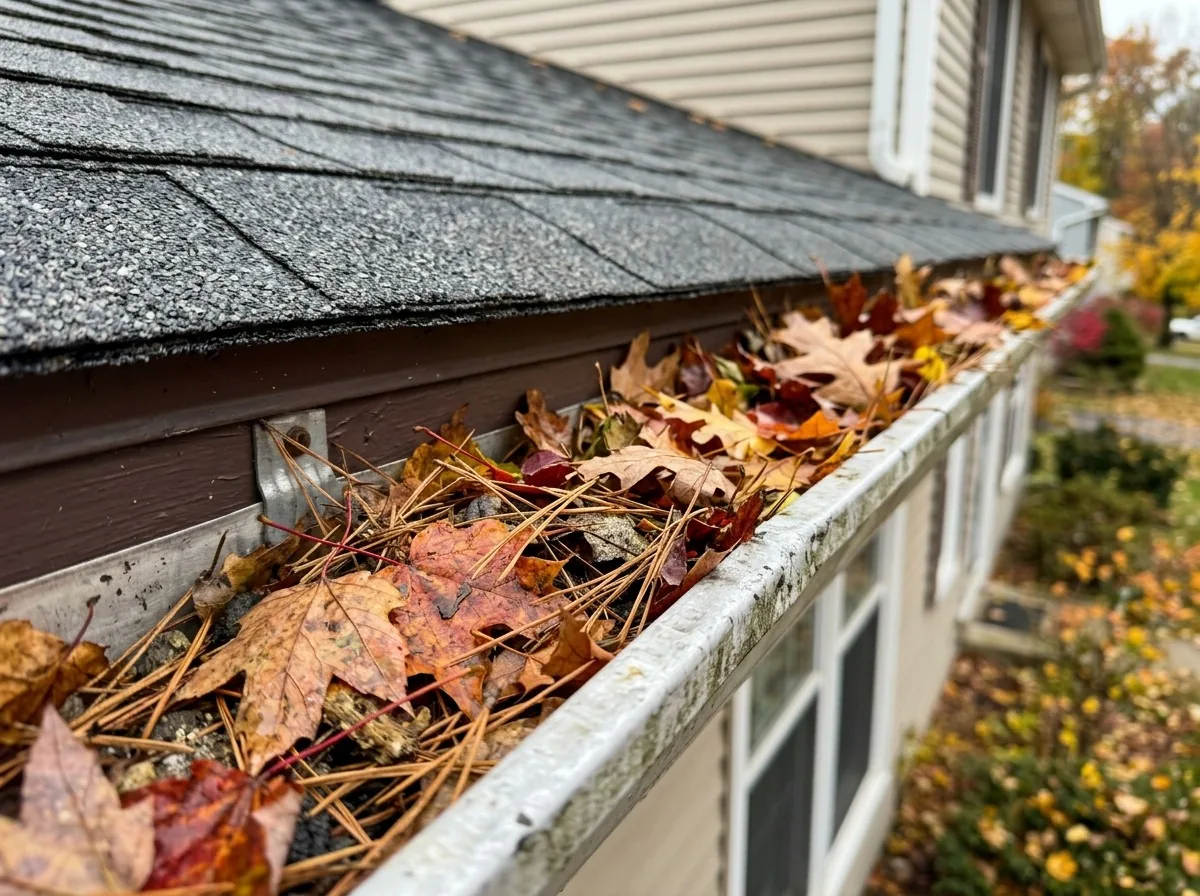
Yes. Guards are a cover, not a vacuum. A November trough under oak and spruce often holds wet mats, shingle grit, and pine needles packed at the outlet. If that stays, the mesh just lids it. The first January thaw then weeps over the front edge — the same overflow you were trying to stop.
A proper November visit is: gutter cleaning, outlet check, pitch check, then the frame. That is the same order as cleaning before installing guards, just with less leaf still in the trees. Homes that already have sectional 10-foot troughs with open seams should fix those seams on a 40°F day before the mesh goes on, or the cover hides the leak. If you want the “before drop vs after drop” comparison in more detail, use the leaf-drop article. If you want what actually holds snow and ice after the mesh is on, use gutter guards for Minnesota snow.
November gutter guard cost in the Twin Cities (2026)
| Item | Typical Twin Cities range (2026) | Notes |
|---|---|---|
| Micro-mesh on existing 5-inch K-style | $8–$20/lf | Aluminum frame + stainless mesh; longer two-story runs sit at the high end |
| Same mesh with new seamless trough | Guards $8–$20/lf plus trough $8–$14/lf | One trip if fascia is sound; not two invoices a month apart |
| November cleaning before mesh (ranch) | $150–$275 | Oak lots and two-story eaves cost more; frozen mats are a stop, not a surcharge |
| Fascia repair if the board is soft | $15–$40/lf | Market wrap-or-replace band; hangers will not hold in rot |
These are Minnesota market averages for 2026, not an EaveX price list. The number on your house depends on linear footage, stories, fascia, and roof type. The on-site measurement is free. A 160-foot ranch at $12/lf of mesh is a different job than 220 feet of two-story oak eave at the top of the band.
Same-visit seamless gutter installation still makes sense in November when the old trough is sectional, pulled away, or the wrong size. Mesh on a failing 5-inch sectional just covers the next leak.
Will November-installed gutter guards freeze in a Minnesota winter?
Mesh does not keep water from freezing. Water freezes at 32°F on an open trough and on a screened one. What a November install changes is the debris that holds that water in place. An open trough packed with oak leaves turns into a frozen dam at the outlet. A clean micro-mesh run sheds most of the water and lets a thin ice film melt on the next 35°F afternoon.
That is the “gutter guards in winter” question people type in November: not “will ice exist,” but “will the cover make ice worse.” On a clean 5-inch or 6-inch K-style with a free outlet, mesh usually makes ice less likely to sheet over the front edge. On a sagging trough with a packed downspout, mesh cannot invent pitch. Fix the outlet first. Heat tape is a separate decision. Guards do not replace cable, and cable does not replace a clean trough. If ice dams already form on a north roof, deal with ventilation and overflow — do not expect a screen to be an ice-dam system.
Maple Grove, Plymouth, Blaine, and Andover in November
West-metro oak canopy in Maple Grove and Plymouth is why November shows up in search. Those lots finish dropping later than a maple street in Minneapolis. North-metro ranches in Blaine and Andover often keep a dry 40°F afternoon into the second week of November if snow has not stuck.
A two-story north eave loses that window first. If your shade line stays wet after a 28°F night, the crew will say so and book the next thaw instead of forcing sealant. That is not a delay tactic. It is how 0.027-inch coil and a stainless screen actually last through March.
Book the free inspection
November is not too late for gutter guards on a Twin Cities house if the oaks are down, the trough is empty, and the afternoon is dry. It is too late if the roof is snow-covered or the fascia is soft. EaveX will tell you which one you have on the free measure — 1,200+ projects, 13+ years, license BC808261.
Call (763) 313-8516 or request the inspection. Financing is available from 0% APR (0.00–9.99%) with GreenSky, plan 6124. Not every buyer qualifies for 0%.