Yes — add downspout extensions before Minnesota winter if meltwater still dumps within about 3 feet of your foundation. Push discharge to 4–6+ feet (farther on clay soils and walk-out lots) so freeze–thaw sheets do not ice the driveway or wick into basement walls. Final layout depends on grade, outlet height, and how many corners you have; EaveX confirms the path on a free measure.
Key takeaways
- Twin Cities freeze–thaw turns short elbows into ice ramps against the foundation.
- Market planning band (2026): simple corrugated or aluminum extensions often $15–$60 per outlet DIY-parts range, or $75–$200+ per outlet installed when buried drains, elbows, or splash blocks are involved — Minnesota market averages, not an EaveX price list.
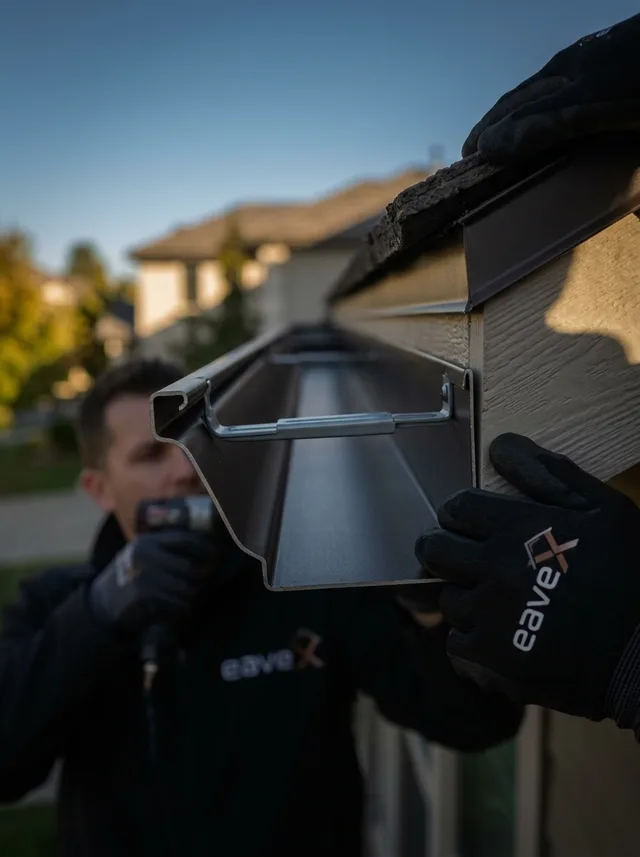
- Pair extensions with seamless gutter installation pitch and outlet checks so water actually reaches the pipe.
- Extensions do not replace gutter cleaning before leaf freeze or attic fixes for ice dams.
- EaveX: 1,200+ projects, 5.0 rating, 13+ years, license BC808261. Financing for larger packages available from 0% APR (0.00–9.99%) with GreenSky, plan 6124 when you qualify — never assume every buyer gets 0%.
Why short downspouts fail in a Minnesota winter
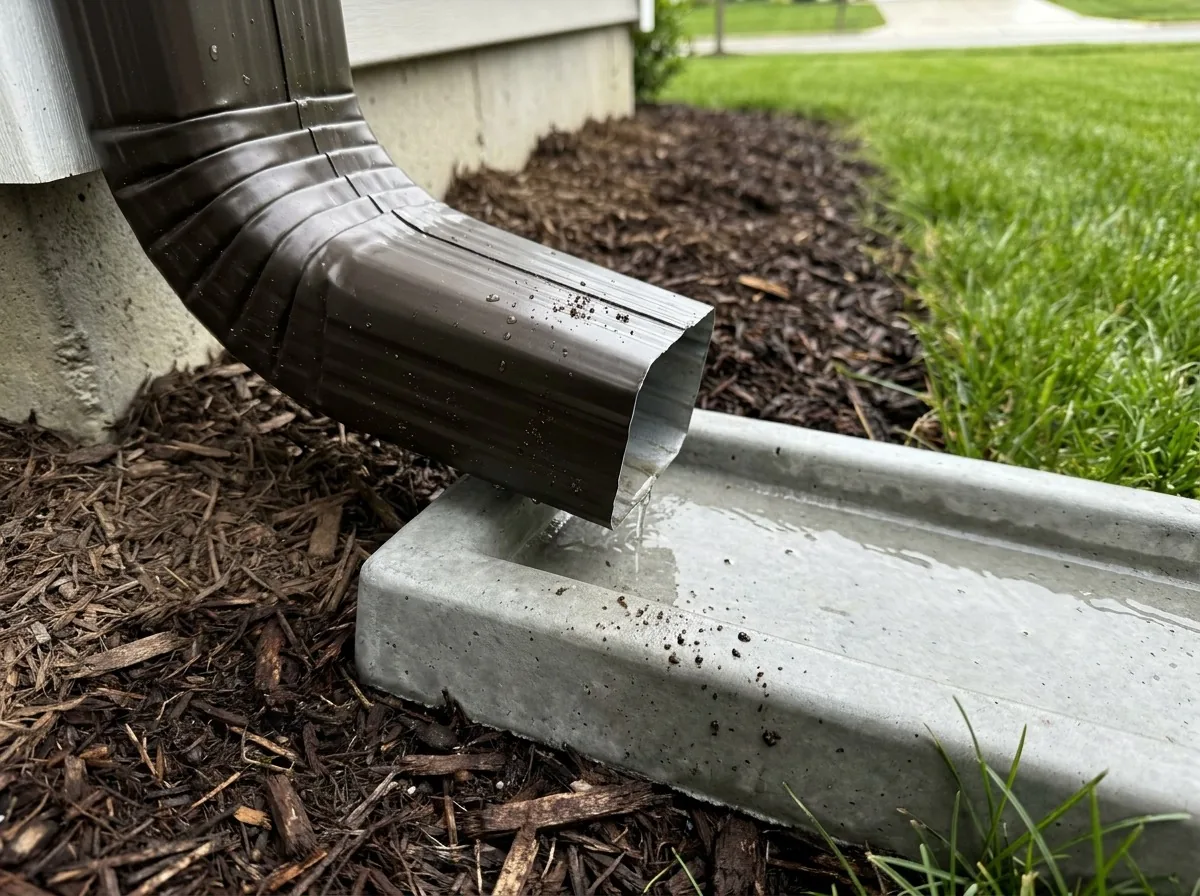
October rain and November melt both leave water next to the slab. When nights drop below freezing, that puddle becomes a skate rink against the foundation and a wick into sill plates. Short elbows that worked in July dump everything into the same two-foot zone all winter.
Homes in Maple Grove, Blaine, and Plymouth with clay backfill see the problem first: water sits, freezes, and heaves. Extending the discharge before hard freeze is cheaper than spring mud-jacking talk or another "mystery" damp corner.
How far should the water go before freeze-up?
Use the same distance rules we teach in how far should downspouts drain in Minnesota: at least 4–6 feet from the foundation on most Twin Cities lots, more when grade slopes back toward the house. Before winter you are not redesigning the whole drainage plan — you are making sure January melt does not stop at the tidy little elbow by the hose bib.
| Lot condition (Twin Cities, 2026 planning) | Minimum discharge target | Notes |
|---|---|---|
| Level sandy yard, good grade away | 4–6 ft | Rigid or corrugated OK |
| Clay soil / walk-out | 6–10+ ft | Prefer buried drain or longer rigid |
| Driveway or walk beside outlet | Past the walk, then daylight | Avoid ice sheets on concrete |
| Below-grade window wells nearby | Away from wells | Never dump into the well |
| Two-story with high outlet volume | Same distance, larger pipe if needed | Pair with 6-inch troughs when upsizing |
Final cost and layout depend on run length, stories, fascia condition, and roof type. Free measurement confirms outlet count and where daylight can actually go.
Extension types that survive freeze–thaw
Corrugated plastic is cheap and flexible for temporary fall setups — zip-tie it straight, then pull it before the mower season if you hate the look. Aluminum or steel elbows with rigid pipe look cleaner and take snow load better along a garage wall. Buried drain tile to daylight is the long-term fix when you hate surface pipe; bid it with new seamless gutter installation so outlets and underground drains line up.
Skip "splash block only" on clay lots. A curved pad that still ends two feet from the wall is not an extension — it is a decorated puddle.
Cost bands for Twin Cities homeowners (2026)
These are Minnesota market averages for 2026, not an EaveX price list. Your number moves with outlet count, bury depth, and whether fascia or troughs need work first.
| Scope | Typical Twin Cities market band (2026) | Notes |
|---|---|---|
| DIY corrugated kit per outlet | $15–$60 parts | Labor = your Saturday |
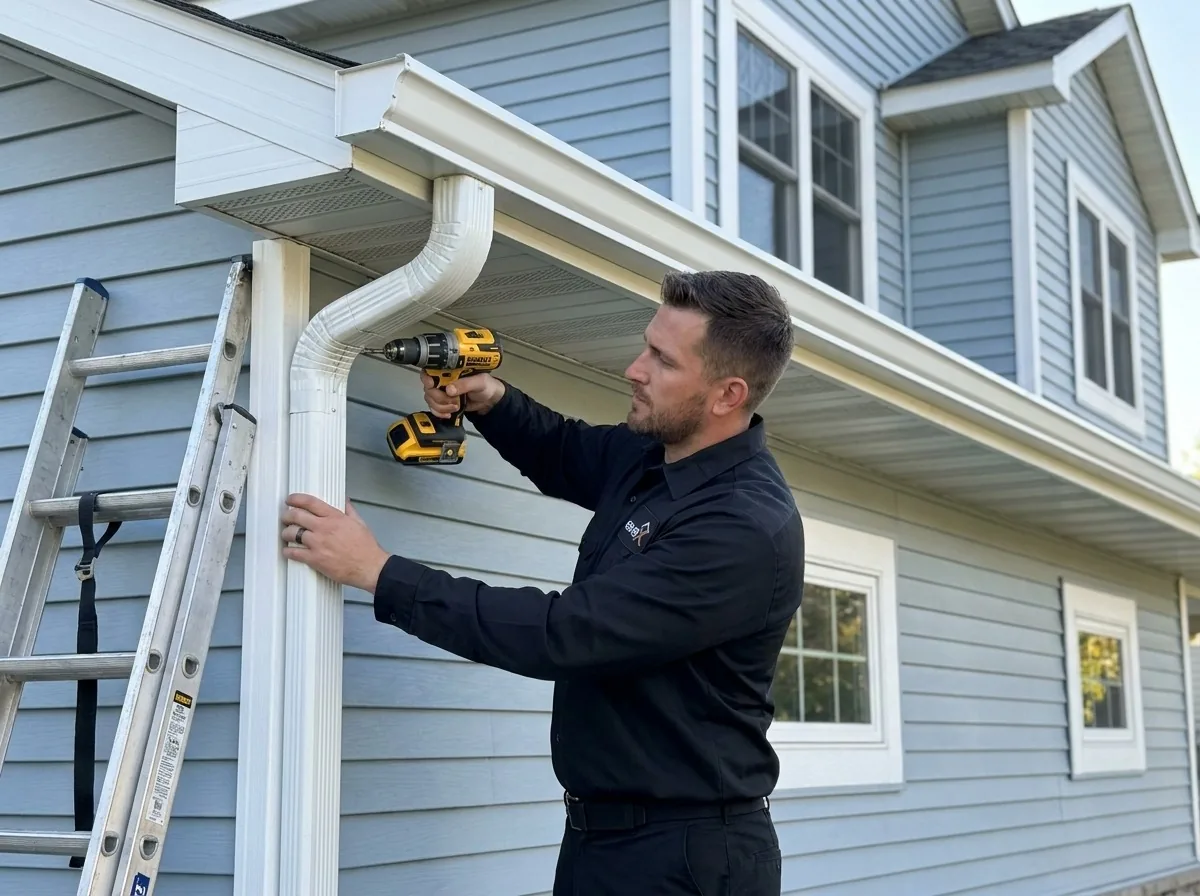
| Pro surface extension / elbows per outlet | $75–$200+ installed | Color-match possible |
| Buried drain to daylight (short run) | $300–$900+ per line | Dig + daylight grade |
| Bundle with new seamless gutters | Often less than two visits | Pitch + outlets + extensions |
| Add gutter cleaning same day | $150–$350 typical visit | Clear outlets before freeze |
If outlets are clogged with oak mash, clean first — an extension on a packed elbow just freezes the clog farther from the house. Homes that already need new troughs should read gutter replacement cost in Minnesota and bundle extensions on the same mobilization.
When extensions are not enough
Extensions move water; they do not fix a back-pitched gutter, a missing hanger, or soft fascia. If water still overflows the trough in a light rain, fix the eave first with fascia and soffit repair or a full hang — then set discharge distance.
Ice dams from attic heat will still form even with perfect extensions — moving water 8 feet from the wall will not cool a warm roof deck. Focus extensions on foundation protection; use insulation and ventilation talk for dams. Use prepare gutters for Minnesota winter for the full checklist, and keep how many downspouts a Minnesota house needs open if one corner always floods while others stay dry.
Fall timing: October is the practical window
Schedule extensions while the ground is still diggable and ladders are safe — typically September through late October in the Twin Cities. Waiting until a December ice curtain appears means you are chipping frozen corrugated pipe instead of aiming meltwater.
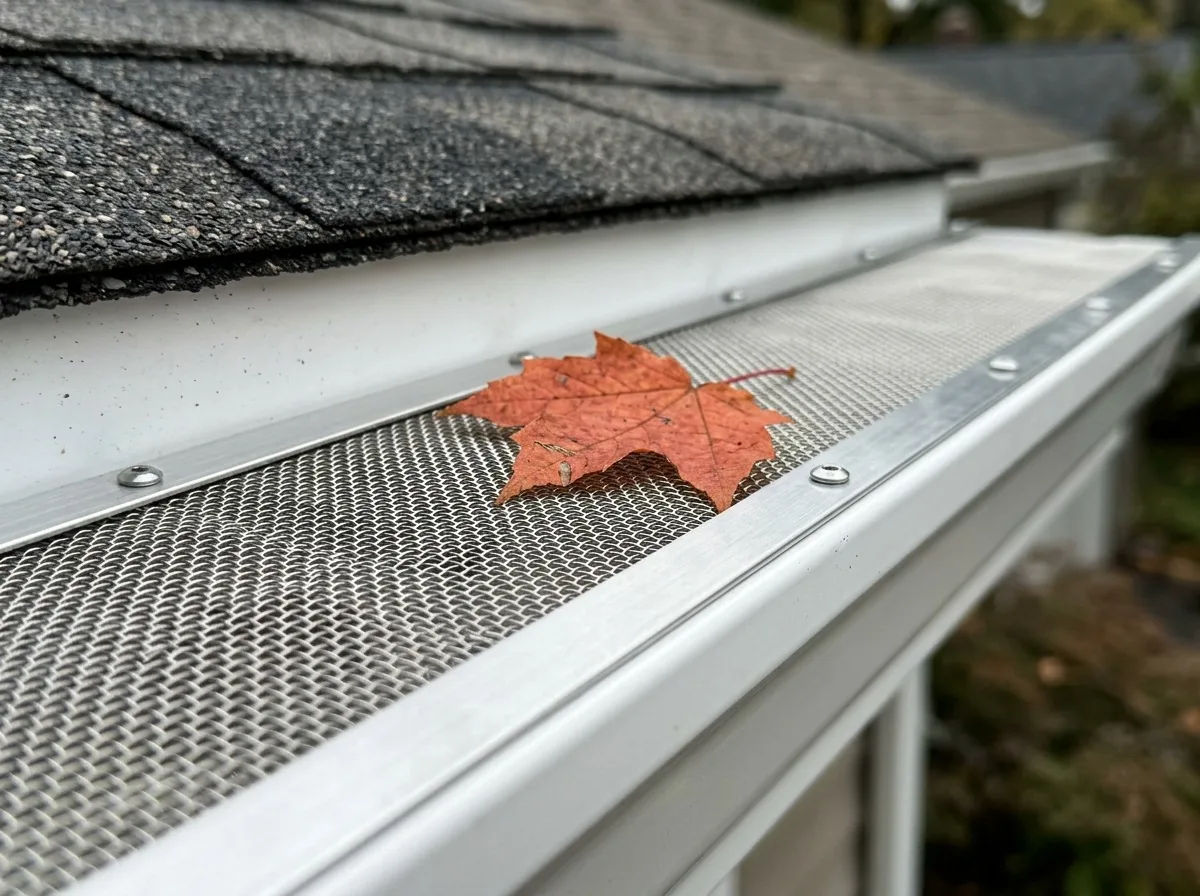
Wooded lots should clean leaves out of outlets the same week. If you are also hanging micro-mesh, finish cleaning and pitching before any gutter guards go on so water actually reaches the new extension.
Quick field checks before the first hard freeze
- Every outlet has a continuous path 4–6+ feet from the foundation.
- No extension dumps onto a sidewalk you need in January.
- Buried lines daylight on a downhill grade, not into a low bowl.
- Elbows are screwed, not friction-fit only — wind and ice pop cheap slip joints.
- You can see water leave the outlet during a hose test, not sheet behind the gutter.
If hangers spin in soft wood while you are on the ladder, stop and quote boards — new extensions will not save a failing eave.
City notes: Albertville base and north-metro grade
We stage outlet work from Albertville (5098 Main Ave NE) into Maple Grove, Blaine, Plymouth, and nearby north-metro streets where clay and flat lots are common. The city label does not change the physics: short elbows still ice the slab. What changes is where daylight can legally and practically go — fence lines, HOA rules, and shared driveways.
On tight side yards, a buried line to the rear daylight often beats a surface hose across the walk. On open prairie lots, a color-matched rigid run along the garage wall is usually enough for one winter. Either way, hose-test before you pack the ladder away so you see water leave the eave, not sheet behind the gutter onto soft fascia.
Ready for a free inspection?
Call (763) 313-8516 or request a free inspection. We map outlets, grade, and whether surface pipe or buried drain is the smarter 2026 spend — from our Albertville shop (5098 Main Ave NE), license BC808261. Ask for seamless gutter installation if troughs are due, or gutter cleaning if the only problem is packed elbows before freeze-up.