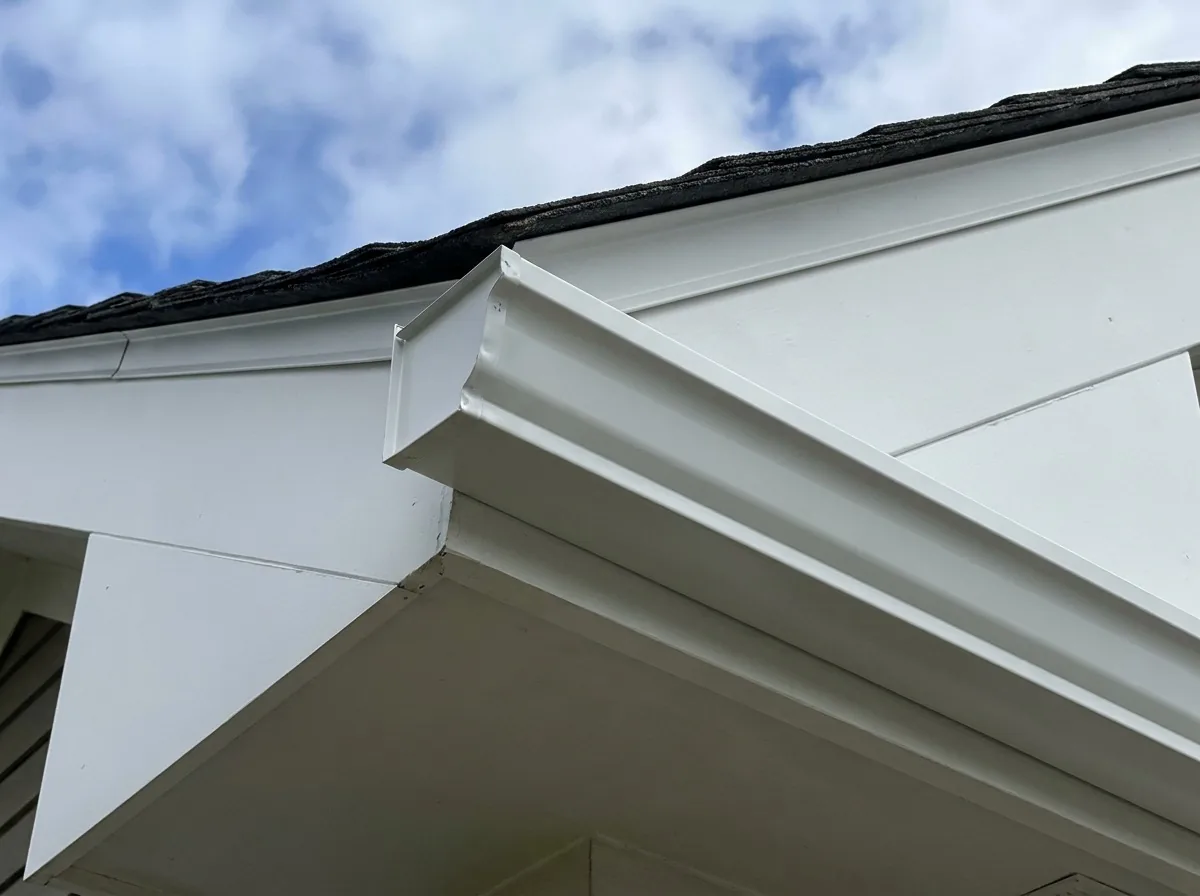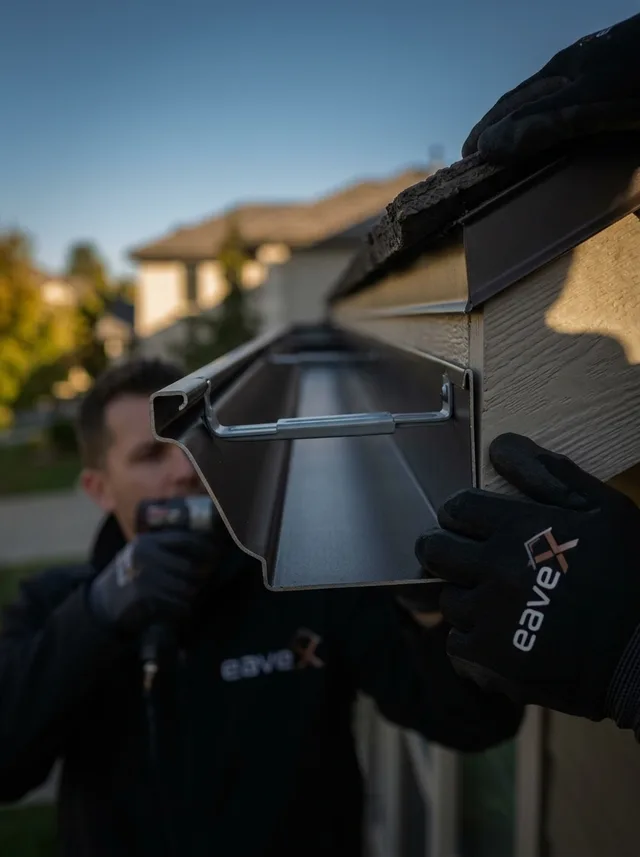
Most Minnesota homes should discharge roof runoff at least 6-10 feet away from the foundation, and farther on clay-heavy or poorly graded lots.
Key takeaways
- For most Twin Cities homes, a practical target is 6-10 feet from the foundation wall.
- In low spots, heavy clay soil, or homes with wet basements, 10-15 feet is often safer.
- Burying extensions can look cleaner, but only if pitch, cleanouts, and freeze strategy are done right.
- Typical range in the Twin Cities (2026): $12-$28 per linear foot for buried line work, depending on depth, obstacles, and outlet point.
- The final scope depends on roof area, downspout count, grading, and discharge location; EaveX confirms it on a free measurement.
Why 6-10 feet is the Minnesota baseline
Minnesota homes deal with spring melt, heavy summer rain bursts, and repeated freeze-thaw cycles. If water dumps right next to the foundation, it can saturate soil around footings, stress parged walls, and increase seepage risk at cold joints or utility penetrations.
For many lots, 6-10 feet keeps roof runoff out of that immediate pressure zone. On flatter lots or homes with known moisture history, you usually want longer runs plus grading correction so the outlet still drains away after a storm.
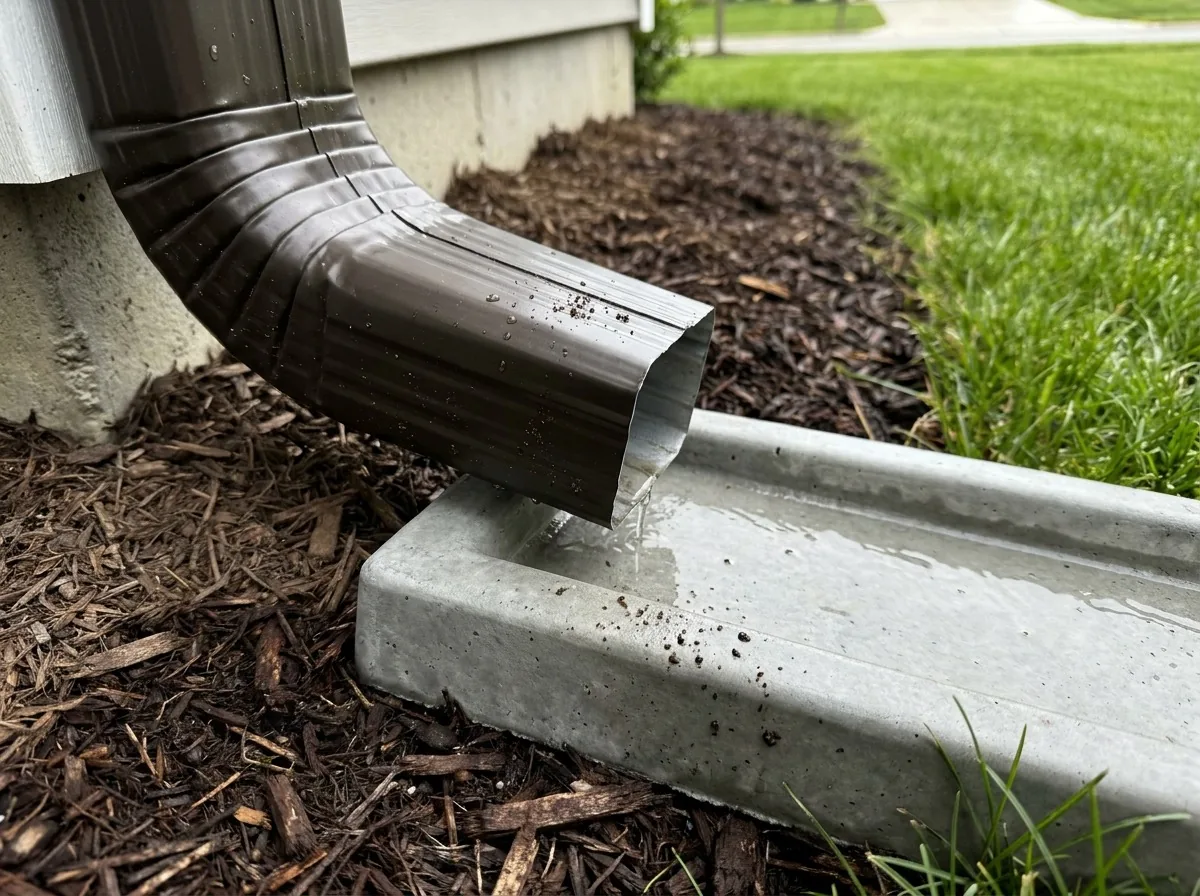
Quick distance guide by lot conditions
Use this as a homeowner planning guide, not a substitute for a site-specific layout.
| Site condition | Practical discharge target | Why it matters |
|---|---|---|
| Typical suburban lot with decent slope | 6-10 ft | Usually enough to move water beyond the splash zone |
| Flat yard / slow-draining lawn | 10-15 ft | Extra distance helps prevent ponding near footing line |
| Heavy clay soils and past seepage | 10-15+ ft | Clay drains slowly and holds water against foundation longer |
| Walkout or stepped-grade home | Case-by-case, often split discharge points | Runoff can collect at lower corners if all lines dump together |
If you are comparing options while planning gutter work, this pairs well with seamless gutter installation in Minneapolis because downspout placement and outlet routing should be designed at the same time, not after install day.
Above-ground vs buried extensions
Above-ground extensions are inexpensive and easy to adjust, but they can get kicked, moved by mowers, or disconnected after yard work. Buried lines look cleaner and protect walk paths, but they require correct pitch and a clear outlet that does not back up.
A practical Minnesota approach is often hybrid: short rigid transition at the elbow, then buried run to a daylight outlet or approved discharge zone. That gives better durability through winter than flimsy corrugated-only setups near grade.
Typical 2026 cost ranges in Minnesota (market averages)
These are Minnesota market averages, not EaveX price promises. Your final quote depends on run length, number of outlets, trench depth, buried utilities, hardscape crossing, and where water can legally discharge. EaveX verifies this on a free measurement.
| Item | Typical range in the Twin Cities (2026) | Notes |
|---|---|---|
| Basic above-ground extension (per downspout) | $40-$140 | Fastest fix, but easiest to dislodge |
| Rigid elbow + secured extension upgrade | $120-$320 | Better durability and direction control |
| Buried drain line (per linear foot) | $12-$28 | Depth, soil, and obstacles drive cost |
| Pop-up emitter / outlet hardware | $80-$220 each | Works only if outlet zone drains well |
| Full multi-downspout drainage tune-up | $900-$3,500+ | Typical for homes with 3-6 downspouts |
If overflow is already happening, compare this with gutter cleaning cost in Minnesota to separate blockage issues from drainage layout issues.
Common setup mistakes that cause repeat water problems
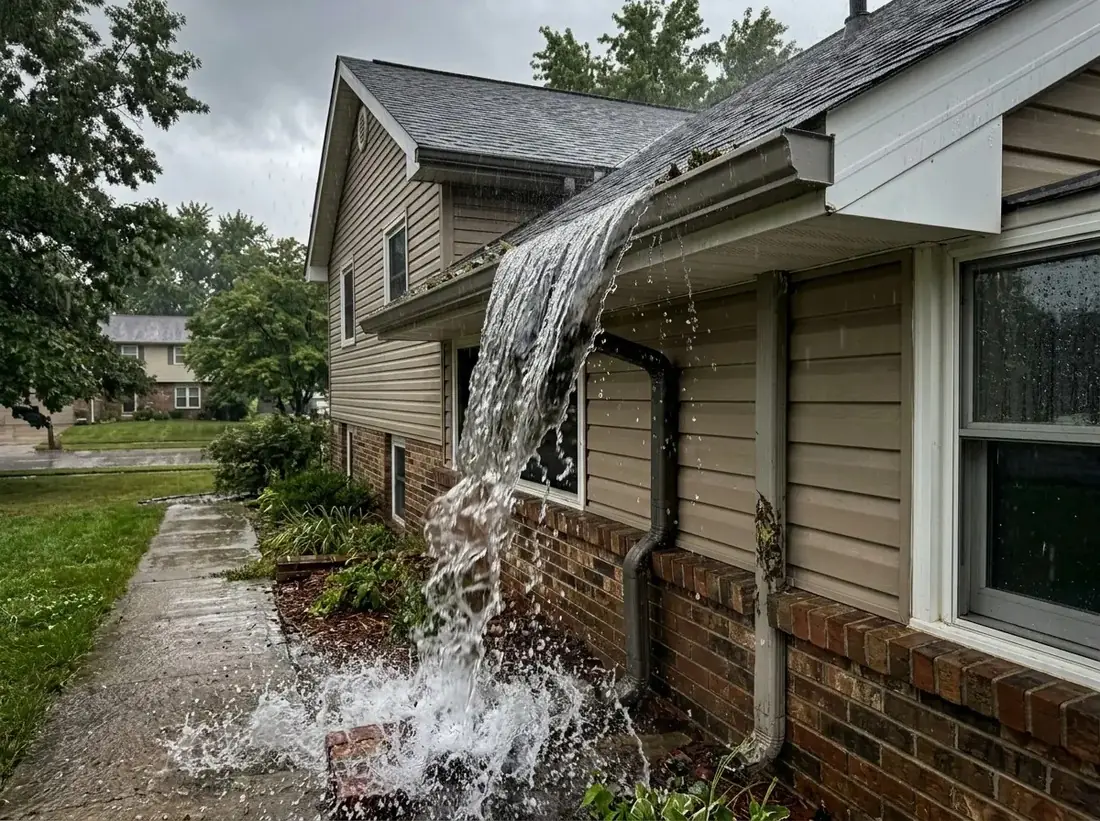
The most common failure is thinking extension length alone solves everything. If grading still pitches toward the home, even a long extension can dump into a low basin that flows back during peak rain.
Another frequent issue is undersized drainage for roof area. A two-story section with a long upper valley can dump a lot of water into one corner. In those cases, the better fix may include larger downspouts, added outlets, or gutter capacity review during gutter cleaning.
Winter-proofing downspout drainage in MN
Minnesota winters expose weak drainage details quickly. Water that cannot clear before overnight freeze can form ice at elbows, split fittings, or create slippery discharge zones near entries.
Before freeze season, confirm each outlet has a clear path, no crushed sections, and no standing water pockets. If ice dam risk is already part of your house pattern, pair drainage planning with ice dam removal in Minneapolis and roof edge ventilation checks so you are not treating symptoms only.
Where can downspouts legally discharge in Minnesota?
Most Twin Cities suburbs want roof runoff kept on your lot and directed away from neighboring foundations, sidewalks, and street ice zones. Daylight outlets into a side yard, a rock dry well, or a buried line to a low point that still drains are common homeowner options.
Avoid dumping under decks that trap moisture or onto driveways that sheet-ice in January. If your lot is small, a pop-up emitter farther from the wall often works better than a long above-ground hose that gets moved every mow. Confirm local rules for your city before burying a long run across a shared easement. When in doubt, keep the outlet on your property and sloping away from both your foundation and the neighbor’s.
How to plan your layout before you spend
A simple walkthrough saves money before you buy fittings or dig a trench:
- Mark every downspout and estimate roof area feeding that point.
- Identify safe outlet zones that stay dry after storms.
- Check slope direction for at least 10-15 feet from the wall.
- Flag obstacles: AC pads, sidewalks, decks, fences, gas/electric lines.
- Decide where above-ground is acceptable and where buried is worth it.
- If you want debris control too, keep materials climate-appropriate (micro-mesh, stainless steel mesh, aluminum frame) and compare with gutter guards for Minnesota snow so drainage and leaf protection are planned together.
Outlet count comes before extension length. How many downspouts a Minnesota house needs is the check that stops a long hose from just relocating a backup.
When to call a pro instead of trial-and-error
DIY extension swaps are fine for simple one-corner splash issues. Call a pro when you see recurring seepage, washout trenches, driveway icing from discharge, or repeated elbow blow-offs after storms. Those usually indicate a layout or capacity problem, not just a loose extension tube.
At EaveX, crews map runoff paths during a free inspection and tie the plan to your full exterior system: gutters, fascia condition, roof edge details, and lot drainage behavior. That avoids paying twice for disconnected fixes.
Need a runoff plan before the next storm?
Book a free inspection with EaveX and get a practical drainage layout based on your lot, rooflines, and foundation risk points. Call (763) 313-8516 to schedule.
EaveX has completed 1200+ projects across the Twin Cities, holds a 5.0 rating, and brings 13+ years of exterior experience under Minnesota license BC808261. Financing is available from 0% APR (0.00-9.99%) with GreenSky, plan 6124 (not every buyer qualifies for 0%).