Gutter Guards for Minnesota Snow: What Actually Works (2026)
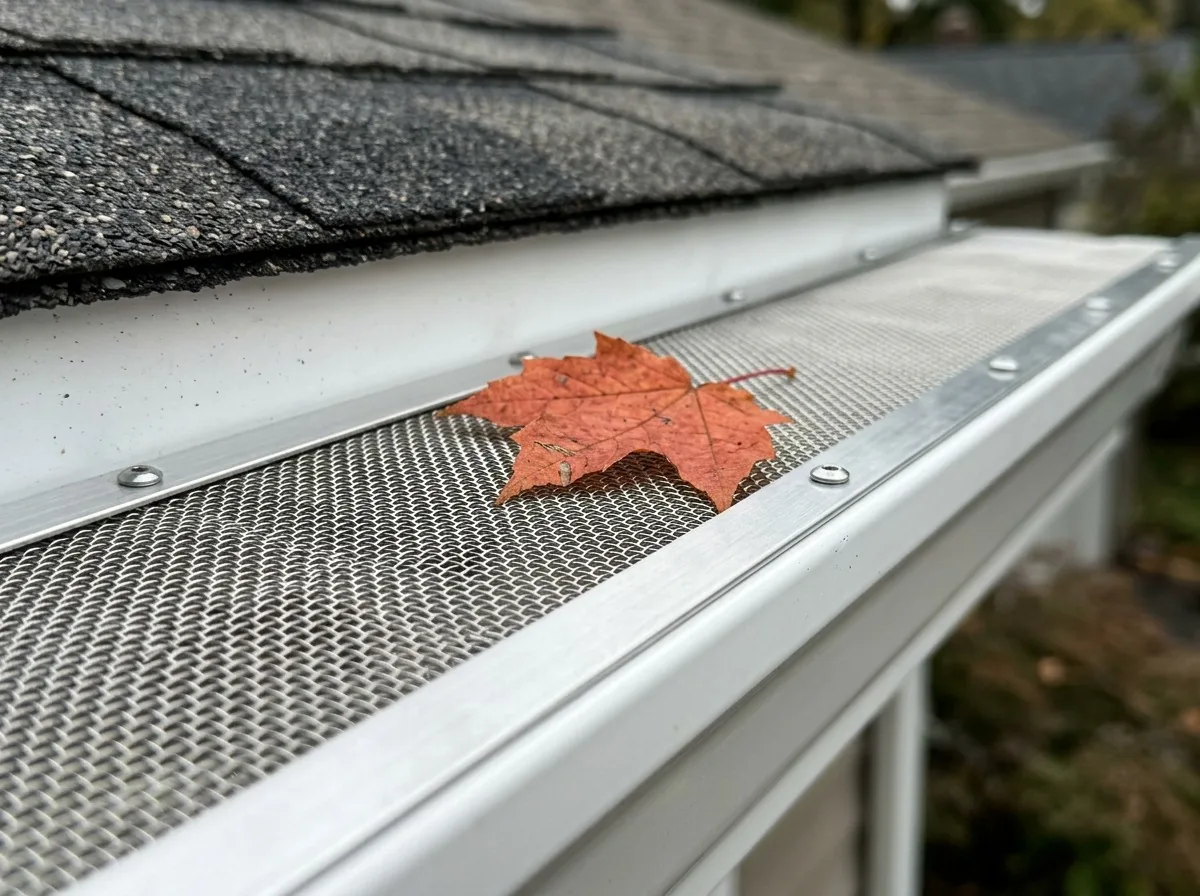
Micro-mesh gutter guards with a stainless steel screen and a rigid aluminum frame are the setup that holds up best through Minnesota snow, freeze-thaw cycles, and ice — when the gutters underneath are sized, pitched, and hung correctly. Screen-only or brush-style covers that work in milder states often clog, ice over, or lift in Twin Cities winters.
Same houses still need a professional gutter cleaning before freeze-up if the trough is packed — covers do not replace that pass.
Key takeaways
- Minnesota winters punish weak covers: snow load, ice lenses, and freeze-thaw can bend flimsy frames or trap meltwater against the roof edge.
- For most Twin Cities homes, micro-mesh over seamless aluminum gutters is the durable pairing — not a brand name, a construction type.
- Guards reduce debris clogs; they do not replace attic insulation, ventilation, or roof snow management for ice dams.
- Typical Twin Cities market range (2026) for quality micro-mesh installs runs about $8–$20 per linear foot; final price depends on run length, stories, fascia condition, and roof type — free on-site estimate.
- Install before heavy fall leaf drop (late August–early October) so the system is clean going into first freeze.
- EaveX (license BC808261) matches the guard system to your roof after a free inspection — 1,200+ projects, 5.0 rating, 13+ years in Minnesota.
Why Minnesota snow is harder on gutter guards than marketing claims
Minnesota is not a light-snow market. Twin Cities winters stack repeated freeze-thaw, wind-driven snow, and roof melt that refreezes in the trough. A cover that looks fine in a southern climate can ice into a dam at the eave, overflow at valleys, or pull hangers when snow slides off an asphalt roof.
What "works" means for Twin Cities roofs
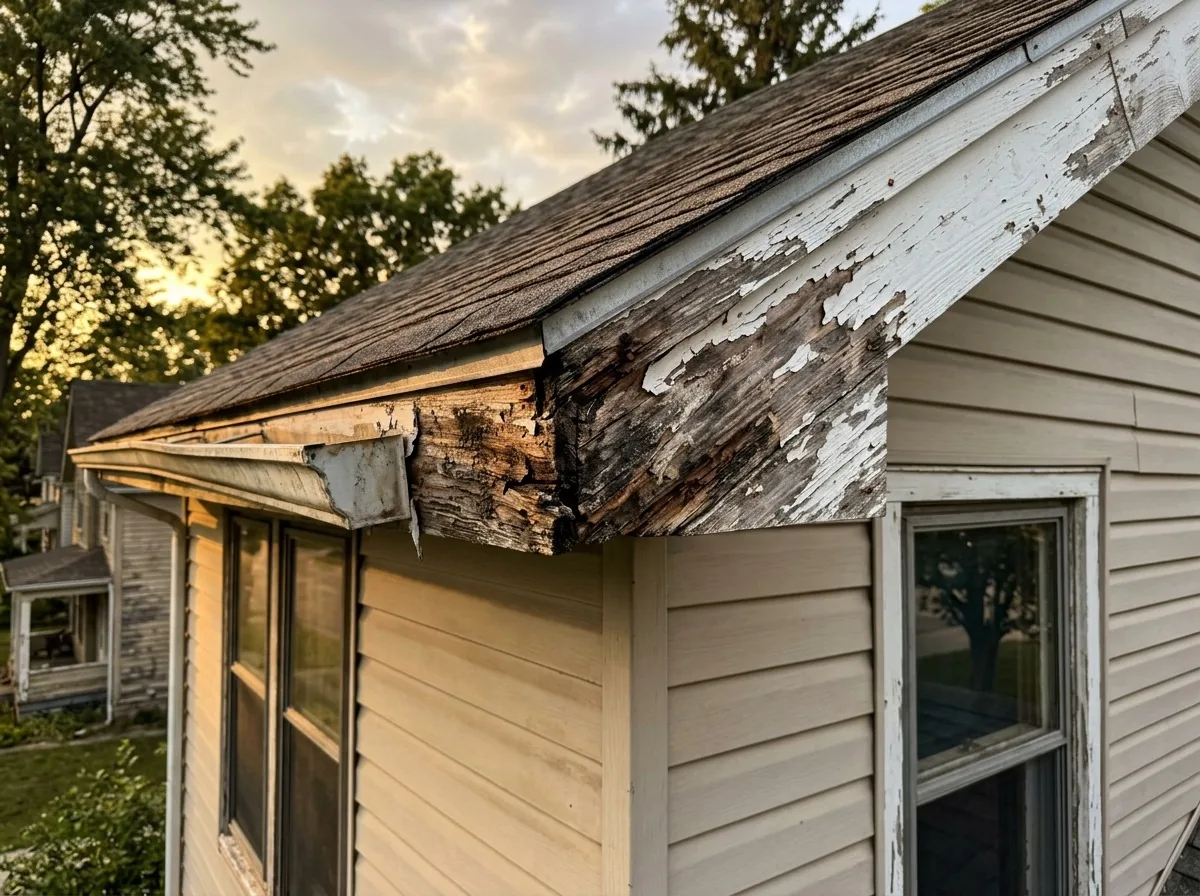
A guard that works in Minnesota does three jobs at once: it keeps oak and maple litter out of the trough, it sheds meltwater into the gutter instead of over the edge, and it stays fastened when ice expands. If any of those fail, you get the same basement wet spots and fascia rot you had before the install.
Micro-mesh vs screen vs brush in Minnesota winters
| Guard type | Debris control | Snow / ice behavior (MN) | Typical Twin Cities range (2026)* |
|---|---|---|---|
| Micro-mesh (stainless mesh + aluminum frame) | Excellent (needles, shingle grit) | Best when pitched correctly; mesh stays open if kept clear of ice dams at the roof edge | $8–$20 / lf |
| Larger perforated screen / reverse-curve | Good for large leaves | More ice bridging risk; reverse-curve can shed water over the front in freeze-thaw | $6–$15 / lf |
| Brush / foam inserts | Fair short-term | Absorb water, freeze solid, push out of trough — poor MN choice | $3–$8 / lf |
| Plastic snap-in covers | Fair | Brittle in cold; UV cracking after a few seasons | $4–$10 / lf |
*Minnesota market averages for 2026, not an EaveX price list. Your total depends on linear footage, stories, fascia condition, and roof type. Free inspection.
For most homes we see around Maple Grove, Plymouth, and Minneapolis suburbs, micro-mesh is the durable default. We do not lock you into a national brand name — EaveX selects stainless micro-mesh and aluminum framing that fit your fascia and roof pitch.
Gutter guards for snow in Hugo, Cedar, and Twin Cities suburbs
Searches like "gutter guards snow Hugo MN," "gutter guards snow Cedar MN," and "gutter guards snow North Oaks MN" point to the same winter problem: wooded Twin Cities lots pack the trough with leaves in fall, then roof melt refreezes into ice curtains. Hugo, Cedar, and North Oaks sit in that maple-and-oak belt — the cover that works is stainless micro-mesh on a rigid aluminum frame over sound seamless gutters, not a national brand pitch.
| Setup in a Twin Cities thaw | What usually happens | Minnesota note (2026) |
|---|---|---|
| Open K-style, no cover | Melt hits packed leaves → overflow and icicles | Highest cleaning + ice-curtain risk on wooded lots |
| Micro-mesh on sound 5-inch or 6-inch seamless | Melt reaches outlets if mesh and outlets stay clear | Best everyday snow pairing for Hugo / Cedar / North Oaks-style debris |
| Cheap plastic snap-in or brush insert | Ice lenses, lift-out, brittle cold snaps | Poor fit for MN winters — market $3–$10/lf that often fails early |
| Minneapolis / St. Paul asphalt roof + micro-mesh | Melt drains if outlets clear; grit sits on mesh top | Best everyday metro pairing for snow + shingle grit (2026) |
| Minneapolis open trough after leaf drop | Packed leaves → ice curtains at eave | Highest overflow risk on tree-lined city lots |
| Stillwater / Lindstrom oak canopy + micro-mesh | Melt reaches outlets if fall leaf mat is kept off mesh | East-metro snow pairing for wooded St. Croix lots (2026) |
| Stillwater open trough after leaf drop | Packed leaves + thaw → ice curtains on historic eaves | Highest overflow risk on east-metro canopy streets |
| Isanti / north-metro canopy + micro-mesh | Melt reaches outlets if fall leaf mat stays off mesh | North-metro snow pairing for Isanti lots (2026) |
| Coon Rapids open trough after leaf drop | River-metro maples pack trough → ice curtains at eave | Highest overflow risk on Coon Rapids tree streets |
If you are comparing options after a snowy season, start with trough condition and pitch, then choose gutter guards sized for Minnesota freeze-thaw. City name in the search does not change the physics: meltwater needs a clear path to the outlet, and cheap plastic or brush inserts still freeze solid on these roofs. Market patterns for 2026, not an EaveX price list — length, stories, fascia, and roof type set the final number (free measurement).
Best gutter guards for snow in Minneapolis MN
For "best gutter guards for snow Minneapolis MN," use stainless micro-mesh on a rigid aluminum frame over sound seamless gutters — not a national brand. Metro roofs add asphalt-shingle grit on top of the same freeze-thaw as Hugo or Cedar. Fix sagging troughs or soft fascia first, then add gutter guards. Twin Cities market averages run about $8–$20 per linear foot in 2026 (not an EaveX price list); final cost depends on length, stories, fascia, and roof type — free measurement.
Gutter guards for snow in Stillwater and east-metro MN
"Gutter guards snow Stillwater MN" and "best gutter guards for snow Lindstrom MN" track the St. Croix canopy belt: oak and maple pack the trough in October, then January melt turns into ice curtains. Stainless micro-mesh on a rigid aluminum frame over sound seamless gutters is the durable answer — not a national brand pitch. Soft troughs need seamless gutter installation first; soft boards need fascia and soffit repair before gutter guards. Twin Cities market averages stay about $8–$20 per linear foot in 2026 (not an EaveX price list); free measurement.
Gutter guards for snow in Isanti and Coon Rapids MN
Searches like "best gutter guards for snow Isanti MN" and "best gutter guards for snow Coon Rapids" sit in the north / river-metro canopy belt: maples pack the trough in October, then January melt refreezes into ice curtains. Isanti and Coon Rapids punish open K-style the same way Hugo and Cedar do — stainless micro-mesh on a rigid aluminum frame over sound seamless gutters is the durable everyday answer, not a national brand pitch.
Add gutter guards only after pitch, outlets, and fascia check out. Soft boards need fascia and soffit repair first. Twin Cities market averages for quality micro-mesh run about $8–$20 per linear foot in 2026; final cost depends on length, stories, fascia, and roof type — free measurement, not an EaveX price list.
Will gutter guards stop ice dams?
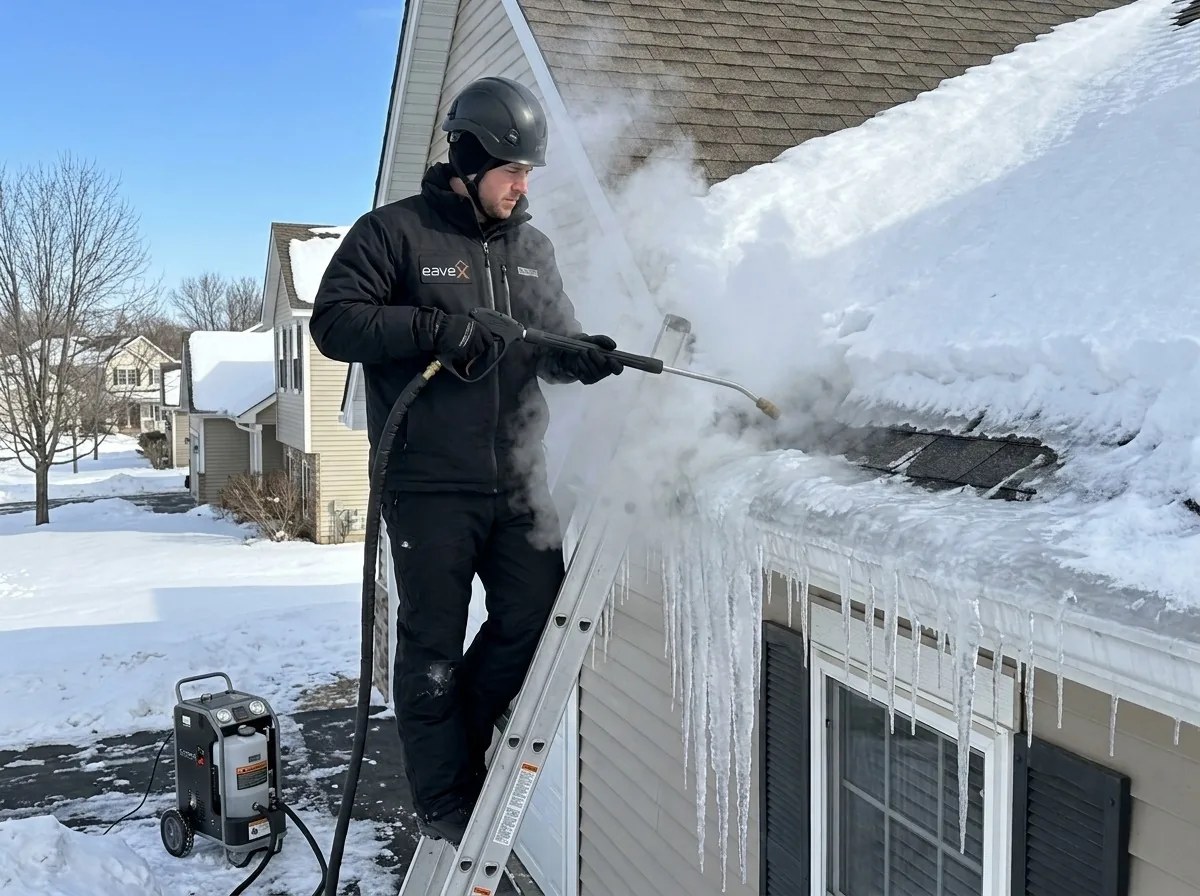
No. Ice dams form when attic heat melts roof snow that refreezes at the cold eave. Guards sit in or over the trough; they cannot fix attic insulation, soffit intake, or ridge exhaust. If your main pain is ice dams, read our guide to ice dam prevention in Minnesota and consider professional ice dam removal when a dam is already active.
What guards can do is keep the trough clear so meltwater has a path once it reaches the eave. A debris-packed gutter turns every thaw into a spill over the fascia — one of the signs your gutters are failing. Clear troughs plus sound hangers reduce overflow; they do not replace roof and attic work.
Snow load, sliding snow, and hanging covers
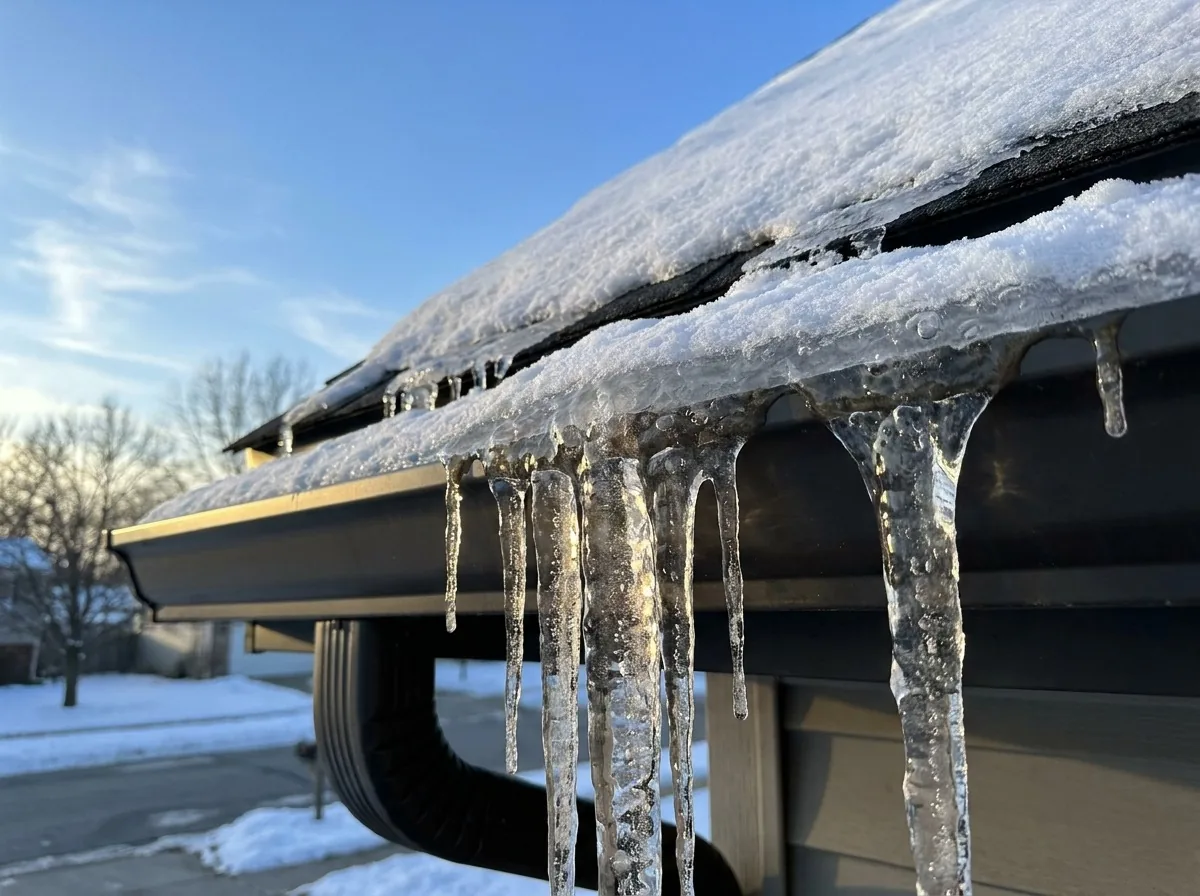
Steep asphalt roofs shed slabs of snow in spring and during mid-winter thaws. Those slabs can catch on a raised cover lip and yank the gutter line. A low-profile micro-mesh that sits closer to the trough, with hangers at proper spacing (typically every 24 inches on MN installs), handles slide-off better than tall surface covers.
Best timing: install before fall leaf drop
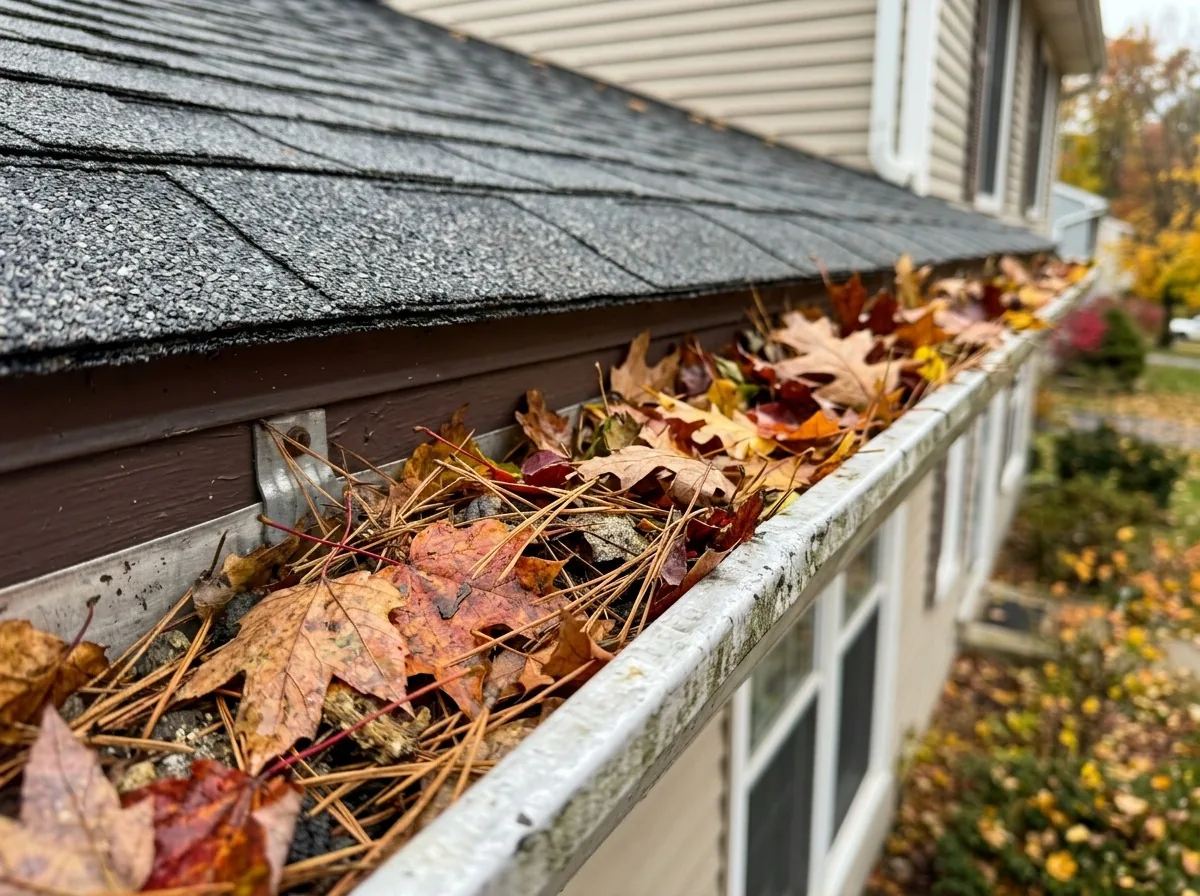
August through early October is the practical window in the Twin Cities. You want the mesh on before oak and maple drop packs the trough, and early enough that crews can still work safely on ladders. Waiting until after the first hard freeze means installing over ice or delaying until spring — and spring often collides with storm damage and a long wait list.
If you are also planning a full trough swap, combine the jobs. A single mobilization for gutter guards plus new seamless runs usually costs less than two separate visits, and the hangers get sized for both products at once.
Cost reality for Minnesota homeowners (2026)
Across the Twin Cities metro, quality micro-mesh installs commonly land in the $8–$20 per linear foot band in 2026. A typical single-story ranch with ~150–200 linear feet often pencils in the low-to-mid thousands; two-story colonials with steep pitches run higher because of access and safety. Figures below are Minnesota market averages for 2026 — not an EaveX price list; length, stories, fascia, and roof type drive the final number. Financing available from 0% APR (0.00–9.99%) with GreenSky, plan 6124 — not every buyer qualifies for 0%.
| Home situation | Typical market range (Twin Cities, 2026) |
|---|---|
| Single-story, simple rectangle, good fascia | $1,200–$3,000 |
| Two-story, average complexity | $2,500–$5,500 |
| Complex roof / tall peaks / fascia repair needed | $4,000–$8,000+ |
| Guards only on existing sound seamless gutters | Often toward the lower end of $/lf |
Maintenance after install (yes, you still check them)
Micro-mesh is low-maintenance, not zero-maintenance. Once or twice a year, brush shingle grit and seed helicopters off the mesh — never pressure-wash into the trough. Before freeze-up, confirm downspouts discharge 4–6 feet from the foundation. Pair that check with our winter gutter prep timeline.
How EaveX selects a system for your house
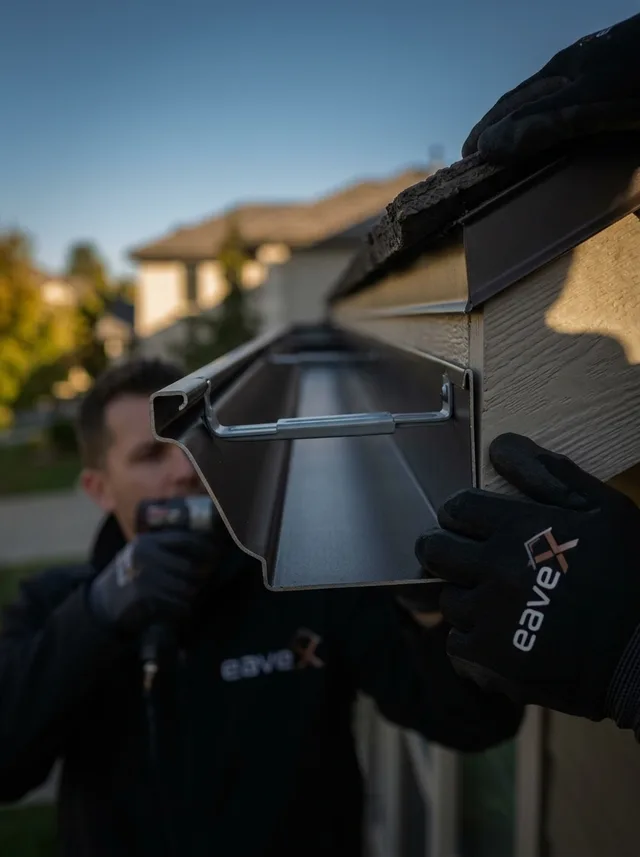
We measure pitch, fascia depth, gutter size (5-inch vs 6-inch), tree cover, and problem corners. Then we recommend stainless micro-mesh with an aluminum frame sized to that fascia — or we tell you to fix the trough first. No brand-name lock-in.
Ready for a free inspection?
If last winter left you with ice curtains, overflowing troughs, or a ladder you never want to climb again, schedule a free on-site inspection. We will tell you whether micro-mesh makes sense on your current gutters — or whether seamless replacement should come first.
Call (763) 313-8516 or request a free estimate. Serving Minneapolis, St. Paul, and the Twin Cities suburbs — license BC808261.