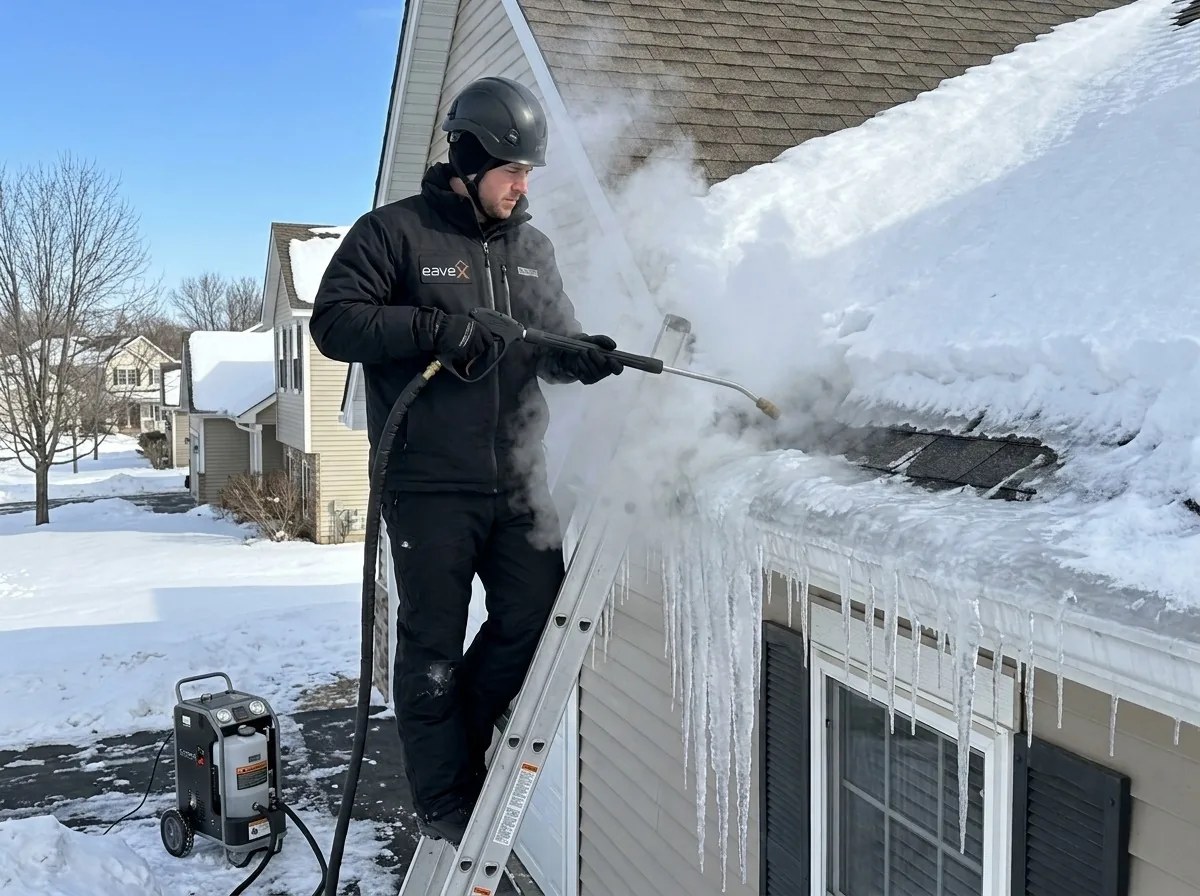
The best time to winterize your gutters in Minnesota is a narrow window: after the last major leaf drop and before the first sustained freeze — roughly late October through mid-November in the Twin Cities. That is when gutter cleaning actually holds: leaves are down, the metal is not iced. Miss it early and leaves refill the troughs; miss it late and you are on an icy ladder with sealant that will not cure.
Key takeaways
- Late October to mid-November is the cleaning window for most Twin Cities homes. Track your own trees, not the calendar — oaks drop later than maples.
- Sealants stop curing below 40°F (manufacturer specs from OSI, DAP, GE). If your gutters need seam repair, do it before mid-November or it will not hold.
- Downspout extensions stay on through winter — frozen ground cannot absorb meltwater, so keeping it away from the foundation matters more in January than in July.
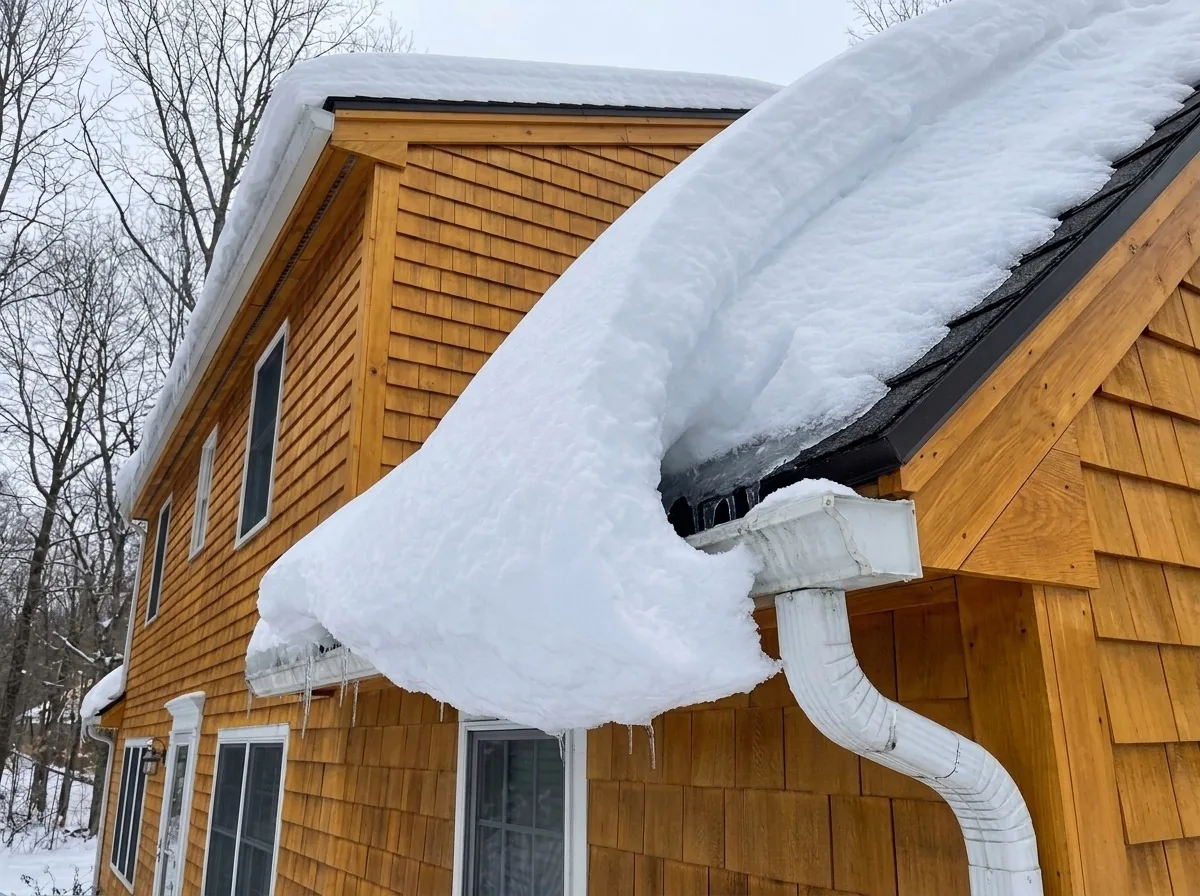
- A 10-minute pitch check with a garden hose catches sags before 30 lbs/ft of snow load turns them into permanent bends.
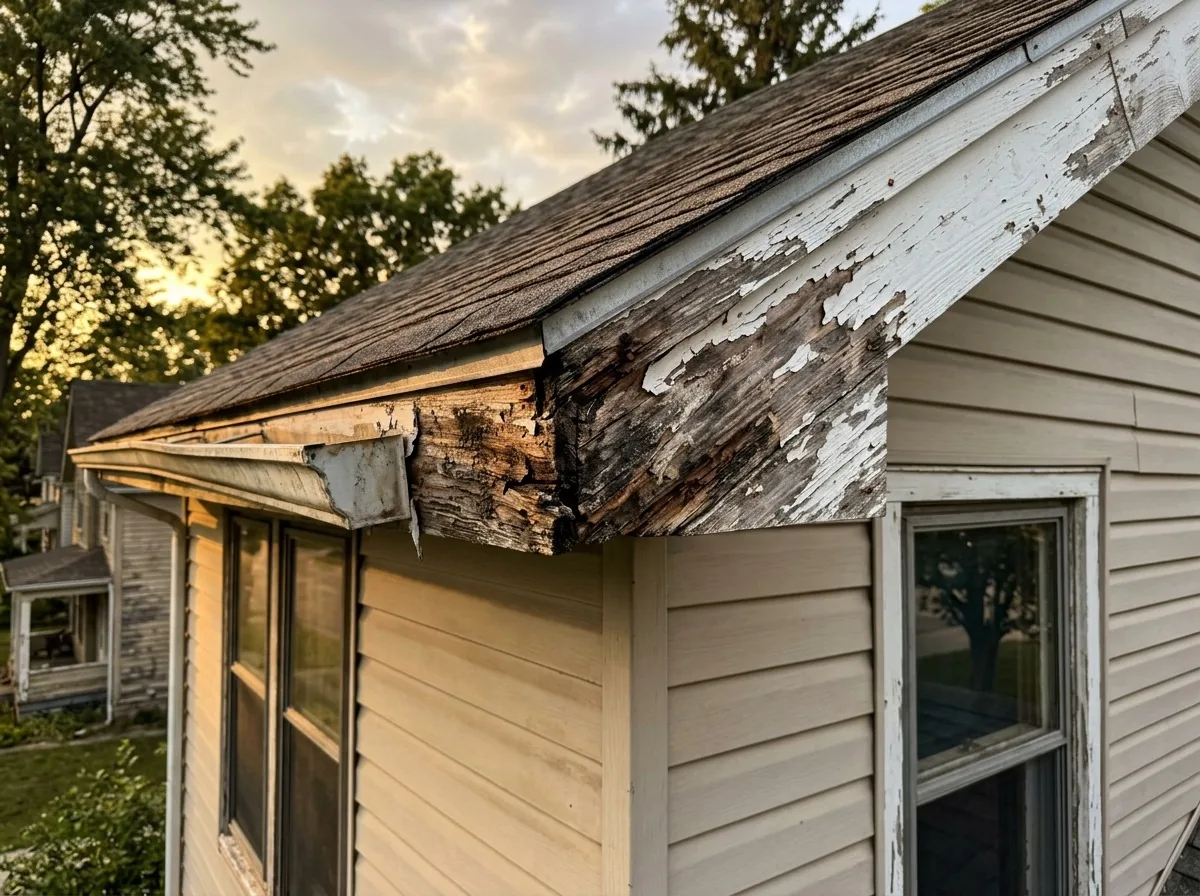
- If you spot signs of gutter failure during prep — sagging, seam splits, soft fascia — fix or replace before freeze-up, not during it.
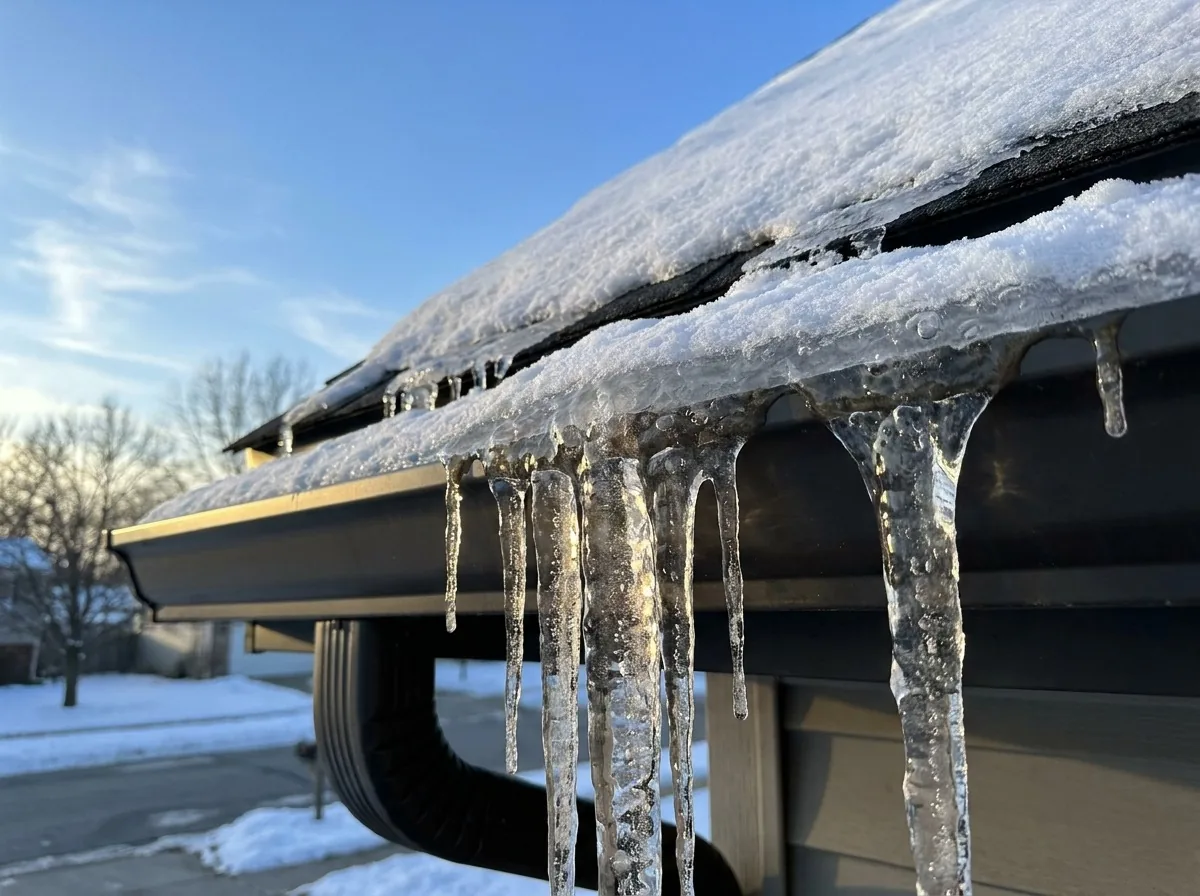
September: inspect while the weather is easy
September in Minnesota is dry, warm, and the leaves have not dropped yet. Use this month for inspection, not cleaning.
Walk the perimeter and look up. Note any visible sags, gaps between the gutter and fascia, or areas where the trough has pulled away from the house. Push a screwdriver into the fascia behind the gutter at a few spots — if it sinks, that board needs replacement before winter snow load. Mark those spots with painter's tape so you remember when the crew arrives. Check downspout outlets at ground level. Extensions should direct water at least 4 feet from the foundation wall. If extensions are missing, cracked, or disconnected, replace them now. A 4-foot aluminum or flexible extension costs $8–$15 at any hardware store (2026 retail). This is also the time to get a professional inspection if you suspect problems. A free gutter inspection from EaveX takes about 20 minutes and covers pitch, hangers, seams, and fascia condition: (763) 313-8516.
Gutter cleaning before winter in Minnesota
Gutter cleaning before winter in Minnesota belongs in one narrow window: after the last major leaf drop and before the first sustained freeze — usually late October through mid-November in the Twin Cities. Clean too early and maples refill the troughs; clean after ice forms and you are on an icy ladder with frozen mats that tear paint and hangers.
Professional gutter cleaning for a typical Twin Cities ranch runs $150–$250 for a one-story home and $250–$350+ for two stories (Minnesota market average, 2026). Final cost depends on linear footage, stories, fascia condition, and roof type — free measurement sets the number. DIY is possible on a stable ladder in dry weather; never work alone on wet or icy eaves. Pair cleaning with hangers, pitch, and downspout extensions the same week so meltwater has somewhere to go once snow starts cycling.
| Timing | What happens | Twin Cities market note (2026) |
|---|---|---|
| Early Oct (maples still dropping) | Troughs refill before freeze | Often needs a second visit |
| Late Oct – mid Nov (oaks down) | Clean holds through winter | Best window for most lots |
| After sustained freeze | Frozen mats + icy ladders | Harder, slower, riskier |
| One-story ranch clean | — | About $150–$250 |
| Two-story / complex roof | — | About $250–$350+ |
The pitch check: two minutes that prevent a winter disaster
While the gutters are clean, run a garden hose at low pressure along each run. Watch the water flow. It should move steadily toward the nearest downspout with no standing puddles.
If water pools in a low spot, the hanger at that point has loosened or the fascia behind it has compressed. This is a $150–$300 fix now (typical Twin Cities repair, 2026). Left through winter, the standing water freezes, expands, and bends the trough — turning a minor repair into a full-section replacement. While you are up there, count the hangers. Minnesota building practice calls for hanger spacing every 24 inches to handle snow load. If your hangers are 36 inches apart (common on builder-grade installs from the 1990s), adding intermediate hangers before winter is cheap insurance — about $3–$5 per hanger plus labor.
Downspouts: where the water goes matters more in winter
In summer, water from downspouts soaks into the ground within a few feet. If you are counting outlets before winter, start with how many downspouts a Minnesota house needs. In winter, the ground is frozen solid from December through March. Meltwater from a January thaw cycle has nowhere to go — it puddles against the foundation, refreezes, and applies ice pressure to the wall.
Keep downspout extensions in place all winter. The minimum distance from the foundation wall is 4 feet; 6 feet is better on flat lots. If your downspouts discharge into underground drain tile, confirm the tile is clear before freeze-up — a clogged tile backs water up into the gutter and creates an ice dam at the outlet. Splash blocks under the extension prevent erosion at the discharge point. A concrete splash block costs $10–$20 and lasts decades.
The temperature cutoff: why late repairs fail
This is the detail most homeowners learn the hard way. Gutter sealants — butyl caulk, silicone, and tripolymer — have minimum application temperatures printed on the tube. Most require 40°F or higher for proper cure (OSI Quad Max: 40°F; DAP Dynaflex Ultra: 35°F; GE Silicone II: 40°F). Below that, the sealant stays soft, does not bond, and fails at the first ice expansion.
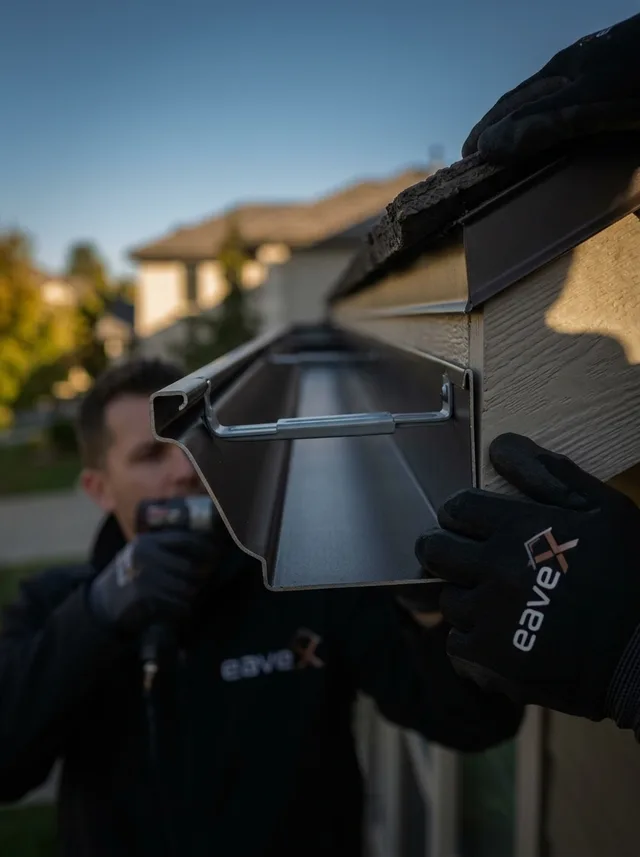
Aluminum gutter installation can proceed to about 20°F — the metal is workable and hangers seat fine. But every seam joint sealed in that cold window is a weak point. Contractors who install in December know this and plan a sealant touch-up in spring, but most homeowners do not ask about it. The practical rule: schedule any gutter repair or replacement before mid-November in the Twin Cities. After that, you are gambling on weather windows and accepting that seam work may need a spring follow-up.
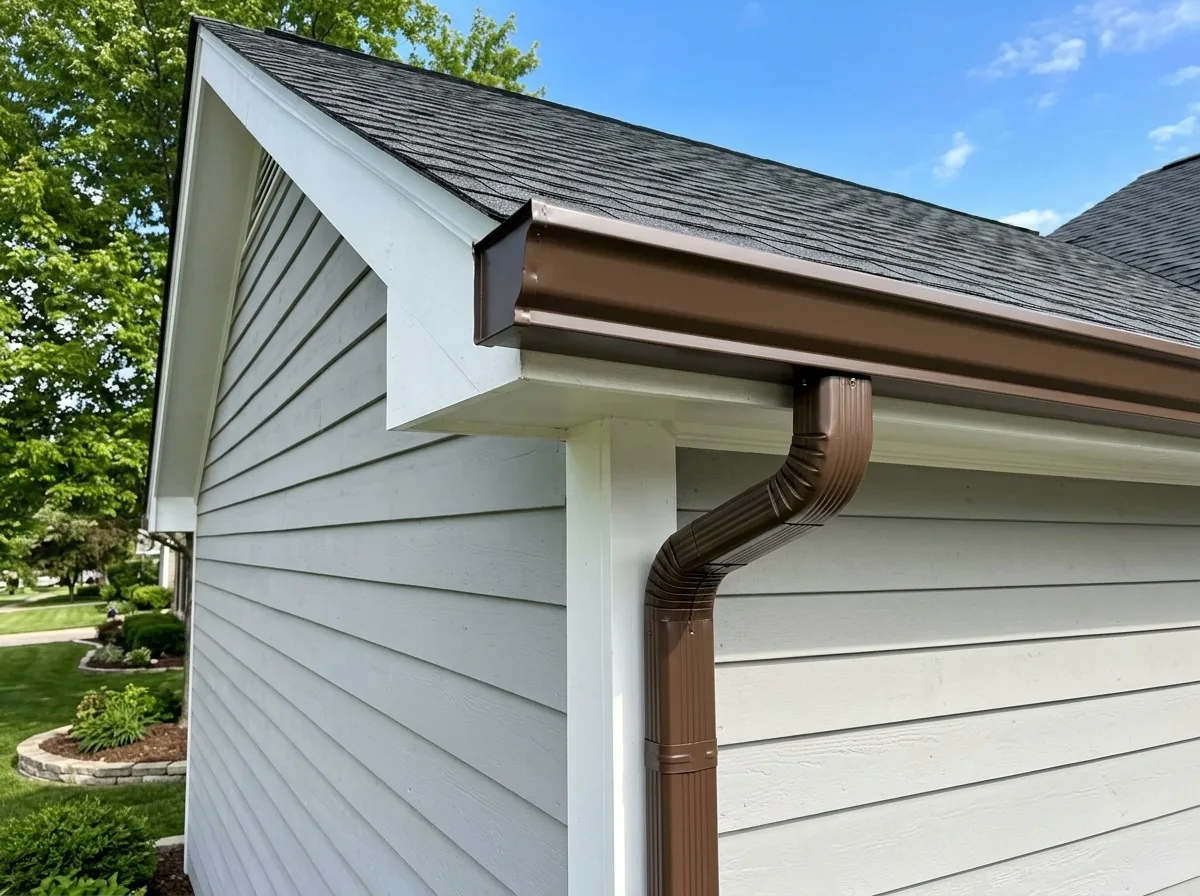
Checklist: do before the first snow
This is the short version. Print it, tape it to the garage wall, cross off each line.
- Decide on gutter guards for Minnesota snow if leaf clogs turned into ice curtains last winter
- Run the payback check in are gutter guards worth it in Minnesota if you paid for two or more cleanings last year
- Inspect fascia for soft spots (September)
- Book gutter cleaning after last leaf drop (late Oct – mid Nov)
- Run the hose test — no standing water in any run
- Tighten or add hangers — every 24" for snow load
- Check downspout extensions — 4 ft minimum from foundation
- Confirm underground tile is clear (if applicable)
- Seal any open seams while temp is above 40°F
- Place splash blocks under downspout extensions
- Disconnect and drain garden hoses from outdoor faucets
- Shut off interior valve to outdoor hose bibs (if not frost-free)
If anything on this list reveals a bigger problem — multiple sags, seam failures on several runs, soft fascia — that is not a prep task, it is a repair-or-replace decision. Our guide to spotting gutter failure walks through the diagnostic side. If undersized troughs keep overflowing in summer storms, see our gutter sizing guide for Minnesota homes.
The outdoor faucet step (it protects more than plumbing)
Disconnect garden hoses and shut off outdoor faucets so a burst bib does not flood the same foundation wall your downspouts are trying to protect. Frost-free bibs still need the hose off — trapped water defeats the design.
What if you already missed the window?
If it is December and the gutters are full of frozen leaves, do not try to chip them out — you will dent or crack the trough. Wait for a thaw day above 40°F (they happen in January and February in Minnesota) and do a quick cleanout then. This is not ideal, but it is better than leaving the blockage for the entire winter.
If you need seamless gutter replacement and winter has already started, the installation itself can still happen on days above 20°F. Just know that seam sealant applied below 40°F will need a touch-up in spring. Ask your contractor about this up front — a reputable one will tell you without being asked.
Book a pre-winter inspection
A 20-minute free inspection in September or October catches everything on this list before it becomes a December emergency. Call (763) 313-8516, schedule gutter cleaning, or visit our seamless gutter installation for details. If the fascia is soft, we quote fascia and soffit repair on the same visit — one trip covers both.
EaveX: 1,200+ projects, 5.0 rating, 13+ years in Minnesota, license BC808261. Financing available from 0% APR (0.00–9.99%) with GreenSky, plan 6124 — not every buyer qualifies for 0%.