Yes—replace the gutters when you re-side a Twin Cities home if the troughs are original to 1990s–2000s siding, hangers sit in fascia the crew will wrap, or the drip edge has to come off. Putting old metal back on new J-channel is how the next freeze pulls the eave.
Key takeaways
- Same visit: most Minnesota re-sides already pull the gutters. New seamless gutters hang into repaired wood on that lift—typical Twin Cities market $8–$14/lf for 5-inch in 2026.
- Full re-side: Minnesota market averages often land $12,000–$36,000 for vinyl / engineered-wood / fiber-cement on a typical house (2026). Gutters are a small add on that scaffold.
- Keep old troughs only if they are seamless, in pitch, under about 15 years, and the fascia stays hard when probed.
- August–October is still the window before leaf drop and freeze-up.
- EaveX: 1,200+ projects, 5.0 rating, 13+ years, license BC808261; financing from 0% APR (0.00–9.99%) with GreenSky, plan 6124 (not every buyer qualifies for 0%).
We work from Albertville (5098 Main Ave NE) across Minneapolis, St. Paul, and the west/north metro. Ranges below are Twin Cities / Minnesota market averages for 2026, not our price list. Your total depends on run length, stories, fascia condition, and roof type; the measure is free.
Why a siding crew takes the gutters down anyway
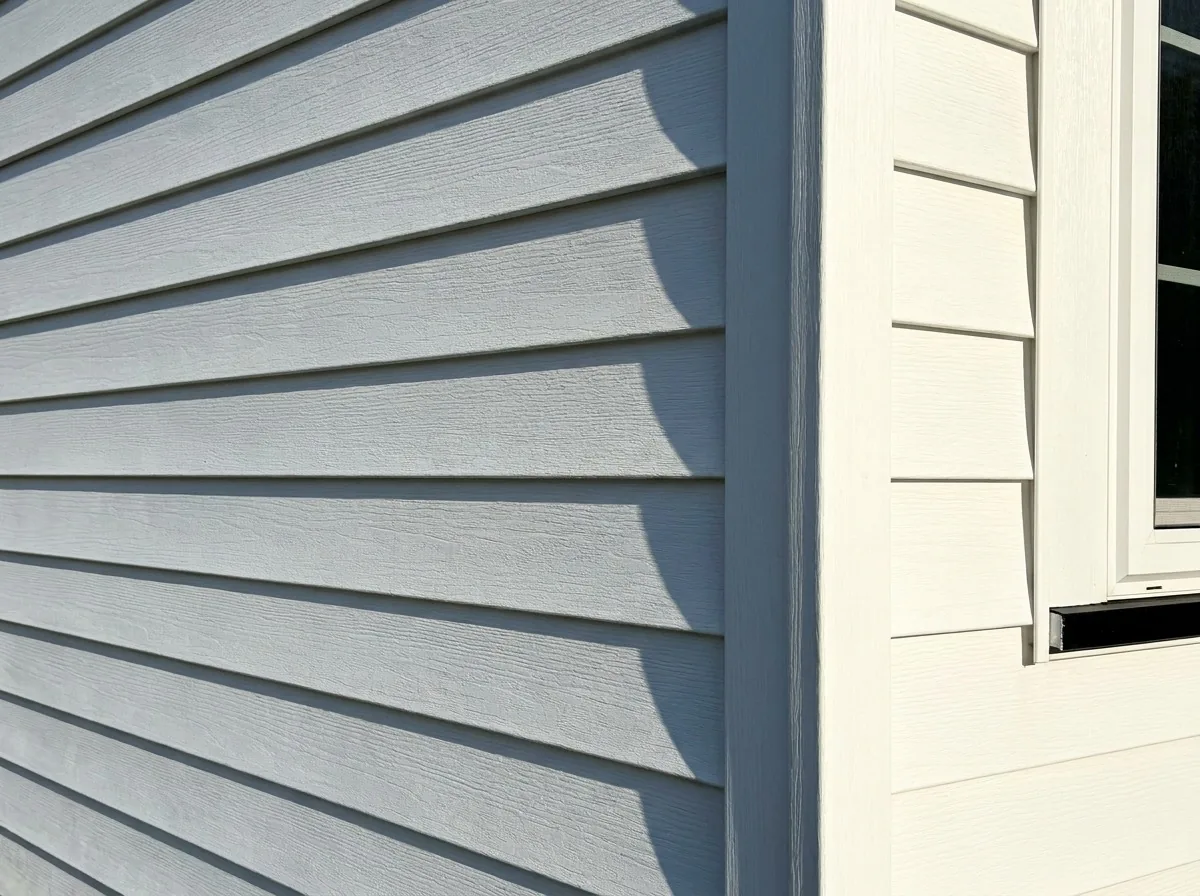
A re-side is not a paint job. Crews pull J-channel, window wrap, and the eave line so new panels lock to a straight starter. The gutter is in that line. On almost every Twin Cities vinyl or lap job, the troughs come off for a week even if nobody budgeted to replace them.
Hanging the same 20-year sectional back on is the expensive shortcut. Spike holes oval, miters have already cycled through Minnesota freeze–thaw, and the new siding’s top course wants a clean drip edge—not a wavy old back hanging 3/8 inch off the fascia.
When the troughs should go on the same ticket
Replace them when they are builder-grade sectional from the original siding wave, when seams leak in more than one spot, or when hangers have walked. That is the same 20–25 year clock as a lot of 1990s–2000s siding in Albertville, Hanover, and Maple Grove.
Replace them too when the fascia is opening. New panels do not make a spongy 1x hold hidden hangers. If a screwdriver sinks at hanger height, the board is fascia and soffit work first—then new coil. See wrap or replace fascia before new gutters for the wood call; this page is why that call lands on the siding calendar.
When keeping the old gutters is the right call
Keep a seamless aluminum run that is still in pitch, under about 15 years, with solid hidden hangers and no overflow stripes on the new cladding. Color-match is the only real hassle: baked-enamel coil rarely hits the exact new siding chip, so a contrasting eave (white on gray, musket brown on shake) is the usual Twin Cities look.
Do not keep spike-and-ferrule sectional “because the siding is the big invoice.” Putting those spikes back through new J-channel punches the water plane you just paid to seal. If the metal is that old, you are not saving a system—you are staging gutters pulling away from the house onto fresh siding.
What a siding + gutter combo costs in the Twin Cities in 2026
These are Minnesota market averages for 2026, not an EaveX price list. Confirm on a free measure. Stories, tear-off, and how much fascia is gone move the number more than interior square footage.
| Scope | Typical 2026 range | When it applies | Minnesota note |
|---|---|---|---|
| Full re-side (vinyl / engineered wood / fiber-cement) | $12,000–$36,000 | Typical 1,500–2,500 sq ft wall area | Scaffold already on site |
| 5-inch seamless gutters, same visit | $8–$14/lf | 150–200 lf ranch | Often $1,400–$3,800 |
| 6-inch seamless, same visit | $11–$16/lf | Steep roof, large watershed | Pair with 3×4 downspouts |
| Fascia wrap, sound wood | $6–$12/lf | Paint peeling, board hard | Caps the eave under new J-channel |
| Board replace + wrap | $15–$40/lf | Soft spots, ovaled hanger holes | Do this before new hangers |
| Micro-mesh covers, same visit | $8–$20/lf | Oak/maple lots | Stainless mesh, aluminum frame |
Final cost depends on run length, stories, fascia condition, and roof type; the measure is free. Two mobilizations—siding in August, gutters in October—costs a second lift and a second hole pattern in new wood.
Fascia is the board siding and hangers share
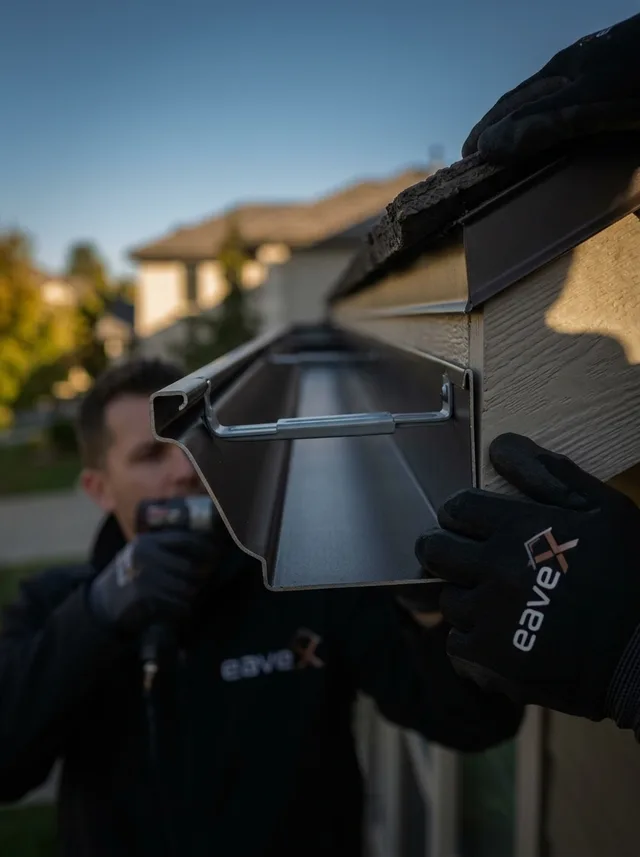
Siding locks to the eave; hangers screw into the same board. If the crew wraps a cupped 1x and you reuse old spikes, the wrap dimples and the trough walks by February. Hidden hangers every 24 inches (tighter on ice-loaded eaves) need hard wood.
A single 8–12 lf bad stretch is often $250–$650 in 2026 market averages. Whole-house fascia + soffit packages commonly land $1,500–$5,500. That is cheaper on the siding scaffold than as a winter emergency after melt soaks the new top course.
Drip edge, J-channel, and freeze–thaw
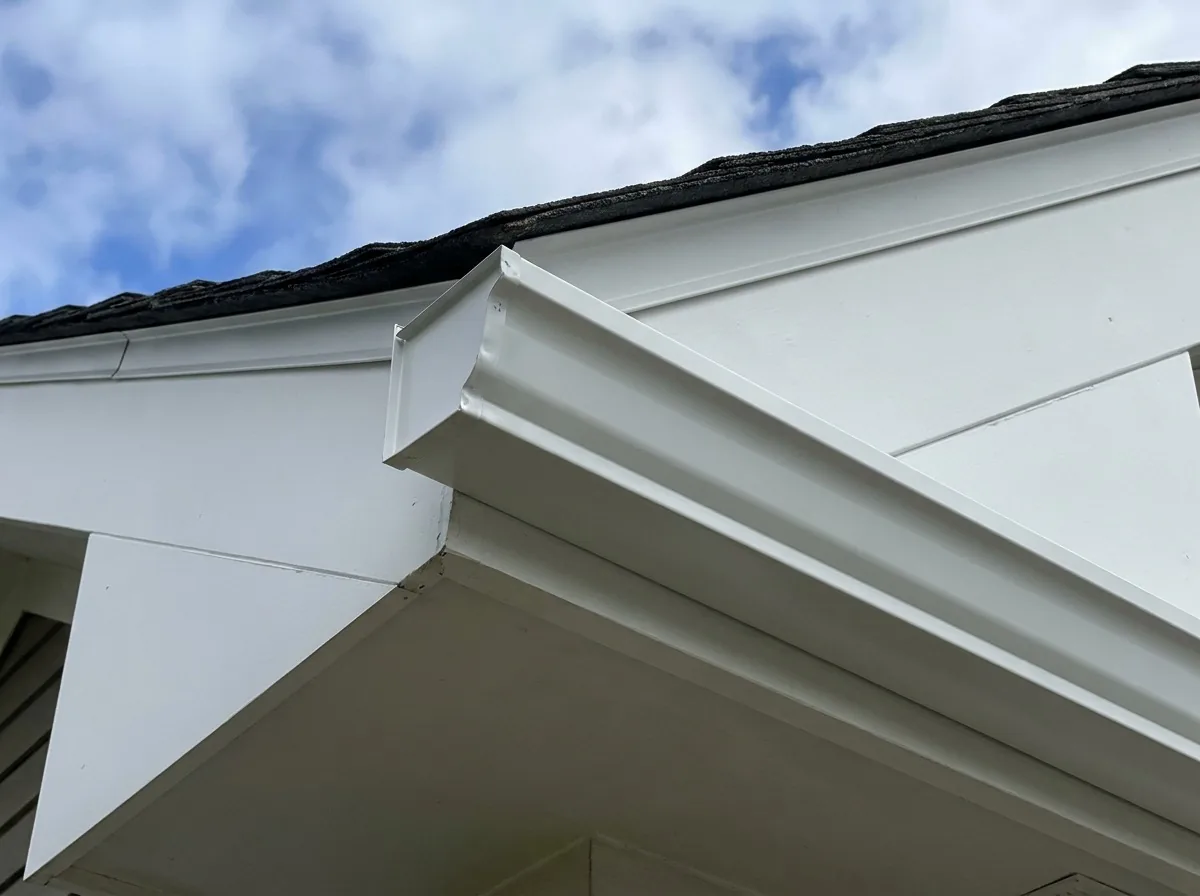
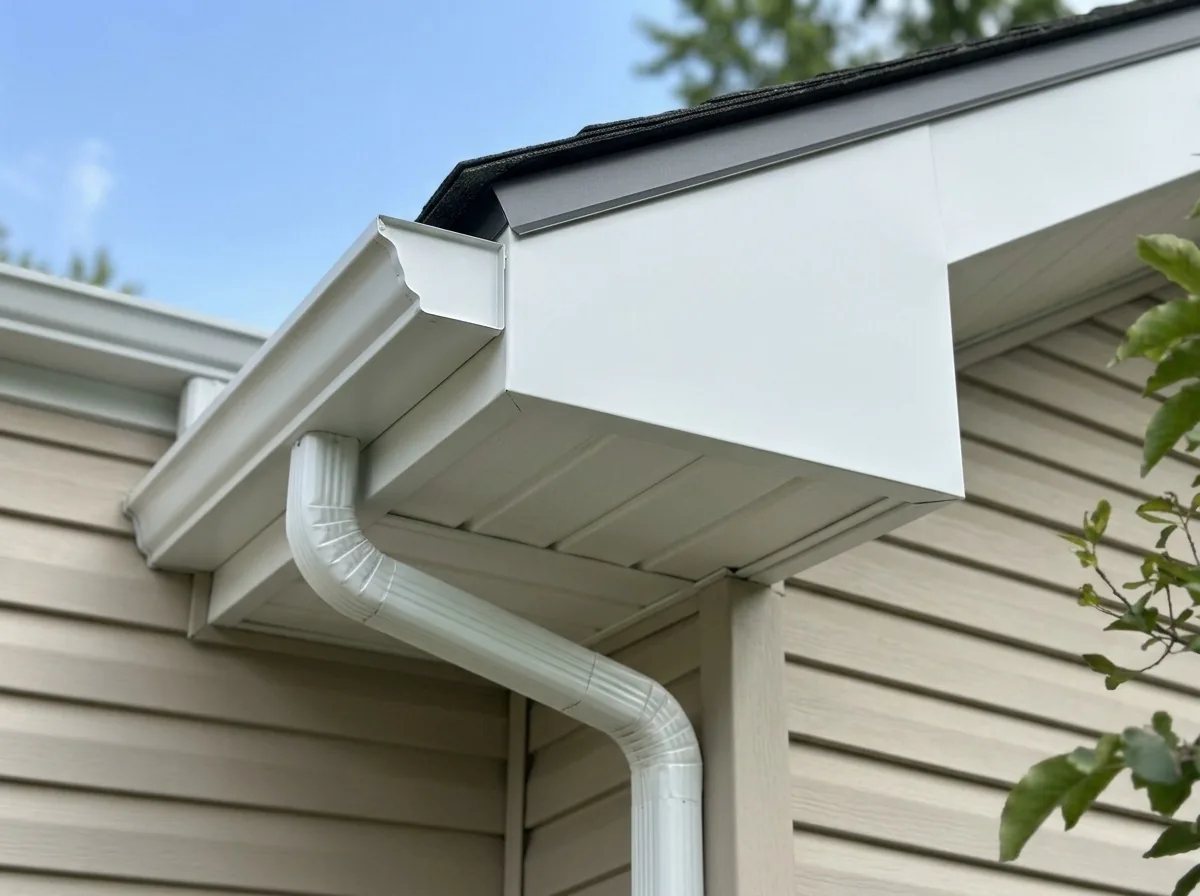
New siding wants a drip edge that sheds into the gutter, not behind it. If the old apron is rusty or short, the re-side is when you correct it. Ice at a valley will find any gap between J-channel and trough and stain the first winter’s panels.
Pitch still needs about 1/4 inch per 10 feet toward outlets every 30–40 lf, dumping 4–6 feet from the foundation. A pretty new wall with a stub elbow at the slab is a basement problem in clay soil. Pair the trough with the siding job so discharge is set before freeze-up, not after.
Gutter guards after a re-side
Wooded lots in the west metro dump oak and maple onto a clean new eave twice a year. Stainless micro-mesh in an aluminum frame—typical Twin Cities market $8–$20/lf in 2026—bolts to a trough that is already in pitch. It does not rescue a sectional run you just rehung.
Add covers on the same visit if the yard is tree-heavy. A second trip in November means ladders on new siding. See whether gutter guards are worth it in Minnesota for the ROI math; gutter guards is the install. Foam inserts freeze into a dam here—skip them.
Replace gutters with siding vs with a new roof
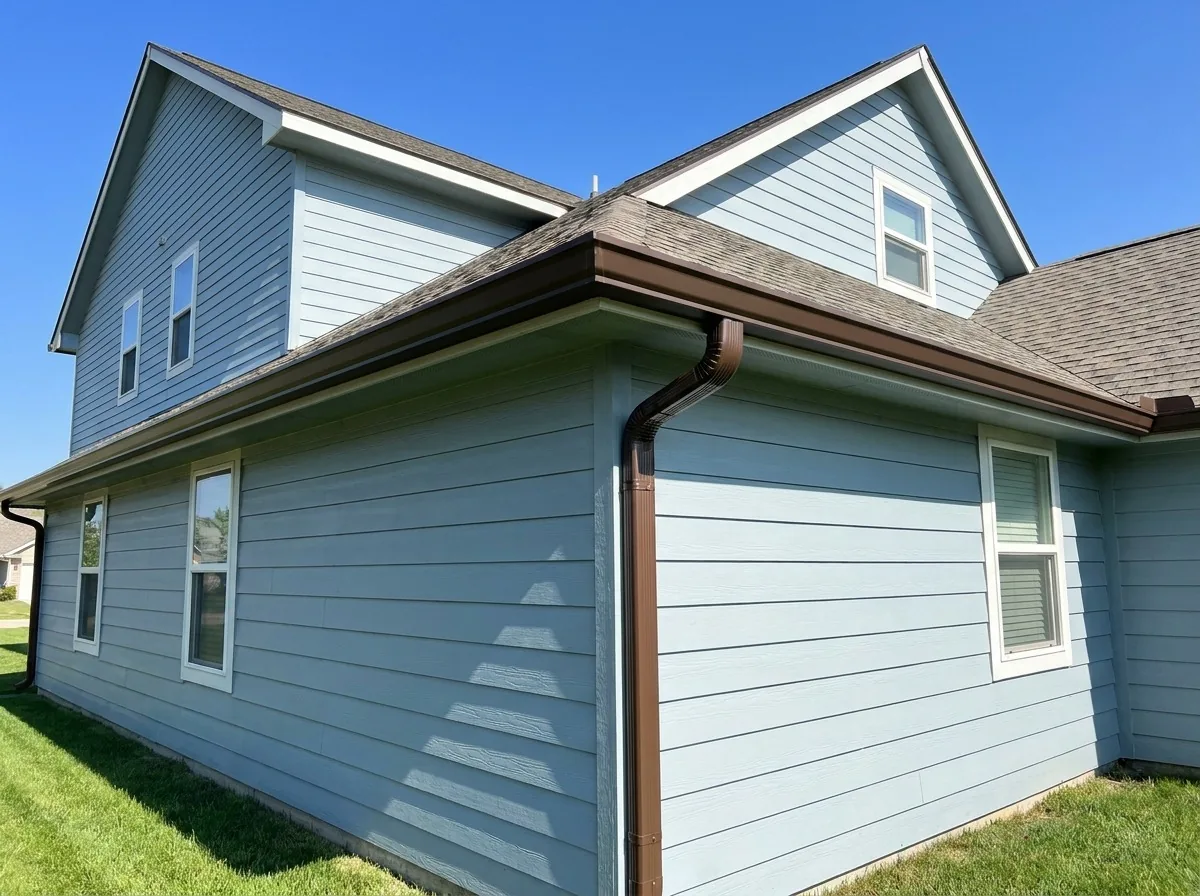
A reroof opens the eave from above; a re-side opens it from the wall. Both are valid “one lift” moments. If shingles are also inside the 20–25 year window, read should you replace gutters with a new Minnesota roof and bundle all three. If the roof is mid-life and the siding is the project, this page is the pairing.
Do not wait for the roof if the wall is already coming off. Leaving 1998 sectional on 2026 siding means you will pull that eave again in a few years and punch new holes in finished panels.
Book the combo before freeze-up
July–September is the window. October is last call before hard freeze; hanging coil onto a wrapped board in January means ice in the kerf and hangers that will not seat. If you are already looking at the best time to install gutters in Minnesota, put the siding ticket on the same calendar.
From Albertville we run this combo across Maple Grove, Hanover, and the west/north metro. Mid-August is still inside the window. Waiting until the first hard freeze is how a $8–$14/lf gutter line becomes a winter leak on brand-new siding.
Ready for a free inspection?
EaveX will measure the eaves, probe the fascia, and tell you whether the troughs belong on the siding ticket—with a written number, not a phone guess. Call (763) 313-8516 or request a free inspection online. We serve Minneapolis, St. Paul, Maple Grove, Hanover, and the surrounding metro from our Albertville shop. License BC808261.