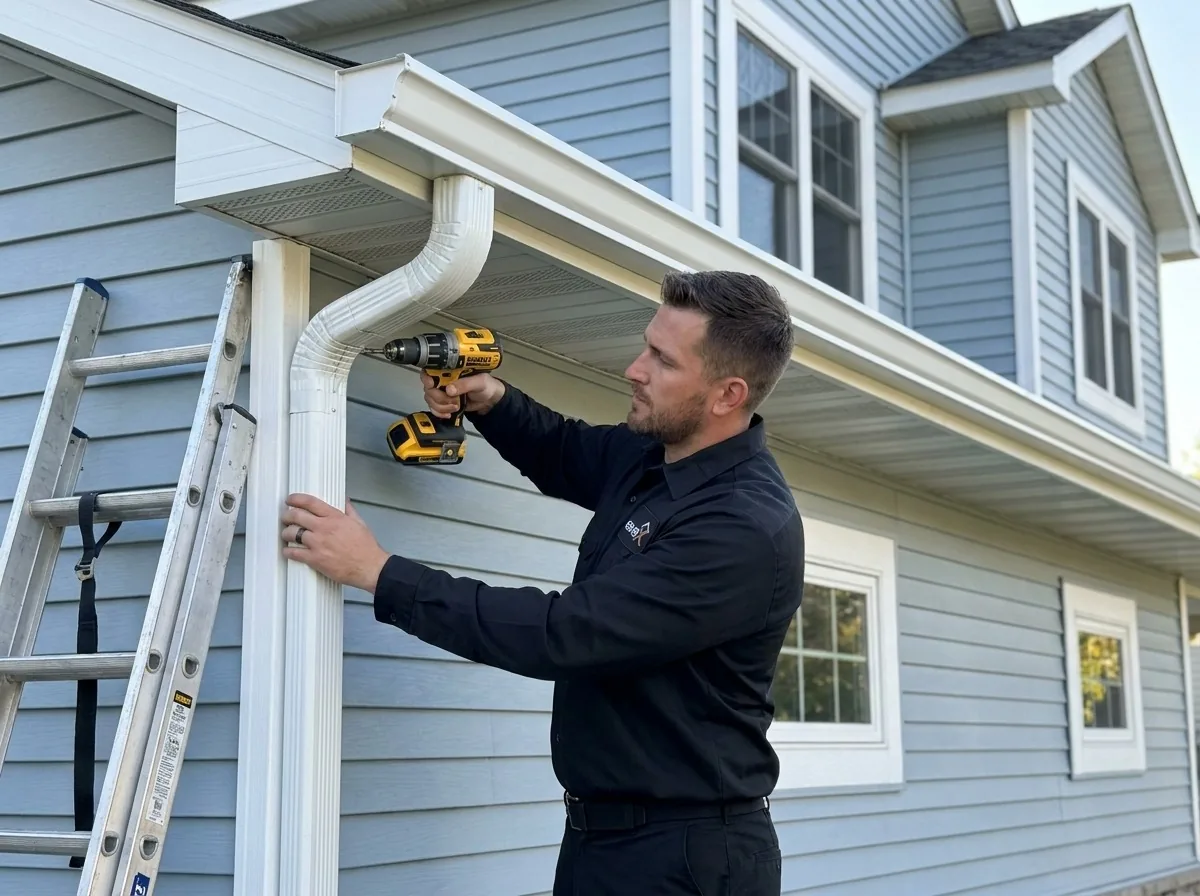
Hiring a pro for seamless aluminum gutters is usually the smarter call in Minnesota — DIY sectional kits look cheaper upfront, but freeze–thaw, ice weight, and spike hangers that pull from soft fascia turn many weekend installs into spring repairs. If your goal is a one-day, continuous-run system that holds Twin Cities snow loads, start with a seamless gutter installation free inspection rather than a box-store kit.
Key takeaways
- DIY fits short, single-story runs with sound fascia and light tree load — still plan on ladders, miter cuts, sealant, and yearly resealing of joints.
- Pro seamless (0.027–0.032-inch aluminum, hidden hangers, rolled on site) is the default for two-story homes, long eaves, and Minnesota ice/snow. Typical Twin Cities market range in 2026: about $8–$14 per linear foot installed.
- Hidden costs of DIY: soft fascia you did not budget to replace, wrong pitch, and ice that pries sectional seams open by February.
- Guards and cleaning still matter either path — gutter guards in Minnesota cut leaf mats; fall gutter cleaning clears what kits miss.
- Financing is available from 0% APR (0.00–9.99%) with GreenSky, plan 6124 (not every buyer qualifies for 0%). License BC808261, 13+ years, 1,200+ projects, 5.0 rating.
EaveX works from Albertville (5098 Main Ave NE) across Minneapolis, St. Paul, and the west/north metro. Below is a straight DIY-vs-pro comparison for Minnesota homeowners — numbers first, sales talk second.
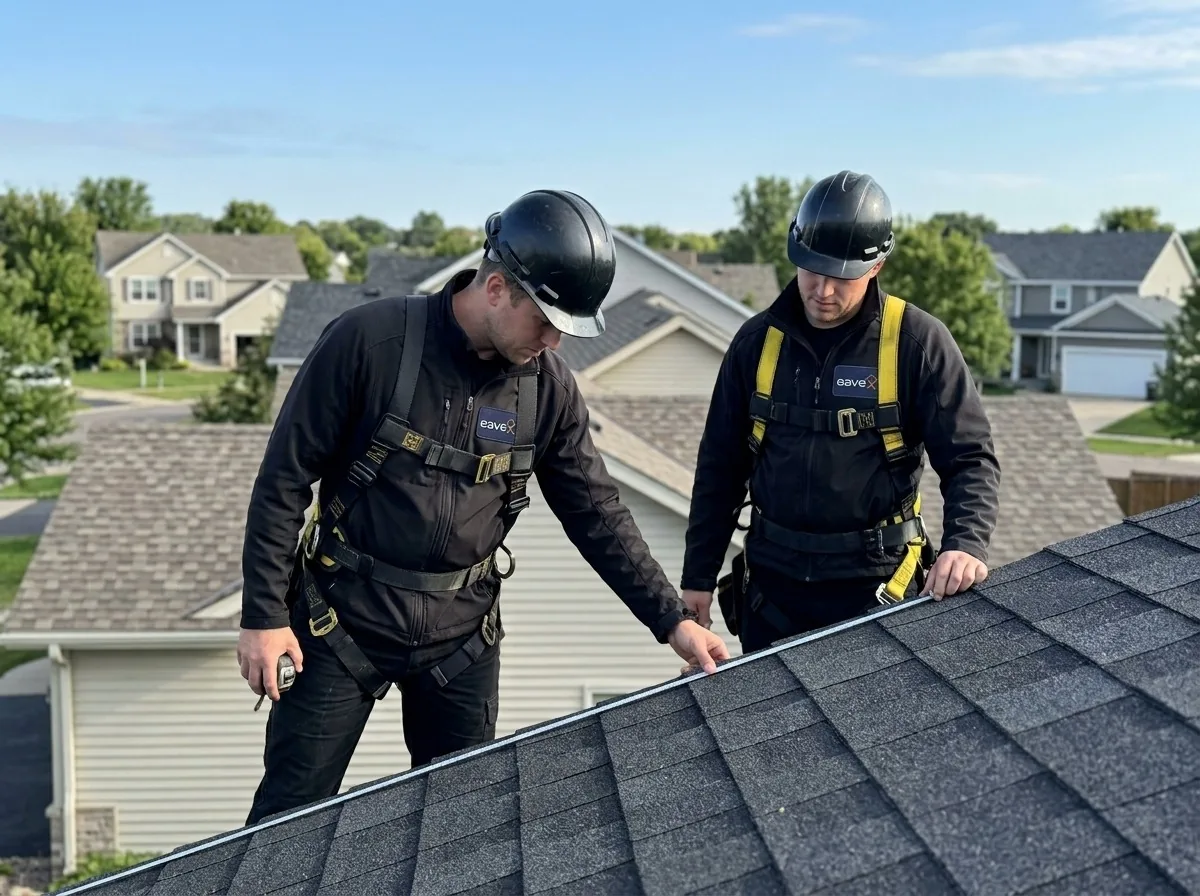
When DIY gutter installation can make sense
DIY can work on a low ranch with 40–80 feet of simple eave, solid fascia boards, and few inside corners. You buy sectional K-style pieces, hang them with spikes or brackets, seal every joint, and add downspouts that dump water at least 4–6 feet from the foundation.
Budget a full weekend, a helper, and the right ladder setup. Minnesota roofs are often steep and icy in shoulder seasons — if you are not comfortable working at height in wind, stop here and call a crew.
What “pro install” means on a Twin Cities house
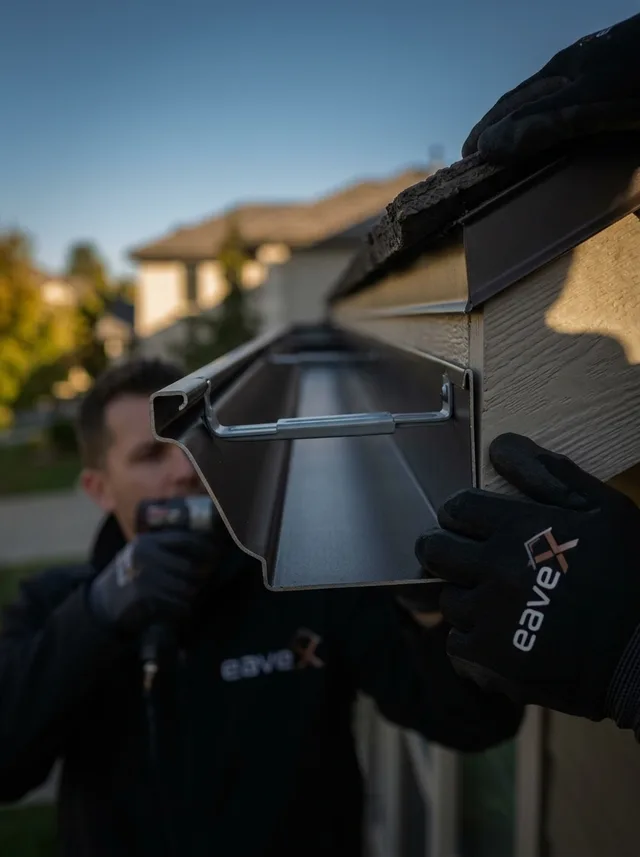
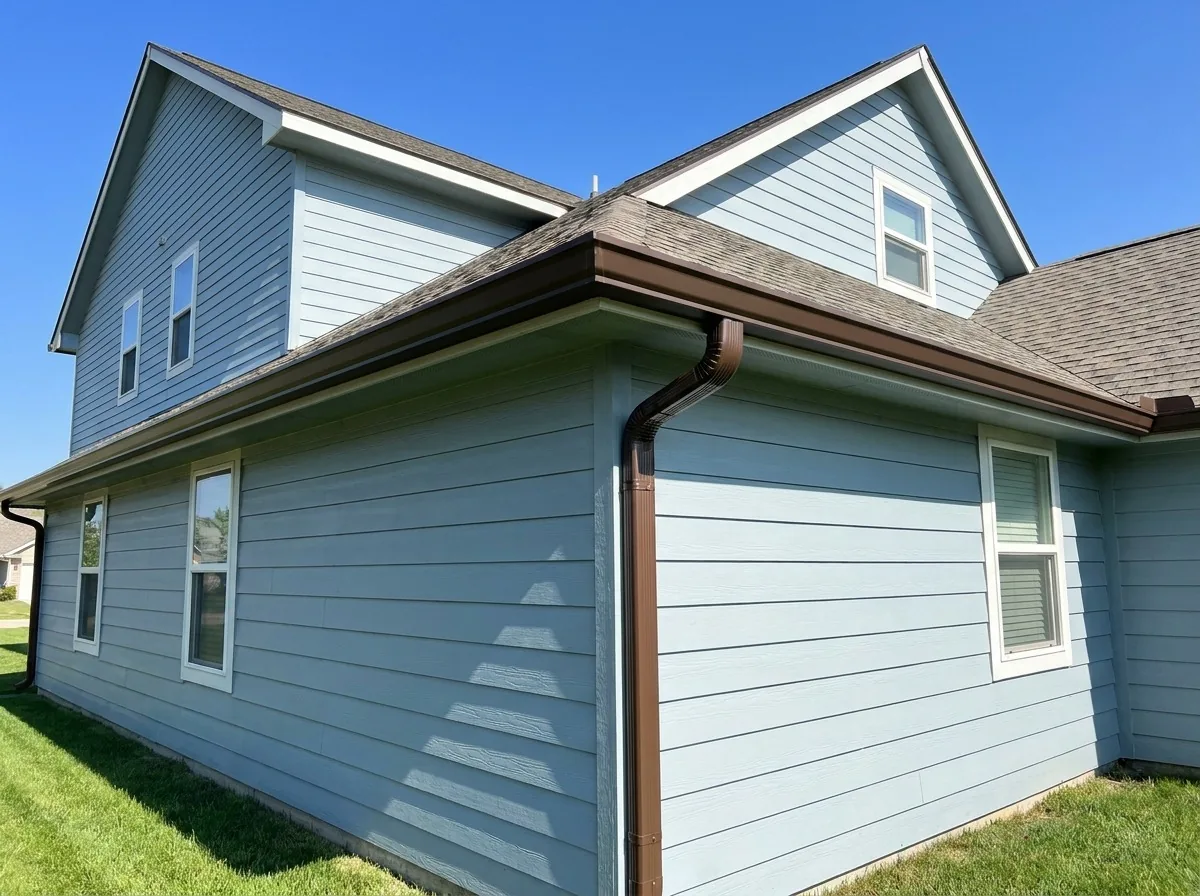
A professional seamless gutter job rolls aluminum coil in your driveway into one continuous trough per wall. No mid-run joints to leak. Hidden hangers screw into fascia or rafter tails on a measured pitch so water actually moves to the downspout instead of sitting in low spots that freeze.
Pros also catch fascia rot, bad drip edge, and undersized 5-inch runs that overflow under maple canopies — issues a kit never lists on the box. That inspection step is why many “cheap DIY” projects become a spring replace anyway.
DIY vs pro: side-by-side (Minnesota)
| Factor | DIY sectional kit | Pro seamless install |
|---|---|---|
| Joints | Every 10 ft + corners (leak points) | One continuous run per wall |
| Typical Twin Cities cost (2026) | ~$3–$7/ft materials + your time | ~$8–$14/ft installed (market range) |
| Snow / ice | Spikes and seams often fail first | Hidden hangers + thicker coil hold better |
| Two-story / long eaves | High fall risk; hard to keep pitch | Crew + staging standard |
| Fascia repair | Easy to miss soft wood | Usually scoped before hang |
| Warranty / insurance | DIY = your risk | Licensed BC808261 contractor |
Market ranges above are typical Twin Cities figures for 2026, not an EaveX price list. Final cost depends on run length, stories, fascia condition, and roof type; measure is free.
Real costs: kit price vs installed system (2026)
A big-box sectional kit for a modest ranch might land around $400–$900 in materials. Add hangers, sealant, downspout extensions, and a fascia board or two and you are often near $1,000–$1,800 before valuing two days of labor and ladder risk.
Pro seamless on the same footprint commonly pencils in the $8–$14 per linear foot Twin Cities market band for 2026 — for example, ~160 ft lands roughly $1,280–$2,240 before optional guards or fascia. Pairing new troughs with micro-mesh gutter guards (stainless steel mesh on an aluminum frame) is a separate line item, typically about $6–$12 per linear foot market range in 2026 when bought with a full install. Again: ranges vary with height, access, and wood condition; you get a fixed quote after a free on-site measure.
Minnesota risks DIY kits handle poorly
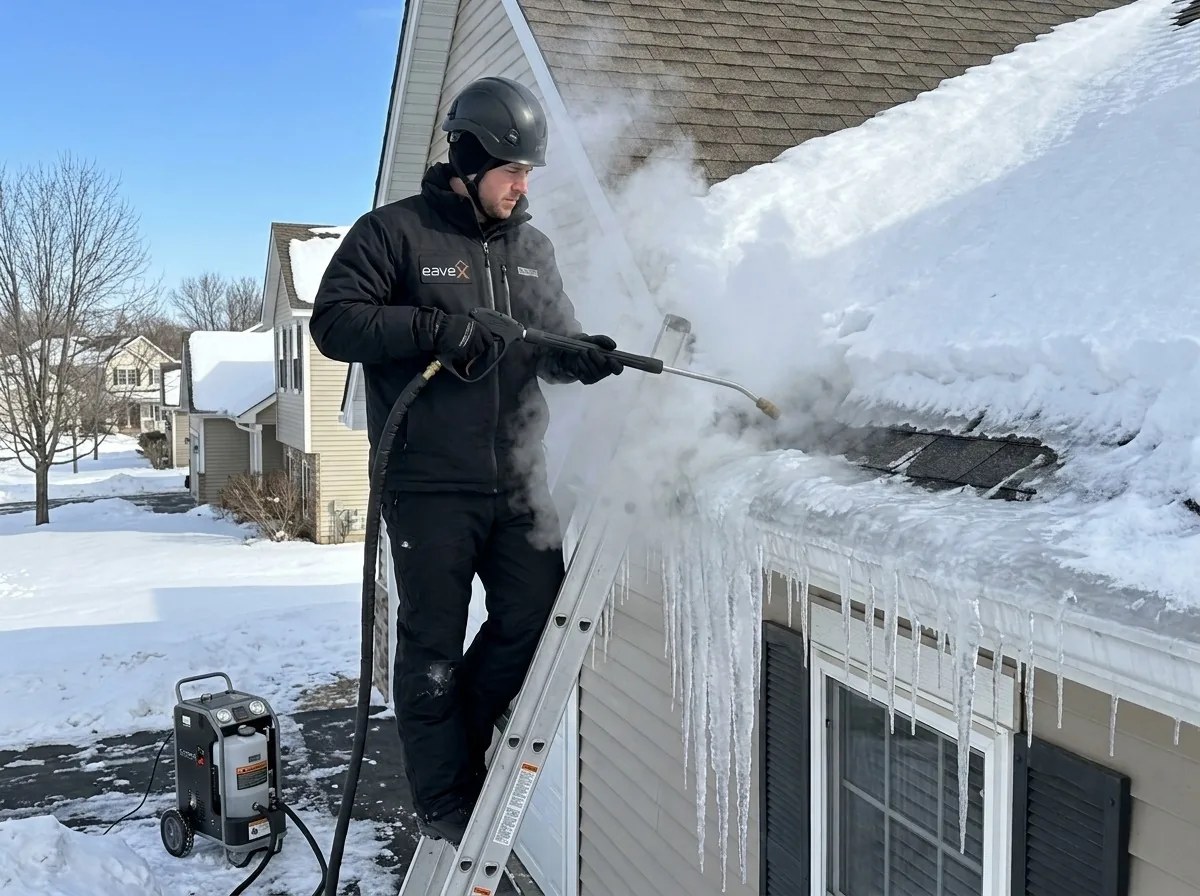
Ice dams shove water under shingles and into the trough. Sectional seams and spike-and-ferrule hangers are the first things that open when ice expands. A clogged DIY run that freezes solid can peel the gutter off soft pine fascia in one polar week.
Leaf season in the west metro (maples, oaks, pines) loads every joint with debris. If you DIY the troughs but skip a fall clean and a sensible guard plan, you recreate the overflow problem you meant to fix. Read how ice forms in our ice dam prevention guide and how early warning signs show up in 7 signs your gutters are failing.
Tools, time, and skills you actually need
Minimum DIY kit: level, chalk line, metal snips, sealant gun, drill, and a ladder rated for your weight plus materials. Inside corners and end caps are where most leaks start — dry-fit twice before you caulk.
Time: a simple one-story L-shaped ranch can take 8–16 hours for two careful people. Add fascia replacement and you are into a second weekend. Pros typically finish a standard home in one day because the coil machine and two- or three-person crew remove the cut-and-join grind.
Fascia and drip edge: the make-or-break detail
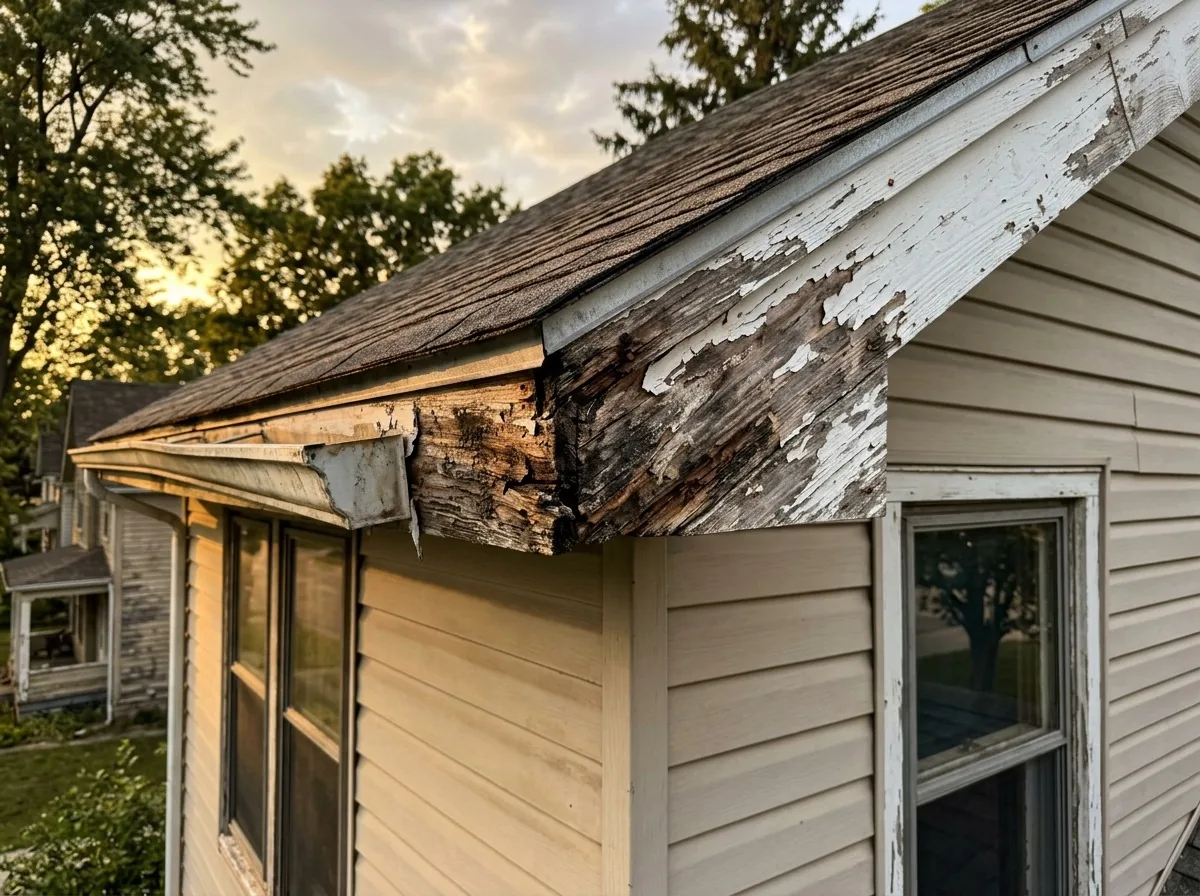
Gutters only last as long as the wood behind them. Soft fascia, cupped boards, or missing drip edge will defeat both a kit and a premium coil. If paint bubbles or a screwdriver sinks into the board, budget fascia and soffit repair before any hangers go in. Before you hang new troughs, decide whether to wrap or replace fascia.
Skipping that step is the #1 reason DIY “savings” disappear. A free inspection that finds two soft elevations can change the whole plan from “weekend project” to “replace wood, then hang seamless.”
Safety and insurance (do not shrug this off)
Falls from extension ladders are still one of the top DIY injury patterns on exterior projects. Two-story colonials, vaulted great-room walls, and wet September decks are not practice runs.
A licensed contractor carries the insurance and workplace habits for that height work. EaveX is licensed BC808261 with 13+ years on Twin Cities roofs — if you want the risk off your household, that is the trade you are buying, not just metal.
How to decide in 10 minutes
Choose DIY if you have a single story, short straight runs, solid fascia, proper ladders, and you accept yearly resealing of joints. Choose a pro if you have two stories, long or complex eaves, soft wood, heavy canopy, ice-dam history, or you want seamless coil with hidden hangers before winter — book seamless gutter installation in the Twin Cities or check our Maple Grove and Plymouth service area pages. Still deciding coil vs kit? Read seamless vs sectional gutters in Minnesota. Pro seamless aluminum often reaches 20–30 years when hangers and fascia stay sound—details in how long seamless gutters last in Minnesota.
Already mid-project? Use gutter repair vs replacement and the 2026 Twin Cities seamless cost guide before you buy more sealant.
Ready for a free inspection?
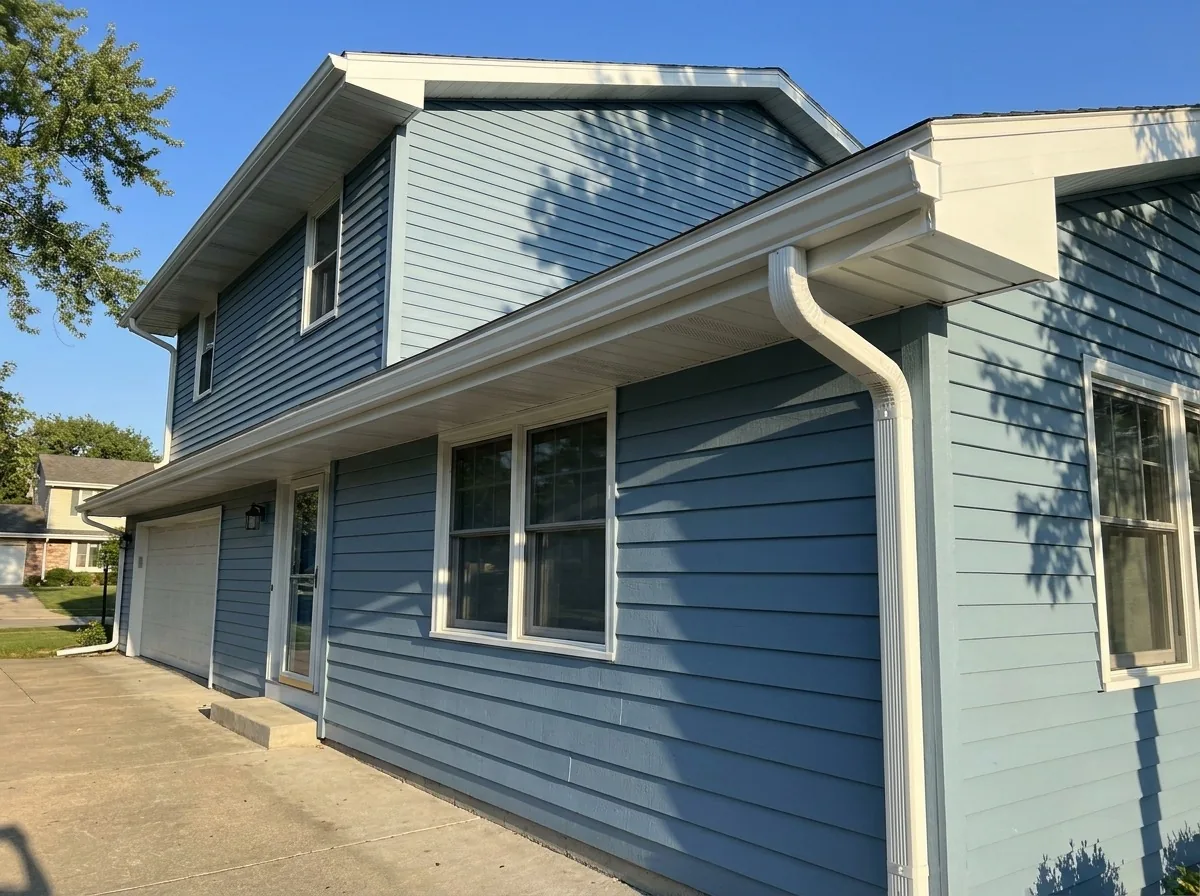
Tell us whether you are weighing a DIY kit or a full replace. We measure runs, check fascia, and give a written scope — no pressure to buy the same day. Call (763) 313-8516 or request a free inspection online. Financing is available from 0% APR (0.00–9.99%) with GreenSky, plan 6124; not every buyer qualifies for 0%.