What Aluminum Gutter Gauge Is Best for Minnesota? (0.027 vs 0.032)
For most Twin Cities homes, 0.027-inch seamless aluminum is the right gauge—thick enough for Minnesota ice and snow when hung with hidden hangers on sound fascia—while 0.032-inch is a premium step-up for long two-story runs, heavy canopy, or ice-dam history. Gauge is the metal thickness; it is not the same choice as 5-inch vs 6-inch or aluminum vs steel. Final pick depends on run length, stories, fascia condition, and roof type; a free measure settles it.
Key takeaways
- 0.027" is the everyday residential coil for seamless gutter installation across Minneapolis–St. Paul in 2026; 0.032" resists wave and pull-away better on tall walls and ice-heavy eaves.
- Twin Cities market averages (2026) for seamless aluminum installed run about $8–$14 per linear foot—thicker coil often sits toward the high end of that band, not a separate menu price.
- Soft fascia and spike hangers kill either gauge in one or two winters; fix wood and use hidden hangers first—see fascia and soffit repair.
- Pair the right gauge with enough downspouts and optional micro-mesh gutter guards (stainless steel mesh on an aluminum frame) if oak, maple, or needles load the trough.
- EaveX: 1,200+ projects, 5.0 rating, 13+ years, license BC808261; financing from 0% APR (0.00–9.99%) with GreenSky, plan 6124 (not every buyer qualifies for 0%).
What “gauge” means on a Minnesota eave
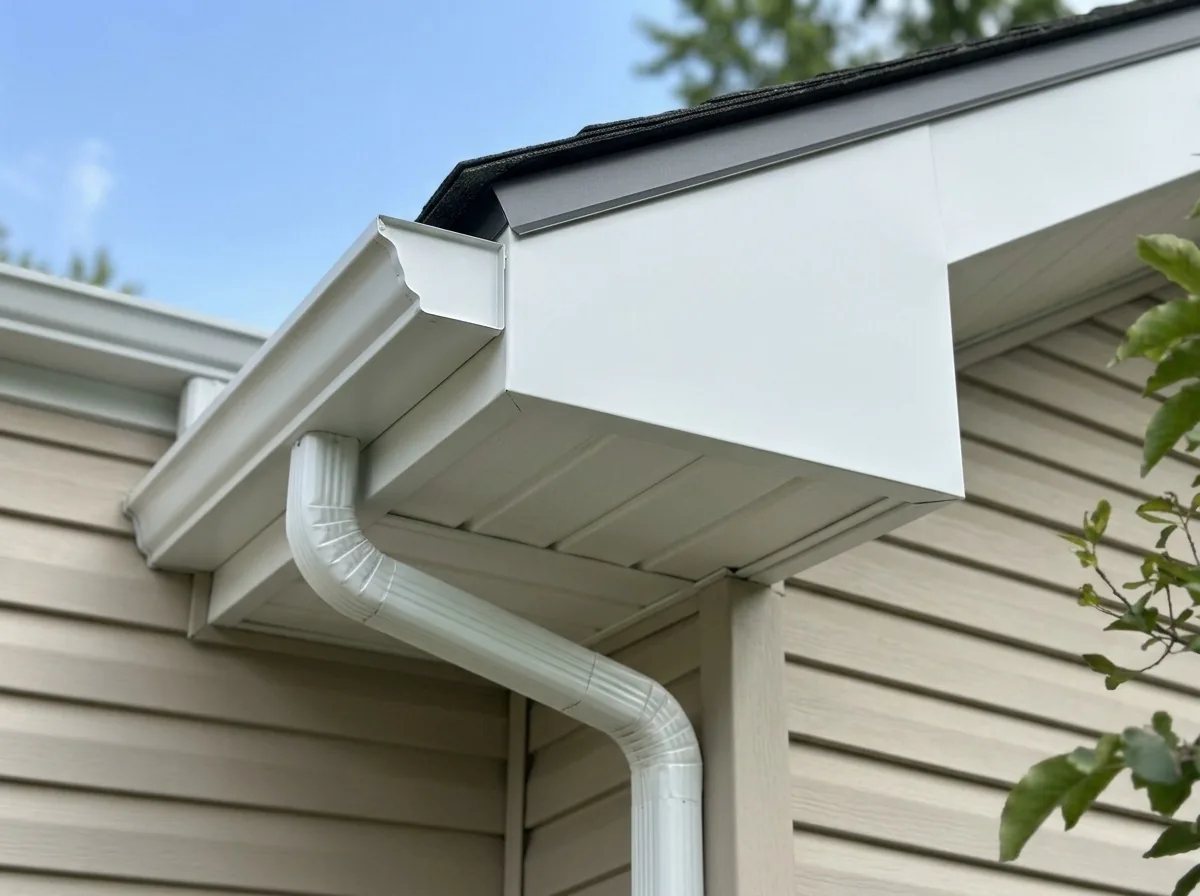
Gauge here is coil thickness in inches. Residential seamless gutters are almost always painted aluminum rolled on site. Thicker metal holds its shape when ice expands in the trough and when wet snow sits overnight after a thaw. Thinner metal is easier to form and costs less, but it waves sooner if hangers are sparse or the fascia is soft.
Do not confuse gauge with trough size. A 6-inch 0.027" system moves more water than a 5-inch 0.032" system; thickness fights denting and wave, width fights overflow. Size the water path first, then pick thickness for the eave height and ice history.
0.027 vs 0.032: which Minnesota homes need which
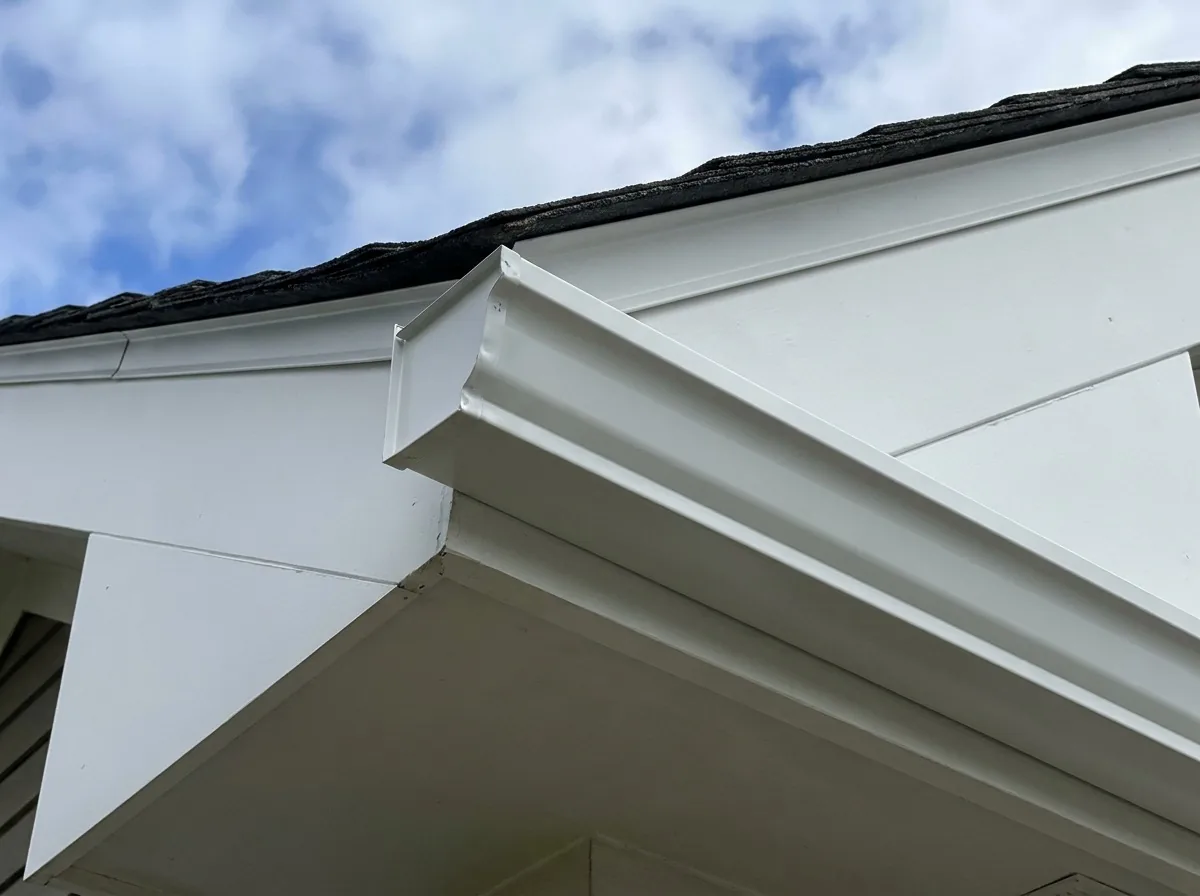
Stay on 0.027" for most single-story ranches and split-levels with moderate pitch, solid fascia, and hangers spaced for snow load. That is the coil we see most often on Twin Cities replacements that still look straight after a decade of freeze–thaw.
Choose 0.032" when eaves are long and two-story, when ice dams have already pulled a thinner trough, or when you want extra stiffness under wet March snow. The upgrade is a few dollars per foot in the market band—not a different product category—and it still fails if hangers bite into rotten wood.
Gauge, hangers, and ice: what actually fails first
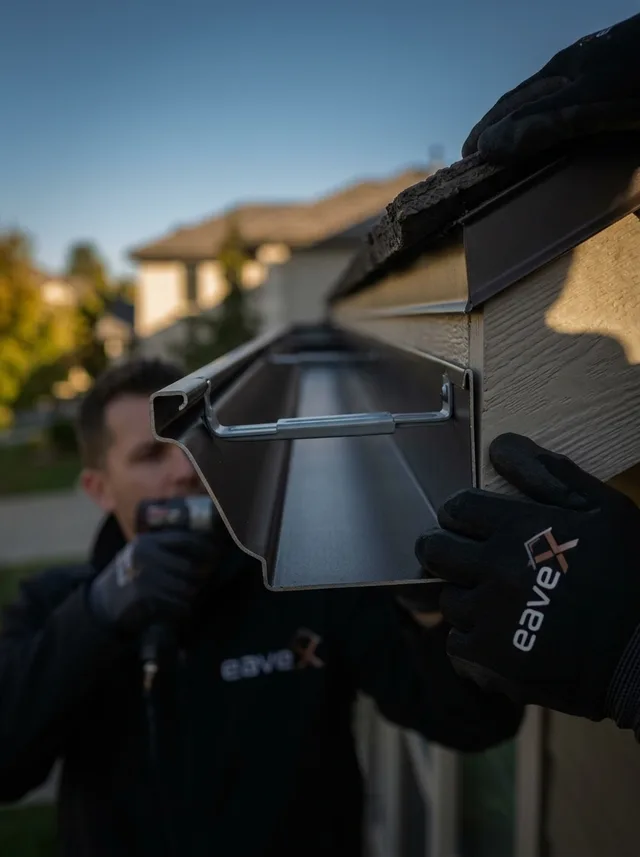
Ice weight and freeze–thaw pry fasteners, not the painted face of the coil. Spike-and-ferrule systems pull out of soft pine first; wave shows up later. Hidden hangers at Minnesota-appropriate spacing keep either gauge working longer. If the board behind the trough is soft, budget fascia repair before arguing about 0.027 vs 0.032.
Leaf mats that freeze solid overnight turn any gauge into an ice beam. That is a maintenance and guard problem as much as a metal problem—fall gutter cleaning or micro-mesh after the trough is sized and hung correctly.
Cost and lifespan context (Twin Cities market 2026)
These figures are typical Twin Cities / Minnesota market averages for 2026, not an EaveX price list. Your total depends on linear footage, stories, fascia condition, and roof type; free inspection confirms the scope.
| Choice (market average, 2026) | Typical range / note | Best for |
|---|---|---|
| 0.027" seamless aluminum installed | Mid of $8–$14/lf band | Most ranches / splits with sound fascia |
| 0.032" seamless aluminum installed | Same band, often +$1–$3/lf vs 0.027" | Tall walls, ice-dam history, long eaves |
| Hidden hangers + correct pitch | Included in quality install | Either gauge — non-negotiable in MN |
| Micro-mesh guards add-on | $6–$12/lf typical | Wooded lots after gauge/size are right |
| Illustrative 160 lf ranch, 0.027→0.032 | Roughly +$160–$480 metal/labor delta | Before fascia; measure still required |
Expected life with solid hangers and fascia: roughly 20–30 years on 0.027" residential coil in Minnesota; 0.032" often holds shape longer on the same eave, but soft wood still ends the system early. For year ranges by system type, see how long seamless gutters last in Minnesota. Installed price bands for the same aluminum coil: seamless gutter cost in the Twin Cities. Material trade-offs vs steel are in aluminum vs steel gutters in Minnesota.
Gauge vs size vs material — do not mix the three decisions
- Size (5" vs 6") — storm capacity and roof catchment (5-inch vs 6-inch; when replacing, upsizing guide).
- Material (aluminum vs steel) — weight, rust, and price.
- Gauge (0.027 vs 0.032) — stiffness under ice and wave resistance.
Picking thicker aluminum does not fix an undersized trough. Upsizing to 6-inch does not fix spike hangers on rotten fascia. Get the decision order right on the free estimate.
Signs your current trough is too thin (or poorly hung)
Wave between hangers, a lip that rolls forward after March melt, and new gaps at the fascia after one hard ice week all point to stiffness or fastening—not just “old gutters.” Tap the board behind the trough; if a screwdriver sinks, the metal thickness is secondary until wood is sound.
Also watch for dents from ladders and ice chunks that never spring back. A 0.027" coil on good hangers recovers better than a thicker coil on spikes every four feet. Photograph the problem elevations before the estimate so we can match gauge and hanger plan to what failed.
Minnesota climate: why thickness still matters in late summer
Late August and September are the install window before leaf drop. Thicker coil will not stop ice dams caused by attic heat loss, but it resists the denting and twist that happen when melt and refreeze load a long eave. Homes in Maple Grove and Plymouth with mature canopy see both leaf load and ice shelves—gauge, hangers, outlets, and optional mesh all belong on one scope.
If you are comparing full tear-off quotes, use the gutter replacement cost in Minnesota guide for $/lf context, then ask which coil thickness is in the line item. DIY sectional kits rarely disclose true thickness the way on-site seamless coil does—see DIY vs pro gutter installation before you buy a weekend project that waves by February.
What to ask on the free estimate
Ask which coil thickness is in the quote, hanger type and spacing, whether fascia repair is included, and whether downspouts match the trough size. A line item that only says “seamless aluminum” without gauge leaves you comparing apples to oranges across bids. We put thickness and hanger plan in writing after the measure so you can compare scopes fairly across the metro.
Free inspection: we spec gauge on the eave, not the catalog
Bring photos of any wave, pull-away, or ice shelves along the fascia. We measure runs, check wood, and recommend 0.027" or 0.032" with hanger spacing for your snow load—not a one-size brochure. Call (763) 313-8516 or book a free inspection online. Written quote after the measure; financing from 0% APR (0.00–9.99%) with GreenSky, plan 6124 when you qualify.