How much fall should gutters have in Minnesota? Aim for about ¼ inch of drop every 10 feet of run toward the nearest downspout—roughly 1 inch over 40 feet—so melt and storm water leave the trough instead of ponding at mid-span. That pitch is the Twin Cities field standard for seamless gutter installation in 2026; flatter runs freeze into ice sheets, steeper ones look “crooked” from the yard and can pull hangers hard in freeze–thaw. Final pitch is set on the free measurement from the high point to each outlet.
Key takeaways
- Standard Minnesota pitch: ¼″ per 10 ft toward the outlet (about 1″ in 40 ft).
- Wrong fall shows up as mid-span ice, fascia stains, and overflow in October leaf drop—not just “clogged gutters.”
- Long eaves often need extra outlets every 30–40 ft so you keep that pitch without a dramatic visual slope.
- Soft fascia and old spike-and-ferrule nails cannot hold winter pitch—fix the board first with fascia and soffit repair.
- EaveX: 1,200+ projects, 5.0 rating, 13+ years, license BC808261; financing from 0% APR (0.00–9.99%) with GreenSky, plan 6124 when you qualify (never assume every buyer gets 0%).
We hang continuous aluminum from Albertville across Maple Grove, Blaine, Plymouth, and the rest of the metro. Below is how fall (slope) actually gets set on Twin Cities houses—and how it ties to fall (season) cleaning.
What “gutter fall” means (slope, not autumn)
Homeowners searching “how much fall for gutters” usually mean pitch: the continuous drop from the high point of a run to the downspout outlet. It is not the calendar season. In Minnesota that slope has to fight ice expansion, freeze–thaw that works hangers loose, and heavy leaf loads that turn a flat trough into a swimming lane.
If water sits in the trough two days after rain, the fall is wrong, the outlet is high, or debris is damming the low end. A laser or string line during a free inspection shows which one it is before you pay for another clean.
The ¼-inch-per-10-feet rule on Twin Cities homes
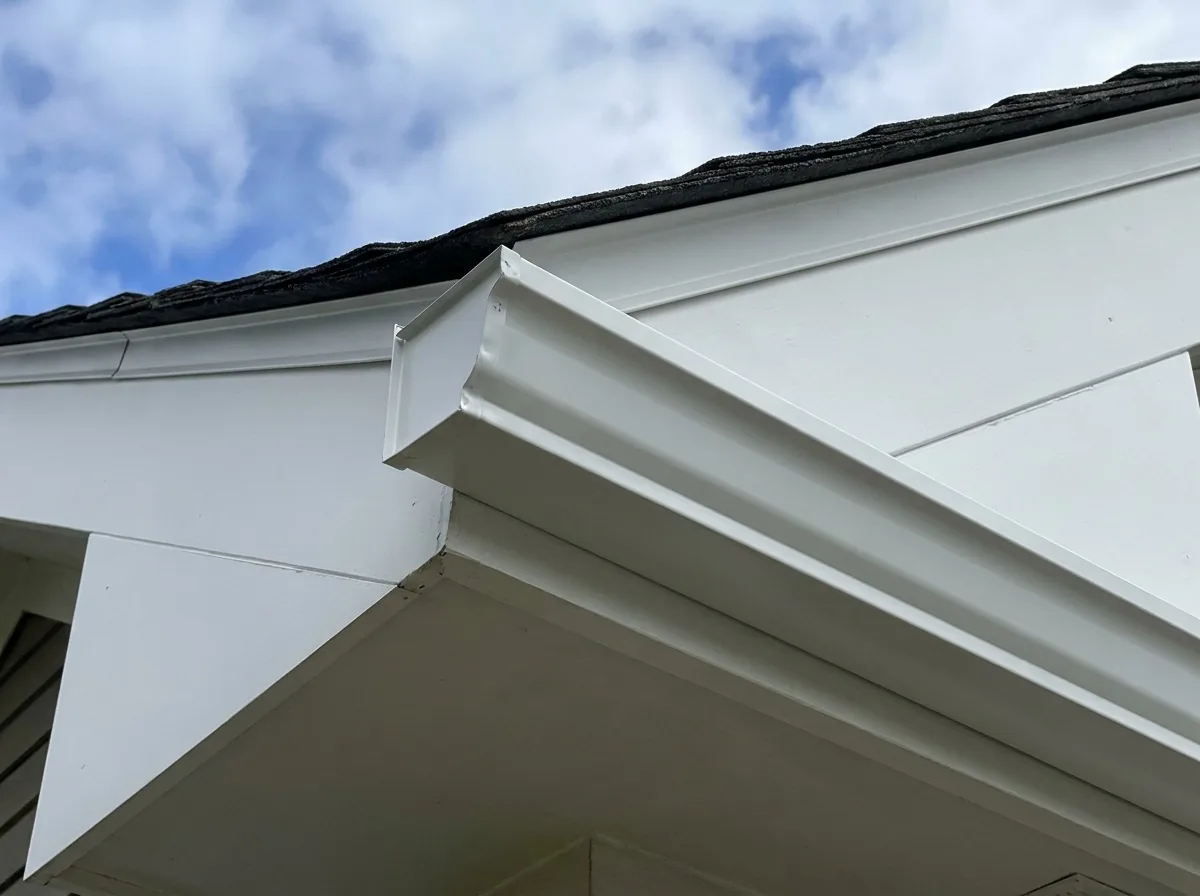
Most Minnesota residential codes and manufacturer install guides land on ¼ inch of fall per 10 feet of gutter. On a 40-foot eave that is about 1 inch of total drop. On a 60-foot run without a center outlet you would need about 1½ inches—enough that many crews add a second downspout so each half keeps a gentle, code-friendly pitch.
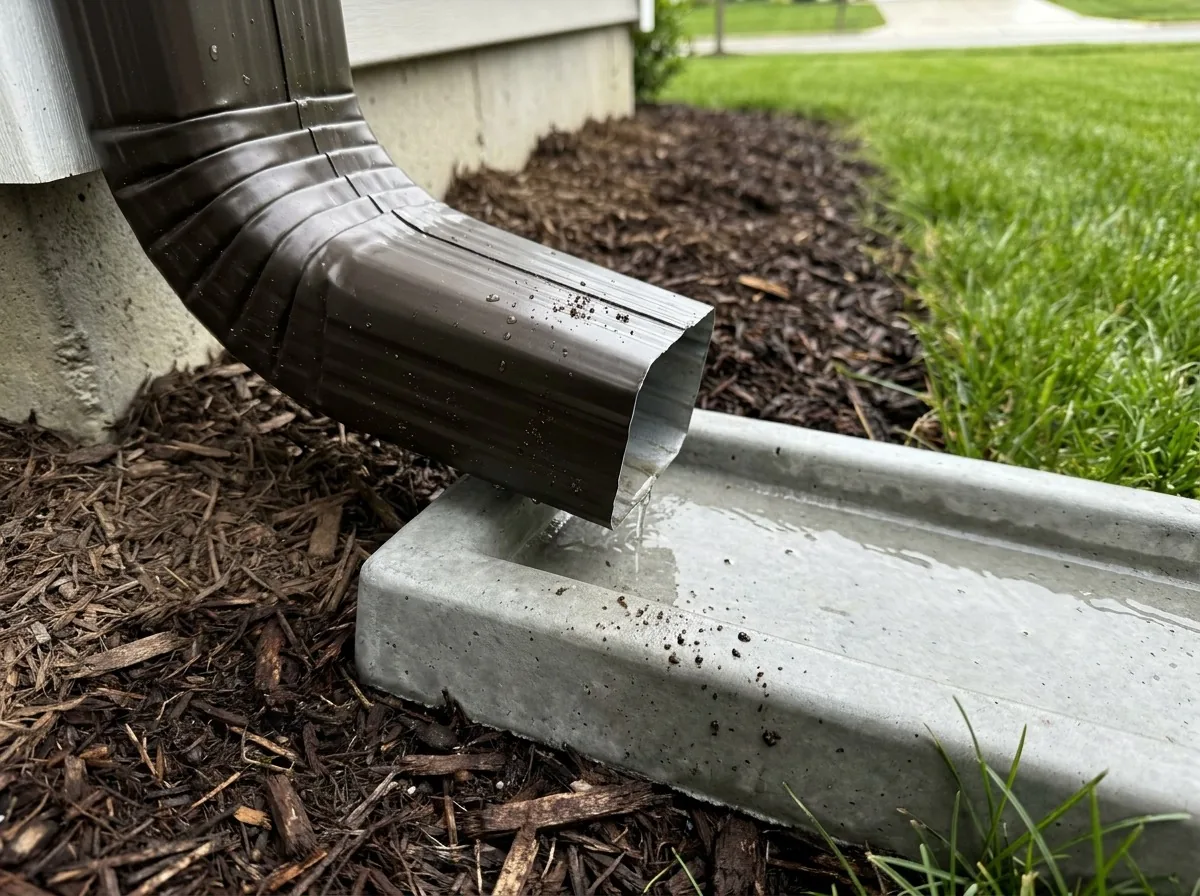
We still check roof edge height, existing fascia plane, and where the water must discharge 4–6 feet off the foundation. Pitch that dumps onto a walkway or toward the walkout is the wrong kind of “fall,” even if the trough itself slopes correctly.
Minnesota pitch table (2026 field ranges)
| Run length / layout | Target fall (Twin Cities practice) | What usually fails |
|---|---|---|
| Short eave ≤20 ft, one outlet | ~½″ total drop (¼″/10 ft) | Outlet set high; water ponds at end cap |
| Typical ranch side 30–40 ft | ~¾–1″ total toward outlet | Mid-span sag from soft fascia or wide hanger spacing |
| Long eave 50–70 ft, one outlet | Prefer 2 outlets; keep ≤1–1¼″ visual drop per half | Single low corner; ice sheet mid-span |
| Inside corner / bay | Separate high points; pitch both ways to outlets | One long continuous slope that fights the corner |
| Two-story with ice history | Same ¼″/10 ft + hangers ~24″ o.c. | Spike nails pull; trough rolls forward |
Ranges are Minnesota / Twin Cities field practice for 2026, not an EaveX price list. Final pitch depends on run length, stories, fascia condition, and roof type; free measurement confirms the layout before we form metal.
Signs your gutters do not have enough fall
Look for a dark water line that never fully dries, granules sitting in a flat pool, or ice that grows from the middle of a run instead of only at the outlet. Overflow during ordinary rain while the downspout is clear almost always means the high point is wrong or the trough sagged between hangers.
On oak lots in Maple Grove and Blaine, leaf mats hide a flat pitch until the first hard freeze. A fall gutter cleaning removes the mat; it does not create slope. If the trough still ponds after a clean, schedule a re-hang or replace—see gutters pulling away and gutter repair vs replacement.
Too much fall: when steep looks wrong
Cranking a trough to ½ inch per 10 feet or more can drain fast and still look bad from the street—the fascia line appears tilted. Steep pitch also loads the low-end hanger and end cap during ice expansion. Stick to ¼″/10 ft unless a short run into a collector box needs a slightly stronger drop, and always keep the visible eave line calm.
Half-round profiles show pitch more than K-style because the round belly reads as a curve; if you are choosing profile, read K-style vs half-round before you chase slope with a different shape.
Fall (slope) vs fall (season) cleaning
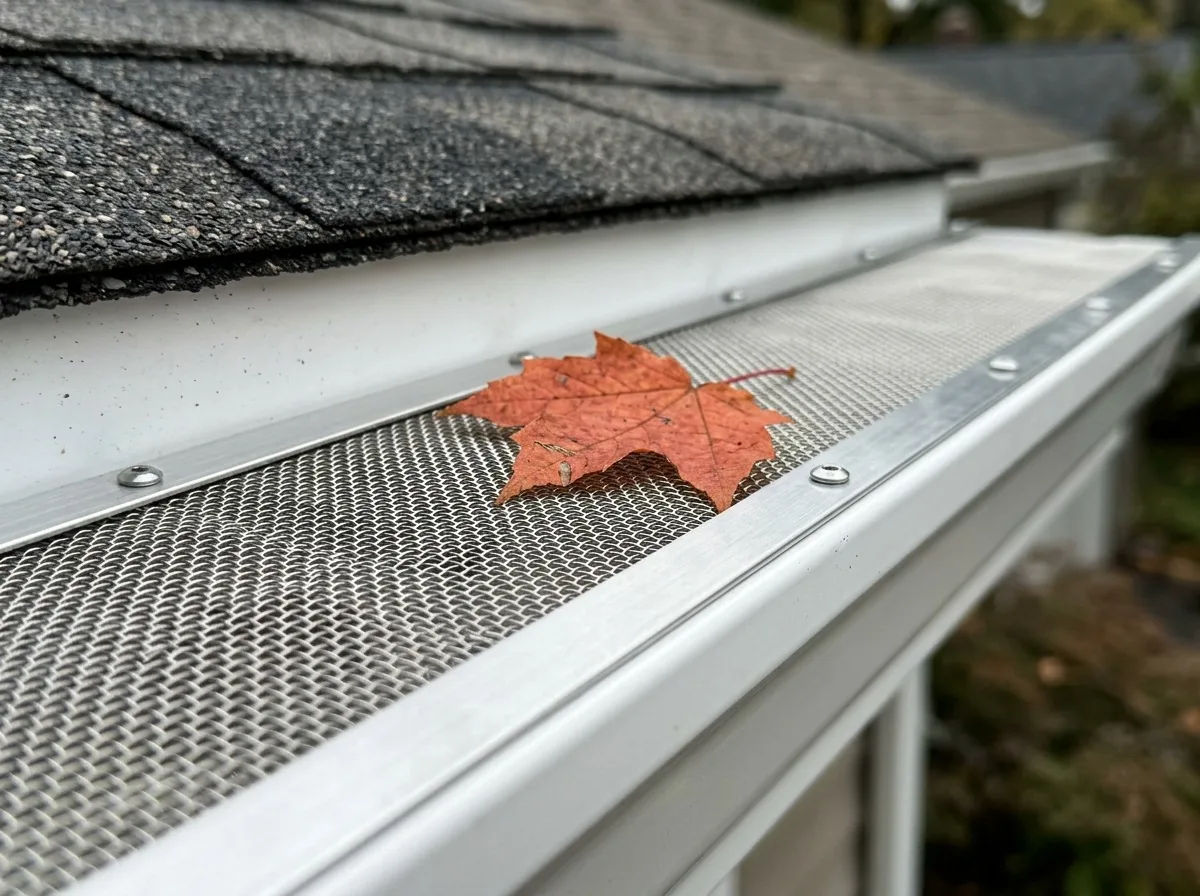
October leaf drop is when wrong pitch becomes obvious. Mats collect at the low point, freeze, and seed ice dams along the drip edge. Clean on time—see when to clean gutters before fall—but treat persistent ponds as a hang problem. Micro-mesh gutter guards reduce debris; they do not replace correct fall or attic air sealing for ice dams (ice dam prevention).
If guards sit on a belly-sagged trough, water still sheets over the front edge in a January thaw. Pitch first, then covers.
How we set pitch on a seamless Minnesota install
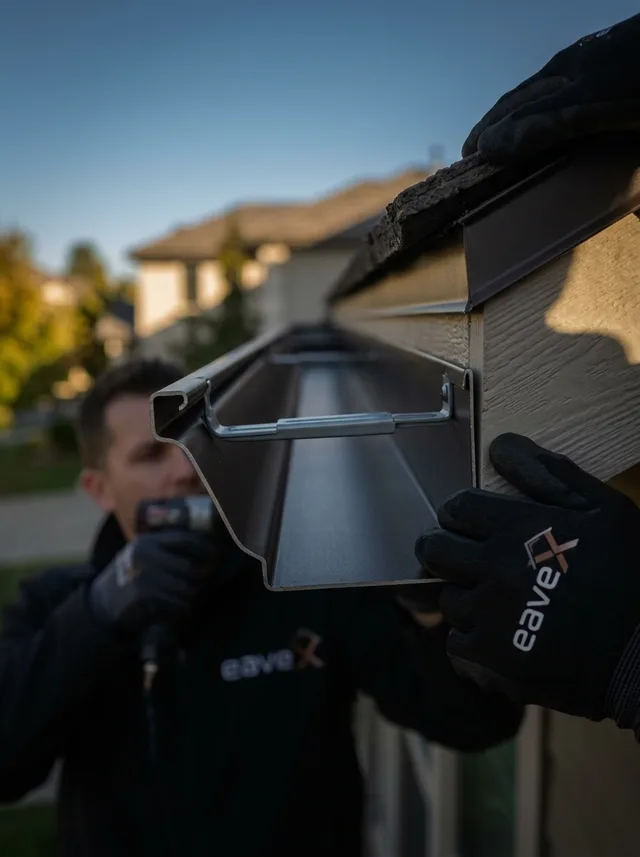
On site we mark the high point, snap or laser a line at ¼″ per 10 ft, set hidden hangers, and form continuous 0.027-inch aluminum to that line. Outlets land at the low ends; downspouts match trough capacity. Soft or wavy fascia gets sistered or replaced before hangers go in—new metal on rotten wood will not keep winter pitch.
Most straightforward ranch runs finish in a day once the board is sound. Two-story eaves and long multi-gable layouts take more hanger layout so each segment keeps the same gentle fall. Typical Twin Cities seamless trough market band remains $8–$14/lf (2026); fascia work, when needed, often sits near $15–$40/lf—market averages, not an EaveX price list. Final cost depends on run length, stories, fascia condition, and roof type; free measurement.
Pitch, hangers, and freeze–thaw on Minnesota fascia
Hidden hangers about every 24 inches (tighter on ice-heavy eaves) keep the trough on the chalk line. Old spike-and-ferrule nails work loose after a few winters, so the metal belly droops even when the original pitch was correct. If the fascia is soft, dark, or wavy, sister or replace the board before you chase slope—new screws in rotten wood will reopen the belly by February.
When we re-hang, we re-establish the high point, reset outlets, and confirm discharge away from walks and the foundation. That sequence fixes most “we cleaned twice and it still overflows” tickets on Plymouth and west-metro ranches without jumping straight to a full tear-off—unless joints are already open on sectional kit metal.
Ready for a free inspection?
EaveX will check your pitch with a line, not a driveway guess, and tell you whether a re-hang, new outlets, or full seamless gutter installation is the honest fix. Call (763) 313-8516 or request a free inspection online. We serve Minneapolis, St. Paul, Maple Grove, Blaine, Plymouth, and the surrounding metro from 5098 Main Ave NE, Albertville. License BC808261.