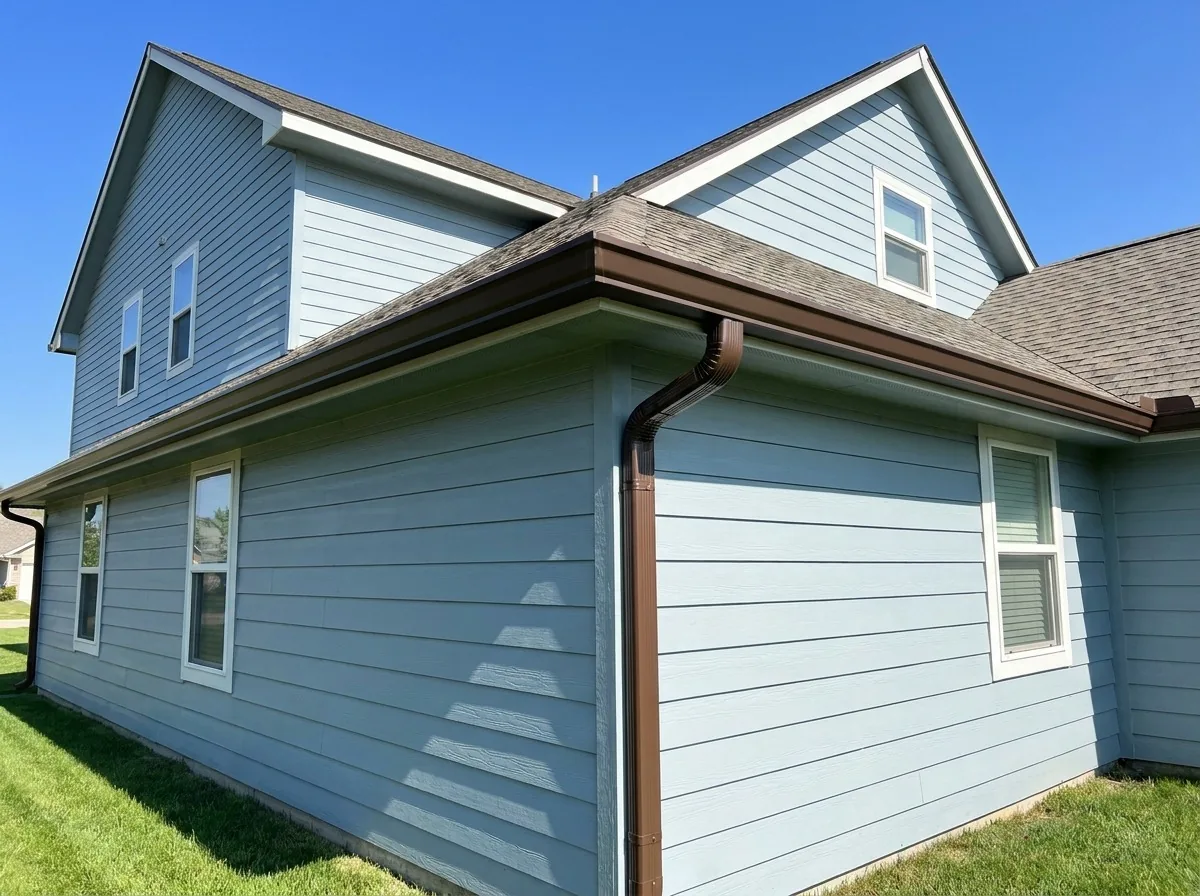
For most Minnesota homes, seamless aluminum gutters beat steel — they will not rust like bare or poorly coated steel, roll into continuous runs on site, and typically cost less per foot while still handling Twin Cities freeze–thaw when hung with hidden hangers and correct pitch. Steel can make sense on heavy commercial or high-snow specialty roofs, but for residential eaves around Minneapolis and St. Paul, seamless aluminum gutters are the default that lasts through ice, leaf season, and spring melt.
Key takeaways
- Aluminum (seamless, 0.027–0.032-inch) — light, no rust, on-site continuous runs, typical Twin Cities market range $8–$14/lf installed in 2026.
- Steel (galvanized or coated) — stiffer and heavier; often $12–$22+/lf; can rust at cut edges and fasteners if coatings fail.
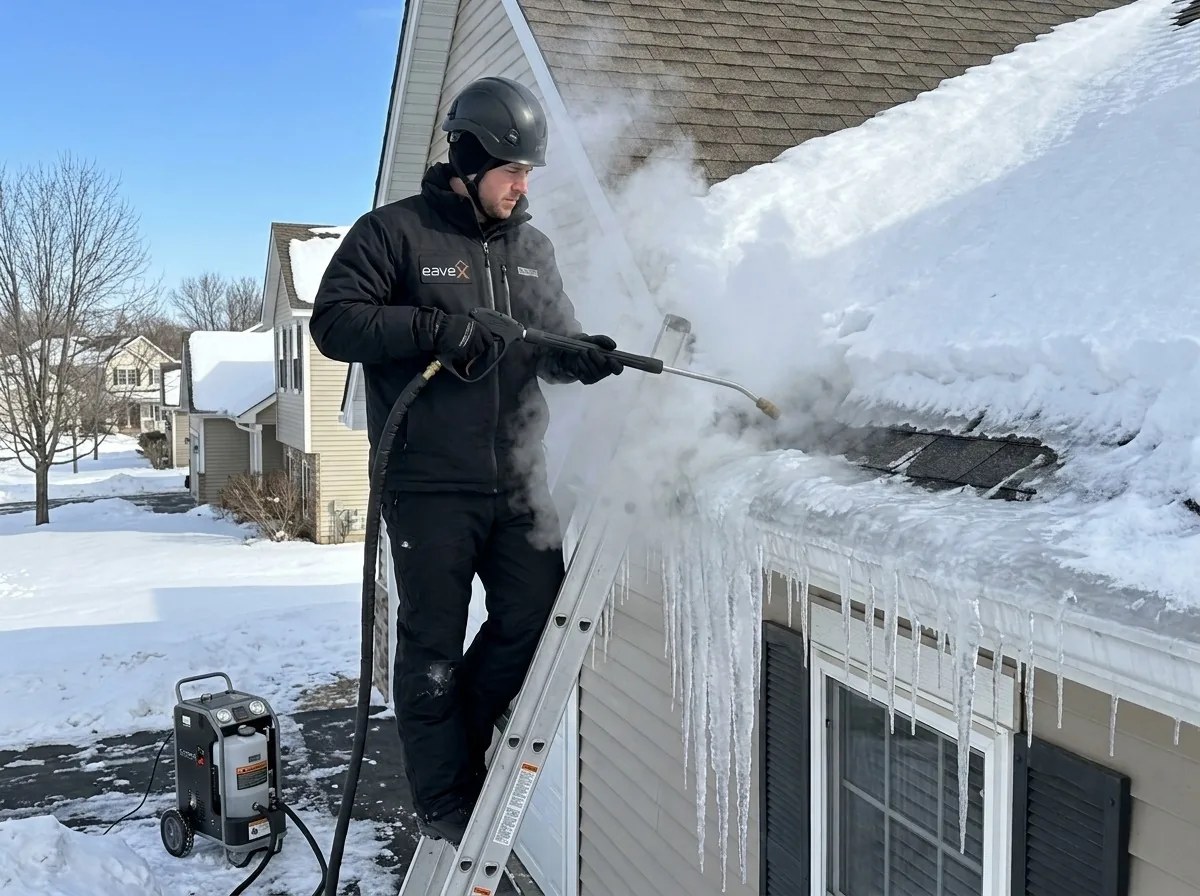
- Ice dams are mostly a roof/attic problem; metal choice alone will not stop them — clear troughs, pitch, and hangers matter more.
- Pair either metal with gutter guards (micro-mesh / stainless mesh / aluminum frame) on wooded lots — and read gutter guards for Minnesota snow before winter — plus a fall gutter cleaning pass.
- EaveX: 1,200+ projects, 5.0 rating, 13+ years, license BC808261; financing from 0% APR (0.00–9.99%) with GreenSky, plan 6124 (not every buyer qualifies for 0%).
We install from Albertville (5098 Main Ave NE) across the Twin Cities metro. Below is a straight aluminum-vs-steel comparison for Minnesota homeowners — market ranges, not our price list; your total depends on run length, stories, fascia condition, and roof type, and the measure is free.
Why material choice matters in Minnesota
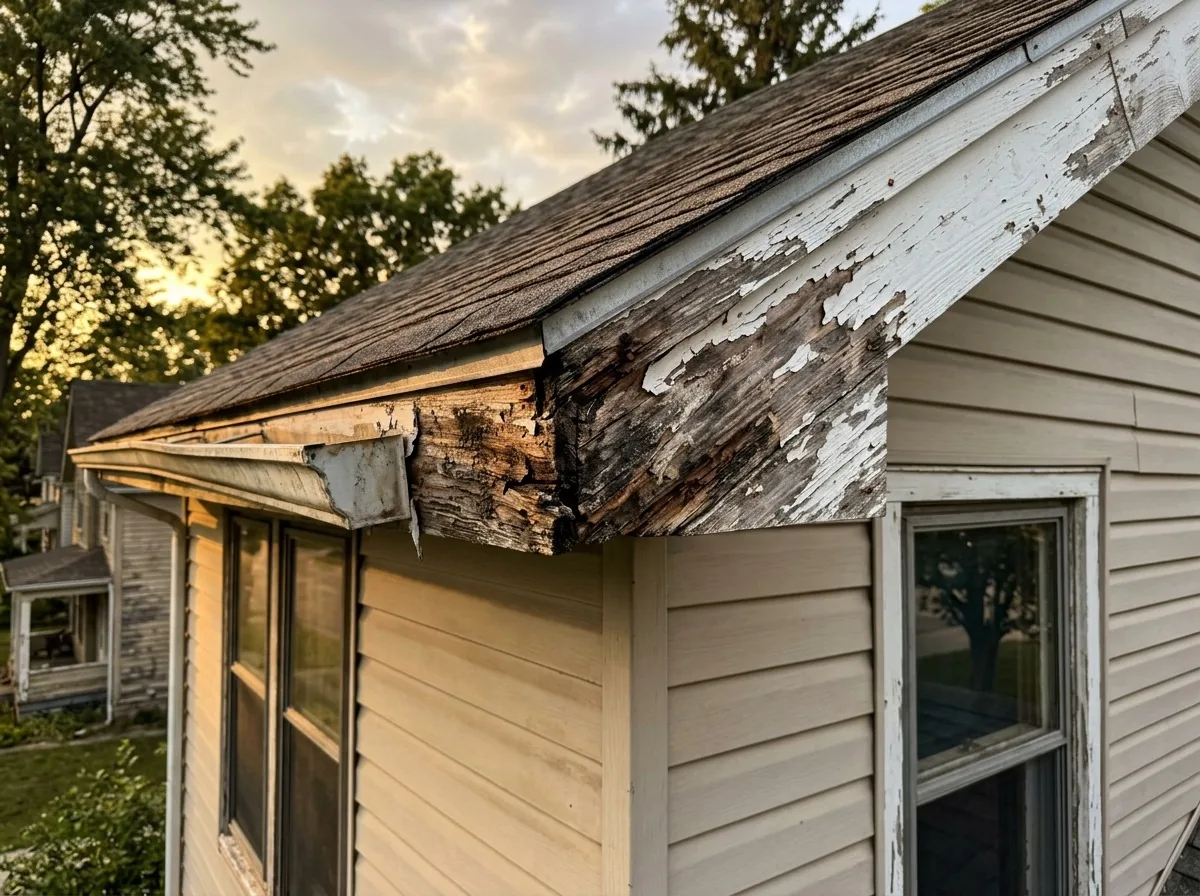
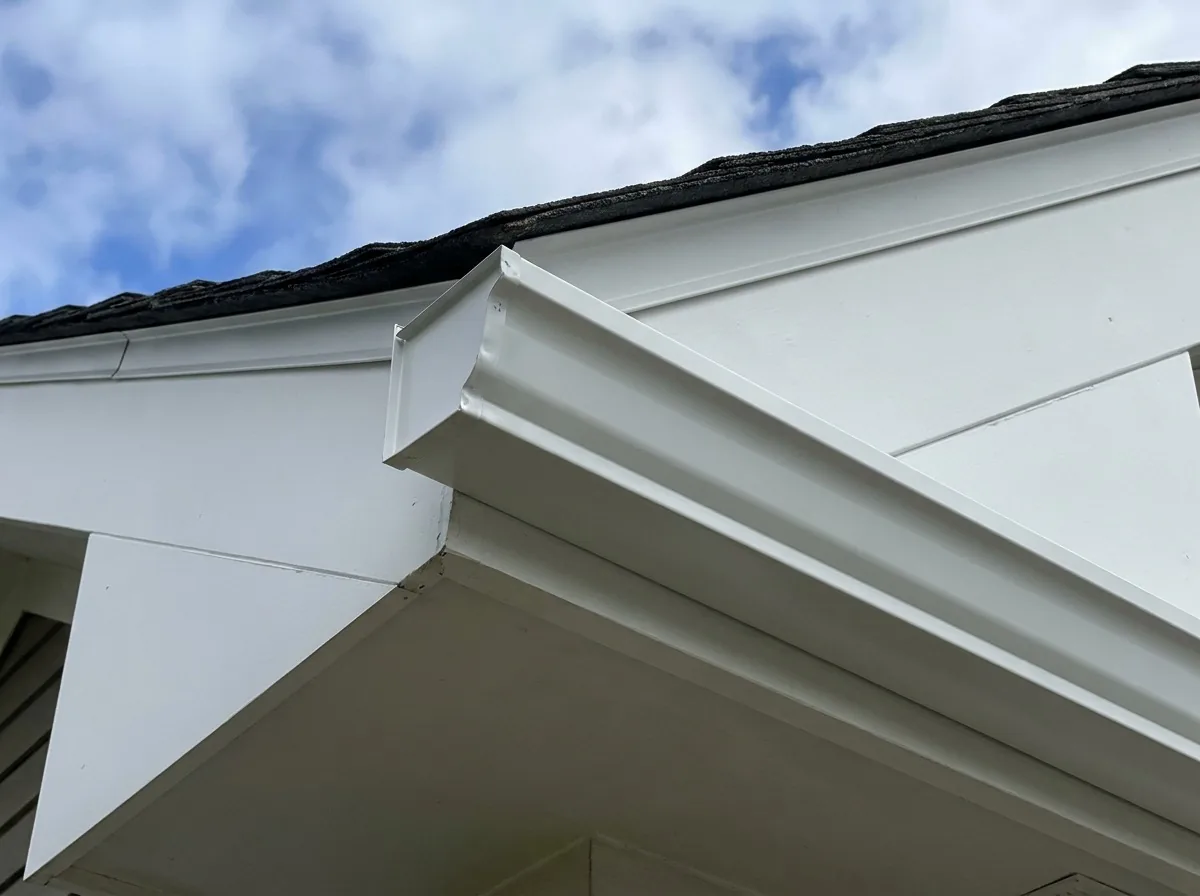
Minnesota winters pile snow on the eaves, then melt–refreeze cycles load the trough with ice. Spring brings long rain stretches; fall dumps oak and maple leaves into every valley. Soft or water-damaged fascia cannot hold heavy troughs or spike hangers—so weight, corrosion, and how the system is fastened matter as much as the metal brand stamp on the coil.
If boards are already soft behind old troughs, fix fascia and soffit before arguing aluminum vs steel. New metal on rotten wood loosens within a season no matter which alloy you pick—and that repair shows up in gutter repair vs replacement decisions every spring.
Aluminum gutters: the Twin Cities default
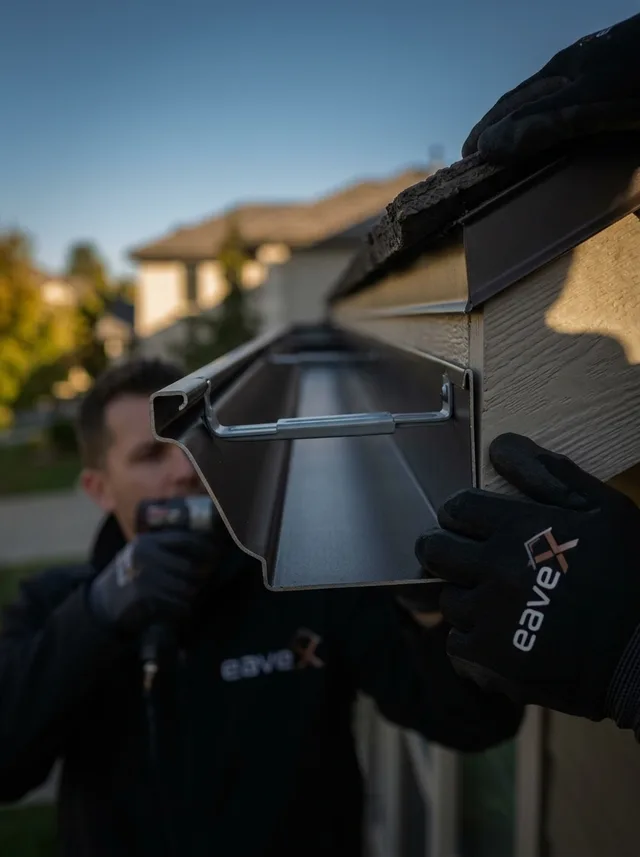
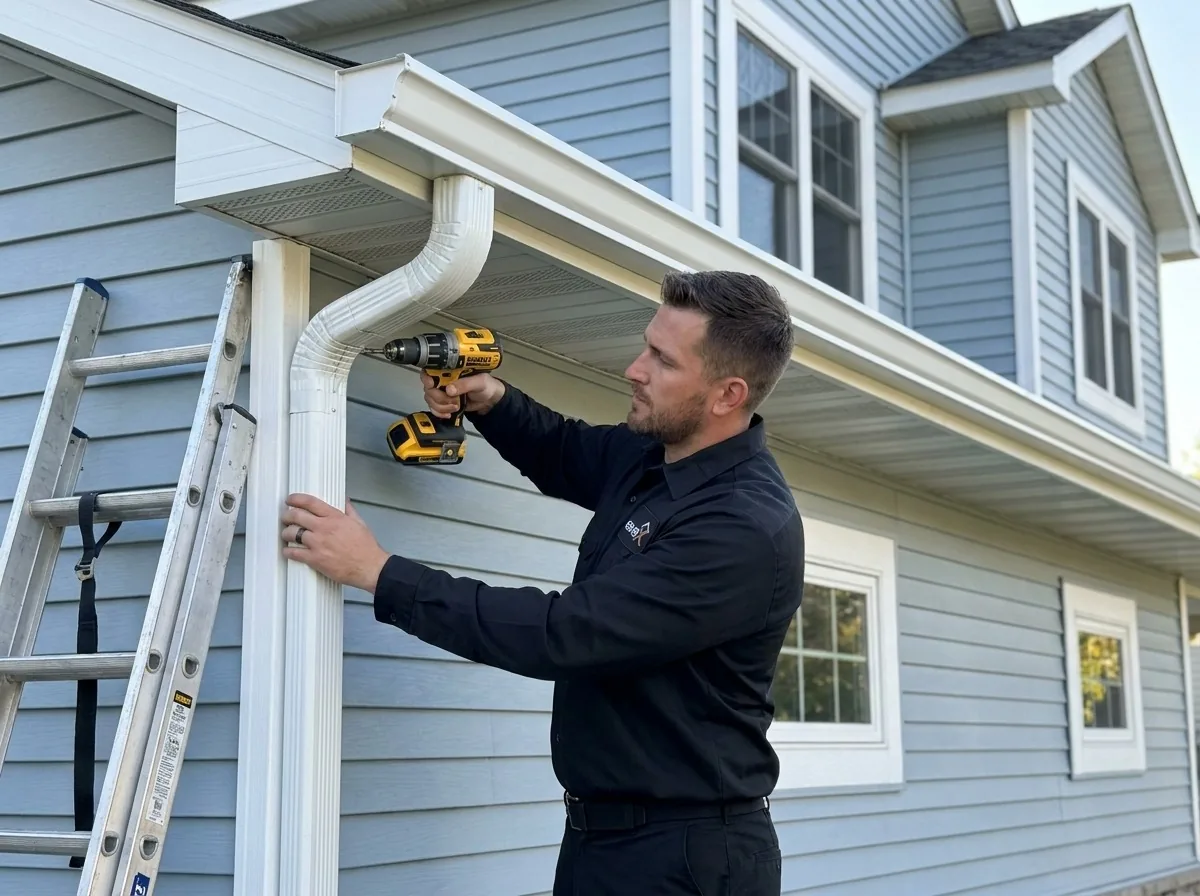
Residential seamless gutters here are almost always aluminum coil formed in the driveway into one continuous K-style run. Common residential thickness is 0.027 to 0.032 inches. Hidden hangers into solid fascia (about every 24 inches, tighter on long or heavily loaded eaves) keep the trough from pulling away when ice builds.
Aluminum will not rust. It can dent if a ladder or ice chunk hits it hard, and very thin stock can oil-can in heat—but 0.027–0.032-inch stock with hidden hangers handles Minnesota weather for decades, which is why most seamless gutter replacements we run before winter use aluminum coil. Color-matched baked enamel finishes cover most Twin Cities roof palettes without a separate paint crew.
Steel gutters: where they fit (and where they do not)
Galvanized or coated steel is denser and stiffer. That feels “stronger” in the hand, which is why some homeowners ask for it after a bad ice winter. On steep commercial roofs or specialty installs, steel can be the right call. On a typical Maple Grove or Plymouth ranch, the extra weight stresses older fascia, and any chip in the coating invites rust at cut edges, miters, and fasteners—especially with road salt and wet leaf mats.
Sectional steel kits also mean more joints. Every joint is a freeze–thaw failure point in Minnesota—the same pattern we see when DIY sectional installs open up by February. If you want continuous runs that shed ice melt cleanly, you are usually back to seamless aluminum rolled on site, not box-store steel sections.
Aluminum vs steel: quick comparison (2026)
| Factor | Seamless aluminum | Steel (galvanized/coated) |
|---|---|---|
| Typical Twin Cities installed range (2026) | ~$8–$14 / lf | ~$12–$22+ / lf |
| Rust | Does not rust | Can rust at edges/fasteners if coating fails |
| Weight on fascia | Lighter | Heavier — harder on soft boards |
| On-site seamless runs | Standard | Less common residentially |
| Dent resistance | Good at 0.027–0.032" | Higher stiffness |
| Ice dam “fix” | No — attic/roof edge first | No — same physics |
| Best fit | Most MN homes | Specialty / heavy commercial |
Ranges are Minnesota market averages for 2026, not an EaveX price list. Final cost depends on run length, stories, fascia condition, and roof type; free measure on site.
Cost ranges Twin Cities homeowners see in 2026
For a typical 150–200 lf residential job, seamless aluminum often lands roughly $1,200–$2,800 installed before guards or fascia work (at the $8–$14/lf Twin Cities market band for 2026). Steel quotes usually climb into higher four figures because of material cost and labor handling weight—often $12–$22+/lf in the same market. Add gutter guards and you commonly see another $6–$12/lf for micro-mesh systems here, depending on roof edge and pitch. For a deeper Twin Cities price breakdown — per-foot bands, whole-house ranges, and what “cost for seamless gutters installed” usually includes — see how much seamless gutters cost in the Twin Cities.
Compare that to lifespan and repair cycles: how long seamless gutters last in Minnesota depends more on hangers, pitch, and cleaning than on chasing the stiffest metal. Financing is available from 0% APR (0.00–9.99%) with GreenSky, plan 6124—not every buyer qualifies for 0%. Reminder: these are market averages, not an EaveX price list; your total depends on run length, stories, fascia condition, and roof type, and the measure is free.
Ice, snow, and “which metal survives February”
Homeowners often ask for steel after ice dams ripped sectional spikes out of fascia. The failure was usually clogged troughs + spike hangers in soft wood, not “aluminum is too weak.” Ice expands in standing water; leaves and shingle grit turn into plugs; water backs under shingles. Read ice dam prevention and signs your gutters are failing before swapping metals.
Clear troughs before hard freeze, keep downspouts dumping 4–6 feet from the foundation, and use hidden hangers—not spikes—on both aluminum and steel.
Size still matters: 5-inch vs 6-inch
Material is one decision; capacity is another. Steep roofs, large watersheds, and mature oaks often need 6-inch troughs and bigger downspouts regardless of aluminum or steel. See 5-inch vs 6-inch gutters in Minnesota if your eaves overflow in summer storms even when “clean.”
Guards, cleaning, and fall timing
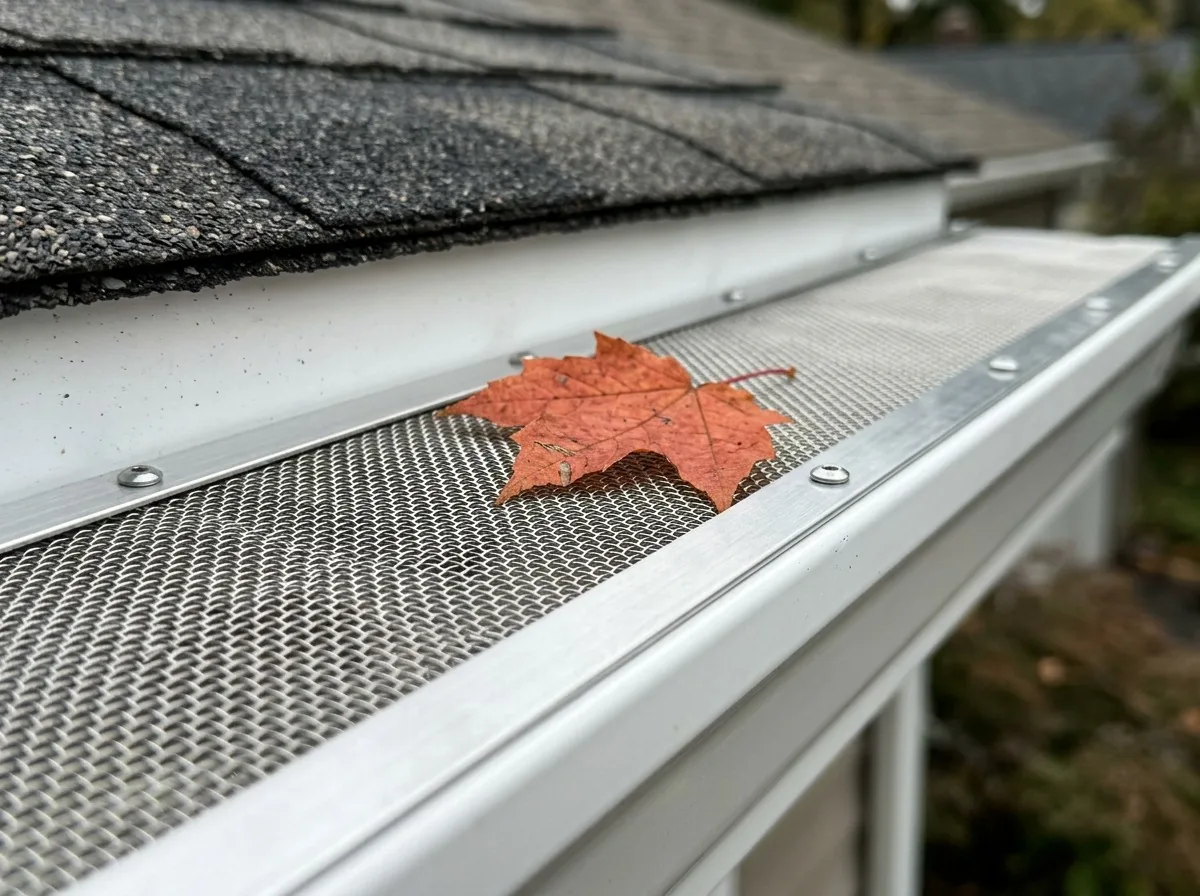
August–September is the window to finish installs and guards before leaf drop. Micro-mesh over aluminum is the combo we see most on wooded Twin Cities lots: stainless steel mesh on an aluminum frame sheds debris while the trough stays continuous aluminum—see whether guards are worth it in Minnesota for payback math. You still want a light yearly brush-off and a professional gutter cleaning when needles or seed pods cake on the mesh; guards cut labor, they do not eliminate it.
What about copper or vinyl?
Copper looks premium and lasts a long time, but Twin Cities residential installs rarely choose it for full eaves because material cost jumps well above aluminum and steel bands. Vinyl sectional kits are cheap upfront and fail early in Minnesota freeze–thaw—joints open, hangers pull, and you are back to repair vs replacement within a few winters.
For almost every Albertville-to-Edina home we measure, the practical fork is seamless aluminum vs specialty steel, not copper or vinyl. Spend the budget on thickness, hangers, fascia repairs, and optional micro-mesh—not on a metal that fights our climate.
When to choose aluminum, when to ask about steel
Choose seamless aluminum if you have a typical single- or two-story home, want color-matched continuous runs, care about rust and fascia load, and want the common Twin Cities price band. Ask about steel only if a structural engineer, commercial roofing plan, or specialty edge detail calls for it—and budget for weight, coatings, and maintenance.
If you are undecided between repair and full replacement, use gutter repair vs replacement first, then pick the metal for the new run.
Ready for a free inspection?
EaveX will measure your eaves, check fascia, and recommend aluminum (or a specialty path) with clear numbers—not a one-size pitch. Call (763) 313-8516 or request a free inspection online. We serve Minneapolis, St. Paul, Maple Grove, Plymouth, and the surrounding metro from our Albertville shop. License BC808261.