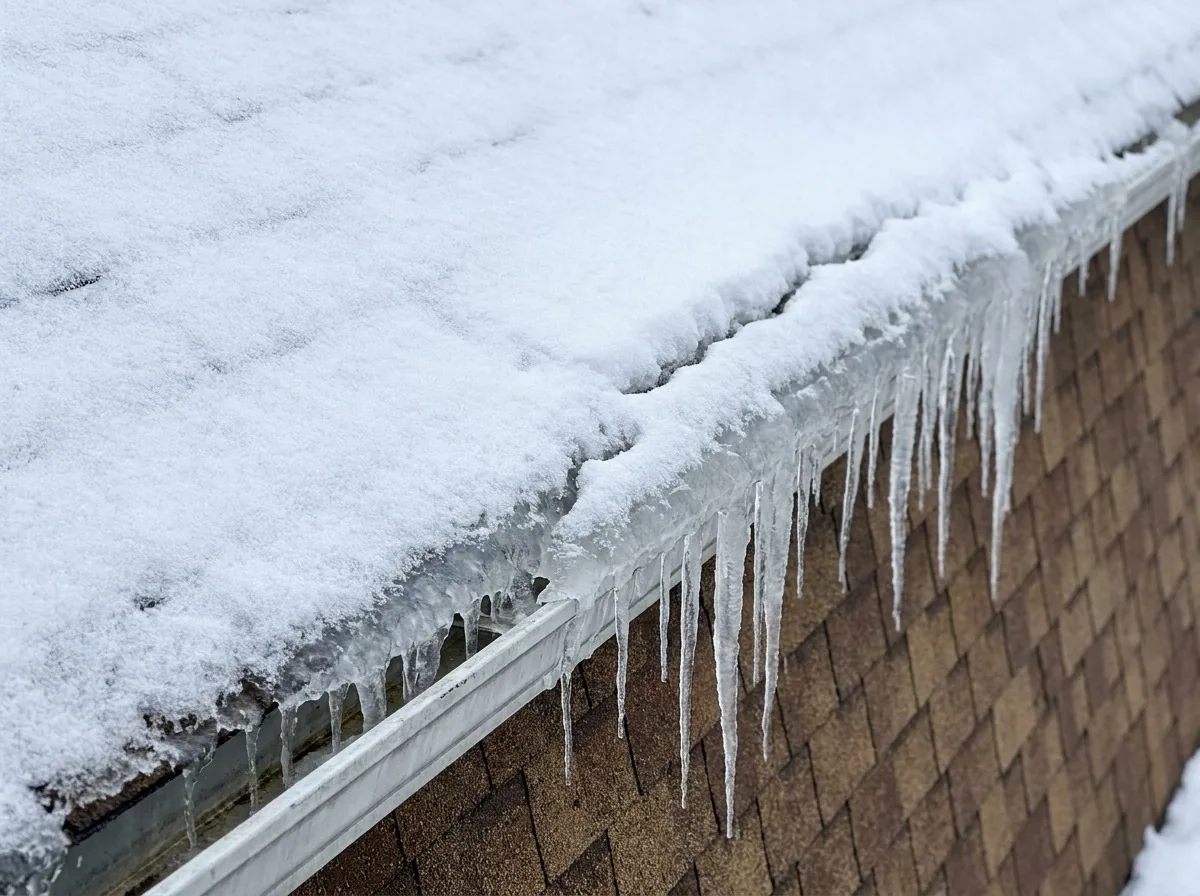
Ice dams form when heat leaking through a poorly insulated attic melts roof snow, and the meltwater refreezes at the cold eave — backing water under shingles, into walls, and down to the foundation.
Key takeaways
- Ice dams start with attic heat loss, not gutter failure — but clogged or sagging gutters make the damage worse.
- Fixing the root cause means sealing attic air leaks, adding insulation to R-49 or higher, and ensuring soffit-to-ridge ventilation.
- Emergency roof snow removal buys time, but prevention is cheaper than one ceiling repair.
- Budget $1,500–$4,000 for attic air-sealing + insulation in a typical Twin Cities home (2026 range).
- If ice dams already damaged your gutters, a seamless gutter replacement with proper slope and oversized downspouts reduces future freeze-up risk.
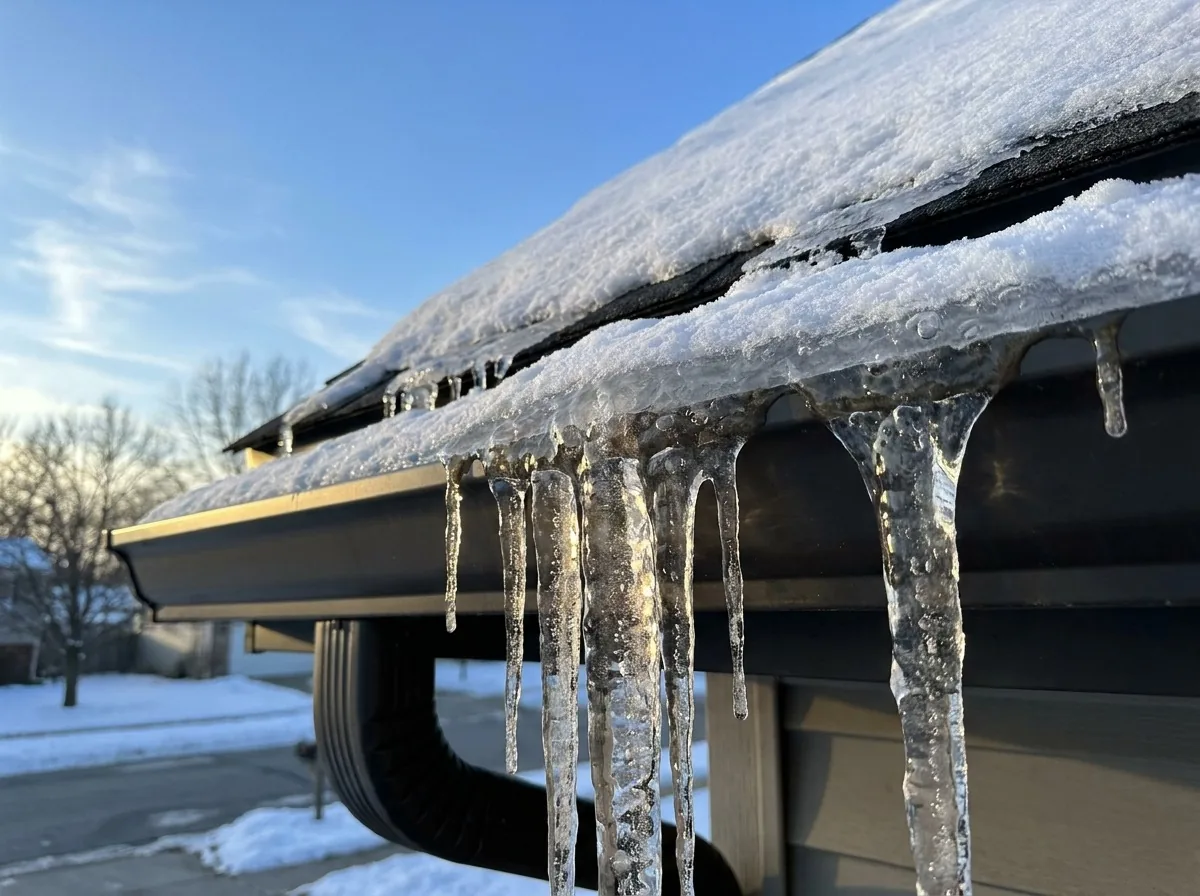
How ice dams form on Minnesota roofs
Minnesota's cycle is straightforward. Indoor heat rises through the ceiling into the attic. If the attic lacks sufficient insulation — current Minnesota code requires R-49, but many older homes built before 1980 have R-19 or less — that heat warms the roof deck above. Snow sitting on the warm section melts. Water runs downhill toward the eave, where the roof extends past the heated wall below. The overhang stays below freezing because there is no conditioned space beneath it, so the water refreezes into a ridge of ice.
Each melt–freeze cycle adds another layer to the dam. Once the ridge grows thick enough, pooled water has nowhere to go except under shingles and into the roof sheathing. From there it drips into wall cavities, soaks insulation, and stains ceilings — often far from the original entry point, making leaks hard to trace.
The damage is not cosmetic. Water trapped inside wall cavities rots framing lumber over a single season, breeds mold colonies that cost $2,000–$6,000 to remediate, and destroys the R-value of fiberglass batts on contact. Repair bills after a single ice-dam event commonly run $3,000–$10,000+ across the Twin Cities metro.
Why gutters matter (but are not the cause)
Gutters do not cause ice dams — attic heat loss does. But gutters clogged with leaves and shingle granules, or sagging from prior ice damage, trap standing water right at the eave and accelerate the dam's growth. Schedule gutter cleaning before winter so troughs are empty before freeze-up. Clean, properly pitched seamless gutters carry meltwater off the roof before it has a chance to refreeze.
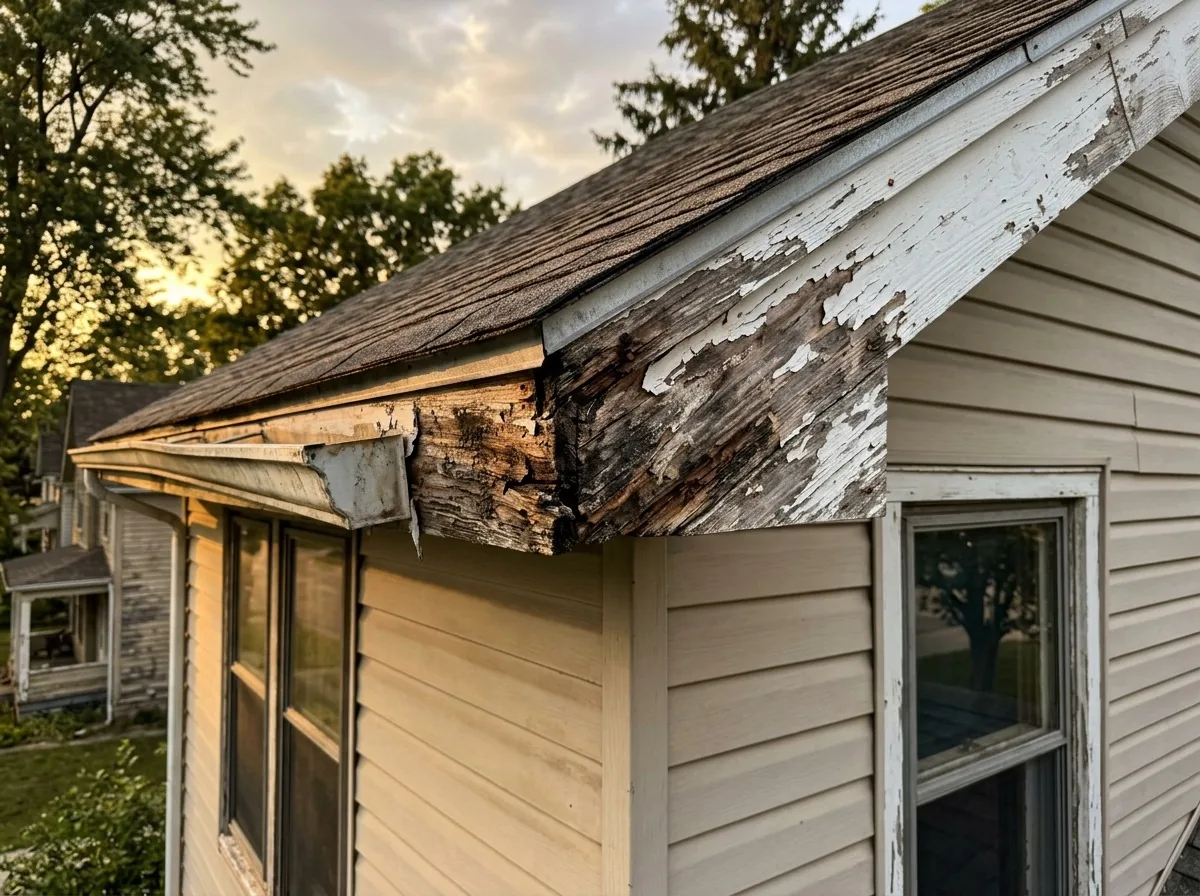
The relationship works both ways: ice dams destroy gutters. A single Minnesota winter with active dams can bend aluminum troughs, pop hanger screws out of softened fascia, and pull the entire run away from the house. If you noticed your gutter system showing warning signs last spring — sagging, seam splits, pulled hangers — ice load from the previous winter is the likely culprit.
After an ice-dam winter, inspect your gutter system top to bottom. Common damage includes pulled-away hangers, bent or crushed troughs, split seams on sectional systems, and rotted fascia boards behind the gutter line. The repair sequence matters: fix fascia first, then rehang or replace the gutters. New gutters on compromised wood sag within one season. When the board is soft, decide whether to wrap or replace fascia before the new trough goes up.
Prevention steps that actually work
No single fix stops ice dams. You need to address heat loss, ventilation, and drainage together. Skipping one leg of the triangle leaves the problem partially open.
Attic air-sealing and insulation. This is the root fix. A weatherization crew seals gaps around recessed lights, plumbing stacks, bathroom fans, and the attic hatch, then blows cellulose or fiberglass to R-49 or R-60. Cost runs $1,500–$4,000 for a typical Twin Cities ranch in 2026, and utility programs from Xcel Energy and CenterPoint often offer rebates that cut the out-of-pocket cost by 20–30%.
Soffit-to-ridge ventilation. A cold roof deck prevents snowmelt entirely. Soffit intake vents pull cold outside air in at the eave; ridge vents exhaust warm air at the peak. Baffles in each rafter bay keep blown insulation from blocking the airflow channel. A ventilation upgrade typically runs $800–$2,500 in the Twin Cities (2026), depending on how many bays need baffles and whether soffit vents need to be added or enlarged.
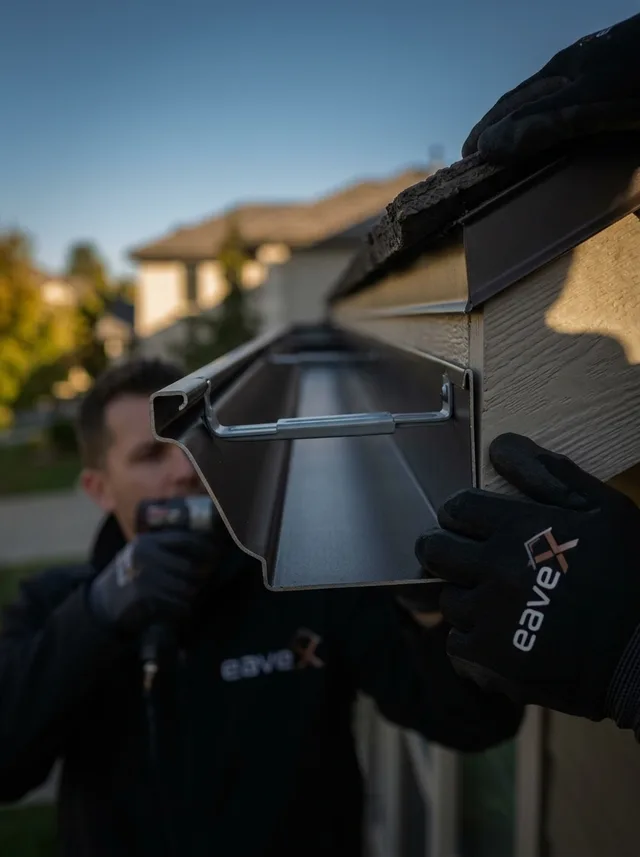
Seamless gutter replacement with slope correction. Older gutter runs often lose pitch over time as hangers loosen, or they were installed flat to begin with. New seamless gutter installation sets each run at the correct pitch toward sized downspouts. Expect $1,400–$2,800 for a typical ranch in 2026 — our seamless gutter cost guide breaks down line-item pricing.
Ice-and-water shield. During a re-roof, a self-adhering membrane on the lower three feet of roof sheathing acts as a waterproof backup. Minnesota building code requires it on new construction and re-roofs, but many older homes predating the code do not have it.
| Prevention step (2026 Twin Cities) | Typical cost range | Impact |
|---|---|---|
| Attic air-sealing + insulation (R-49+) | $1,500 – $4,000 | Eliminates root cause |
| Soffit and ridge vent upgrade | $800 – $2,500 | Keeps deck cold |
| Seamless gutter replacement + slope correction | $1,400 – $2,800 | Drains melt properly |
| Ice-and-water shield (re-roof) | Included in re-roof | Protects sheathing |
| Roof snow removal per event | $250 – $600 | Emergency only |
| Heat cable on eaves (last resort) | $500 – $1,200 | Band-aid, not cure |
All prices are 2026 Twin Cities metro estimates. Final cost depends on home size, roof pitch, and material choices — a tape measure on your roofline determines the real number.
When to call for emergency snow removal
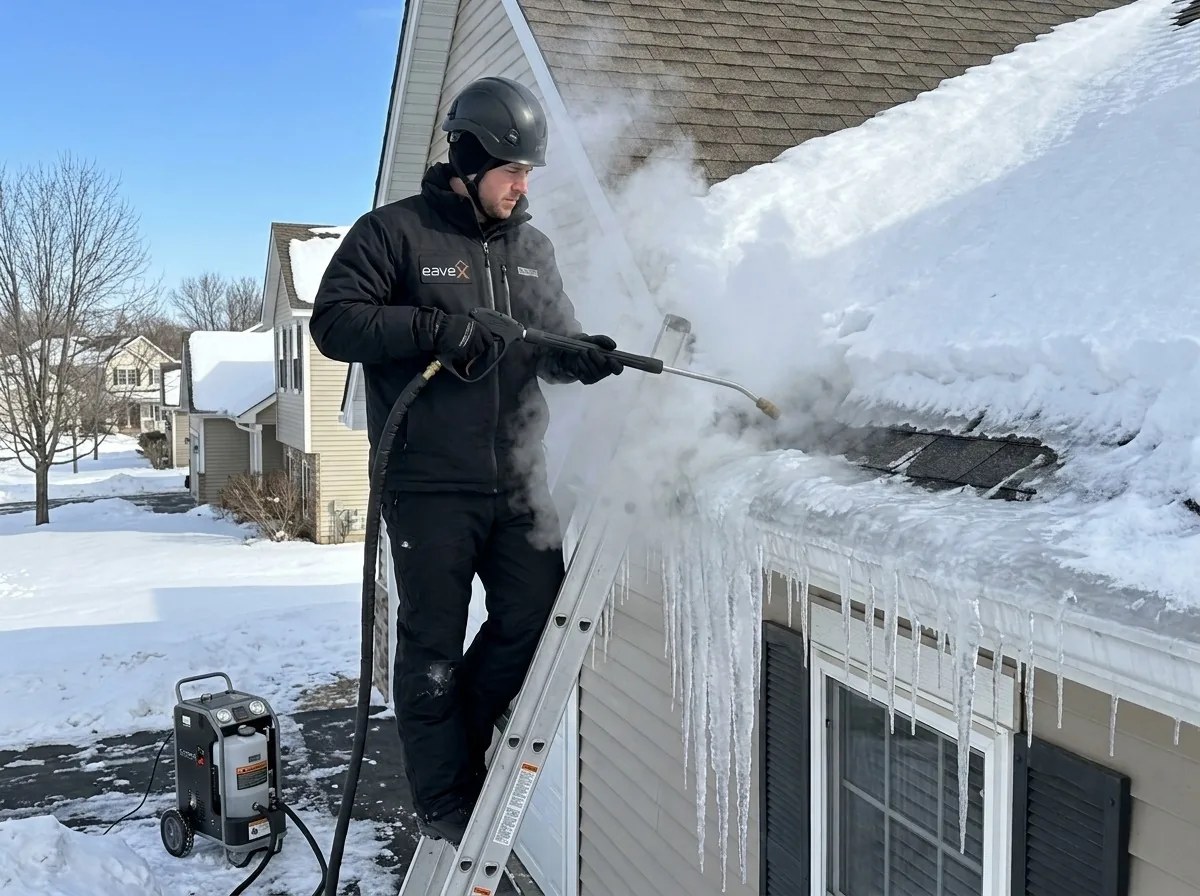
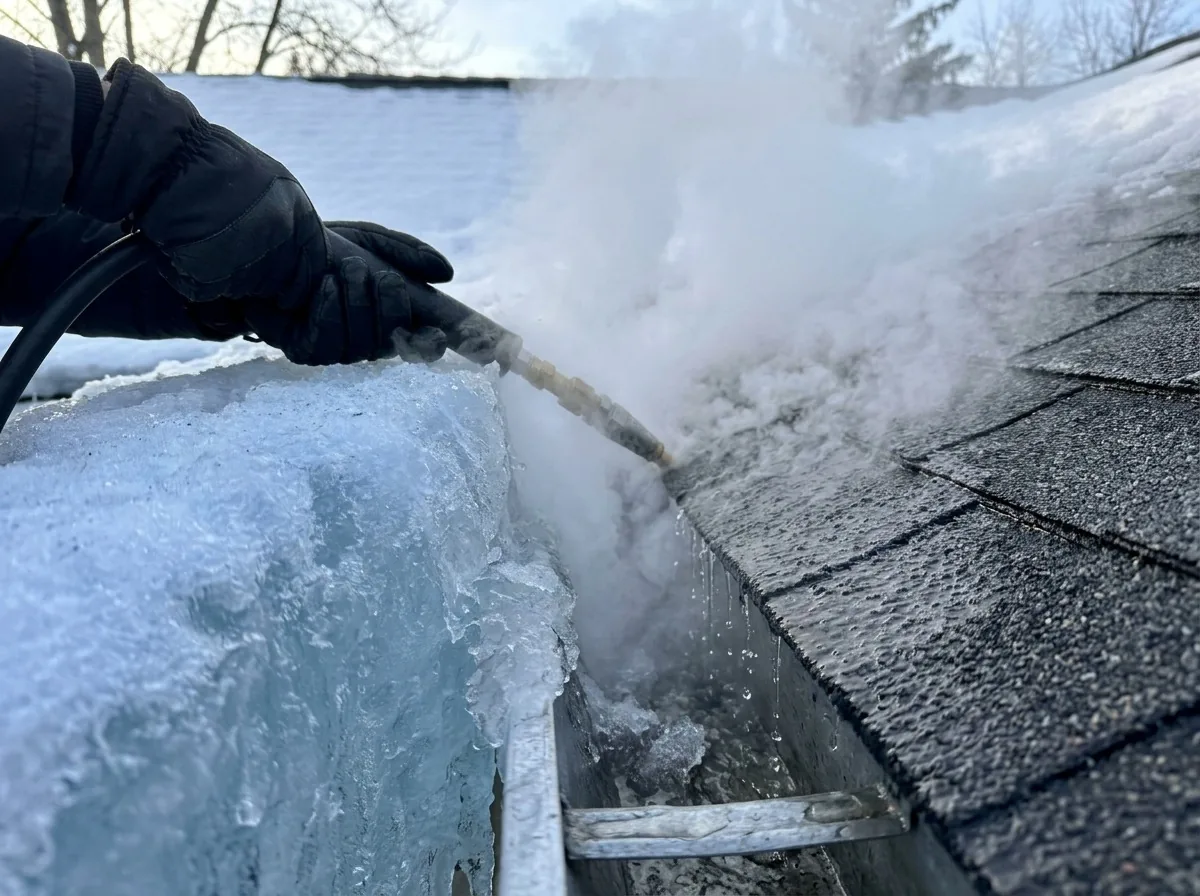
If you see icicles longer than 12 inches, water stains forming on interior ceilings, or ice pushing behind the gutter trough — do not wait. Professional ice dam and roof snow removal clears the load safely with low-pressure steam, not axes, salt, or calcium chloride pucks. Removing snow from the bottom three to four feet of the roof edge is usually enough to stop active leaking.
Do not attempt to clear ice with a hammer, chisel, or roof rake from the ground — all three risk shingle damage and personal injury. Steam is the industry standard because it melts the dam without mechanical impact to the roofing membrane. Emergency removal costs $250–$600 per visit in the Twin Cities (2026), depending on roof pitch, stories, and access.
What gutter guards do (and do not do) for ice dams
Gutter guards keep leaves and debris out of the trough, which reduces clogging — one factor that worsens ice dam severity. But guards do not prevent the dam itself, because the dam forms on the roof surface above the gutter, not inside the trough.
If your gutter system already drains properly, guards reduce maintenance frequency but will not substitute for insulation and ventilation. If you are weighing whether guards make sense for your setup, our gutter guard analysis breaks down the real-world pros and cons for Minnesota homes. For snow load and freeze-thaw on Twin Cities roofs, see gutter guards for Minnesota snow.
What to do after an ice dam winter
- Document damage — photograph interior stains, gutter separation, and fascia rot. Your homeowners insurance may cover sudden water damage from ice dams, though it typically excludes the cost of removing the dam itself and deferred maintenance.
- Get gutters inspected — EaveX offers a free inspection: (763) 313-8516. We check hanger spacing, pitch, downspout capacity, and fascia condition across every run.
- Plan insulation work for summer — attic air-sealing and blown-in cellulose are easiest to install when the roof is clear and dry, between April and November.
- Budget gutter + fascia repairs — financing available from 0% APR (0.00–9.99%) with GreenSky, plan 6124. Not every buyer qualifies for 0%; ask during the estimate for your rate.
- Check your replacement cost — if full replacement is on the table, our seamless gutter cost guide covers 2026 pricing in detail for the Twin Cities.
EaveX: 1,200+ projects, 5.0 rating, 13+ years in Minnesota, license BC808261.
Book a free inspection before next winter
Ice dams are preventable, but you have to act before the snow flies. The window for insulation work, gutter replacement, and fascia repair in Minnesota is April through November — once the ground freezes and roofs are snow-loaded, options shrink and emergency pricing kicks in.
Call (763) 313-8516 or start with ice dam removal to see what emergency response looks like. If your gutters took a beating last winter, we will quote seamless gutter replacement and fascia repair on the same visit — one scaffold setup, one trip, one invoice.