One fall gutter cleaning is enough for many Twin Cities homes — but oak-heavy lots, two-story roofs, and homes without micro-mesh often need a second pass after late leaf drop before Minnesota freeze-up.
Key takeaways
- One clean holds when the main leaf drop is finished (often late October–mid-November) and troughs stay empty through the first freeze.
- Plan a second visit if maples drop early and oaks finish weeks later, or if pine needles pack into outlets after the first clean.
- Twin Cities market ranges in 2026 run about $150–$250 for a one-story ranch and $250–$350+ for two stories per visit — not an EaveX fixed menu; free measurement sets the number.
- Gutter guards cut how often you need full scoop-outs; they do not erase fall maintenance.
- Pair timing with the prepare gutters for Minnesota winter checklist so hangers, pitch, and downspouts get checked the same week.
Why “one cleaning” depends on your trees
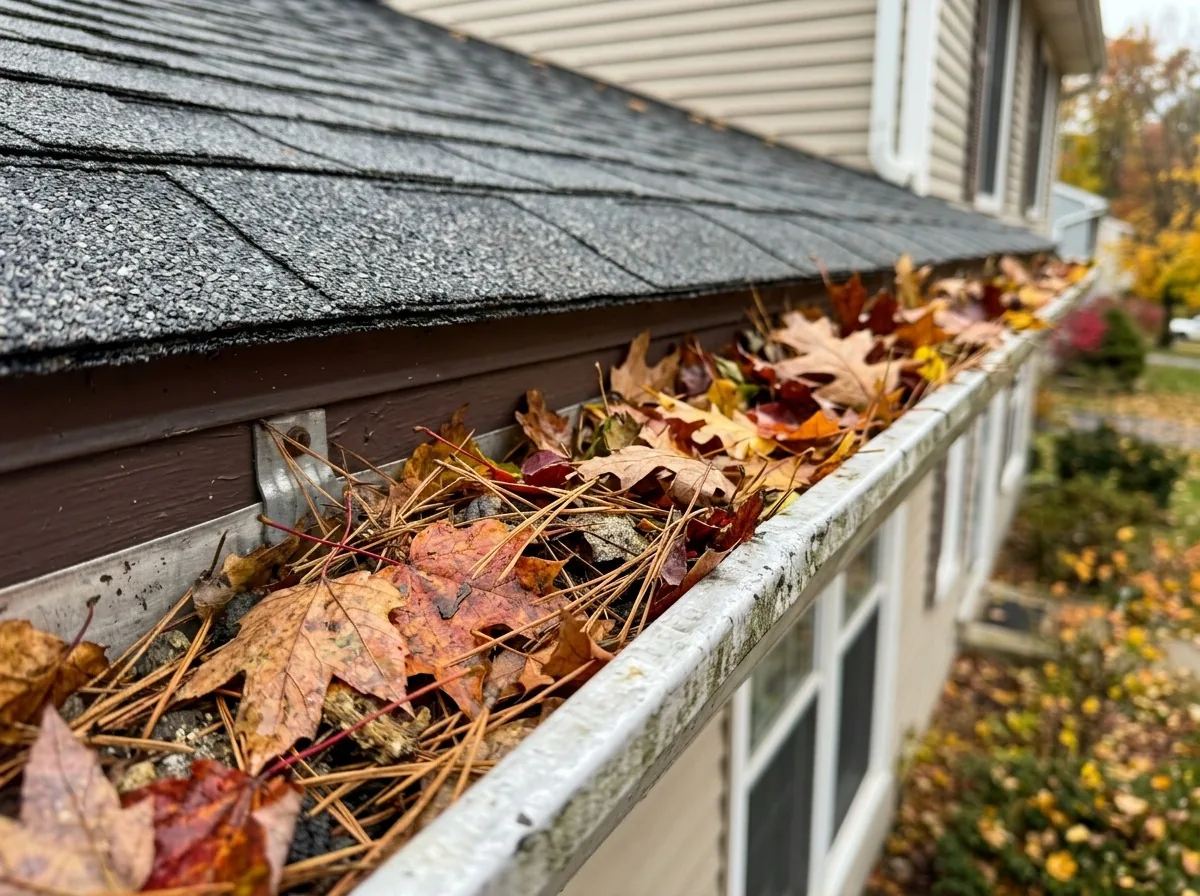
Maple, ash, and elm drop early. Oaks in the Twin Cities metro often finish weeks later — sometimes into the first or second week of November. If you schedule gutter cleaning in early October to beat the calendar, maples are gone but oak leaves refill the troughs before freeze-up. That is not a bad crew — it is biology.
Homes under dense oak canopy, with valleys that catch wind-blown leaves, or with sectional gutters that snag debris at every seam, are the usual “second pass” candidates. Ranches with sparse street trees and open lawns often stay clean after one late-season visit. Street trees matter as much as backyard oaks. A boulevard maple can dump a full trough of wet leaves onto the front elevation while the backyard still looks empty. Walk both sides of the house after a windy day in late October before you decide the season is “done.”
One visit vs two: Twin Cities planning table (2026)
| Situation | Typical plan | Minnesota market note (2026) |
|---|---|---|
| Sparse trees, ranch, open troughs | One clean after leaf drop | About $150–$250 |
| Mixed maple + oak canopy | Early light clean + late finish | Two visits; second often shorter |
| Two-story / steep valleys | One thorough late visit (or two if oaks late) | About $250–$350+ per full visit |
| Micro-mesh already installed | Brush-off + outlet check | Less scoop volume; still inspect |
| After first hard freeze | Thaw-day clean only | Harder; icy ladders — wait for >40°F |
Final cost depends on linear footage, stories, fascia condition, and roof type. Ask for a free measurement — ranges above are Twin Cities market averages for 2026, not a published EaveX price list.
Signs one cleaning will not hold
Watch for these after the first fall visit:
- Fresh oak mats in the trough within two weeks of cleaning.
- Pine needles packing the downspout strainer or micro-mesh surface.
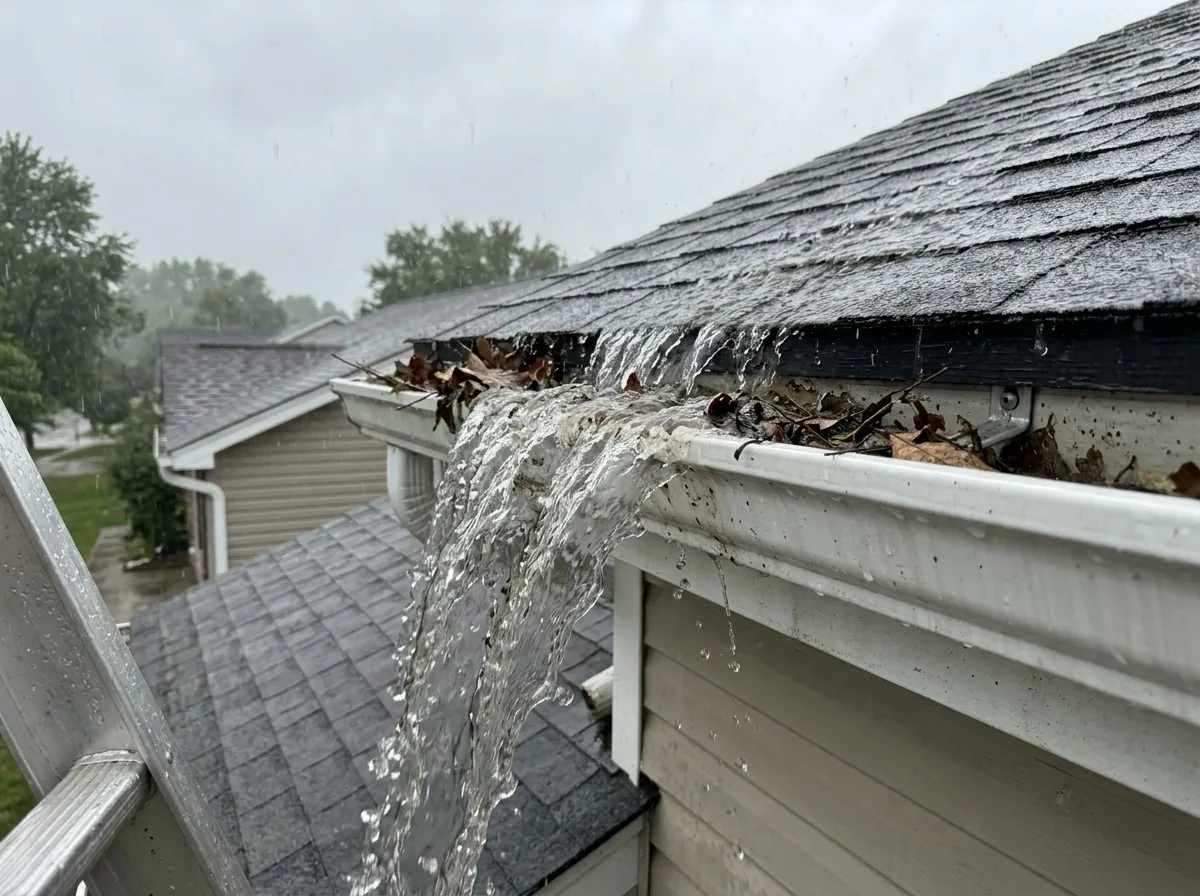
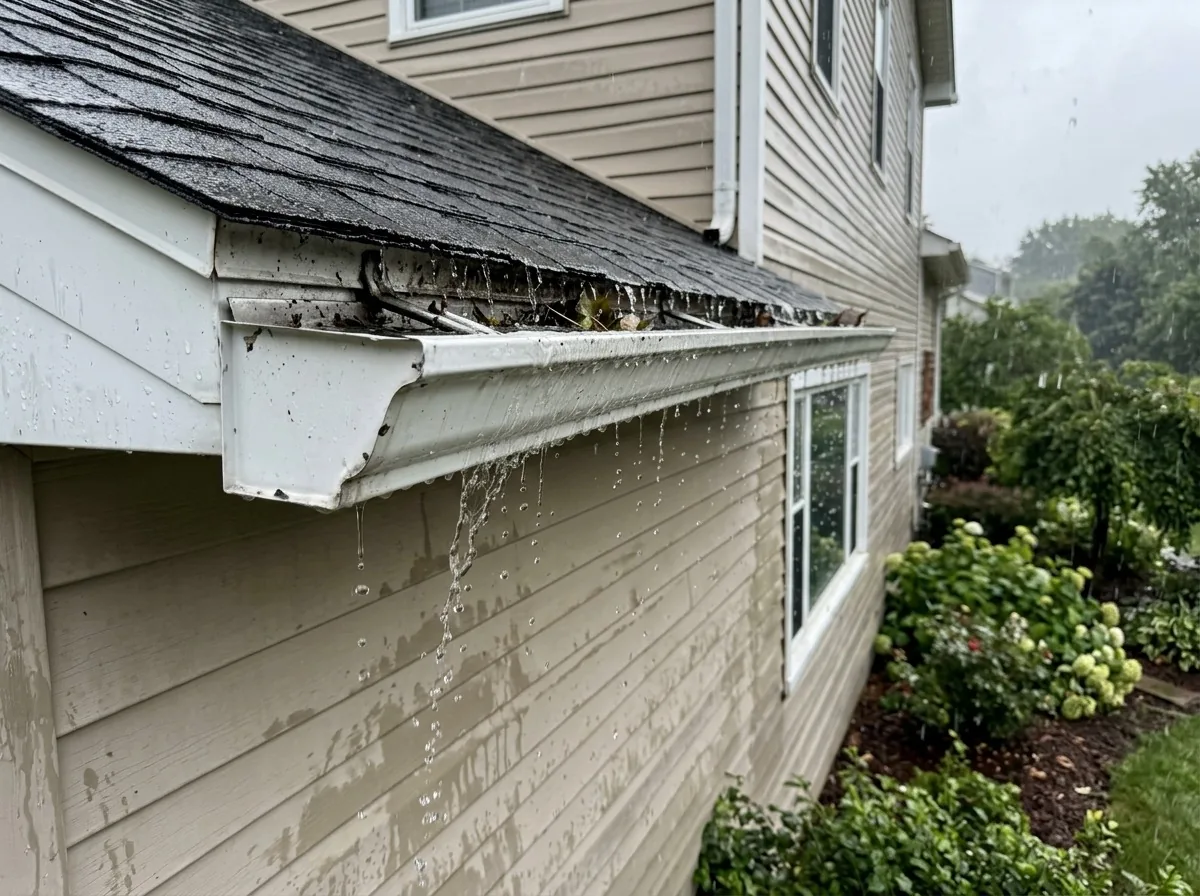
- Overflow stains on siding after the next soaking rain.
- Standing water in a low spot on a hose test — that is pitch/hanger, not just leaves.
If overflow returns quickly, read why gutters overflow in Minnesota — undersized troughs and clogged outlets look like a “dirty gutter” problem but need a different fix. Shingle granules also fool homeowners. After a hail year or an aging asphalt roof, black grit settles in the trough even when leaves are gone. Granules do not “look like fall,” but they still choke outlets. Scoop or flush them before freeze-up the same way you would leaves.
How this ties to winter prep
Cleaning empties the trough. Winter prep also checks hangers every ~24 inches for snow load, confirms pitch with a hose, extends downspouts 4+ feet from the foundation, and seals seams while temps stay above 40°F. Skipping those steps after a perfect clean still leaves you exposed when January thaw cycles hit frozen ground.
Use when to clean gutters before fall to pick the first calendar window, then finish with gutter cleaning before winter so the troughs are empty when ice arrives. A clean gutter with a sag still holds a ribbon of water that freezes into a skate-blade of ice. That ice expands, lifts hangers, and starts the “gutters pulling away” cycle. Cleaning and pitch correction belong on the same ticket whenever you can book them together.
Do gutter guards change the math?
Micro-mesh cuts how often you need a full scoop — many wooded lots go from two or three cleanings a year to a light ground brush. Whether that spend beats cleaning forever is the are gutter guards worth it in Minnesota question (payback vs Twin Cities cleaning ranges). If you are comparing keep-and-cover vs replace-first, see installing gutter guards on existing gutters. For snow-specific mesh behavior, read gutter guards for Minnesota snow. Guards do not replace attic ventilation or insulation work when ice dams are the real problem. They only change how debris meets the trough. If last winter left ice curtains despite clean gutters, ask about attic heat loss — not just another scoop.
DIY second pass vs calling a pro
A second DIY scoop is reasonable on a one-story ranch with a stable ladder, dry shingles, and a helper on the ground. Stop and call a pro if the roof is steep, the eaves are icy, the fascia feels soft under a screwdriver, or you cannot safely reach the peaks. Ladder falls beat leaf cost every time.
Pros also spot pulled hangers and soft fascia while they clean — problems that turn into gutters pulling away after the first heavy wet snow. Bring a hose for the flush test after you scoop. If water pools mid-run, mark that hanger with tape and get it tightened before snow load locks the sag in place. A $3–$5 hanger plus labor is cheaper than a bent trough in March.
Cost planning without a fake price menu
Budget the 2026 Twin Cities market ranges above per visit, then add repair line items only if the inspection finds them (hangers, seam seal, fascia sections). For a deeper dollar breakdown by home size, see gutter cleaning cost in Minnesota.
Financing for larger repair/replace packages is available from 0% APR (0.00–9.99%) with GreenSky, plan 6124 — not every buyer qualifies for 0%; ask which rate you qualify for on the estimate. If cleaning reveals soft fascia or troughs that cannot hold pitch, quote fascia and soffit repair and seamless gutter installation together. Same scaffold day beats two mobilizations in November weather. EaveX numbers you can verify: 1,200+ projects, 5.0 rating, 13+ years in Minnesota, license BC808261.
Free inspection before leaf drop peaks
If you are unsure whether one visit will hold on your lot, a 20-minute free inspection in September or early October maps tree timing, outlet capacity, and fascia condition. Call (763) 313-8516 or start with gutter cleaning. If troughs are undersized or seams leak, we quote seamless work on the same visit — one trip, clear next step.