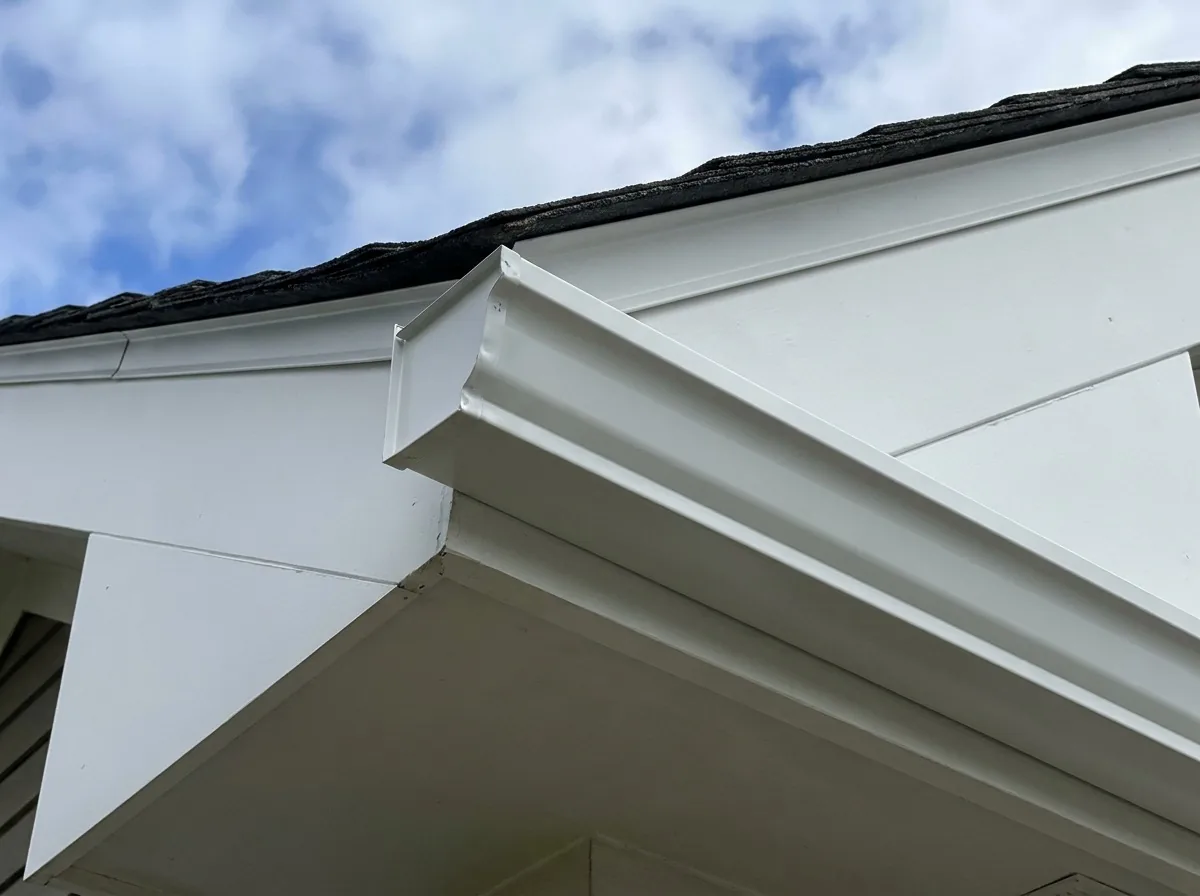
Partial gutter replacement in Minnesota makes sense when only one eave, a short run, or a storm-damaged corner is failing—and the rest of the system is still sound aluminum with solid fascia. Full replacement is the better call when troughs are thin or leaking at many joints, hangers have pulled along most of the house, or you are already opening the eave for fascia work. Twin Cities market averages in 2026 usually land about $8–$16 per linear foot for full seamless replacement (tear-off included) and a pro-rated band for true partial runs once mobilization is paid; final cost depends on run length, stories, fascia condition, and roof type, confirmed on a free measure.
Key takeaways
- Partial is for localized failure (one elevation, one ice-dam bay, one tree-hit corner)—not a way to stretch 25-year-old sectional troughs another season.
- Full seamless replacement wins when leaks, seams, or sag show up on two or more sides, or when color/coil matching matters for a sale.
- Minnesota freeze–thaw punishes mixed old/new metal if outlets and pitch are not rebuilt as one system.
- Typical Twin Cities market (2026): full replace $8–$16/lf; partial jobs still carry a crew minimum so a 20-lf patch can look “expensive per foot.”
- EaveX: 1,200+ projects, 5.0 rating, 13+ years, license BC808261. Financing from 0% APR (0.00–9.99%) with GreenSky, plan 6124 when you qualify.
When a partial gutter replacement is enough
Choose partial when a single run is crushed, pulled, or overflowing and a ladder inspection shows neighboring troughs still hold pitch, show honest metal thickness, and sit tight to sound fascia. Common Twin Cities cases: one garage eave slammed by a branch, a south wall that took ice-dam backup, or a corner outlet that rusted while the rest of a newer seamless system is fine.
If soft wood shows under that same run, fix fascia with the trough—don’t hang new hangers into spongy board. A partial trough on soft wood is a callback waiting for the next thaw. Pair the decision with fascia and soffit repair when paint is blistered, dark streaks sit under the gutter line, or hangers spin in soft fiber—especially on north walls that hold ice longer.
When full replacement is the smarter Minnesota move
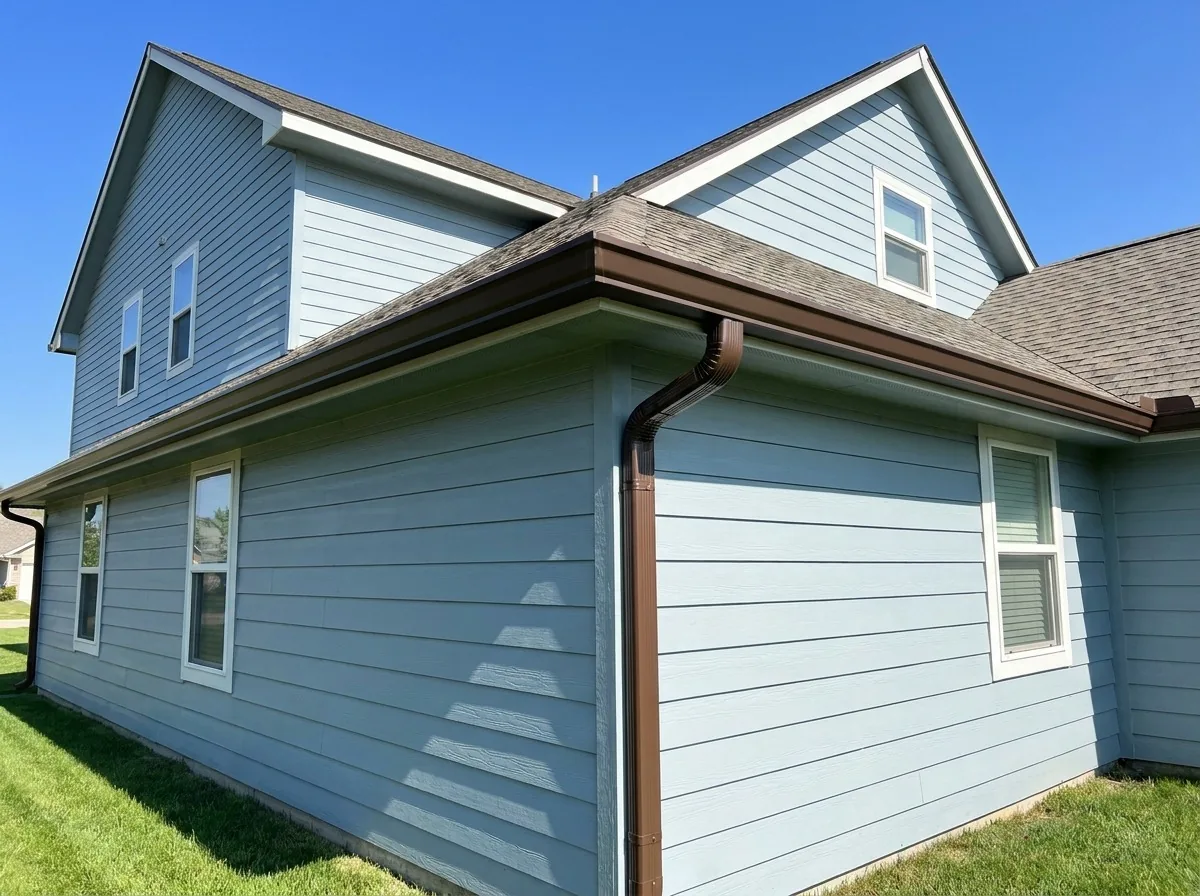
Go full house when you see seams leaking on sectional troughs, widespread hanger pull, mismatched colors from years of patches, or when you want 5- or 6-inch seamless aluminum bent in one continuous coil. Full replacement also cleans up outlet spacing and downspout count so meltwater reaches the ground instead of dumping at every corner.
Compare your situation to the broader gutter replacement cost ranges and the gutter repair vs replacement checklist before you approve a “just this side” bid that leaves three other sides one winter away from the same call.
Twin Cities 2026 cost bands: partial vs full
Numbers below are Minnesota market averages for 2026, not an EaveX price list. Partial work still pays mobilization, tear-off of the failed section, and often a color match surcharge.
| Scope | Typical Twin Cities market band (2026) | What drives the number |
|---|---|---|
| Spot outlet / end-cap rebuild | $150–$450 | Access, rust, custom outlet |
| Partial run ≤40 lf (1-story) | $500–$1,400 | Tear-off + new seamless piece + hangers |
| Partial run 40–80 lf or 2-story | $900–$2,200+ | Staging, ladder moves, color match |
| Full ranch ~150–180 lf seamless | $1,500–$2,900 | Tear-off + new K-style aluminum |
| Full 2-story ~180–220 lf | $2,200–$4,500+ | Height, staging, fascia extras |
| Add micro-mesh guards same visit | $6–$12/lf market | Canopy density, roof pitch |
Final cost depends on run length, stories, fascia condition, and roof type. Free measurement locks linear feet before coil is ordered.
Pitch, outlets, and why “one side only” can still overflow
Water does not care that you only paid for the west eave. If the north run still dumps into a shared corner with the wrong outlet height, the new section can overflow at the splice. A competent partial job rebuilds the shared corner, resets pitch across the joint, and confirms downspouts still discharge 4–6+ feet from the foundation.
Homes in Maple Grove, Plymouth, and Blaine with long ranches often need that corner rebuild even when only one wall looks bad from the yard.
Color match and metal thickness on mixed systems
Partial replacement looks cheap until the new 0.027- or 0.032-inch aluminum sits next to faded 20-year paint. From the street, a checkerboard eave reads as unfinished. Full replacement bends one coil color around the house. If you keep a partial, ask the crew to show a sample against the existing trough in noon light—not in the garage.
Thickness matters too: splicing thin sectional stock into new seamless rarely lasts through a Minnesota thaw. When in doubt, read how long seamless gutters last and size guidance in 5-inch vs 6-inch gutters.
Fascia, hangers, and the hidden line items
Many “partial” callbacks are really fascia failures. Soft board under one elevation means hangers will pull again after the first ice event. Budget Twin Cities fascia repair/replace roughly $18–$35/lf of board work (2026 market averages) when wood is soft—see fascia repair cost with new gutters.
Hidden hangers on sound wood beat old spike-and-ferrule on soft edges. If the rest of the house still uses spikes that have walked out, a partial trough on new hangers can outlive the neighboring sides by years—and then you are back on the ladder.
Storm damage, ice dams, and insurance paperwork
After a windstorm or ice-dam winter, homeowners often ask whether insurance will pay for a partial run. Policies vary; many treat gradual wear as maintenance and sudden tree impact as a claim. Keep photos of the crushed section, the neighboring troughs, and any interior stains before tear-off. Your adjuster may still call for matching adjacent sides—another reason a “cheap partial” can grow once color and pitch rules kick in.
EaveX does not invent claim outcomes. We document linear feet, fascia condition, and what must be opened so you can share an honest scope. If the rest of the system is already thin sectional metal, expect the conversation to lean full seamless gutter installation rather than a one-bay patch.
Seasonal timing: finish before hard freeze
August through October is the practical Twin Cities window: crews can open the eave, paint or wrap, and hang new metal before the first hard freeze. Emergency mid-winter partials cost more and limit color choices. If leaves are already down, combine the visit with gutter cleaning so new outlets are not packed with oak litter on day one.
Optional gutter guards belong on the decision list after the troughs and fascia are honest—especially on wooded lots where one cleaned eave will clog again by November.
What a free EaveX inspection decides on site
We walk each elevation, probe fascia at hanger lines, check outlet heights, and measure which runs truly need metal. You get a written scope: partial with corner rebuild, or full seamless gutter installation when the system is spent. No invented case studies—just linear feet, wood condition, and a clear recommendation.
Book a measure before you approve a one-side bid
Call (763) 313-8516 or request a free inspection from our Albertville shop (license BC808261). Ask the estimate to show partial vs full side-by-side with fascia notes so Minnesota freeze–thaw does not turn a “cheap patch” into a spring callback.