Gutters overflow in Minnesota when water cannot exit the trough as fast as the roof dumps it — usually from leaf/debris clogs, undersized 5-inch troughs on steep or multi-valley roofs, sagging pitch, crushed or short downspouts, or ice buildup at the eaves after a thaw. Fix the blockage and the outlet first; if the trough is too small, pitched wrong, or pulling off soft fascia, plan a seamless gutter upgrade or a targeted gutter cleaning and repair before fall leaf drop and winter freeze.
Key takeaways
- Most overflow is a clog or outlet problem, not “bad luck” — leaves, shingle grit, and nests choke the trough or the top of the downspout.
- Twin Cities storms can dump 1–2+ inches of rain in an hour; a 5-inch K-style run that is half full of debris will sheet water over the front edge.
- Typical Minnesota market ranges in 2026: gutter cleaning cost in Minnesota runs $150–$350 for a one-story ranch, $250–$500+ for two-story / complex roofs; micro-mesh gutter guards often $6–$12/lf; full seamless replacement commonly $8–$14/lf installed — your total depends on run length, stories, fascia condition, and roof type; measure is free.
- Ice dams and ice-filled troughs are a separate winter pain — clear outlets help, but attic heat and roof melt drive dams (see ice dam prevention).
- EaveX: 1,200+ projects, 5.0 rating, 13+ years, license BC808261; financing from 0% APR (0.00–9.99%) with GreenSky, plan 6124 (not every buyer qualifies for 0%).
We work from Albertville (5098 Main Ave NE) across Minneapolis, St. Paul, and the suburbs. Below is a practical overflow checklist for homeowners — market ranges for Twin Cities 2026, not an EaveX price list.
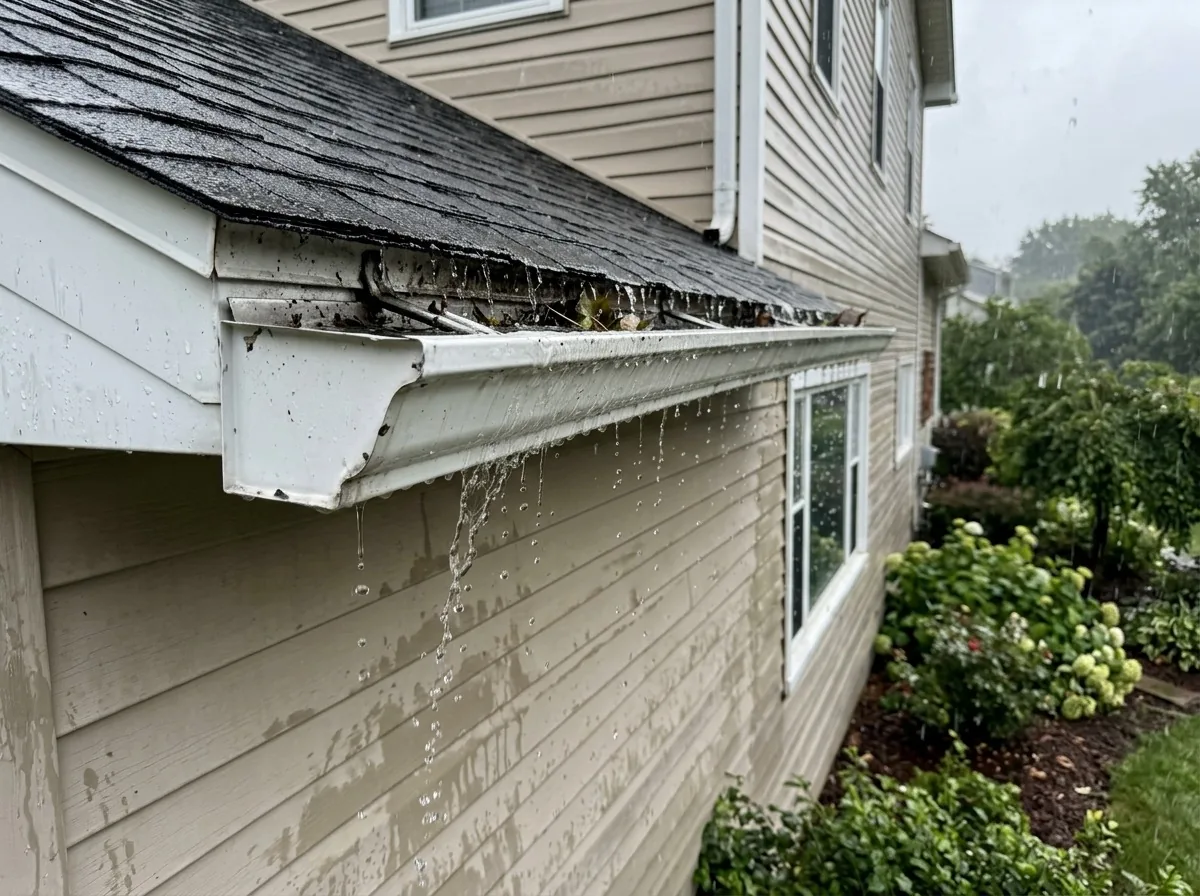
What “overflowing” looks like on a Twin Cities home
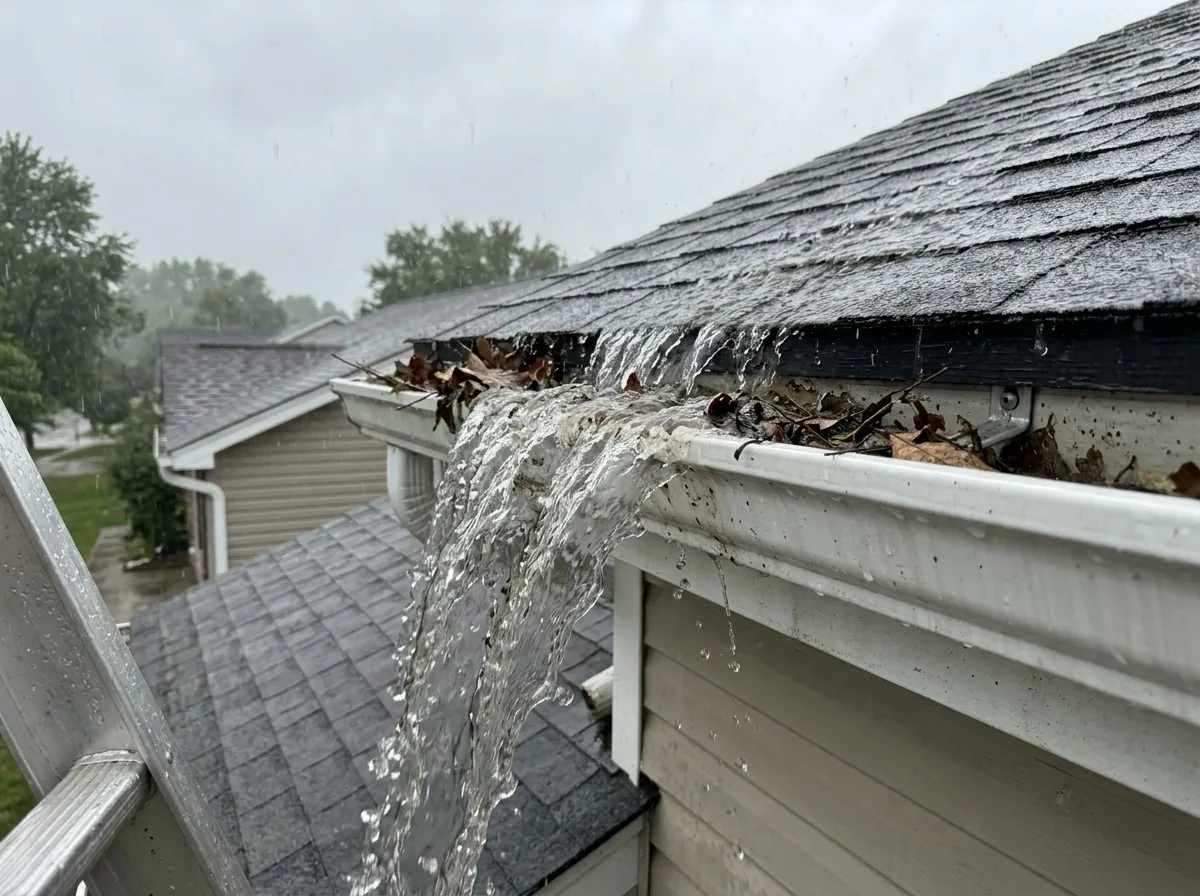
During a hard rain you will see sheets of water pouring over the front lip, curtains at corners, or puddles carving soil next to the foundation. After the storm, wet siding under the eaves, mulch washed into the lawn, or a basement musty smell are the same problem in slow motion. If water only dumps at one corner, that outlet (elbow, buried drain, or crushed downspout) is usually the choke point.
Overflow is different from a slow drip at a seam. Drips point to a joint or hanger issue; sheet-flow over the front edge means the trough cannot pass volume — clog, pitch, size, or ice. Pair this checklist with signs your gutters are failing if boards feel soft or hangers are pulling.
Cause 1: Debris clogs (Minnesota’s default)
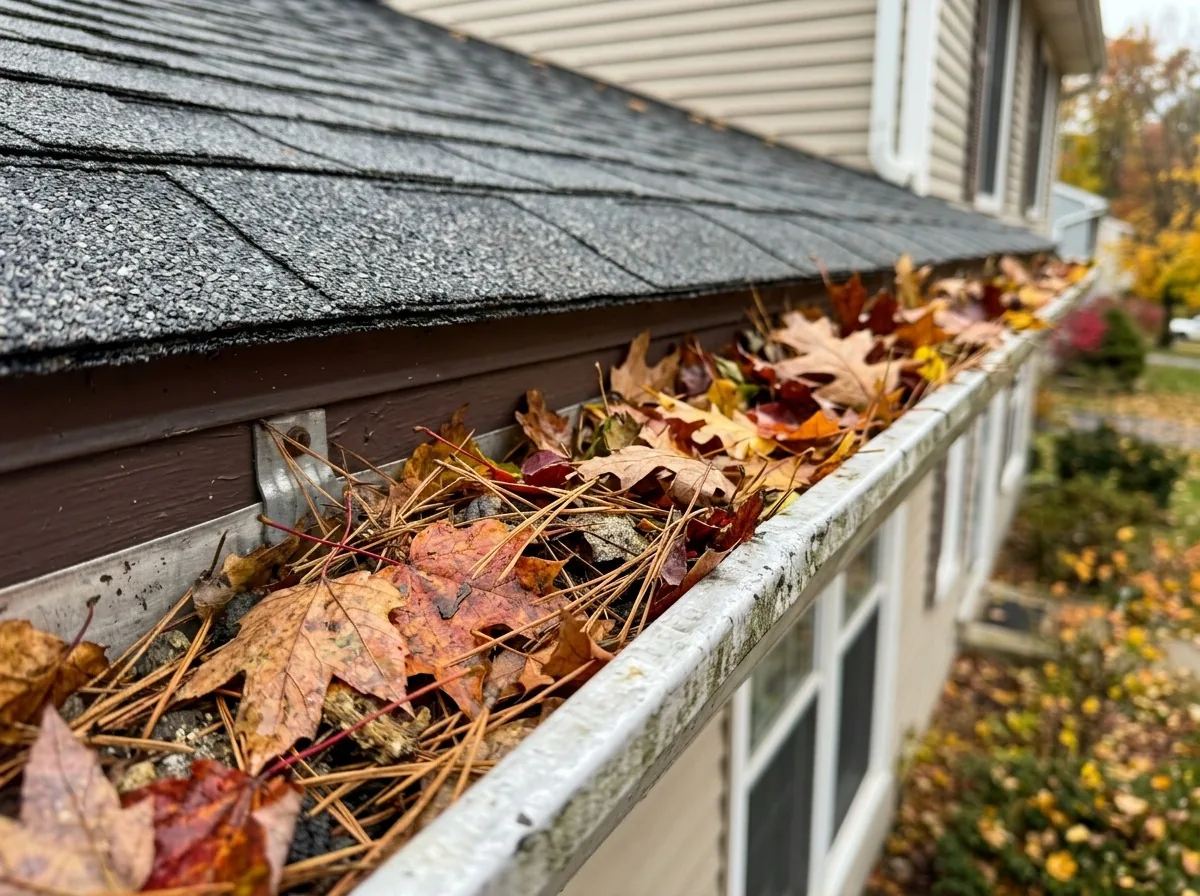
Oak, maple, pine needles, shingle grit, and seed pods pack the trough and the drop outlet. One dense clog at the downspout head backs up a whole run. Wooded lots in Plymouth, Maple Grove, and Lake Elmo see this every fall; even “clean-looking” troughs can hold a sludge layer that cuts capacity in half.
A professional gutter cleaning clears the trough, flushes the downspout, and checks that water exits 4–6+ feet from the foundation. DIY ladder work on two-story homes is a common injury risk — if you are not set up for safe access, hire it out before the next storm cell.
Cause 2: Undersized troughs on steep or busy roofs
Many 1970s–1990s Twin Cities homes still wear 5-inch K-style gutters. On a steep asphalt roof with long valleys, peak summer storms push more water than a half-clogged 5-inch run can carry. Stepping up to 6-inch seamless troughs and larger downspouts is a common fix when cleaning alone does not stop the sheet-over.
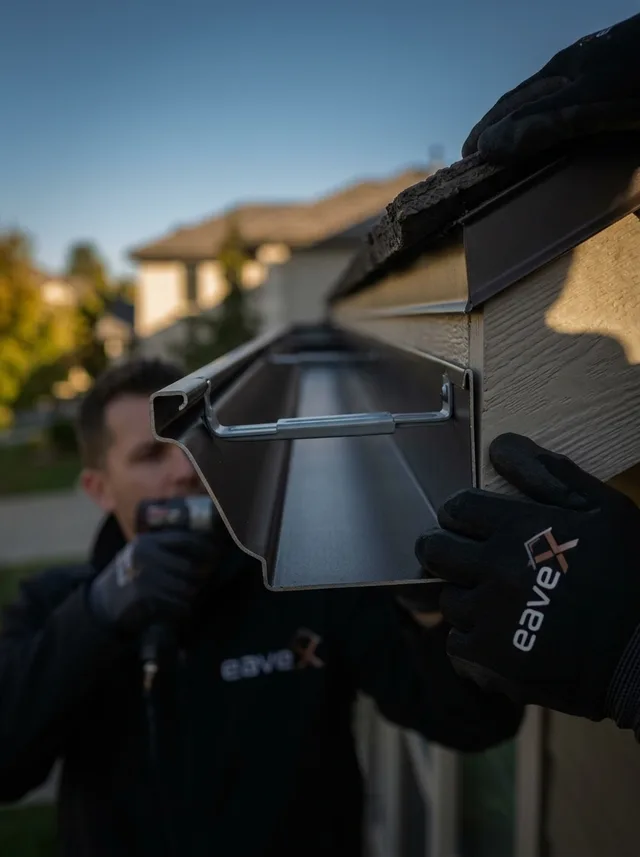
Use 5-inch vs 6-inch gutters in Minnesota for sizing math. If you are already replacing, seamless aluminum formed on site removes leaky joints that sectional systems add — see repair vs replacement. If the trough is also seamed every 10 feet, price a seamless gutter replacement against another season of overflow — 2026 Twin Cities installed ranges sit in that guide, not as an EaveX menu.
Cause 3: Bad pitch, sagging runs, and soft fascia
Gutters need a slight continuous pitch toward each outlet (often about 1/4 inch per 10 feet of run, adjusted to the house). Low spots hold water; after a few freezes the standing water lifts hangers and pulls spikes from soft fascia. Once the front edge dips, water spills even when the trough looks empty of leaves.
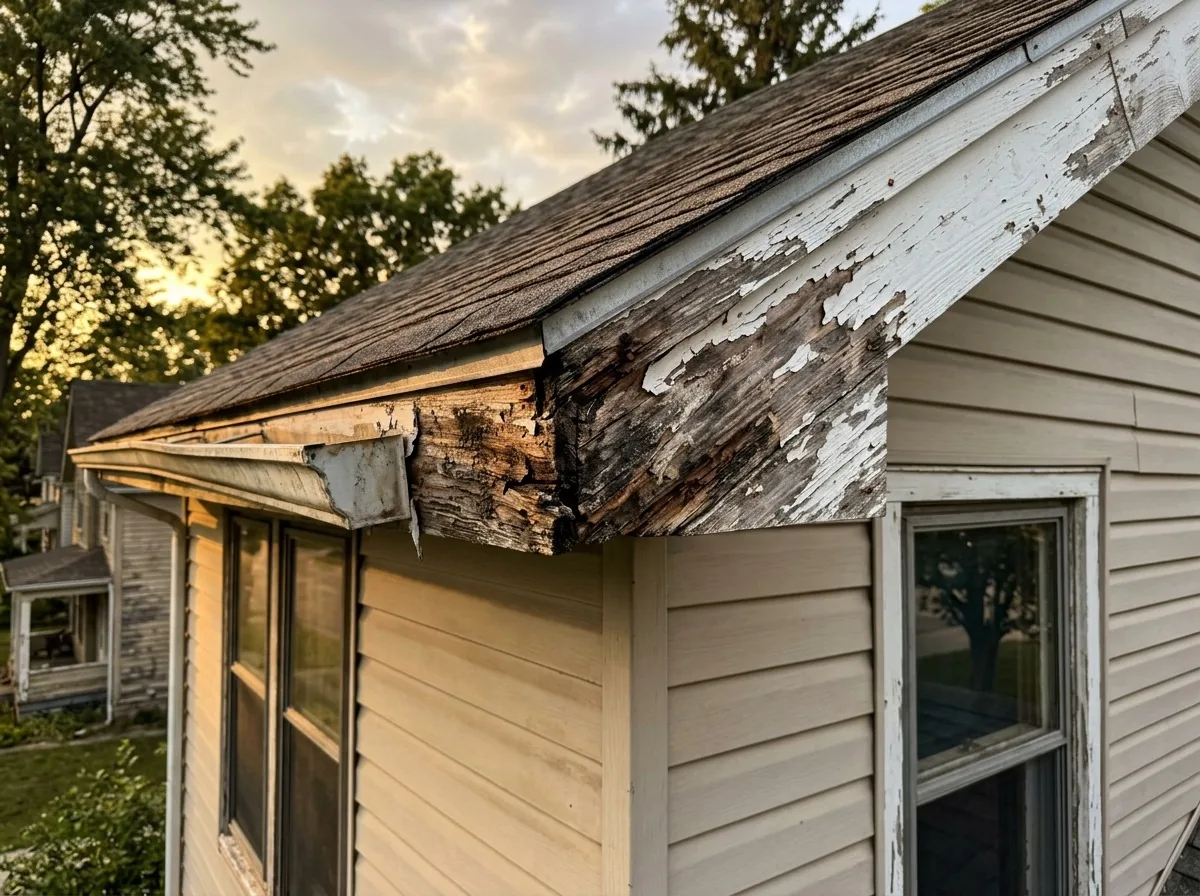
If fascia is rotten, new troughs on bad wood will sag again within a season. Fix fascia and soffit with the gutter work. Hidden hangers into solid board beat old spike-and-ferrule setups for Minnesota ice load.
Cause 4: Downspouts that are crushed, shared, or too short
A beautiful trough still overflows if the only outlet is kinked behind a shrub, shared by two long runs, or dumps at the foundation. Minnesota clay soils and freeze–thaw heave bury or pinch corrugated extensions. Aim for discharge at least 4–6 feet from the wall (farther on walk-outs and tight lots), with solid elbows and an extension you will not kick aside every mow.
On corner lots and ranch homes with few corners, adding a second downspout often cures overflow better than “cleaning harder.” During a free inspection we check outlet count against roof square footage and valley layout.
Undersized outlet counts also overflow — see how many downspouts a Minnesota house needs before you only flush one shared drop.
Cause 5: Ice at the eaves (winter overflow)
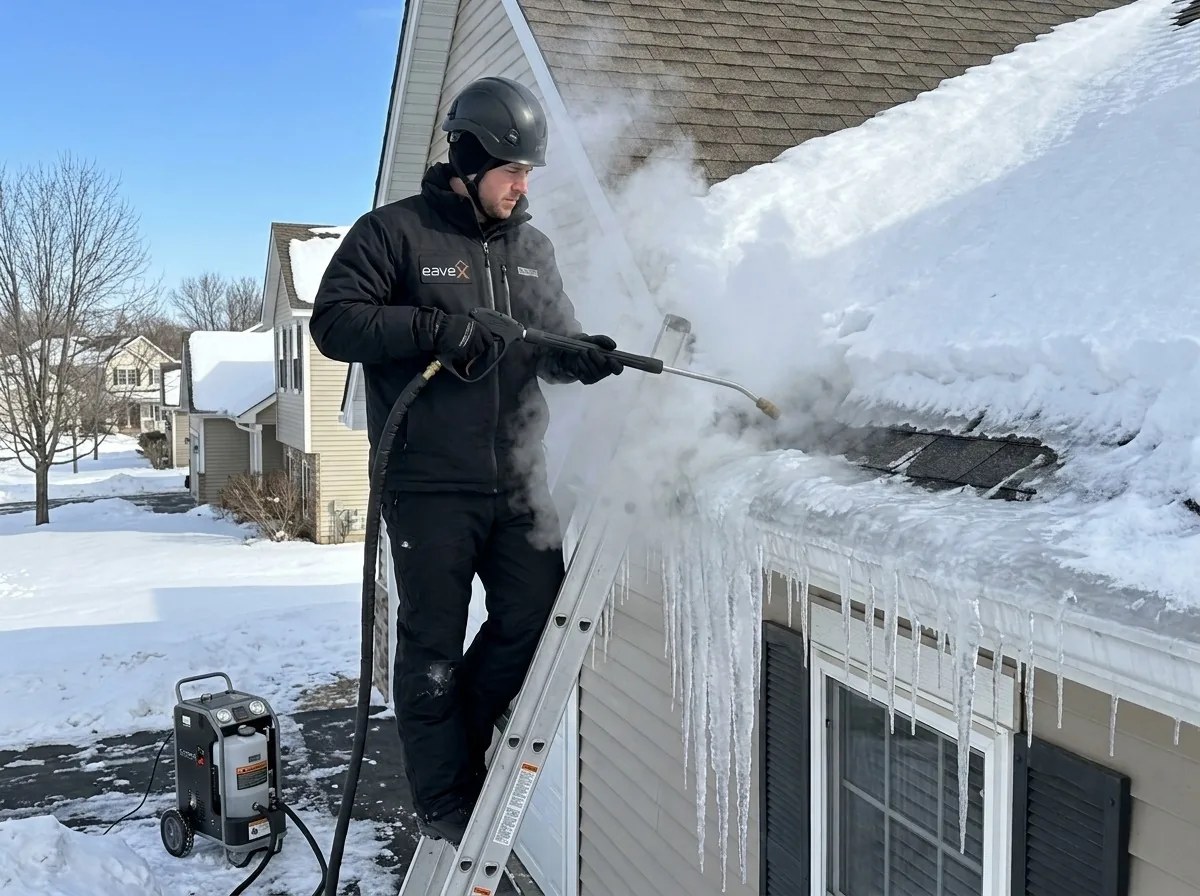
After a thaw, meltwater hits a frozen outlet or an ice-packed trough and sheets over the edge — often with icicles. That is overflow and a cousin of ice dams. Guards and clean troughs help melt leave the roof edge; they do not fix a hot attic. For winter-specific steps, read ice dams in Minnesota and the before-winter gutter checklist.
Overflow diagnosis checklist (quick table)
| What you see | Likely cause | First fix (2026 Twin Cities) |
|---|---|---|
| Water sheets over front lip in one storm | Clog or undersized trough | Clean + flush outlets; consider 6-inch if wooded/steep |
| Only one corner dumps | Crushed/short downspout or shared outlet | Clear/replace elbow; add extension or second downspout |
| Puddles after light rain | Low spot / bad pitch / soft fascia | Rehang with hidden hangers; repair fascia |
| Overflow + attic frost / heavy icicles | Ice dam / frozen outlet | Safe ice management + attic/roof review; clean before freeze |
| Recurring clogs every few weeks | Heavy tree cover | Clean on a schedule + micro-mesh guards |
What Twin Cities homeowners typically pay in 2026
These are Minnesota market averages / typical Twin Cities ranges for 2026, not an EaveX quote. Your total depends on linear footage, stories, fascia condition, roof type, and access; the on-site measure is free.
| Service | Typical range (2026) | Notes |
|---|---|---|
| Gutter cleaning (1-story) | $150–$350 | Higher for heavy sludge or buried drains |
| Gutter cleaning (2-story / complex) | $250–$500+ | Safety gear and time drive cost |
| Spot repair (hangers, seams, elbows) | $150–$600+ | Depends on access and fascia |
| Gutter guards (micro-mesh / stainless mesh / aluminum frame) | $6–$12/lf | Best after a clean trough |
| Seamless aluminum install / replace | $8–$14/lf | Continuous runs; size 5" or 6" |
Financing is available from 0% APR (0.00–9.99%) with GreenSky, plan 6124 — not every buyer qualifies for 0%. We will show real options after the measure.
Will gutter guards stop overflow?
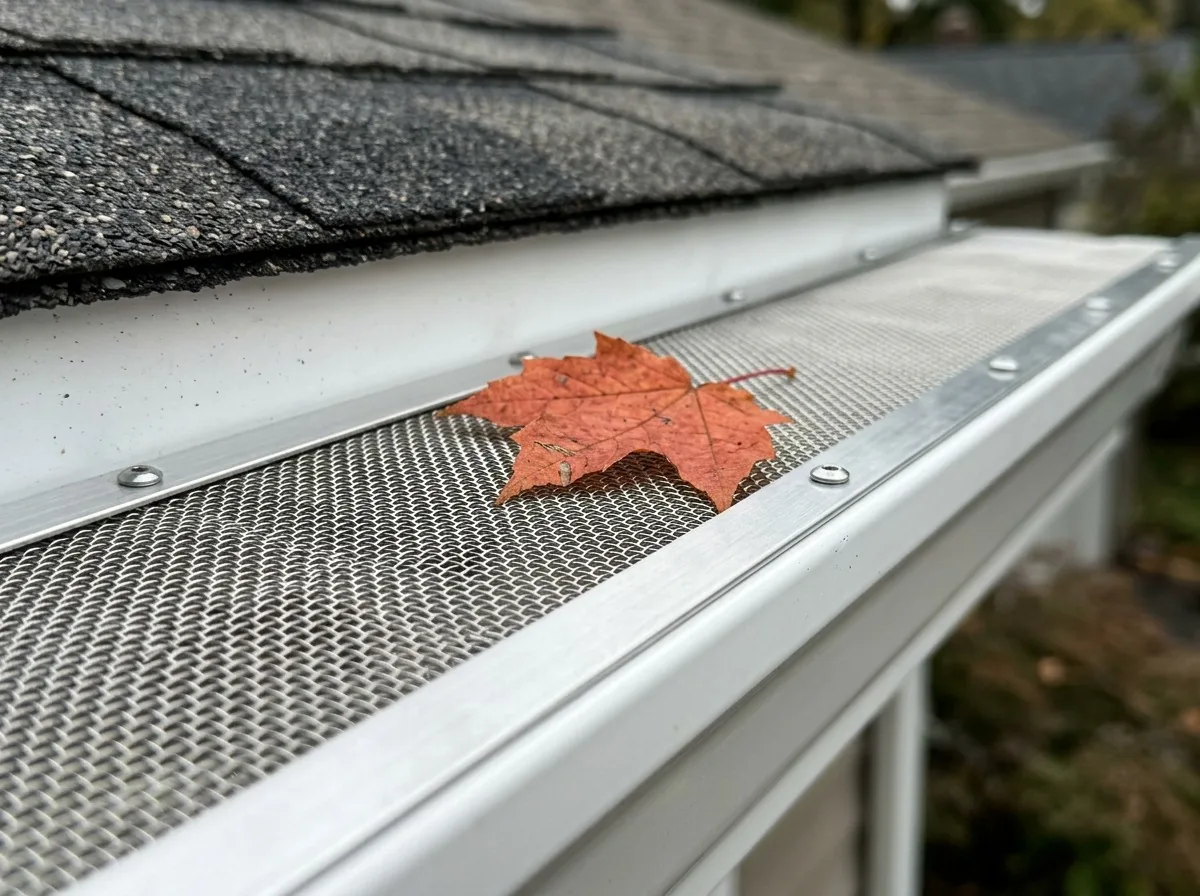
Guards reduce how often leaves choke the trough — especially micro-mesh or stainless mesh in an aluminum frame on oak/maple lots. They do not add capacity if the trough is undersized, pitched wrong, or the downspout is crushed. Install guards on a clean, correctly pitched system; otherwise you can trap debris under a dirty screen and still overflow. For Minnesota freeze-thaw and wooded lots, see what actually holds up in gutter guards for Minnesota snow before you buy a cover that ices over.
For the full pros/cons and payback math, see are gutter guards worth it in Minnesota. EaveX sizes the guard style to the house — we do not push a single brand name.
When cleaning is enough vs when to replace
Clean and rehang when troughs are sound, outlets are few, and fascia is solid. Replace with seamless when you have recurring seam leaks, widespread sag, mixed old sections, or you need 6-inch capacity before another Minnesota winter. Lifespan context: how long seamless gutters last in Minnesota. DIY full installs rarely beat a coiled on-site system for pitch and hangers — see DIY vs hiring a pro.
City pages if you are comparing local crews: Maple Grove and Plymouth both see heavy canopy and summer pop-up storms. When troughs are wavy, seams leak on multiple walls, or you are pricing a full tear-off, compare numbers in our gutter replacement cost in Minnesota guide—useful next to searches for gutter installation cost near me.
Ready for a free inspection?
If water is sheeting over your eaves, schedule a free inspection — we will check clogs, pitch, outlets, fascia, and whether 5-inch vs 6-inch (plus guards) is the lasting fix. Call (763) 313-8516 or request a free estimate online. Serving the Twin Cities from Albertville, MN — license BC808261.