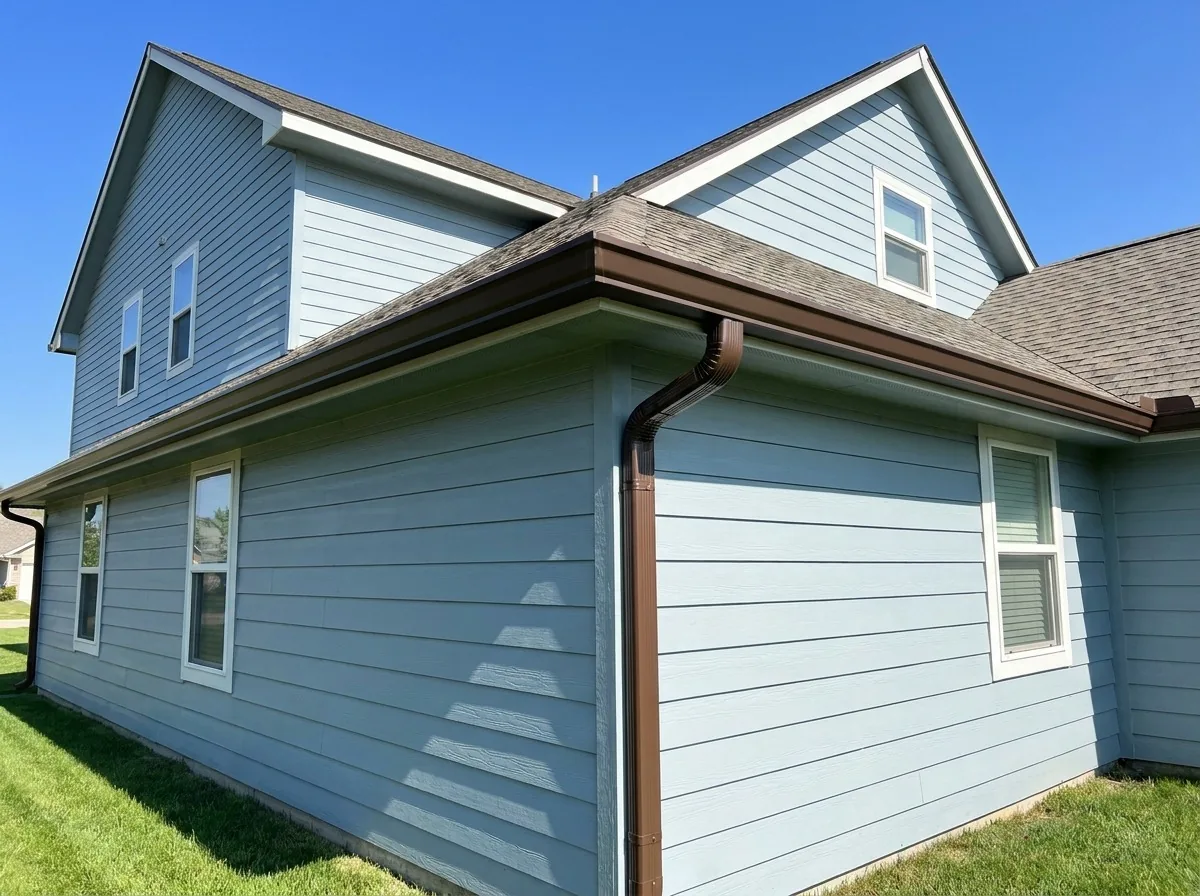
Seamless aluminum gutters are the better install for most Minnesota homes—they roll into one continuous trough on site, so there are no mid-run joints for freeze–thaw to open, while sectional (piece) gutters leak at every seam after a few Twin Cities winters.
Key takeaways
- Seamless: 0.027–0.032-inch aluminum coil, hidden hangers about every 24 inches, typical Twin Cities market range $8–$14/lf installed in 2026.
- Sectional:
10-foot pieces plus connectors; cheaper upfront (**$3–$7/lf** materials) but every joint is a freeze–thaw leak point. - Builder-grade sectional on 1990s–2000s plats is a common Twin Cities failure pattern—same 20–25 year clock as aging 3-tab shingles.
- August–October is the window to switch before leaf drop and freeze-up.
- EaveX: 1,200+ projects, 5.0 rating, 13+ years, license BC808261; financing from 0% APR (0.00–9.99%) with GreenSky, plan 6124 (not every buyer qualifies for 0%).
We install from Albertville (5098 Main Ave NE) across Minneapolis, St. Paul, and the west/north metro. Below is a straight seamless-vs-sectional comparison for Minnesota homeowners—market ranges, not our price list; your total depends on run length, stories, fascia condition, and roof type, and the measure is free.
What sectional gutters actually are
Sectional (also called piece or kit) gutters ship in roughly 10-foot lengths. A crew—or a homeowner—joins them with slip connectors, end caps, and miters, then seals every joint. Big-box K-style kits and a lot of builder-grade troughs on 1990s–2000s Twin Cities plats are this system.
Those connectors are the weak link in Minnesota. Ice expands in standing water, leaf acids sit in the seams, and the sealant that looked fine in October is cracked by March. If you are weighing a weekend kit versus a crew, read DIY vs hiring a pro for gutter installation—this article is about the system, not who holds the ladder.
What seamless gutters are (rolled on site)
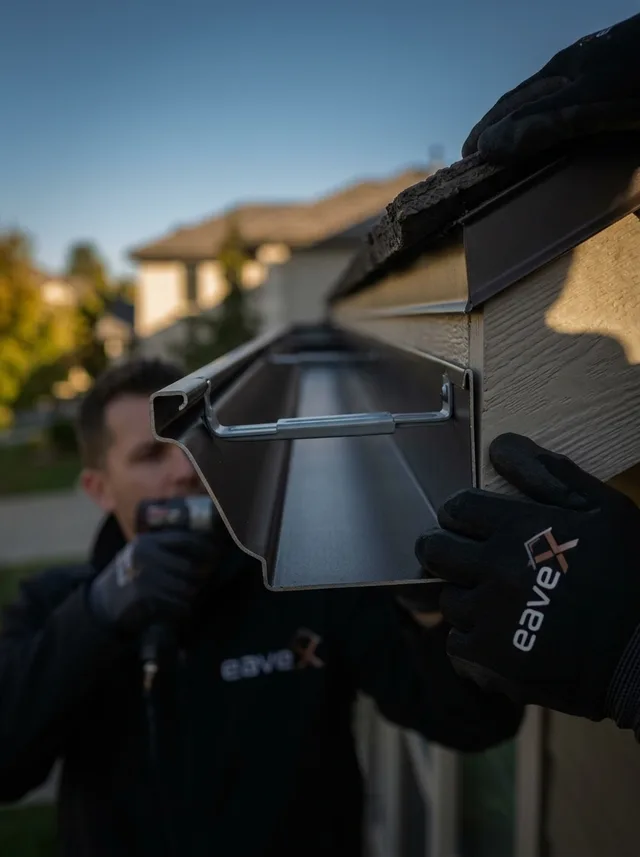
Seamless gutter installation starts as a coil. A machine on your driveway forms one continuous K-style trough per wall—no mid-run joints. Corners and outlets are still fabricated, but the long runs that catch snowmelt and summer storms are one piece.
Residential stock here is usually 0.027–0.032-inch aluminum with hidden hangers into solid fascia about every 24 inches (tighter on long or ice-loaded eaves). Color-matched baked enamel covers most Twin Cities palettes. That is the default we hang from Albertville through Maple Grove and Plymouth.
Why Minnesota freeze–thaw punishes joints
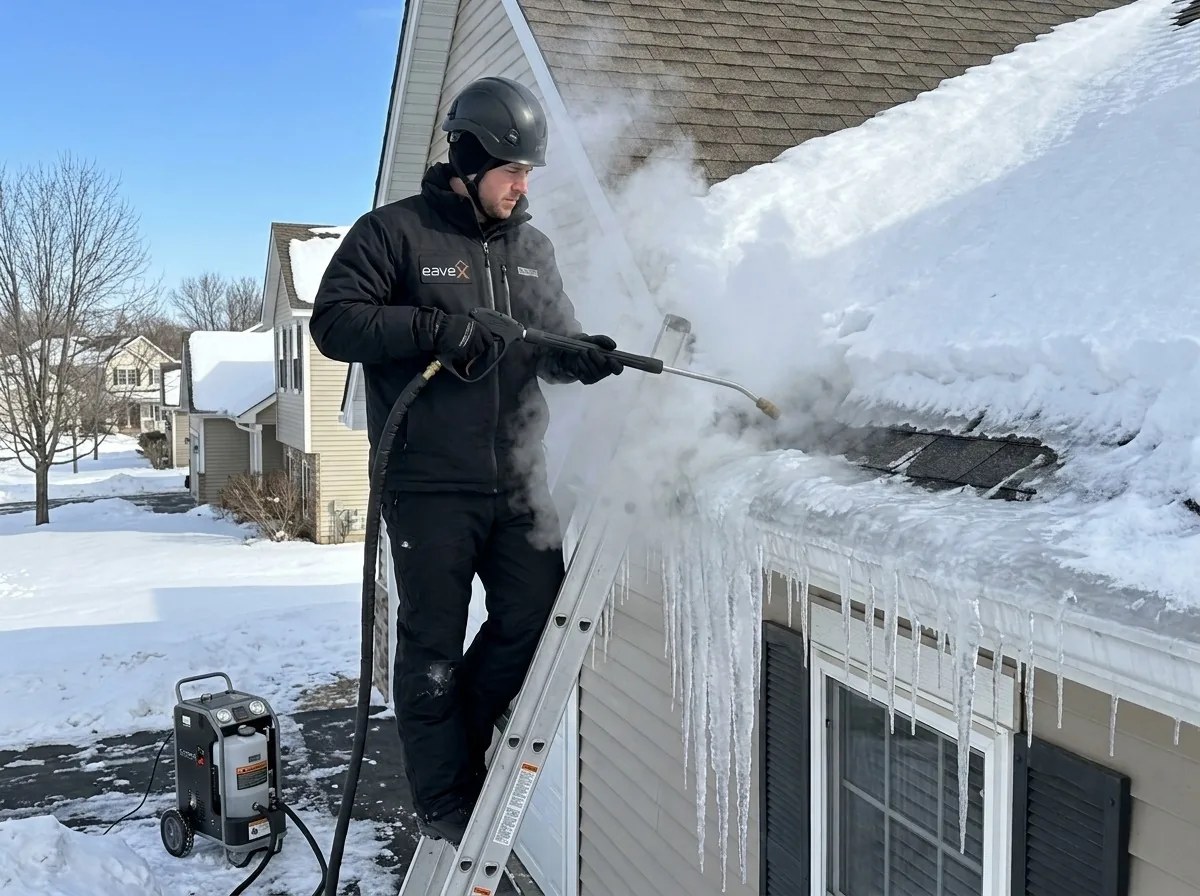
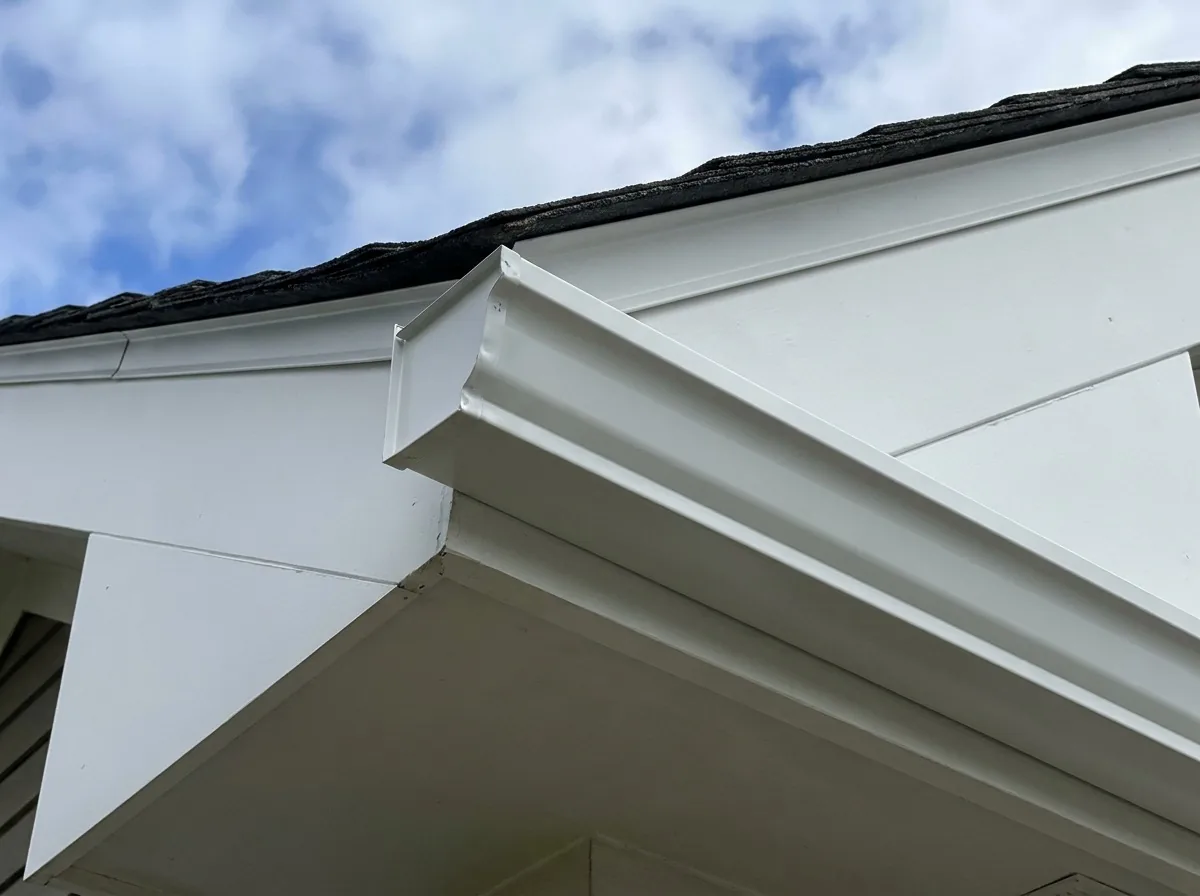
Minnesota winters mean repeated melt–refreeze at the eave, not one pretty snow. Water sits in a low spot, freezes, expands, and pries the connector. Oak and maple mats hold moisture against the seam all fall. Road-salt splash on lower downspouts speeds corrosion on cheap fittings.
A continuous seamless run still needs pitch (about 1/4 inch per 10 feet) and clear outlets—but it does not have a joint every 10 feet for ice to open. That is why sectional leaks show up as stripes on siding and puddles at the foundation after the first hard freeze, even when the trough “looks fine” from the ground. Continuous coil can still drip at outlets or soft fascia—see do seamless gutters leak in Minnesota if the wet stripe is not on a kit joint.
Seamless vs sectional: quick comparison (2026)
| Factor | Seamless aluminum | Sectional / kit |
|---|---|---|
| Joints | One continuous run per wall | Every ~10 ft + corners |
| Typical Twin Cities range (2026) | ~$8–$14 / lf installed | ~$3–$7 / lf materials |
| 6-inch seamless (same market band +$2–$4/lf) | Continuous 6-inch coil, fewer overflow events | 6-inch kit still has a joint every ~10 ft |
| Freeze–thaw | No mid-run seams to open | Sealant and connectors fail first |
| Ice / leaf load | Hidden hangers + thicker coil | Spikes and slip joints often pull |
| Lifespan in MN (solid fascia) | Often 20–30 years | Often 8–15 years before reseal/replace |
| Best fit | Most Twin Cities / St. Paul homes | Short shed / simple single-story DIY |
| 6-inch St. Paul / Maplewood (2026 market) | Continuous 6-inch coil ~$10–$16/lf; fewer overflow events on steep east-metro roofs | 6-inch kit still joints every ~10 ft |
| Typical 150–200 lf 6-inch job (market 2026) | Often ~$1,800–$3,200 before guards/fascia | Kit materials lower upfront; reseals + fascia push cost up |
Ranges are Minnesota market averages for 2026, not an EaveX price list. Final cost depends on run length, stories, fascia condition, and roof type; free measure on site.
Cost ranges Twin Cities homeowners see in 2026
For a typical 150–200 lf house, seamless aluminum gutters often land roughly $1,200–$2,800 installed before guards or fascia (at the $8–$14/lf Twin Cities band for 2026). A sectional kit for the same footprint might be $400–$1,400 in pieces plus hangers and sealant—until the first fascia board, extra downspout, or spring reseal pushes you toward $1,000–$1,800. Line-item ranges and whole-house examples live in our guide to seamless gutter cost in the Twin Cities — useful when you are comparing seamless aluminum quotes side by side.
Add fascia and soffit when boards are soft ($15–$40/lf typical Twin Cities 2026) and optional micro-mesh gutter guards (often $6–$12/lf market range with a full install). Financing is available from 0% APR (0.00–9.99%) with GreenSky, plan 6124—not every buyer qualifies for 0%. See how much gutter replacement costs in Minnesota if you are tearing off old sections. Reminder: these are market averages, not an EaveX price list; your total depends on run length, stories, fascia condition, and roof type, and the measure is free.
Builder-grade sectional on 1990s–2000s homes
A huge share of Twin Cities plats from the mid-1990s through the 2000s shipped with builder-grade sectional troughs. Those joints age on the same clock as 3-tab or early architectural shingles—about 20–25 years. Crimped connectors open, hangers loosen, and overflow stains the fascia even after a gutter cleaning.
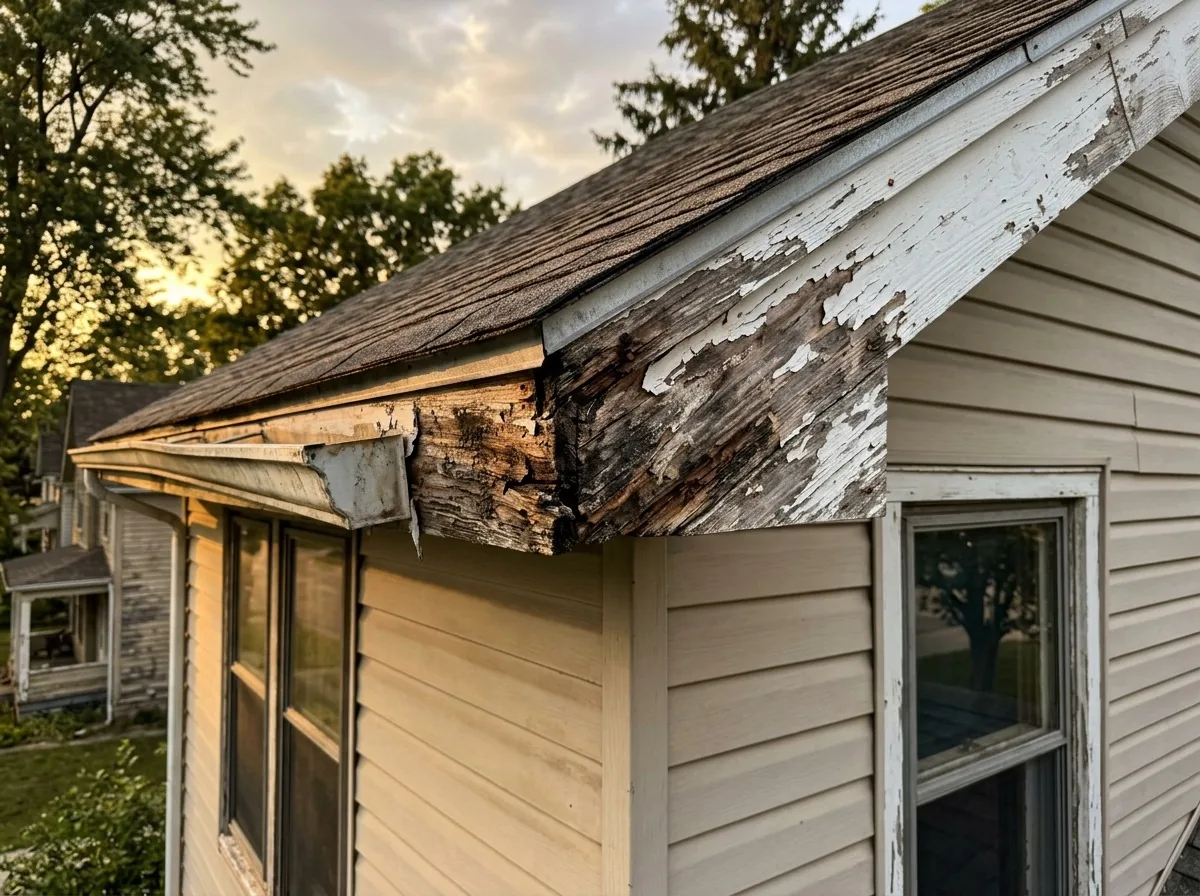
If asphalt is late-cycle, bundle a reroof with new continuous runs on one lift. If the boards behind the old sections are soft, fix wood first—new coil on rotten fascia fails as fast as the kit it replaced. Use gutter repair vs replacement when only one elevation is leaking.
Ice, snow, and leaf load—not just “more metal”
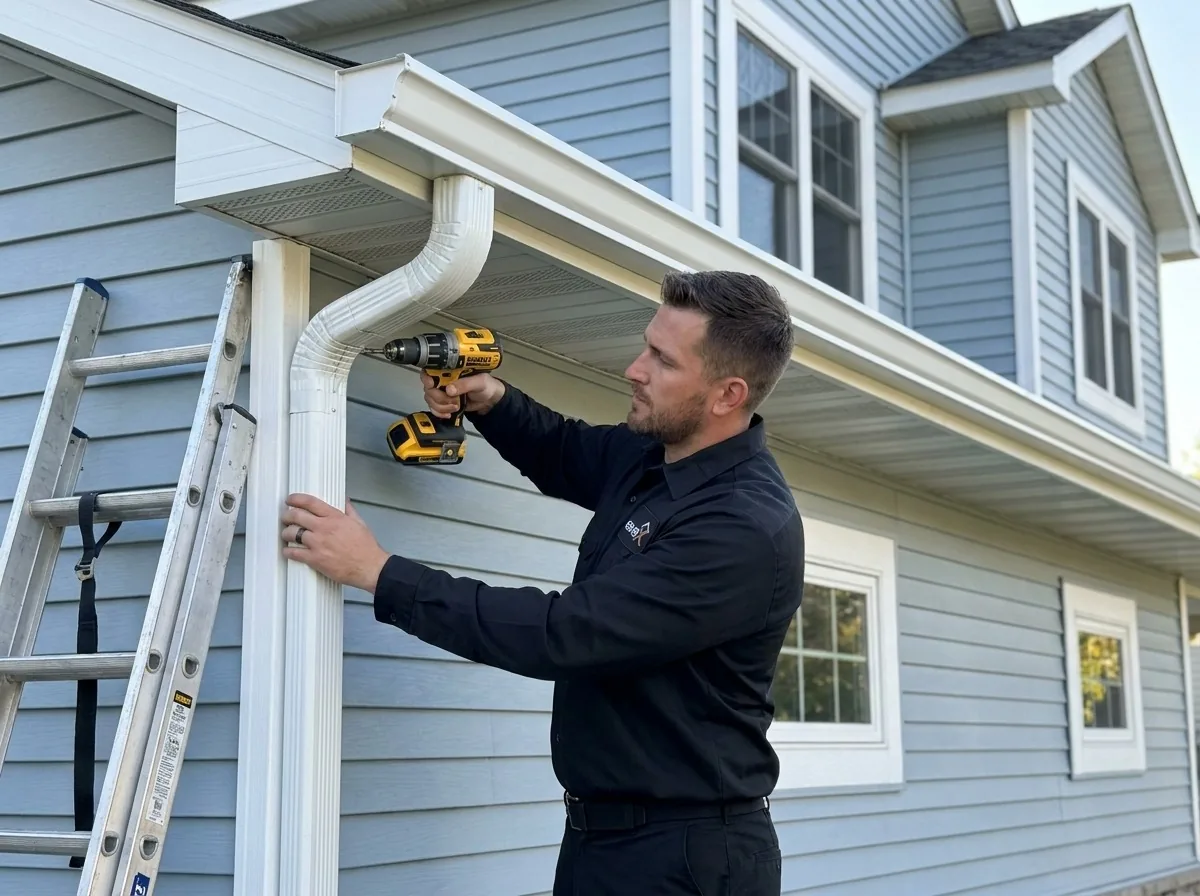
Homeowners often blame “cheap aluminum” after ice pulled sectional spikes out of pine fascia. The failure was usually clogged joints plus spike hangers in soft wood, not the alloy. Ice dams start in the attic and roof edge; clear troughs and hidden hangers matter more than stacking extra seams. Read ice dam prevention in Minnesota before ordering another kit.
Keep downspouts dumping 4–6 feet from the foundation. Pair new seamless runs with micro-mesh (stainless steel mesh on an aluminum frame) on wooded lots so oak and maple do not mat into ice plugs—that is the Minnesota-ready alternative to big-box “helmet-style” covers that shed poorly in freeze–thaw. Guards cut cleaning labor; they do not eliminate a yearly brush-off or replace attic ventilation. See gutter guards for install options without chasing brand names.
Are 6-inch seamless gutters better than 6-inch sectional in Minnesota?
Seamless vs sectional is one decision; capacity is another. Steep roofs, large St. Paul and east-metro watersheds, and mature oaks often need 6-inch troughs and bigger downspouts. Upsizing a kit to 6-inch still leaves a slip connector every ~10 feet for ice to pry—so you paid for volume and kept the leak points. A 6-inch seamless run adds capacity without those mid-run joints.
Expect roughly $2–$4 more per foot than standard 5-inch seamless in Twin Cities 2026 market averages (not an EaveX price list)—often about $300–$800 on a typical house—plus oversized outlets. If summer storms overtop a clean 5-inch coil, read 5-inch vs 6-inch gutters in Minnesota and upsizing to 6-inch when replacing. Book seamless gutter installation when you want continuous 6-inch coil, not a taller kit.
6-inch seamless gutter service in St. Paul and Maplewood MN
Homes in St. Paul and Maplewood often sit under steeper roofs and heavier oak canopy than a flat west-metro ranch. That is when 6-inch seamless gutter service—continuous coil, not a taller sectional kit—stops summer sheet-off and winter ice plugs at the eave. Mid-run slip connectors every ~10 feet still fail in Twin Cities freeze–thaw even if the trough is 6 inches wide.
Typical Twin Cities market range for 6-inch seamless in 2026 runs about $10–$16 per linear foot installed (roughly $2–$4/lf above 5-inch), or about $1,800–$3,200 on a 150–200 lf house before guards or fascia work. These are Minnesota market averages, not an EaveX price list; your total depends on run length, stories, fascia condition, and roof type, and the measure is free. Book seamless gutter installation when you want continuous 6-inch coil sized on site—not a big-box kit with more joints.
When sectional still makes sense
A short, single-story shed, a simple ranch with 40–80 lf of straight eave, solid fascia, and light tree cover can still take a careful sectional hang—especially if you accept yearly resealing. That is a small-scope exception, not the default for a two-story Maple Grove or Plymouth colonial.
If you are already on a ladder with a kit, stop when you find soft wood, inside corners that will not dry-fit, or a second story. Those jobs belong on continuous coil with hidden hangers—see how long seamless gutters last in Minnesota for lifespan math once fascia is sound.
August–October: switch before leaf drop
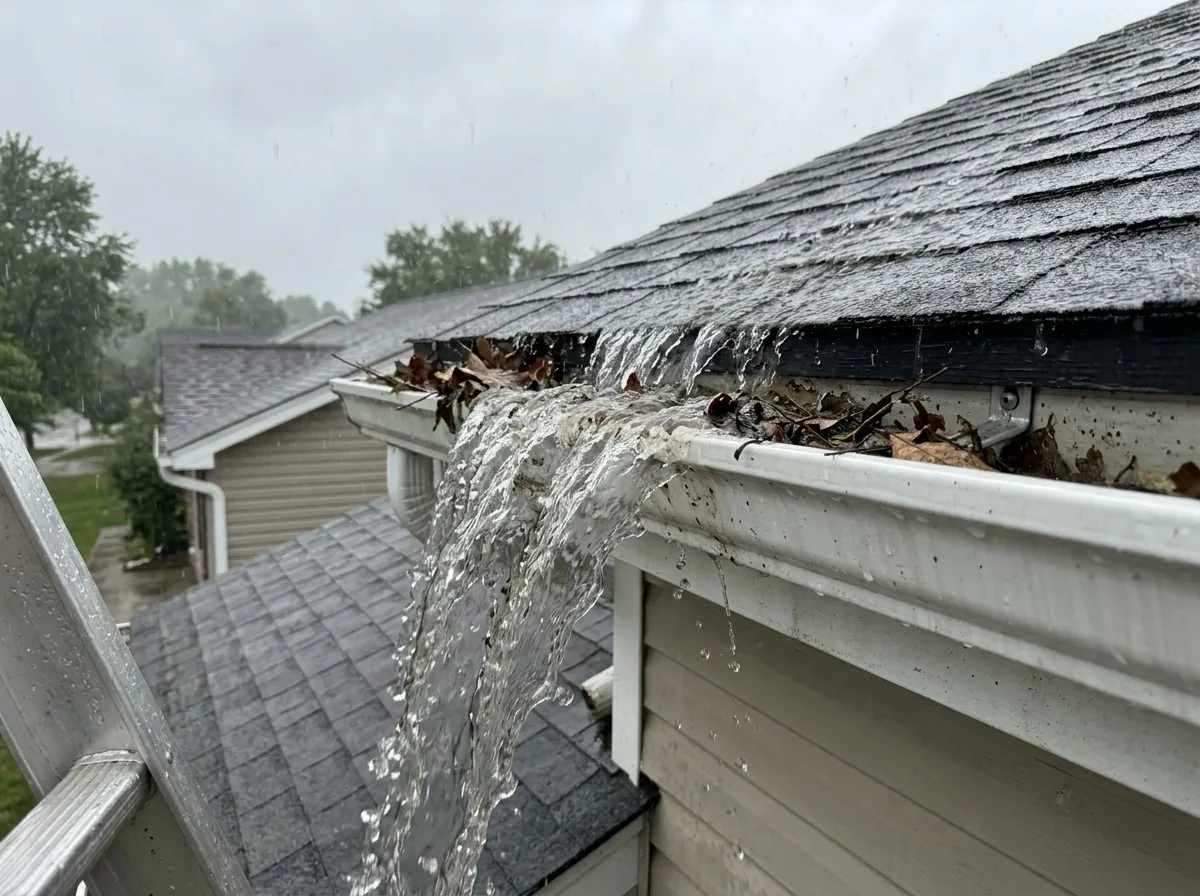
July–September is install season here; October is last call before snow. Finish tear-off and new seamless runs before oak and maple dump into open troughs. Waiting until a January ice dam is how sectional joints become fascia rot and a spring emergency.
If you already see stripes on siding, pulling spikes, or overflow in rain, check 7 signs your gutters are failing and book a measure now—not in March. Material choice is a separate fork; most residential seamless jobs here use aluminum—see aluminum vs steel gutters in Minnesota.
Ready for a free inspection?
EaveX will measure your eaves, check fascia, and tell you whether sectional can be saved or you need continuous coil—with clear numbers, not a one-size pitch. Call (763) 313-8516 or request a free inspection online. We serve Minneapolis, St. Paul, Maple Grove, Plymouth, and the surrounding metro from our Albertville shop. License BC808261.