Yes—most Minnesota homeowners should replace gutters when they reroof, because asphalt shingles and builder-grade troughs wear out on the same 20–30 year clock, and one lift costs less than a second trip after the first ice season.
Key takeaways
- 1990s–2000s Twin Cities roofs and sectional gutters usually fail together—not years apart.
- Leaving old troughs on a new roof often stains new fascia, leaks at the drip edge, and needs another mobilization within 2–5 winters.
- Typical Twin Cities market (2026): seamless gutters $8–$14/lf (~$1,400–$3,800 house); fascia $15–$40/lf; asphalt reroof often $450–$700+ per square or about $14,000–$28,000 on a typical home—Minnesota market averages, not an EaveX price list. Final cost depends on run length, stories, fascia condition, and roof type; the measure is free.
- August–October is the window before leaf drop and freeze-up.
- EaveX: 1,200+ projects, 5.0 rating, 13+ years, license BC808261; financing from 0% APR (0.00–9.99%) with GreenSky, plan 6124 (not every buyer qualifies for 0%).
We roof and hang gutters from Albertville (5098 Main Ave NE) across Minneapolis, St. Paul, St. Michael, Maple Grove, and the west/north metro. Below is how to decide on a bundled reroof—market ranges, not our menu.
Why Minnesota roofs and gutters age out together
A 3-tab or early architectural roof installed in the late 1990s or early 2000s is now inside or past the 20–30 year replacement window. Builder-grade sectional gutters from that same build fail on the same clock: slip joints open, spikes loosen, and overflow soaks the fascia you cannot see from the yard.
That is why roofing in the Twin Cities and seamless gutter installation show up on the same estimate so often—especially on 1990s–2000s plats in St. Michael, Maple Grove, and Albertville. The shingles and the troughs were cheap together; they quit together.
What happens if you reroof and keep the old gutters
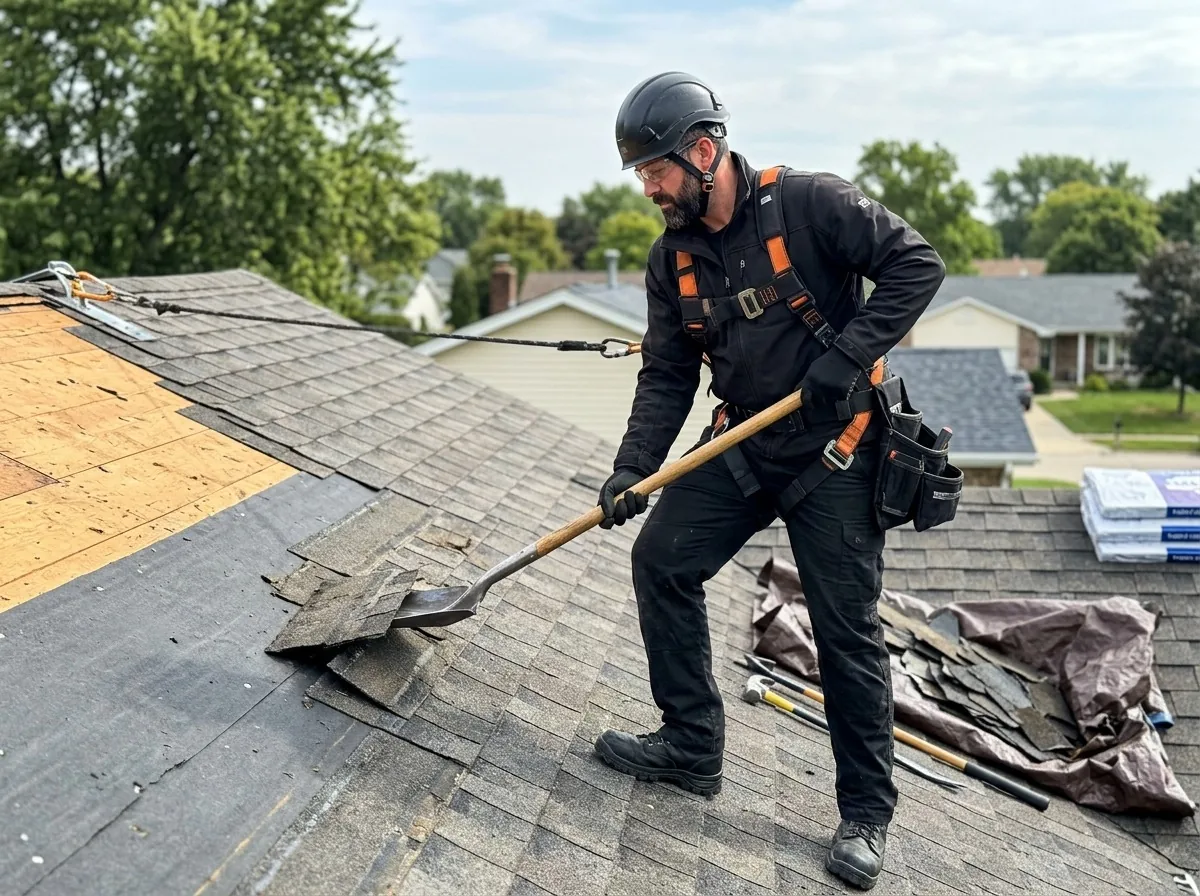
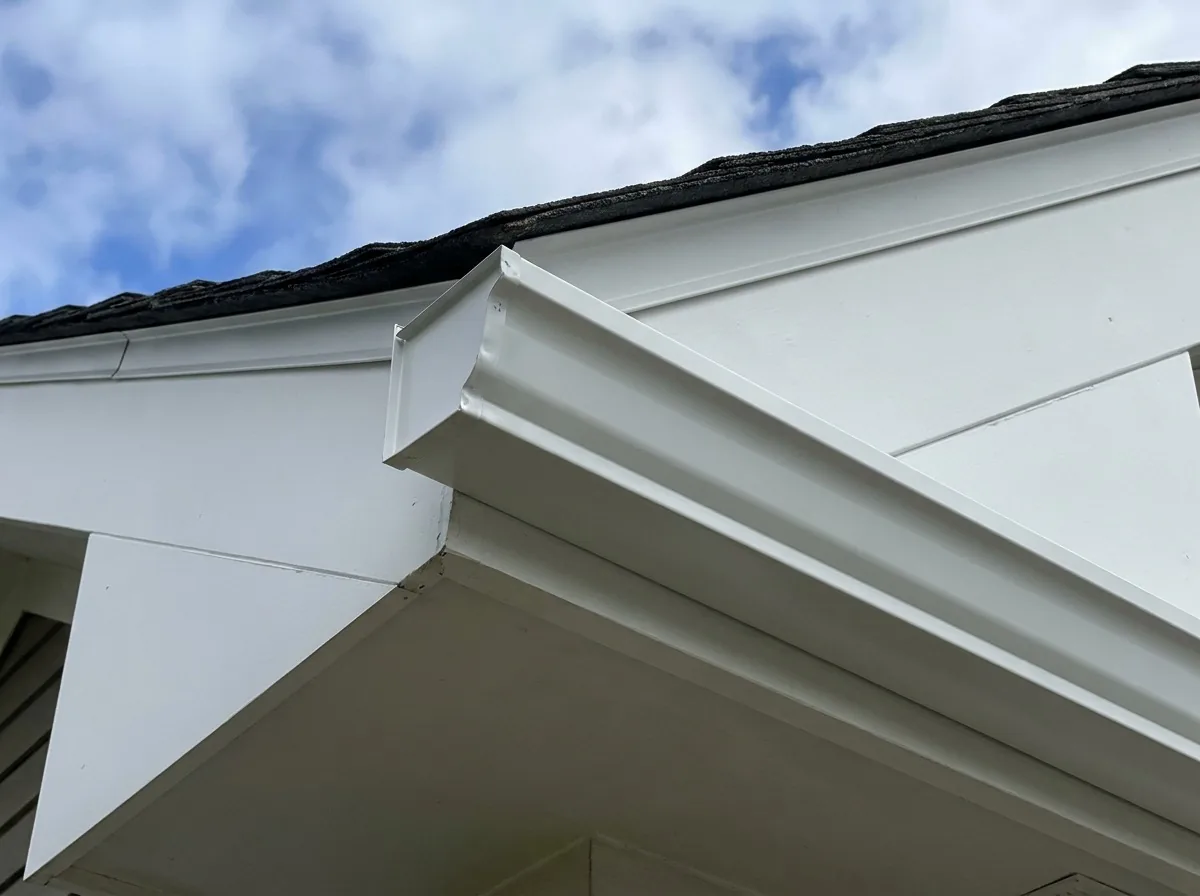
When the old shingles come off, the drip edge and fascia are exposed. If you hang the new roof back onto a sagging sectional trough, meltwater still dumps behind the new drip edge. You just spent five figures on asphalt and left a leak at the only line that protects it.
Old hangers also punch into fascia that has been wet for a decade. After one or two freeze–thaw cycles the run pulls away, stains the new soffit, and you pay a second lift. If only one elevation is bad, use gutter repair vs replacement; if the whole house is late-cycle with the roof, replace the troughs on the same visit.
Keep vs replace gutters with a reroof (Twin Cities, 2026)
| Situation | Keep old gutters? | Typical next step |
|---|---|---|
| Seamless aluminum, solid fascia, under 15 years, no overflow | Often yes | Clean, check pitch, add outlets if storms sheet |
| Builder-grade sectional, 20+ years, same age as old shingles | No | Tear-off + seamless gutters on the new drip edge |
| Sagging runs, rusted spikes, stains on siding | No | Replace troughs + fascia while the roof is open |
| Soft or painted-over fascia once shingles are off | No | New boards first, then new gutters |
| Ice dams / icicles every winter | Replace drainage + fix attic | New troughs help the edge; they do not replace ventilation |
Ranges and “typical next steps” are Minnesota market practice for 2026, not an EaveX price list. Your home depends on run length, stories, fascia, and roof type; free measure on site.
Fascia is exposed—do not skip the board
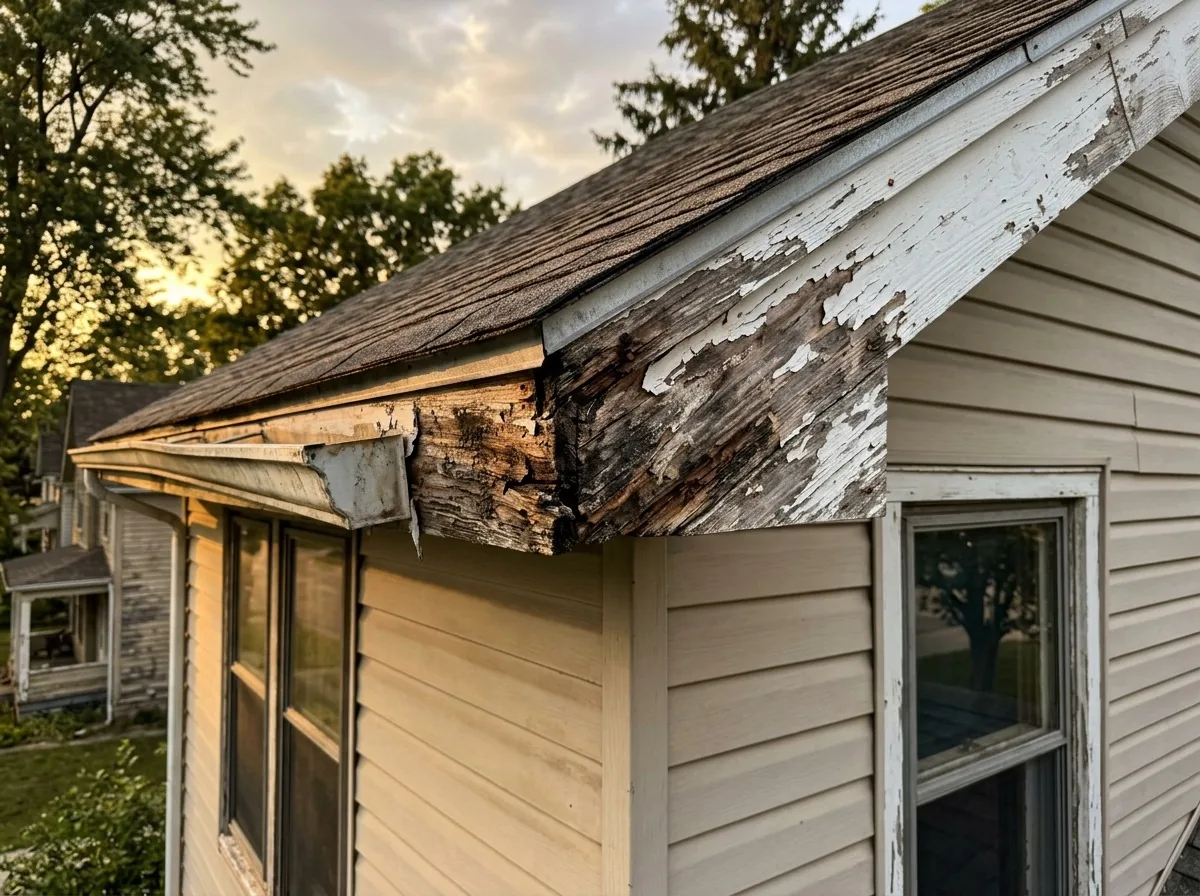
Gutters only stay straight when the board behind them is solid. Once roofers pull shingles, you can see rot that paint hid from the ground. Rehanging a new coil on soft pine is how gutters pull away from the house the following March.
Fascia and soffit work belongs on the same lift as the roof and troughs: one scaffold, one color match, new hangers into new wood. Typical Twin Cities fascia replacement runs $15–$40/lf in 2026 (market average). Details on damage and wrap options: fascia and soffit damage repair in Minnesota.
Twin Cities cost ranges when you bundle (2026)
These are metro averages homeowners see on written estimates in 2026—not EaveX pricing. Final cost depends on linear feet, stories, fascia condition, and roof type; the on-site measure is free.
| Scope (Minnesota market, 2026) | Approximate range |
|---|---|
| Asphalt reroof, typical house | ~$14,000–$28,000 (often $450–$700+ / square) |
| Seamless aluminum gutters, 150–200 lf | ~$1,400–$3,800 ($8–$14/lf) |
| Fascia replacement (where soft) | ~$15–$40/lf |
| Micro-mesh gutter guards (optional) | ~$6–$12/lf with a full install |
| Second mobilization later (gutters only) | Extra lift + dump fees you already paid once |
Adding gutters to a reroof is usually a small slice of the roof number and cheaper than coming back after ice season. See how much gutter replacement costs in Minnesota and seamless gutter cost in the Twin Cities for per-foot detail. Financing is available from 0% APR (0.00–9.99%) with GreenSky, plan 6124—not every buyer qualifies for 0%.
Ice dams, drip edge, and the roof edge
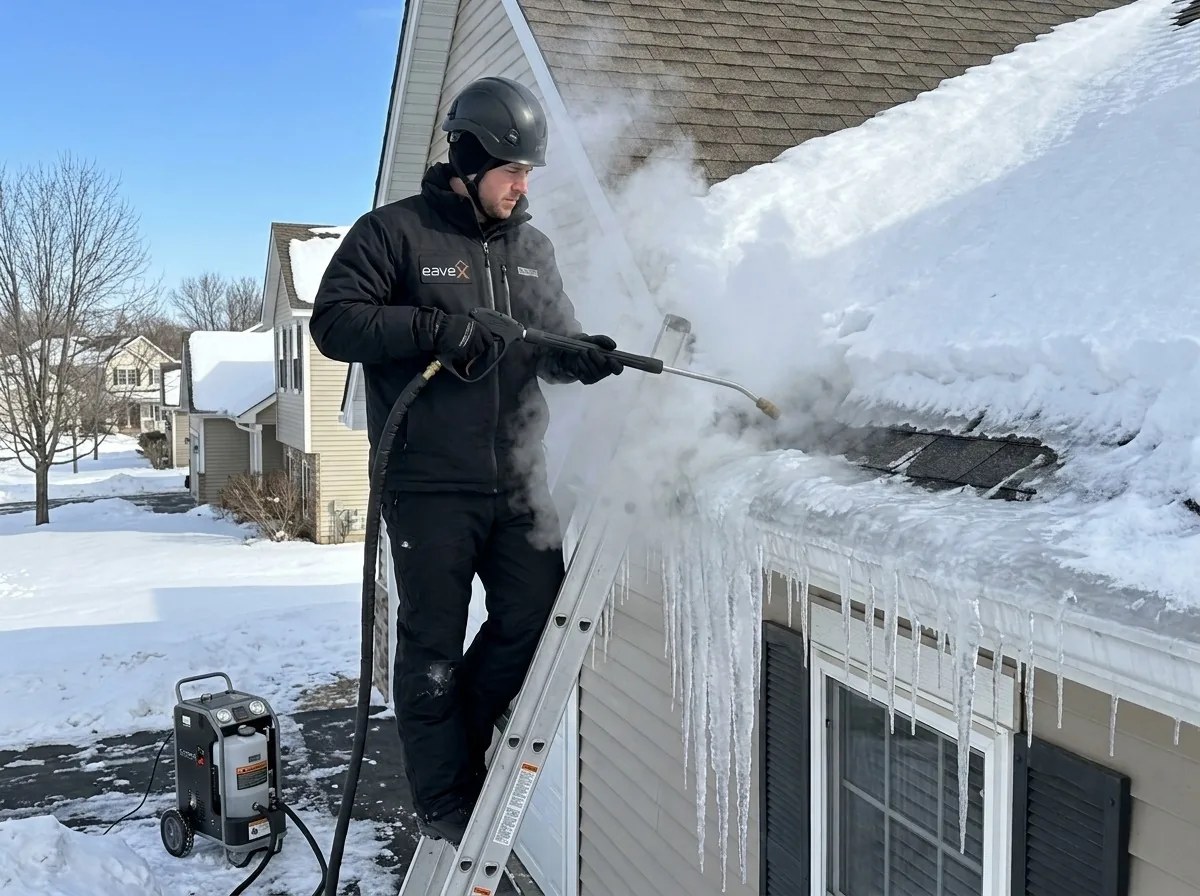
Ice dams start in the attic—heat loss, weak ventilation, thin insulation—not in the gutter. New troughs still matter: they move melt off the new drip edge instead of behind it, and they keep icicles from loading a sagging sectional seam. They do not replace ice-and-water shield, attic air, or ice dam prevention in Minnesota.
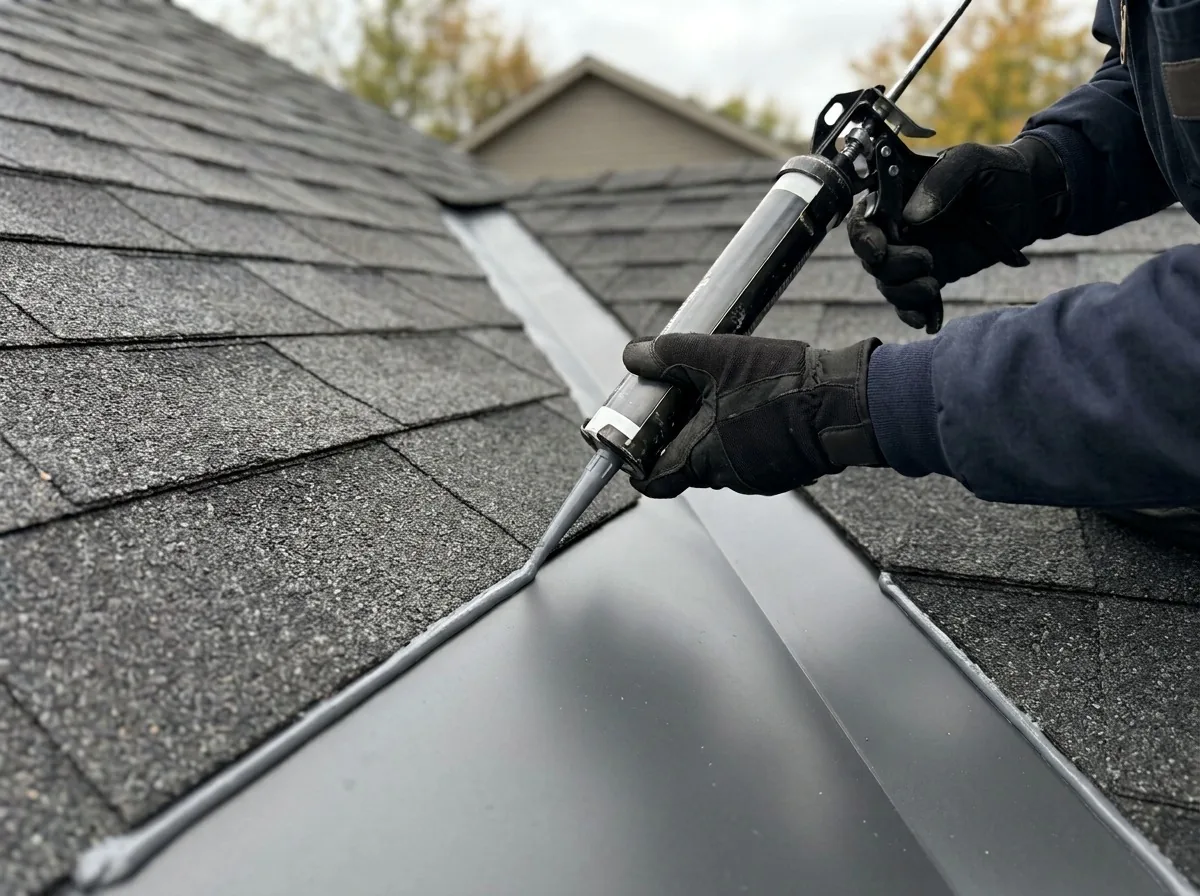
When the roof is open, the crew can tie ice-and-water shield to a gutter apron and hang seamless gutters on a straight board. That edge detail is hard to retrofit later without lifting shingles again. If you already fight ice every winter, pair the reroof with drainage and attic work—not just a new coil.
When you can keep the old gutters
Keep them if they are seamless aluminum in good pitch, hangers are tight into solid fascia, downspouts dump 4–6 feet from the foundation, and you do not overflow in July storms. Age under ~15 years with no rust-through or pull-away is the usual cutoff. Confirm from the roof deck while shingles are off—not from the driveway.
Sectional kits, spike-and-ferrule hangs, and anything that already stains siding do not get a pass just because “they still catch water.” Lifespan math once fascia is sound: how long seamless gutters last in Minnesota. If you are on 10-foot pieces, read seamless vs sectional gutters in Minnesota before you rehang the kit on a new roof.
August–October: one lift before freeze-up
July–September is peak exterior season here; October is last call before snow. Finish the reroof, fascia, and new troughs before oak and maple dump into open runs. Waiting until a January ice dam is how a “roof-only” job becomes a spring emergency.
Wooded lots in Maple Grove and Plymouth should price micro-mesh gutter guards (stainless steel mesh on an aluminum frame) on the same visit so fall debris does not plug a brand-new system. Guards cut cleaning; they do not stop ice dams by themselves. We stage crews from Albertville—same-day measures in Wright County are normal.
How to compare a bundled roof + gutter quote
If you are shopping a roof replacement and wondering about gutters, ask every contractor the same six things:
- Will old troughs come off before new drip edge goes on?
- Is tear-off and haul-away for gutters in the roof price or extra?
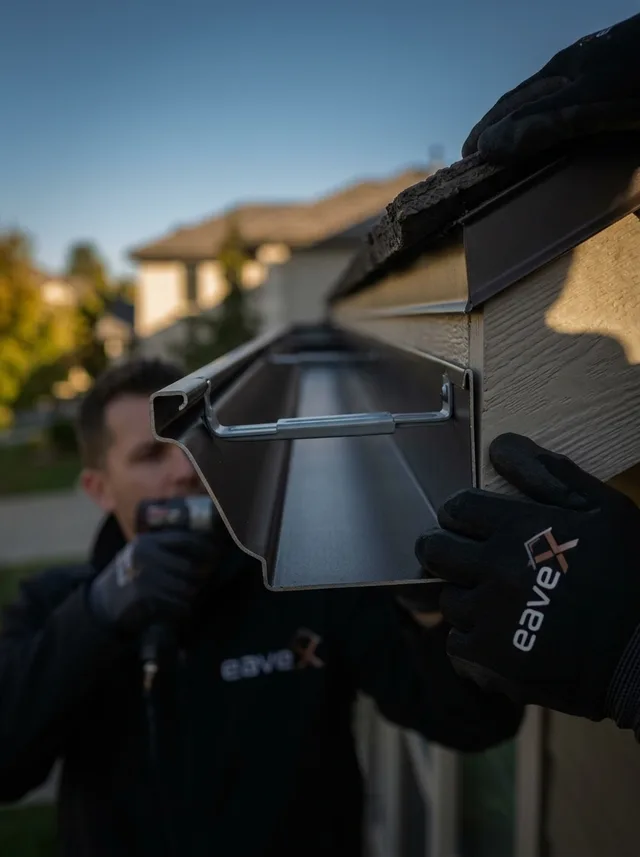
- What hanger type and spacing do they use for Minnesota snow load?
- Will soft fascia be called out from the roof deck before shingles go back?
- How many downspouts, and how far from the foundation?
- Is ice-and-water shield tied to a gutter apron, or just lapped at the eave?
EaveX writes a fixed price after we walk the roof and eaves: 1,200+ projects, 5.0 rating, 13+ years, license BC808261.
Ready for a free inspection?
When the eave boards are soft under old troughs, settle wrap or replace fascia on the same visit as the reroof so new hangers bite solid wood.
If your shingles are late-cycle, have us check the troughs and fascia on the same visit—one written plan, not two seasons of leaks. Call (763) 313-8516 or request a free inspection. We serve Minneapolis, St. Paul, St. Michael, Maple Grove, Plymouth, and the surrounding metro from 5098 Main Ave NE, Albertville. License BC808261.