Seamless gutter installation is the right move when your Twin Cities roofline needs continuous aluminum runs that fit today—not when every hanger, seam, and fascia board is still sound and you only need a short repair. Replacement is the better call when existing gutters are leaking at joints, pulling away after freeze–thaw, undersized for your roof, or riding on soft fascia. EaveX (license BC808261) measures on site so you get a clear install-versus-replace recommendation—not a guess from photos.
Key takeaways
- Installation usually means new 0.027–0.032-inch seamless aluminum formed on site, hung on solid fascia, with outlets and downspouts sized for Minnesota melt and spring storms.
- Replacement removes the old system first, then installs new seamless runs—often with fascia repair if water has already softened the boards.
- Twin Cities market averages in 2026 for full seamless work commonly land around $8–$14 per linear foot installed; replacement tickets rise when tear-out, dump fees, or fascia work are required. Final price depends on run length, stories, fascia condition, and roof type—free measurement.
- If hangers are loose but metal is fine, a rehang or partial fix can beat a full tear-off—until ice dams and overflow keep repeating.
- Book before deep freeze when you can: installing gutters in November in Minnesota is still workable on many days, with weather windows.
Install vs replace: the 60-second decision
Choose new seamless gutter installation when you are building, adding a porch, fixing a long empty eave, or swapping sectional boxes that never sealed through Minnesota winters. Choose full replacement when the current gutters already cover the house but fail at seams, corners, or hangers after every thaw.
A short repair still wins when one outlet is clogged, one spike pulled, or one 10-foot bay is dented—and the rest of the system grades correctly to the downspouts. Once you are patching the same elevation every spring, replacement usually costs less than another season of emergency cleans and fascia rot.
What “seamless gutter installation” means on a Twin Cities house
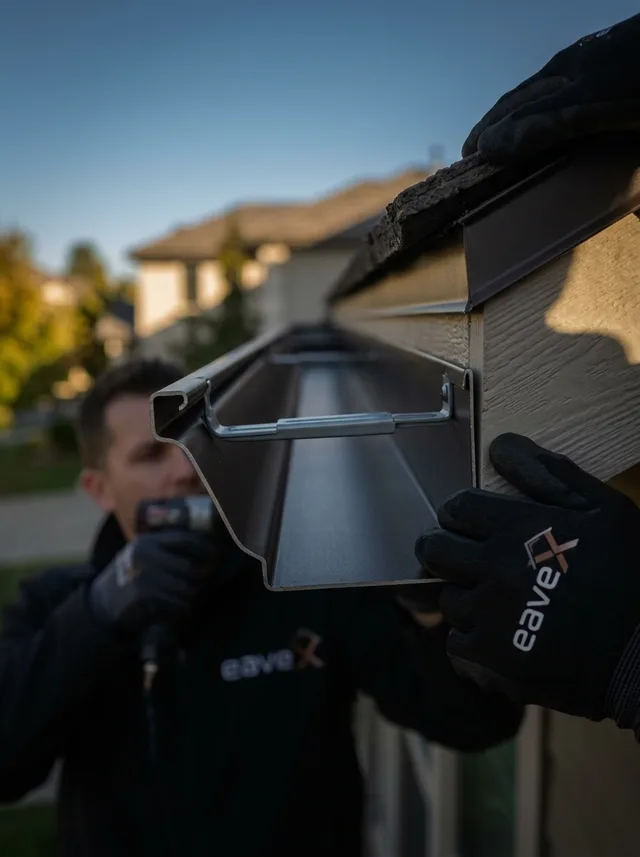
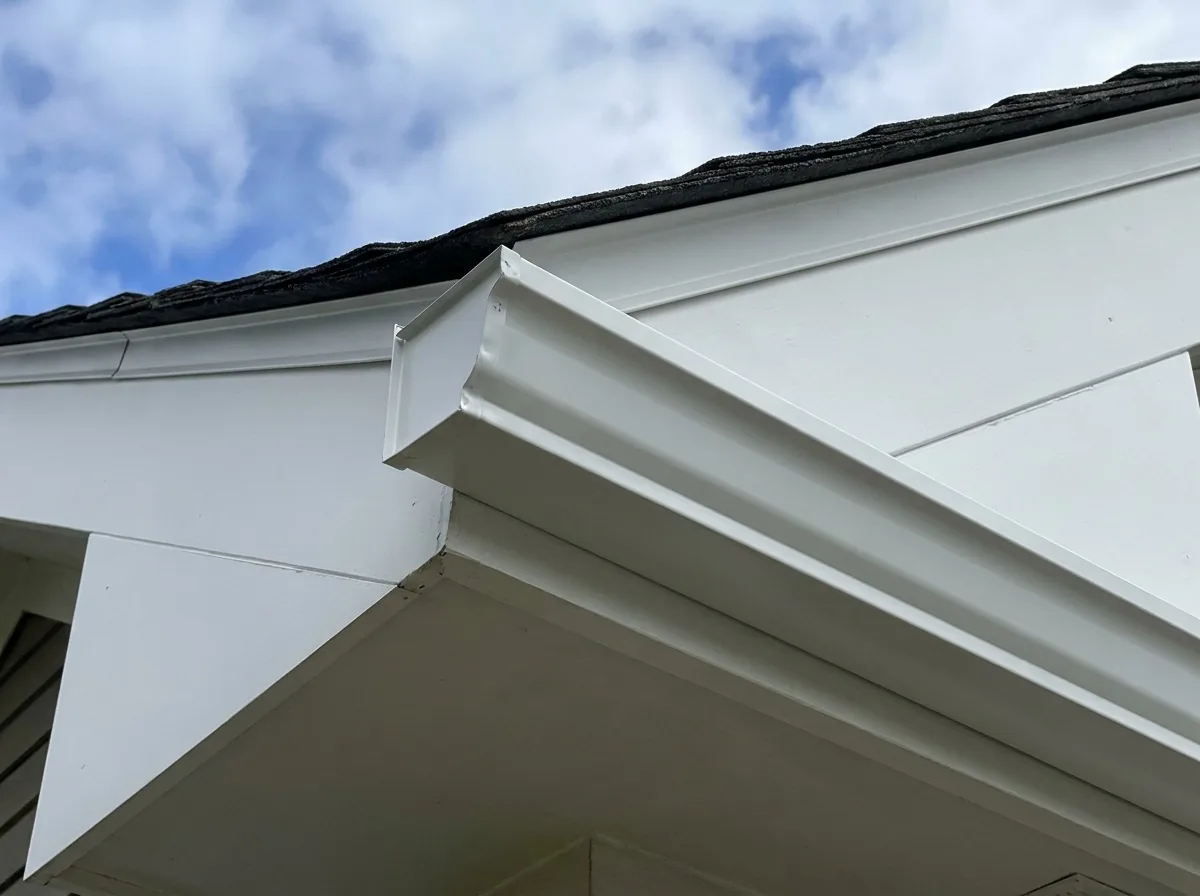
Seamless gutter installation starts with a coil of aluminum, a portable brake in the driveway, and runs cut to your exact eave lengths. Hidden hangers (not old spike-and-ferrule) bite into sound fascia. Outlets drop into downspouts that discharge away from the foundation—critical on clay soils common around the metro.
Installation on a bare or builder-grade eave is often a one-day job for a typical single-story ranch. Two-story peaks, inside corners, and steep roofs add hours and staging, not mystery fees, when the estimate lists linear feet, hanger spacing, and downspout count up front.
When replacement is the smarter ticket
Replacement is installation plus controlled tear-out. Crews strip old sectional or failing seamless runs, check the fascia for soft spots, and only then hang new metal. That path fits homes where:
- Joints on sectional gutters leak into the fascia every spring.
- Gutters pull away from the drip edge after ice load.
- 5-inch troughs overflow on long south or west slopes that need 6-inch capacity.
- Paint is chalking, ends are crushed, or prior DIY silicone patches keep reopening.
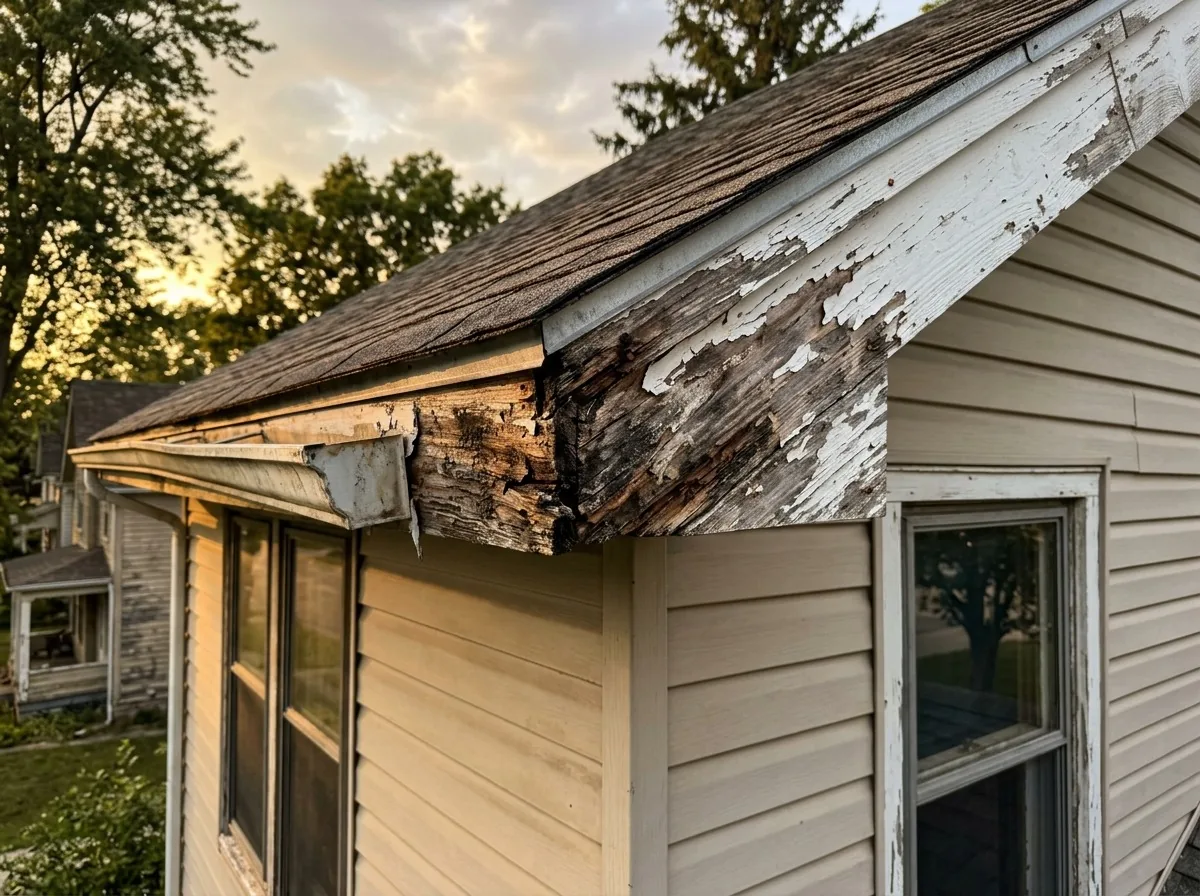
If fascia is already soft, hanging brand-new gutters on rot just repeats the failure. Plan fascia and soffit repair in the same visit when the board compresses under a screwdriver or shows dark water staining behind the gutter line.
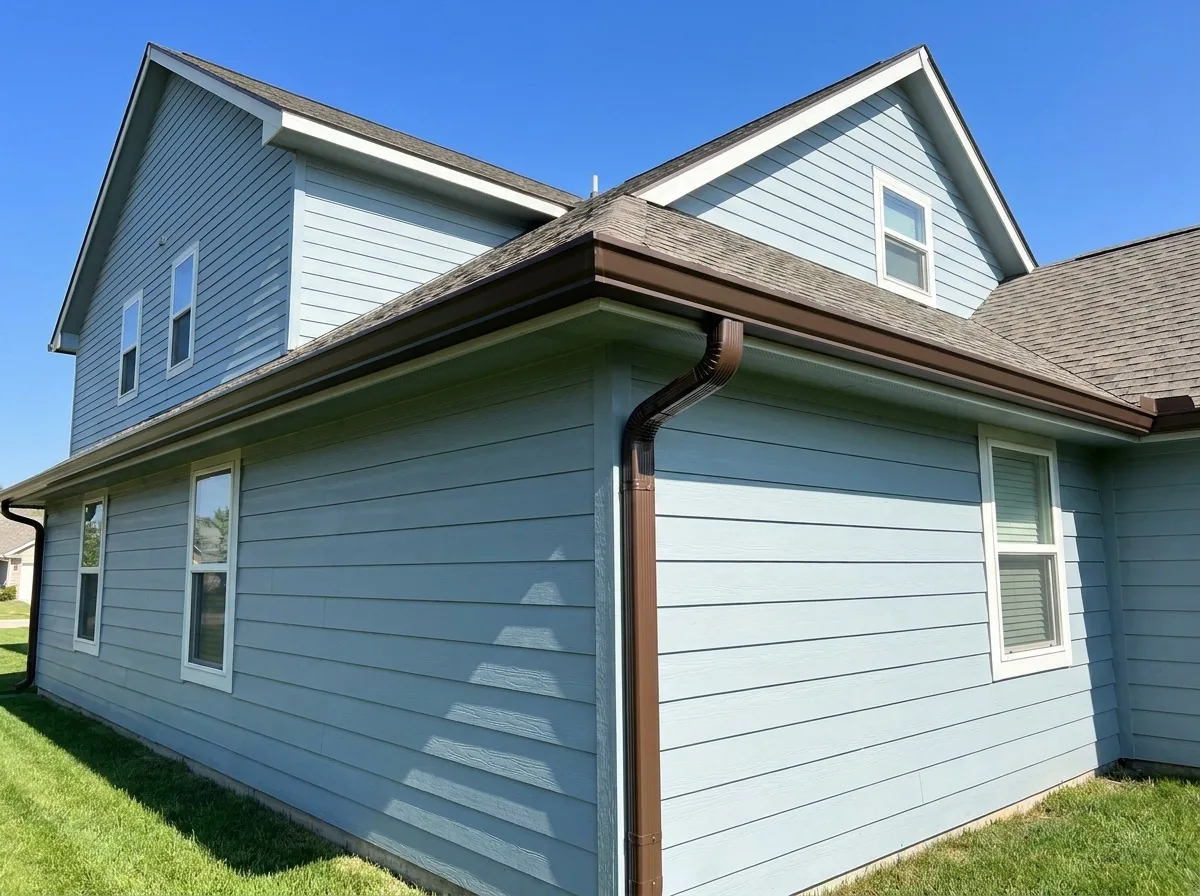
Twin Cities 2026 market ranges: install vs replace
These are Minnesota market averages for 2026, not an EaveX price list. Your total depends on linear feet, stories, fascia condition, and roof type; measurement is free.
| Scenario (typical Twin Cities home) | What you are buying | Typical 2026 market range |
|---|---|---|
| New seamless on sound fascia | Install only (5" or 6" aluminum) | About $8–$14 per linear foot installed |
| Full replace, tear-out included | Remove old + new seamless | Often $10–$16+ per linear foot when tear-out is simple |
| Replace + fascia board work | Gutters + wood/wrap repair | Gutters in the ranges above, plus fascia line items by board length |
| Add micro-mesh guards same day | Guards on new or solid existing troughs | Often quoted per foot for stainless mesh in an aluminum frame—ask for a bundled number |
| Rehang only (metal still good) | Hangers/pitch correction | Usually far below a full replace when fascia is solid |
A 160-foot single-story example at a midpoint install rate lands roughly in the mid–$1,000s before add-ons; two-story tear-out with soft fascia can push the project well above that. Compare apples to apples: hangers per foot, downspout count, and whether dump fees are inside the number.
Signs you can wait on a full replace
You can often defer a full tear-off when pitch still drains, seams are dry, hangers are tight every ~24–36 inches, and overflow only happens when the trough is packed with oak leaves. In that case, gutter cleaning before freeze—and considering gutter guards on a clean, sound trough—solves the pain without new metal.
Do not wait when water is staining siding below joints, soil is washing at the foundation, or ice dams keep forming at the same eave because heat and clogged outlets stack up. Prevention articles help, but soft fascia and failed seams need steel (and wood) on the truck, not another bottle of sealant.
November timing: still a window for either path
Late fall is decision season in Minnesota. Leaf drop is mostly done in many north-metro yards, and you still get workable daytime temperatures for fasteners and sealant on many November days. Deep cold, ice on ladders, and snow on the roof push work into weather holds—so if you already know the gutters fail every thaw, measure now rather than after the first ice dam call.
Bundling guards with new seamless runs avoids a second ladder day and keeps debris out of a clean trough before winter. EaveX selects micro-mesh systems to the house—no brand-name lock-in—and only after the trough is clean and sound.
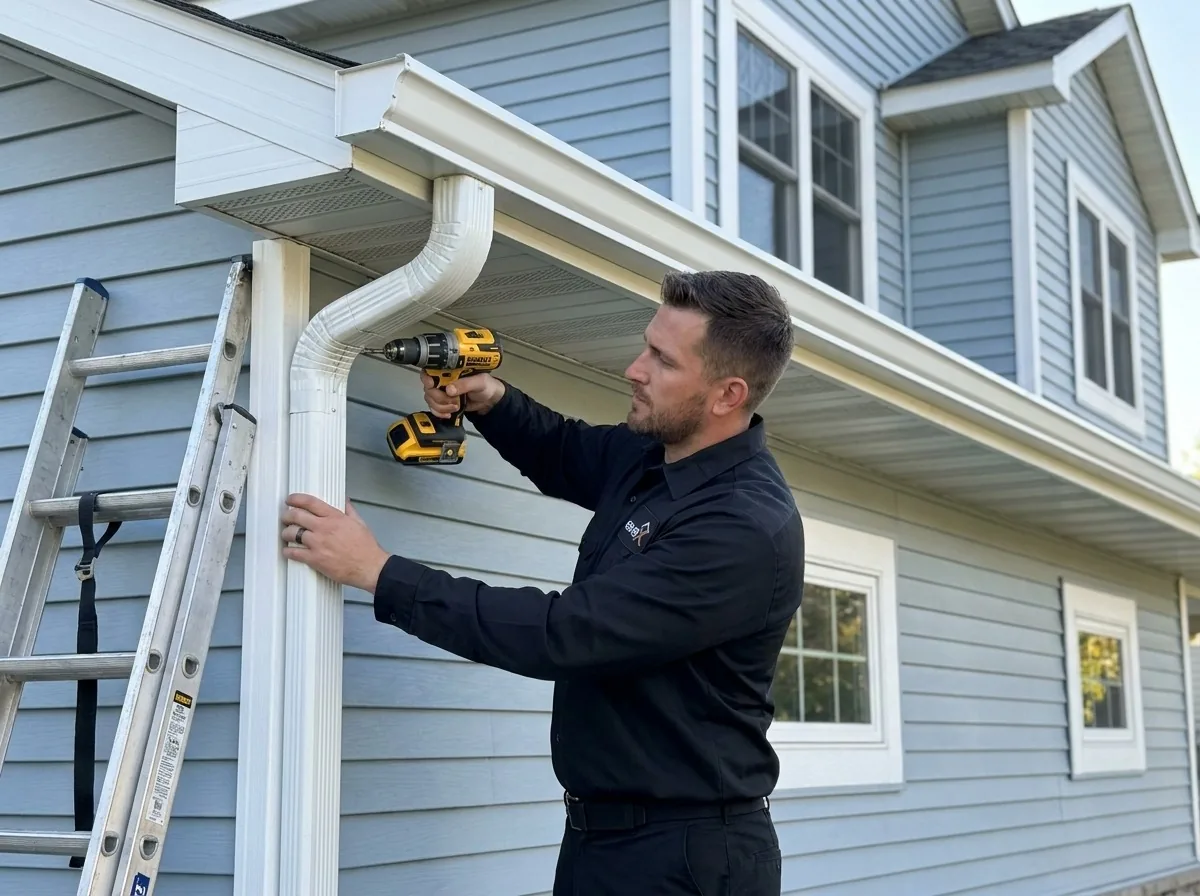
Partial replace vs whole-house swap
You do not always need every elevation done the same day. A south-facing run that overflows into the entry while the north side still drains can take a partial replacement—new seamless metal on the failing walls only—if the remaining troughs match color, size, and outlet height. Mismatched 5-inch and 6-inch sections on one continuous drip edge usually look wrong and fight each other in a heavy melt, so the estimate should say when a whole-house swap is cleaner.
Partial work still needs a fascia check on the opened walls. Soft boards under a “good enough” bay are why water returns after a cheap patch. If the quote lists hidden hangers, outlet count, and discharge distance, you can compare a partial ticket to a full replace without guessing.
How this pairs with the cost guides you already see
If you landed here from searches like “seamless gutter installation,” read the decision first, then the numbers. Our Twin Cities cost guide covers installed ranges in detail: How Much Do Seamless Gutters Cost in the Twin Cities?. For a pure replace quote shape, see gutter replacement cost in Minnesota. Lifespan and “is it time” cues live in when to replace seamless gutters.
Ready for a free inspection?
EaveX has 13+ years in Minnesota exteriors, 1200+ projects, a 5.0 rating, and license BC808261. Financing is available from 0% APR (0.00–9.99%) with GreenSky plan 6124 when you qualify—never a blanket 0% promise. Call (763) 313-8516 or request a free on-site measure and a plain-English install-versus-replace plan for your roofline.