On-site gutter fabrication is how a crew turns a coil of 0.027-inch aluminum into one continuous K-style trough in your driveway, then hangs it the same visit—that is a seamless gutter installation, not a stack of 10-foot sectional pieces joined with pop rivets. The machine sits on a trailer at the house. The run is cut to the eave, so there is no mid-span seam for Minnesota freeze–thaw to open. Typical Twin Cities 2026 market range is about $8–$14 per linear foot installed; that is a Minnesota market average, not an EaveX price list. Book a free measure from Albertville while the last week of October still has a dry afternoon.
Key takeaways
- On-site fabrication = seamless. Coil in, one-piece trough out, hidden hangers about every 24 inches, outlets and downspouts in the same day on a typical ranch.
- Sectional kits are shop-cut sticks. Every joint is a winter leak path. The comparison lives in seamless vs sectional gutters in Minnesota; this page is the fabrication step itself.
- Coil width is a real choice: 5-inch vs 6-inch is locked before the machine runs. See 5-inch vs 6-inch gutters in Minnesota.
- Typical Twin Cities 2026 market: seamless $8–$14/lf; fascia work often $15–$40/lf; micro-mesh gutter guards about $8–$20/lf. Totals depend on run length, stories, fascia, and roof type; measure is free.
- Financing is available from 0% APR (0.00–9.99%) with GreenSky, plan 6124 (not every buyer qualifies for 0%). License BC808261, 13+ years, 1,200+ projects, 5.0 rating.
EaveX works from 5098 Main Ave NE, Albertville, across Minneapolis, St. Paul, and the north/west metro. Cost context is the Twin Cities seamless gutter cost guide. Hour-by-hour timing is how long seamless gutter installation takes in Minnesota. This page answers how the coil becomes a gutter system on your lot.
What on-site gutter fabrication actually is
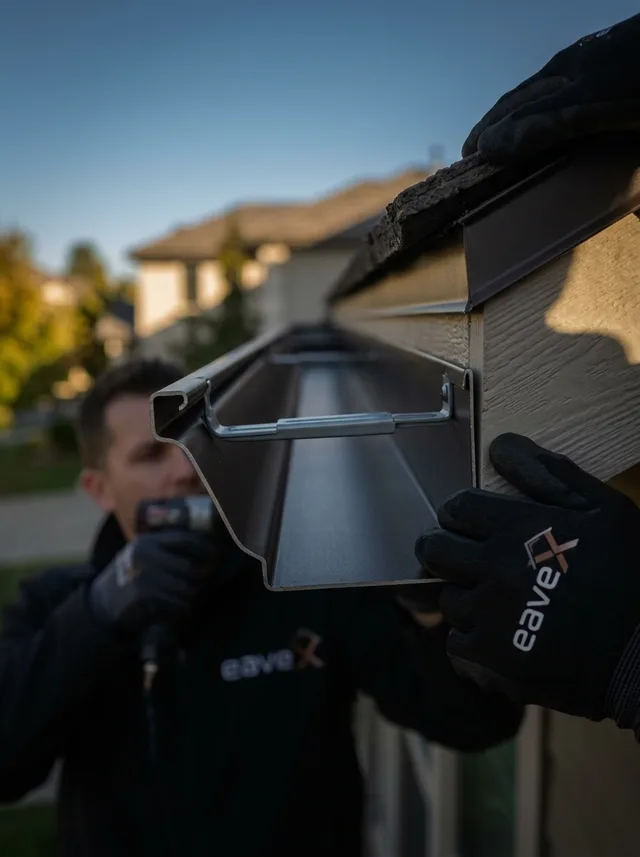
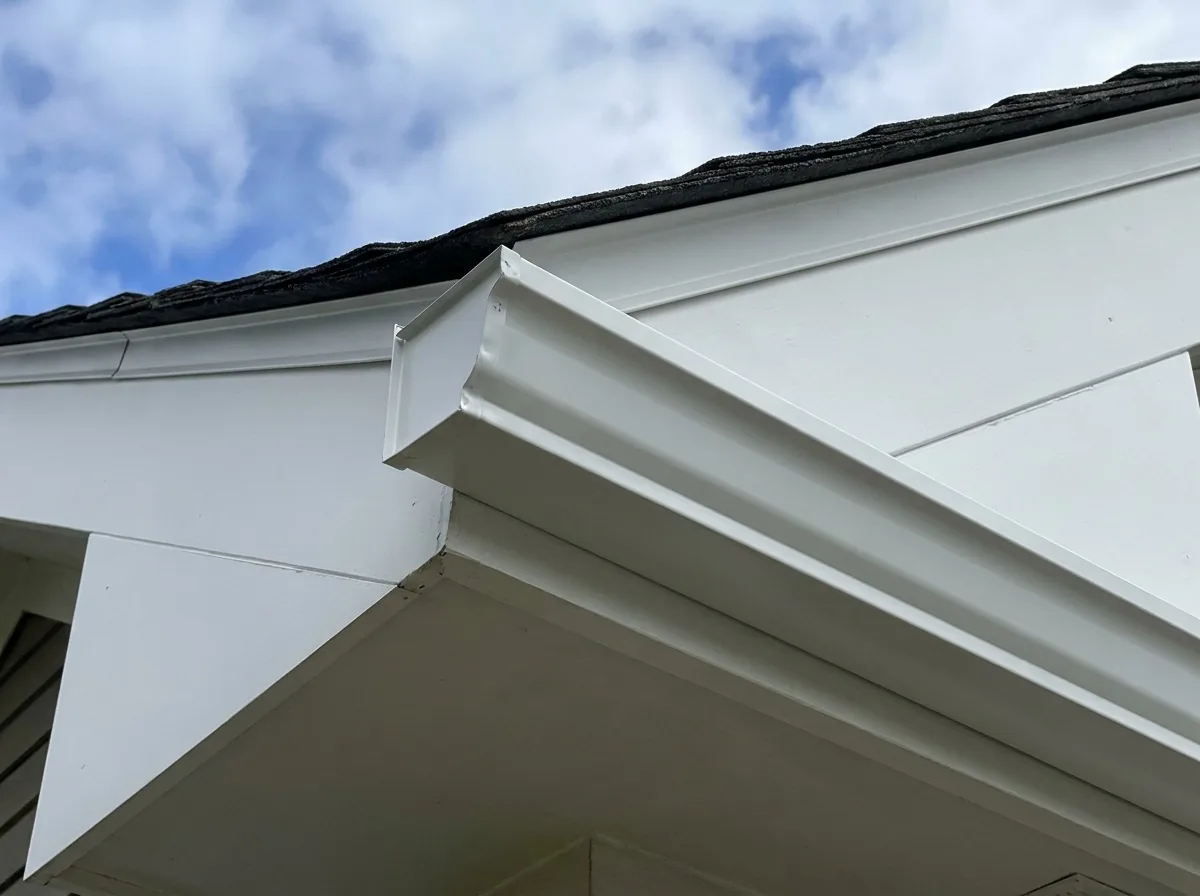
A fabrication trailer carries painted aluminum coil, a forming mill, and the hangers. The crew measures the eave, sets the mill in the driveway, and runs a continuous K-style profile to that exact length. Corners, end caps, and drop outlets are added on the ground or on the ladder. Hidden hangers bite the fascia; the trough is pitched toward the downspouts.
That is a seamless gutter system: one run, no splices in the middle. It is not a brand of guard and not a shop-built box dropped on the house. If the old trough is still packed with oak mats on a two-story, clean it first—see two-story gutter cleaning cost in Minnesota—so debris is not sitting in the eave while new coil goes up.
On-site fabrication vs shop-cut sectional
Sectional gutters arrive as 10-foot sticks. The installer joins them with seams, sealant, and rivets. Those joints are where Twin Cities ice pries the trough open. On-site fabrication skips the mid-run joint. You still have corners and outlets; you do not have a splice every 10 feet.
| Method (Twin Cities 2026) | How it is made | Mid-run joints | Typical use |
|---|---|---|---|
| On-site seamless fabrication | Coil formed at the house to eave length | None in the middle of a run | Most replacement jobs; 0.027-inch K-style |
| Shop-cut sectional | 10-foot pieces, joined on the ladder | One every stick | DIY kits, some builder-grade leftover stock |
| 6-inch seamless coil | Same mill, wider trough | None mid-run | Steep roofs, heavy oak, undersized 5-inch failure |
| Micro-mesh guards on new coil | Stainless steel mesh, aluminum frame, after the hang | n/a | Same-day add-on when fascia is sound |
Ranges and methods are Minnesota market averages for 2026, not an EaveX price list. Final cost depends on run length, stories, fascia condition, and roof type; free measure on site. If you are choosing product type rather than process, use the seamless vs sectional page.
What happens on a Minnesota install day
A ranch with sound wood is often a 4–8 hour day: tear-off, form the coil, hang, pitch, and tie downspouts. Two-story colonials add staging time; the mill still sits in the driveway. The crew needs dry fascia, safe footing, and a temperature where hangers bite and outlet seals cure. A 40°F last-week-of-October afternoon (Oct 27–31) is a normal Twin Cities shift.
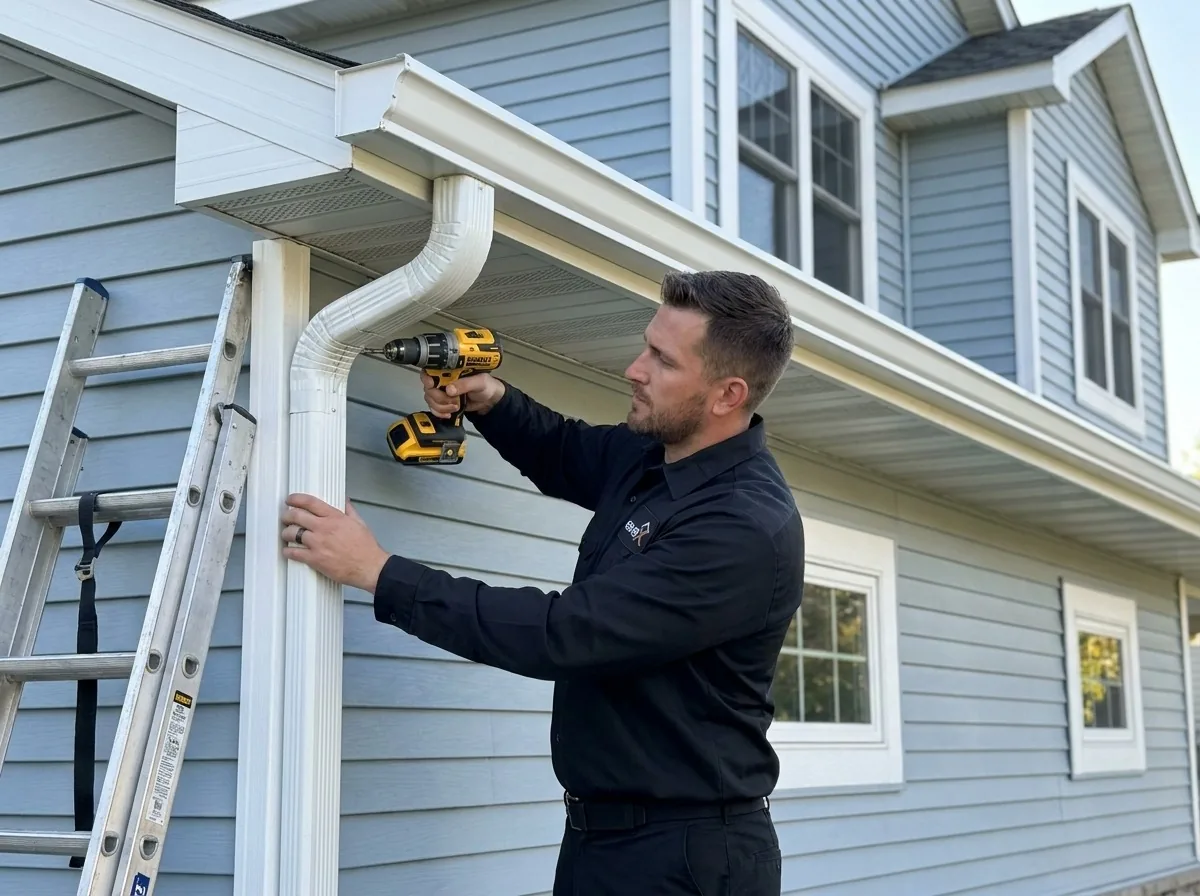
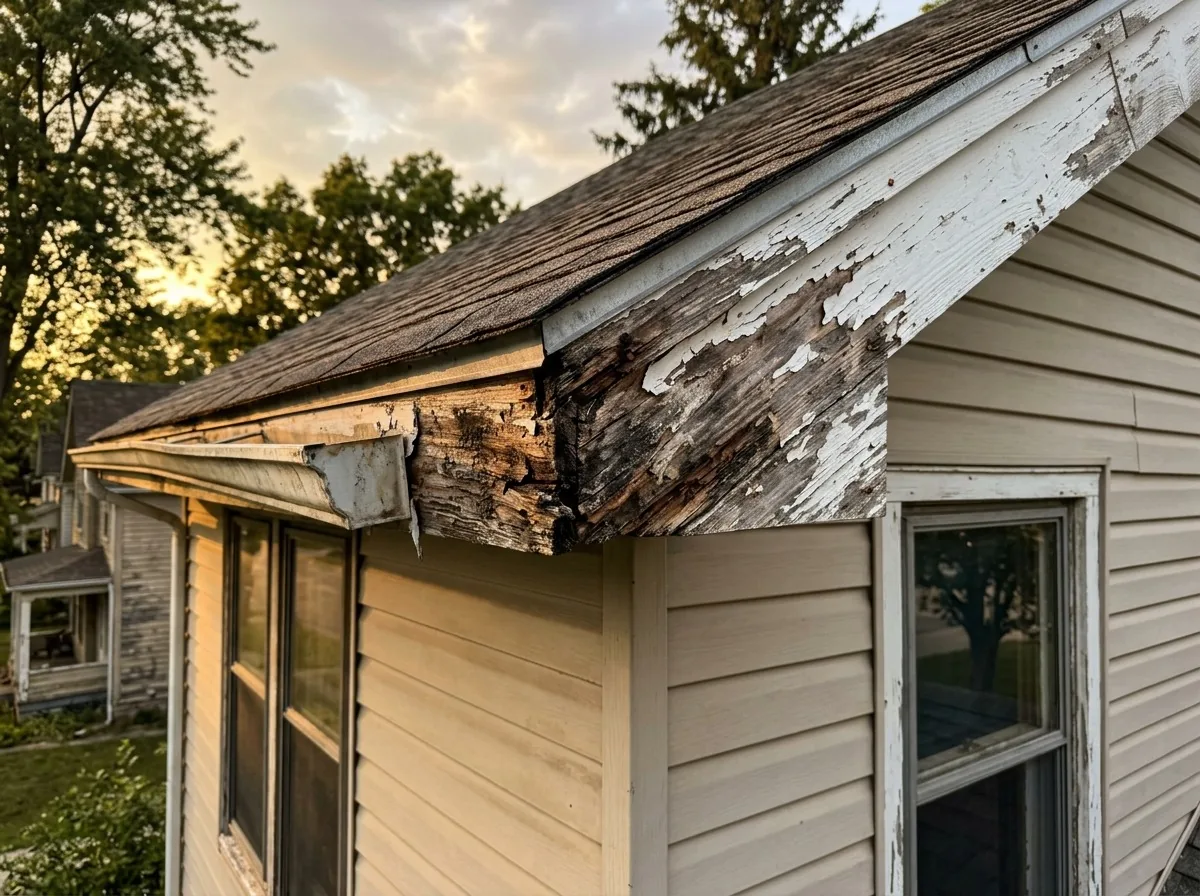
What stops the mill is wet or rotten fascia, packed snow on the shingles, or glazed ground—not the word “October.” If boards are stained, cupped, or soft, schedule fascia and soffit repair the same visit. The wrap-vs-replace call is in wrap or replace fascia before new gutters. New 0.027-inch coil on bad wood repeats the leak by March.
5-inch vs 6-inch coil is chosen before the mill runs
The forming mill is set to a profile. You do not upsize later without rerunning the trough. Most Twin Cities ranches take 5-inch K-style. Steep north faces, 6-inch upgrades, and houses that already overflow in a 1-inch rain should lock 6-inch before fabrication starts. That sizing guide is 5-inch vs 6-inch gutters in Minnesota. Two-story roof area is also why two-story gutter replacement cost runs higher—staging, not a different mill.
Hidden hangers still sit about every 24 inches either way. Spike-and-ferrule leftovers on a 1990s sectional run are a reason to fabricate new coil, not to reuse the old holes.
What on-site fabrication costs in the Twin Cities (2026)
Fabrication is the method, not a surcharge line. Typical seamless gutter installation in the Twin Cities still sits around $8–$14 per linear foot in 2026 market math. Whole-house numbers are in the Twin Cities cost guide.
| Scope (typical Twin Cities 2026) | Market range | Notes |
|---|---|---|
| On-site seamless, ranch, sound fascia | $8–$14/lf installed | 0.027-inch K-style; often one day |
| Two-story or steep north face | Same $8–$14/lf, more hours | Staging and access, not a “machine fee” |
| Fascia repair / wrap with the hang | $15–$40/lf | Needed when wood is wet, cupped, or soft |
| Micro-mesh guards on the new run | $8–$20/lf | Stainless steel mesh, aluminum frame; same-day possible |
These are Twin Cities market averages for 2026, not an EaveX price list. The total depends on run length, stories, fascia condition, and roof type; the measure is free. Waiting until April does not cheapen the coil. What you spend by waiting is fascia soak and ice-dam calls, not a coupon.
Last week of October: the mill still runs on a dry day
Oct 27–31 is still an install window if the roof is bare and the fascia is dry. The mill does not need 70°F. It needs a thaw-day above freezing, no ice crust at the drip edge, and wood that will take a hanger. If oak mats are still in the trough, gutter cleaning on a ranch often sits around $150–$275 in 2026 (market band). Guards can go on the new run the same visit so you are not on an icy ladder in January.
A packed-snow or sub-20°F stretch stops a full hang. Then we write the estimate, stabilize an emergency overflow if it is safe, and queue April. That is better than forming coil onto frozen, wet wood. November thaw days are covered in can you install gutters in November in Minnesota.
Circle Pines, St. Michael, Maple Grove, and Roseville
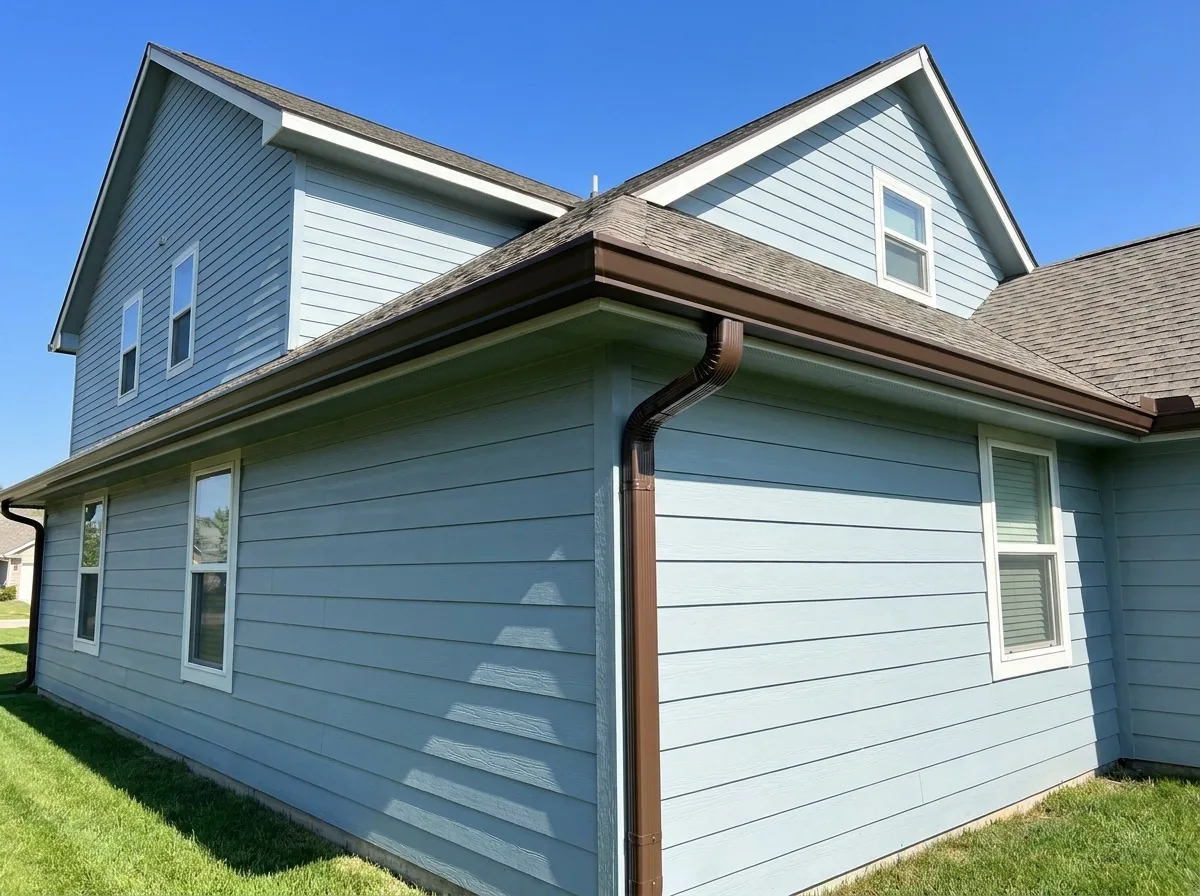
On-site fabrication is the same mill in every suburb. Access changes. St. Michael is minutes from the Albertville shop, so a last-week-of-October thaw day is an easy roll. Circle Pines ranches still get 40°F afternoons after a freeze if the roof is bare. Maple Grove oaks keep eaves wet after every freeze–thaw. Roseville lots add tighter side yards for the trailer. See St. Michael, Circle Pines, Maple Grove, and Roseville.
A north-facing two-story in Maple Grove will ice at the drip edge sooner than a sunny Circle Pines ranch. The free measure includes shade, fascia moisture, trailer access, and downspout discharge of 4–6 feet, not just a coil color chip.
Book the free inspection
EaveX will tell you whether this week is still a fabrication day, a fascia-first job, or a spring date—with numbers, not a scare pitch. Call (763) 313-8516 or request a free inspection online. License BC808261. 5098 Main Ave NE, Albertville, MN 55301. Financing from 0% APR (0.00–9.99%) with GreenSky, plan 6124 — not every buyer qualifies for 0%.