Seamless Rain Gutter Installation in Minnesota (2026)
Seamless rain gutter installation in Minnesota means forming continuous aluminum K-style troughs on site so your roof edge sheds summer storms and spring melt without a joint every ten feet.
Key takeaways
- "Rain gutters" and "seamless gutters" are the same job on Twin Cities homes: continuous aluminum troughs, outlets, and downspouts.
- Typical Minnesota market range in 2026 runs about $8–$14 per linear foot installed for 5-inch aluminum; 6-inch often adds $2–$4/ft — not an EaveX price list; free measurement decides the number.
- Snow load needs hangers about every 24–36 inches, sound fascia, and outlets roughly every 30–40 feet of run.
- Most ranch installs finish in one day (about 4–8 hours) after a free on-site measure.
- Financing is available from 0% APR (0.00–9.99%) with GreenSky, plan 6124 — not every buyer qualifies for 0%.
What "seamless rain gutter installation" means on a Twin Cities home
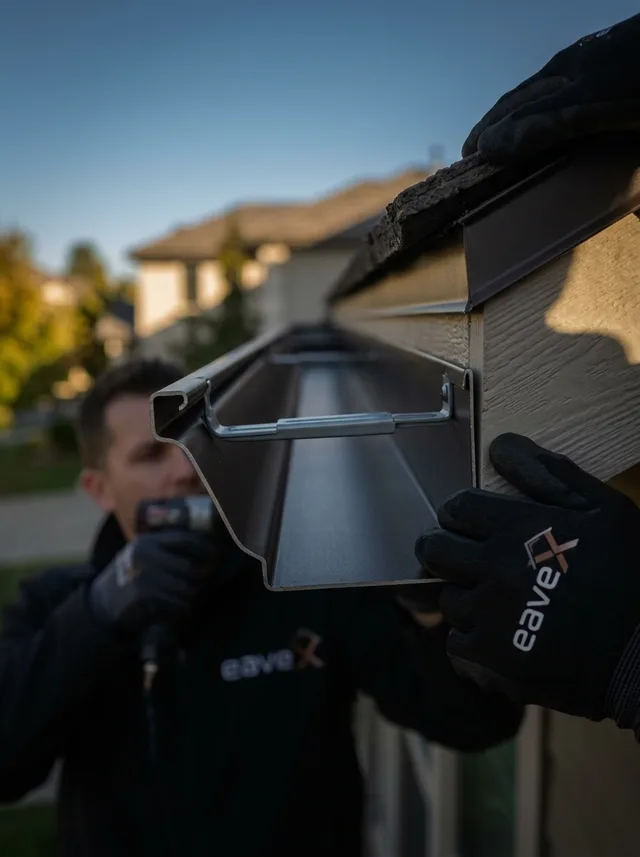
Homeowners search "rain gutters" and "seamless gutters" for the same system: painted aluminum formed on a portable machine in the driveway, hung as one continuous run per eave. Sectional box-store pieces leak at every coupler after freeze–thaw; seamless runs keep water moving to downspouts instead of staining fascia.
On Minnesota roofs that see heavy melt weeks, the install is not just the trough. You also need sized outlets, downspouts that discharge away from the foundation, and hangers that hold ice weight. That full package is what seamless gutter installation covers on a free inspection.
Seamless vs sectional rain gutters for Minnesota snow
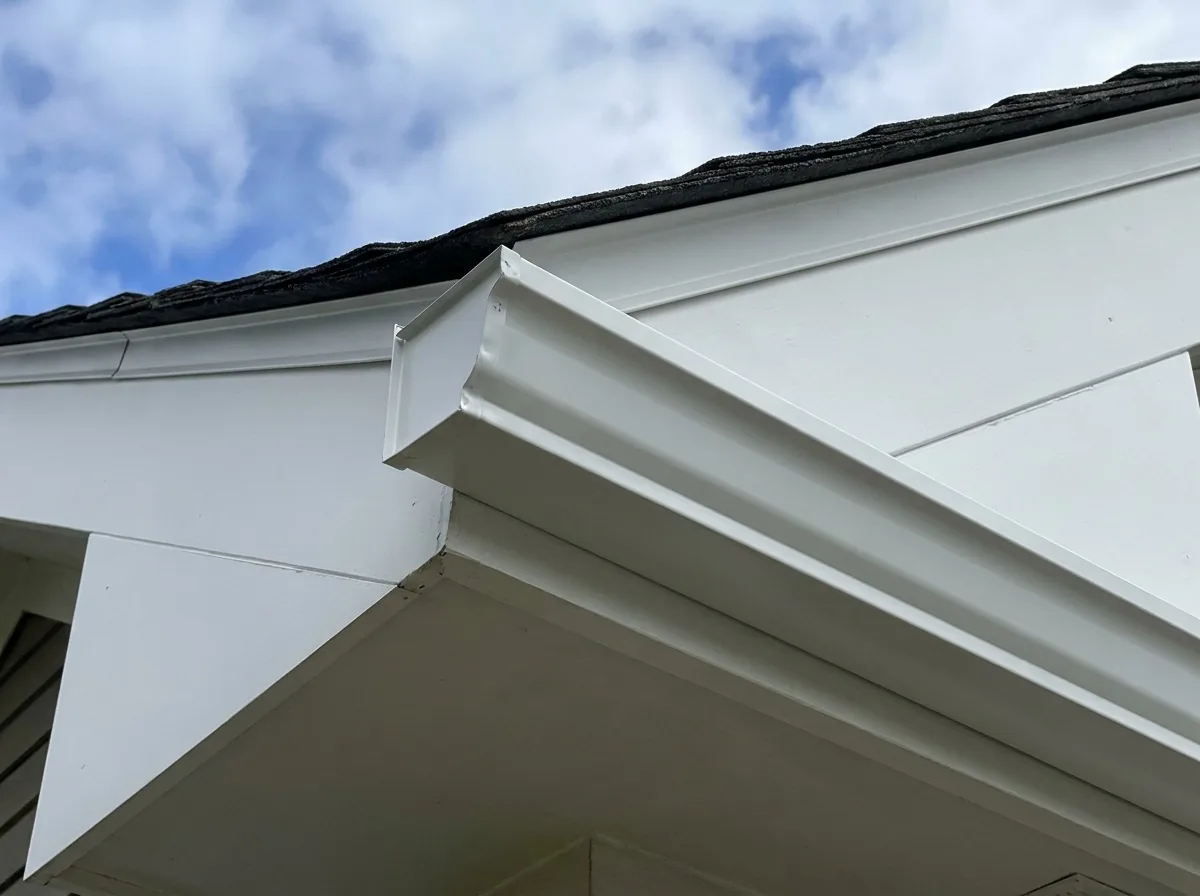
Sectional rain gutters arrive in fixed lengths with seams every ~10 feet. Those seams open when ice expands, then drip onto fascia all winter. Seamless rain gutters are extruded to the exact eave length on site, so the only engineered openings are the outlets you plan.
| System | Joints on a 40-ft eave | Minnesota snow fit | Typical Twin Cities 2026 band |
|---|---|---|---|
| Sectional aluminum | 3–4 couplers | Joints open in freeze–thaw | Often lower upfront, higher leak risk |
| Seamless 5-inch aluminum | Continuous trough | Good for most ranch roofs | About $8–$12/ft installed |
| Seamless 6-inch aluminum | Continuous trough | Better for steep / leaf-heavy roofs | About $10–$14/ft installed |
| Add micro-mesh guards | Mesh on aluminum frame | Fewer clogs before freeze | About $6–$12/ft (market average) |
Ranges are typical Twin Cities / Minnesota market averages for 2026. Final cost depends on run length, stories, fascia condition, and roof type — measurement is free.
Cost bands for seamless rain gutter installation (2026)
For a typical single-story Twin Cities ranch (~150–200 linear feet), many homeowners see a Minnesota market total around $1,400–$2,800 for 5-inch seamless aluminum before tear-off or fascia repair. Two-story access, steep pitches, and full tear-off of failing sectional gutters add labor.
| Scope (Minnesota market average, 2026) | Ballpark |
|---|---|
| 5-inch seamless aluminum, installed | $8–$12 per linear foot |
| 6-inch seamless upsize | +$2–$4 per linear foot |
| Tear-off of old gutters | $1–$3 per linear foot |
| Fascia repair / wrap (if needed) | Quoted after measure |
| Optional micro-mesh guards with new run | $6–$12 per linear foot |
These figures are not an EaveX price list. Compare line items the same way as our Twin Cities seamless cost guide — gauge, hanger spacing, outlets, and disposal — then book a free measure.
Gauge, hangers, and pitch for Minnesota freeze–thaw
Most Twin Cities rain gutter installs use 0.027-inch or 0.032-inch painted aluminum. Heavier gauge resists denting from ladders and ice; hanger spacing of 24–36 inches keeps the trough from pulling away when snow sits on the eave. Pitch is usually about 1/4 inch per 10 feet toward each outlet so melt does not pond and refreeze.
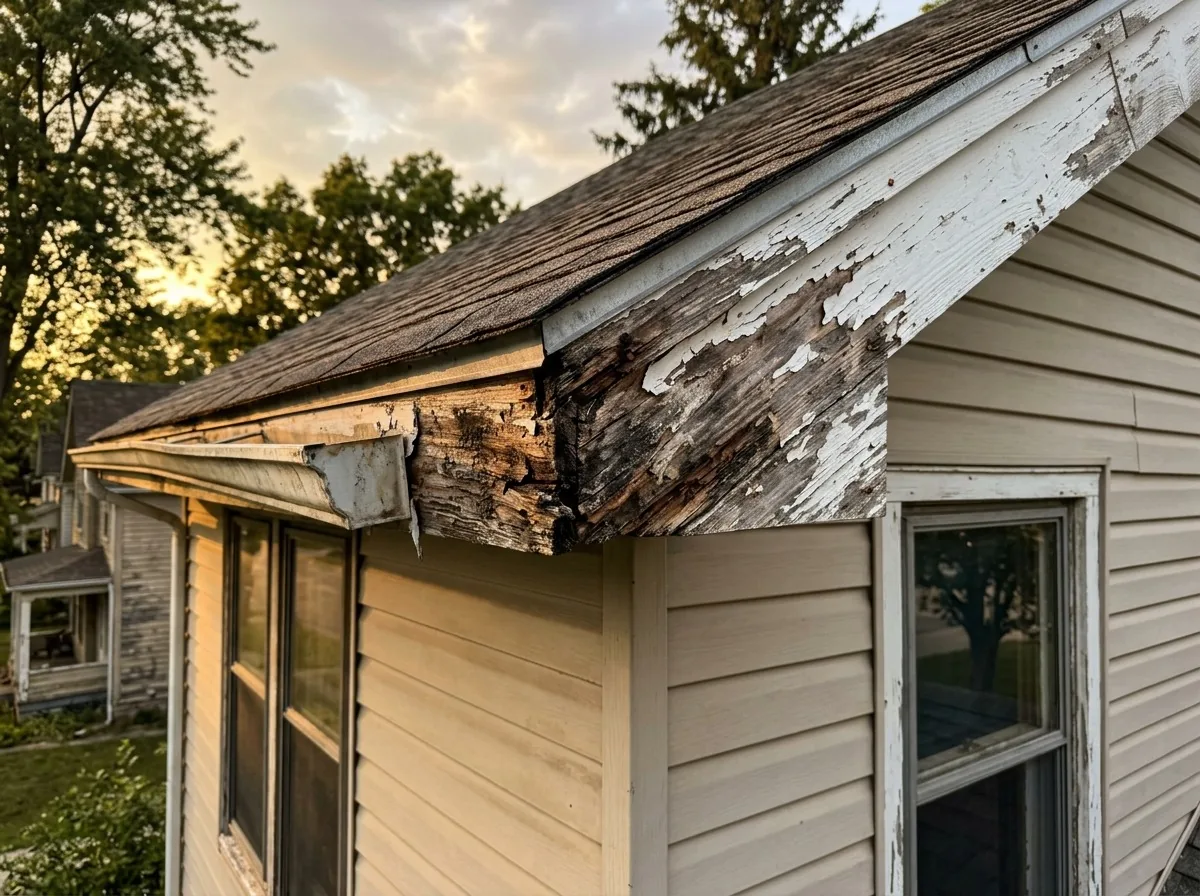
If hangers are sparse or fascia is soft, the new trough will sag in the first hard winter. That is why we check wood and fastening before any fascia and soffit repair is skipped. Spike-and-ferrule hardware is a common failure mode after ice cycles; hidden hangers into solid fascia hold better through Minnesota winters.
Install day: what a seamless rain gutter crew does
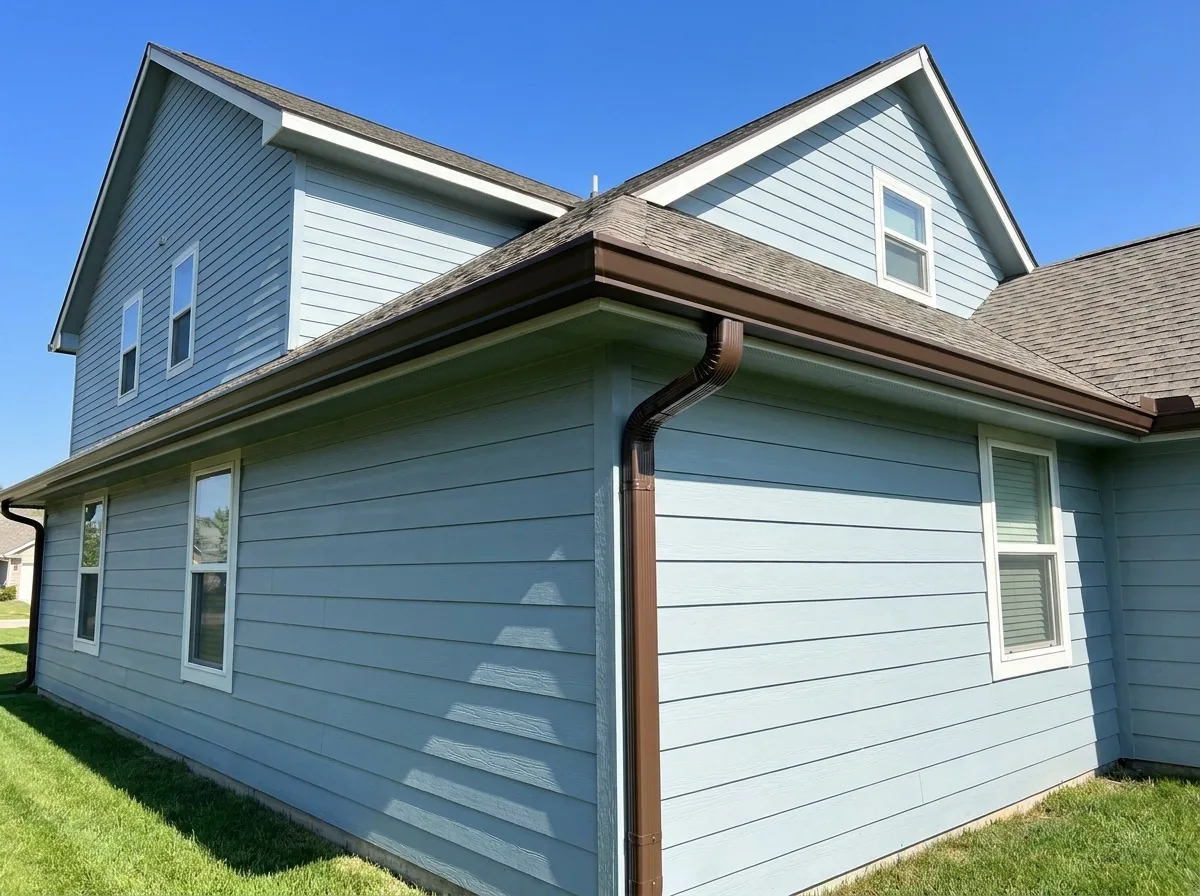
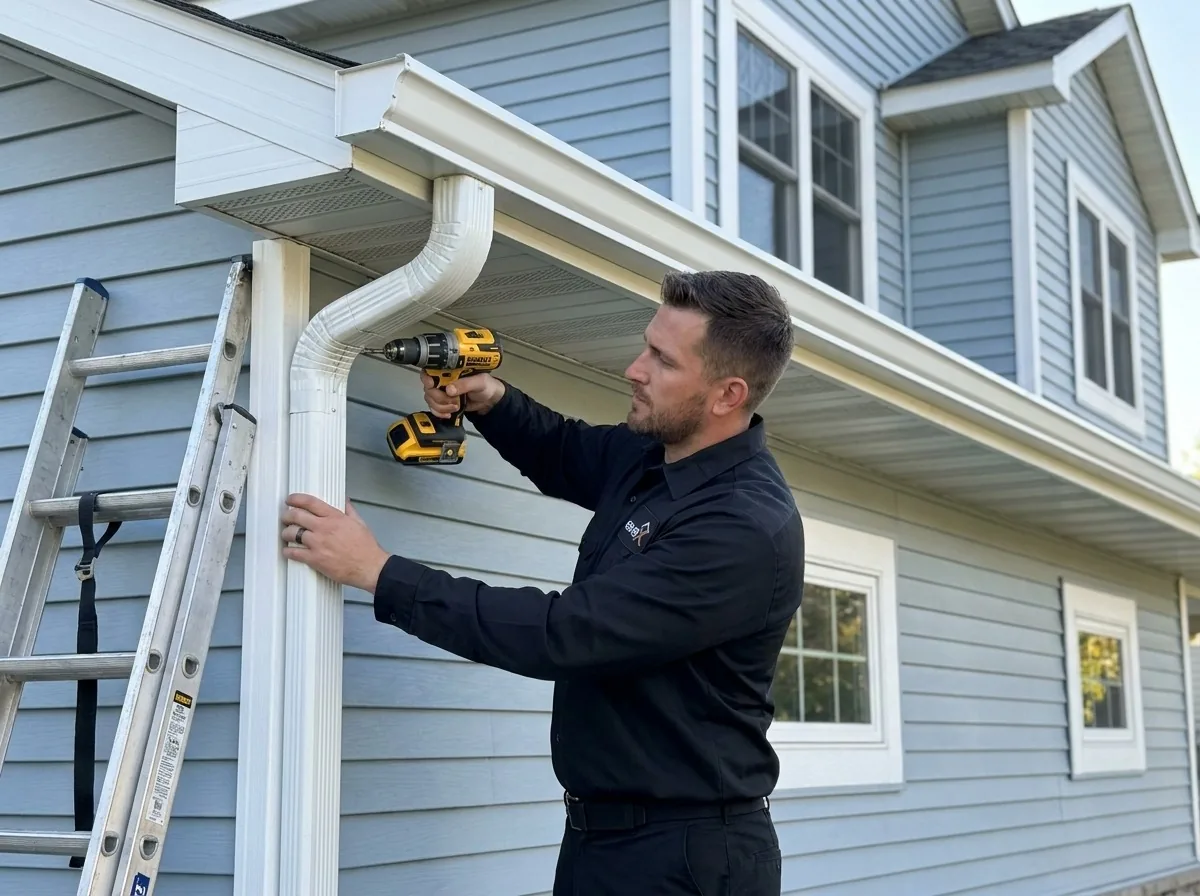
After the free measure, a typical Minnesota seamless install day looks like this: protect landscaping, remove failing sections if needed, verify fascia, roll the new trough to length, hang and pitch, cut outlets, connect downspouts, and water-test the runs. Most ranch homes finish in 4–8 hours; larger two-story footprints can land in the one to two day range.
For timing detail, see how long seamless gutter installation takes in Minnesota. Late November installs are still common on clear, above-freezing days — crews need dry fascia and workable sealant temperatures, not a calendar myth that "season is over."
Downspouts and optional guards with a new rain gutter run
Seamless troughs only work if water leaves the system. Plan outlets about every 30–40 feet, plus extra at valleys. Extend discharge past the foundation so melt does not refreeze against the slab. If you are still mapping outlet count, read how many downspouts a Minnesota house needs.
Many homeowners add stainless micro-mesh on an aluminum frame the same day as the new trough. That combo cuts fall leaf volume before freeze, which is why some crews prefer installing gutter guards with new gutters. We match mesh to the roof — we do not push a single retail brand. Pairing new troughs with gutter guards is optional and quoted after the measure.
Seamless vs sectional when you are replacing rain gutters
If your house still has sectional pieces, replacement with seamless is usually the cleaner long-term fix for Minnesota winters — fewer joints, matched color, and hangers set for snow. Partial one-side swaps make sense only when the rest of the system is sound and the same size/profile. For the trade-off language, seamless vs sectional gutters in Minnesota walks through leak risk and snow load side by side.
Color match and curb appeal on Twin Cities elevations
Seamless rain gutters are painted aluminum, so the trough can match fascia, trim, or a contrasting accent. Popular Twin Cities choices are white, musket brown, and bronze against lap siding or brick. Color is locked when the coil is ordered for the job — changing mid-run means a new coil, so pick the finish during the free measure, not after hangers are up.
A clean continuous line also hides old drip stains once the failed sectional joints are gone. If the fascia board is already dark or weathered, wrapping or painting it with the new trough keeps the eave looking intentional instead of patched. That fascia step is quoted separately when wood needs work.
What to put on your seamless rain gutter quote checklist
Ask every Twin Cities bidder for the same line items so "cheap per foot" quotes do not hide missing outlets or hanger spacing. You want gauge (0.027 vs 0.032), trough size (5-inch vs 6-inch), hanger type and spacing, number of downspouts, tear-off/disposal, and whether fascia repair is included or optional.
Financing language should match the offer: from 0% APR (0.00–9.99%) with GreenSky, plan 6124, with the clear note that not every buyer qualifies for 0%. License BC808261, a written scope, and a free on-site measure beat a phone-only ballpark every time — especially when snow load and two-story access change labor.
Book a free inspection before the next freeze
EaveX has completed 1,200+ exterior projects across the Twin Cities with a 5.0 rating, 13+ years on the tools, and Minnesota license BC808261. Call (763) 313-8516 or request a free inspection — we measure runs, check fascia, and quote seamless rain gutter installation with clear line items. Financing is available from 0% APR (0.00–9.99%) with GreenSky, plan 6124; 0% is not guaranteed for every buyer.