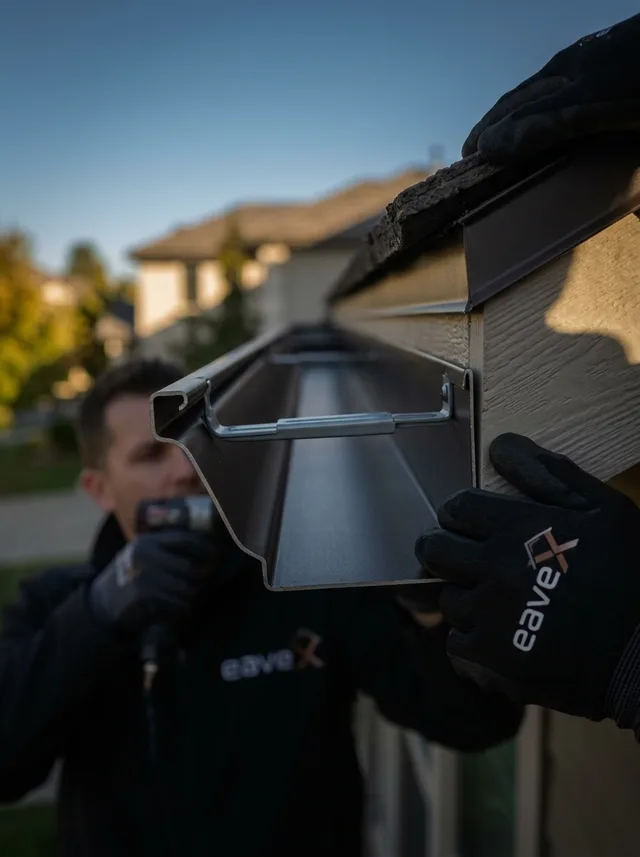
Gutter hangers on Minnesota homes usually land every 24–36 inches on solid fascia—and closer to 24 inches (or tighter at corners and long runs) when you expect heavy snow, ice dams, and freeze–thaw cycles. Wider gaps that “worked” in a dry climate let seamless aluminum oil-can, pull fasteners, and dump meltwater behind the gutter. EaveX (license BC808261) checks hanger spacing, fascia soundness, and outlet layout on every seamless gutter installation measure so the system can carry Minnesota winters—not just a calm summer rain.
Key takeaways
- Typical Twin Cities spacing: hidden hangers about every 24–36 inches; plan toward 24 inches on long eaves, two-story runs, and roofs that shed heavy snow.
- Corners, ends, and outlets need extra support within ~12 inches—those are where ice weight and wind pry first.
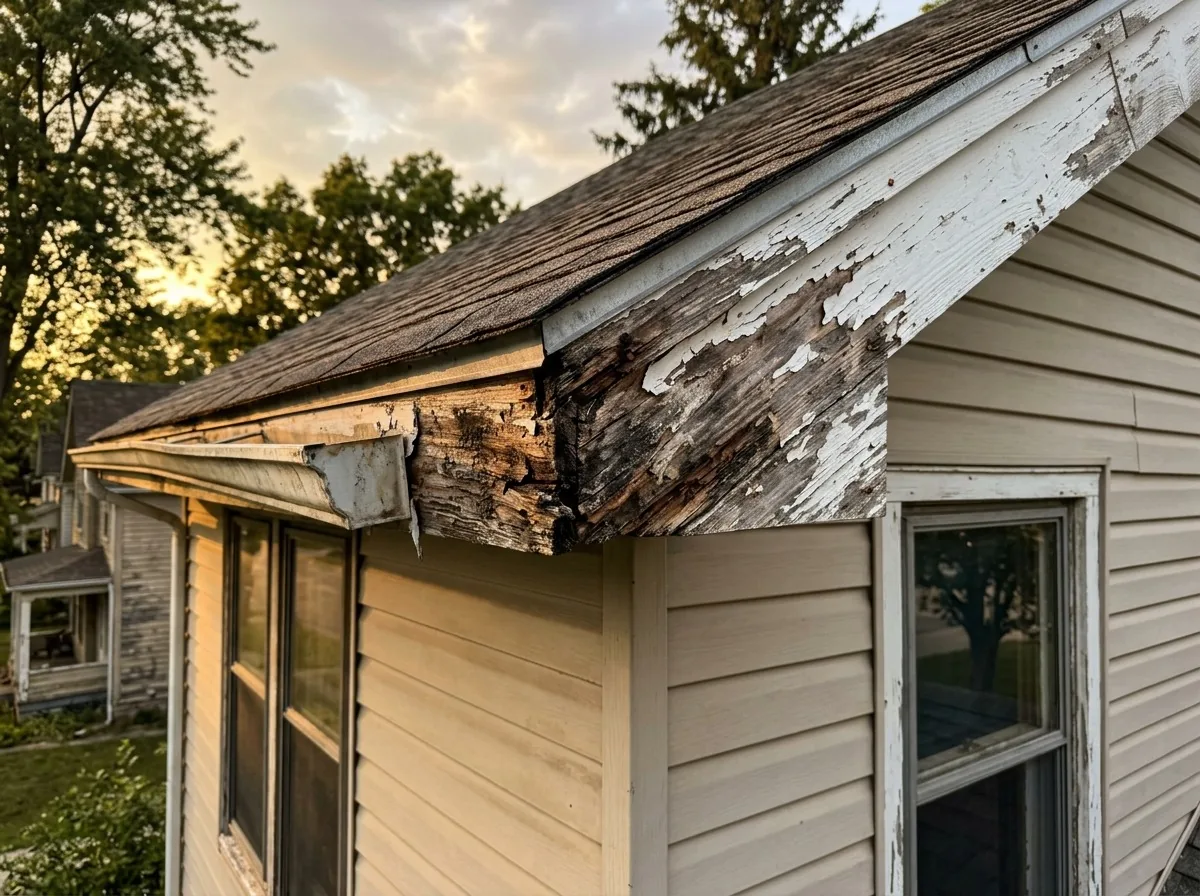
- Fascia first: hangers only hold if the board is solid. Soft wood means fascia and soffit repair before you trust new spacing.
- Spike-and-ferrule layouts often end up wider and looser after years of ice; many Minnesota rehangs switch to hidden hangers at tighter centers.
- 2026 market context: a rehang or hanger upgrade is usually a fraction of full replacement—exact dollars depend on length, stories, and fascia condition (free on-site measure; not an EaveX price list).
Why Minnesota snow changes hanger spacing
Minnesota winters load gutters with snow slides, ice lenses, and thaw–refreeze cycles. Each hanger is a small point load into the fascia. When centers stretch past ~36 inches, the gutter trough flexes between fasteners, water ponds, and joints or end caps work loose.
On seamless aluminum (typically 0.027–0.032-inch coil), correct spacing keeps the run straight so meltwater reaches the outlet instead of spilling at mid-span—the same physics behind ice-dam overflow when a sagging trough stalls water. North-facing eaves and shaded lots hold ice longer, so those runs are the first place we tighten centers during a free inspection; if hangers already sit at 24 inches but the trough still pulls away, the failure is usually soft fascia or undersized downspouts—not a call to space even tighter.
Recommended hanger spacing for Twin Cities homes
Use this as a field guide, not a building-code substitute. Final layout follows the roof edge you have—pitch, overhang, and fascia thickness.
| Situation (Minnesota homes) | Typical hanger centers | Notes |
|---|---|---|
| Standard one-story eave, solid fascia | 24–36 in | Start near 30 in; tighten if the run is long |
| Long eaves / heavy snow shed | ~24 in | Common on north-metro ranches with open fetches |
| Two-story or tall walls | ~24 in | Ladder work + ice weight = less forgiveness |
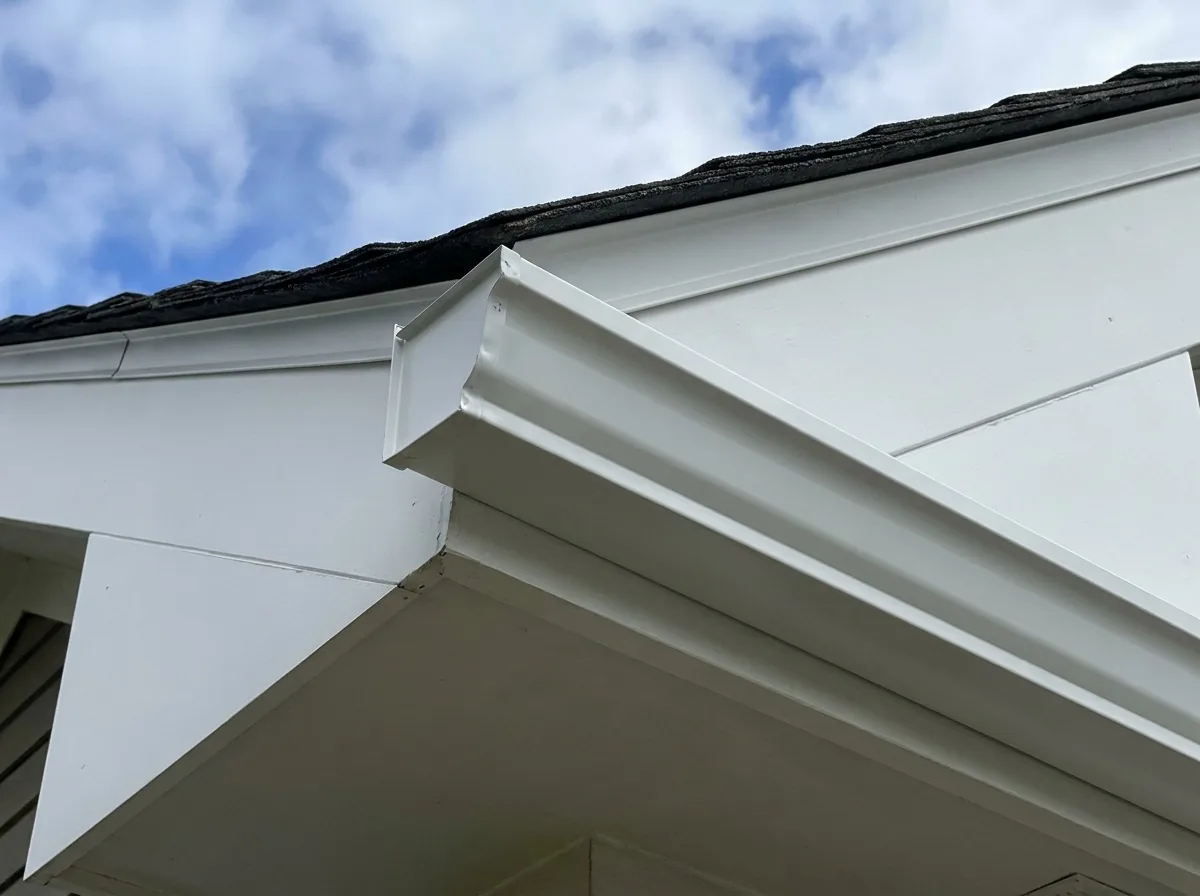
| Inside/outside corners | Extra hanger ≤12 in from corner | Stops twist when ice bridges the miter |
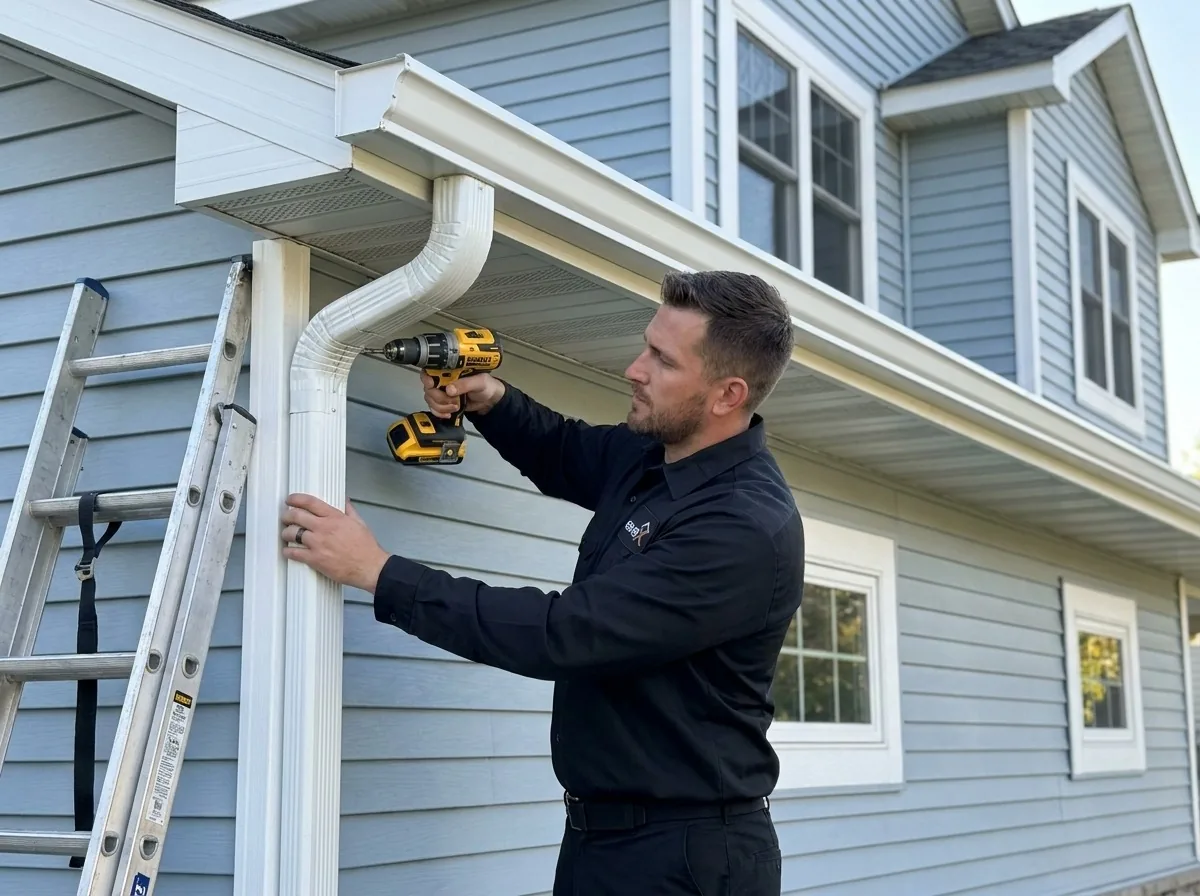
| At downspout outlets | Hanger each side of outlet | Keeps the outlet from dropping under melt surge |
| Behind micro-mesh guards | Match gutter spacing (often 24 in) | Guards add little weight; ice still loads the trough |
If your existing spikes sit at 48-inch centers, that pattern is a frequent reason gutters look “wavy” after a hard winter—even when the aluminum itself is still thick enough to keep.
Hidden hangers vs spike-and-ferrule in snow country
Hidden hangers screw into the fascia (or a sound wrap) and cradle the gutter from inside. They are the default on modern seamless gutter installation because you can place them exactly where snow load demands.
Spike-and-ferrule drives through the gutter into the fascia. On older Twin Cities houses they can still hold—but ice often loosens the spike, and spacing tends to drift wider over time. A rehang that switches to hidden hangers at 24–30 inch centers is a common Minnesota fix when the trough is salvageable and fascia is solid.
Fascia, wrap, and why spacing fails without a solid board
Hangers transmit every pound of ice into the fascia. Soft, cupped, or water-stained wood will not hold 24-inch centers any better than 36-inch centers—the fasteners simply pull out sooner.
Before you pay for a “spacing only” rehang, look for soft spots under old spike heads, peeling wrap, or staining on the soffit. Those point to fascia and soffit repair (or wrap/replace decisions covered in our fascia guides) first. New hangers on rotten wood are a short-term patch.
How hanger spacing ties to overflow and cleaning
Overflow is not always a “need bigger gutters” problem. Mid-span sag from wide hanger centers lets water climb the front lip in a thaw. Debris then sits in the low spots and freezes into plugs.
If hangers are correct but leaves still pack the trough, schedule gutter cleaning before hard freeze—or evaluate stainless micro-mesh gutter guards after the trough is cleaned and rehung. Guards do not replace missing hangers; they sit on a system that already holds a straight line.
Twin Cities 2026 cost context for rehang vs replace
Typical Minnesota market averages (2026)—not EaveX pricing. Final numbers depend on linear feet, stories, fascia condition, and roof type; measurement is free.
| Scope | Twin Cities market average (2026) | When it fits |
|---|---|---|
| Rehang / add hangers on sound fascia | Often a few $/ft of affected run (wide local range) | Trough OK, spacing wide, board solid |
| Fascia repair + rehang | Adds board/wrap cost to the rehang | Soft spots under old spikes |
| Full seamless replace | About $8–$14+/lf installed (market band) | Cracked sections, wrong size, failed seams |
| Replace + micro-mesh guards | Higher combined band | Leaf-heavy lots after trough is new/sound |
For whole-system dollars, compare our seamless gutter cost Twin Cities guide and the gutter replacement cost Minnesota breakdown. Hanger spacing is the detail that keeps those new runs honest through March.
Mid-November check: tighten before the first hard freeze
Mid-November is still a practical window for rehangs on many Twin Cities blocks—crews can work cold days if fascia is dry enough for fasteners. Waiting until deep ice is already bridging the eaves means you are buying steam or emergency overflow fixes instead of a planned hanger layout.
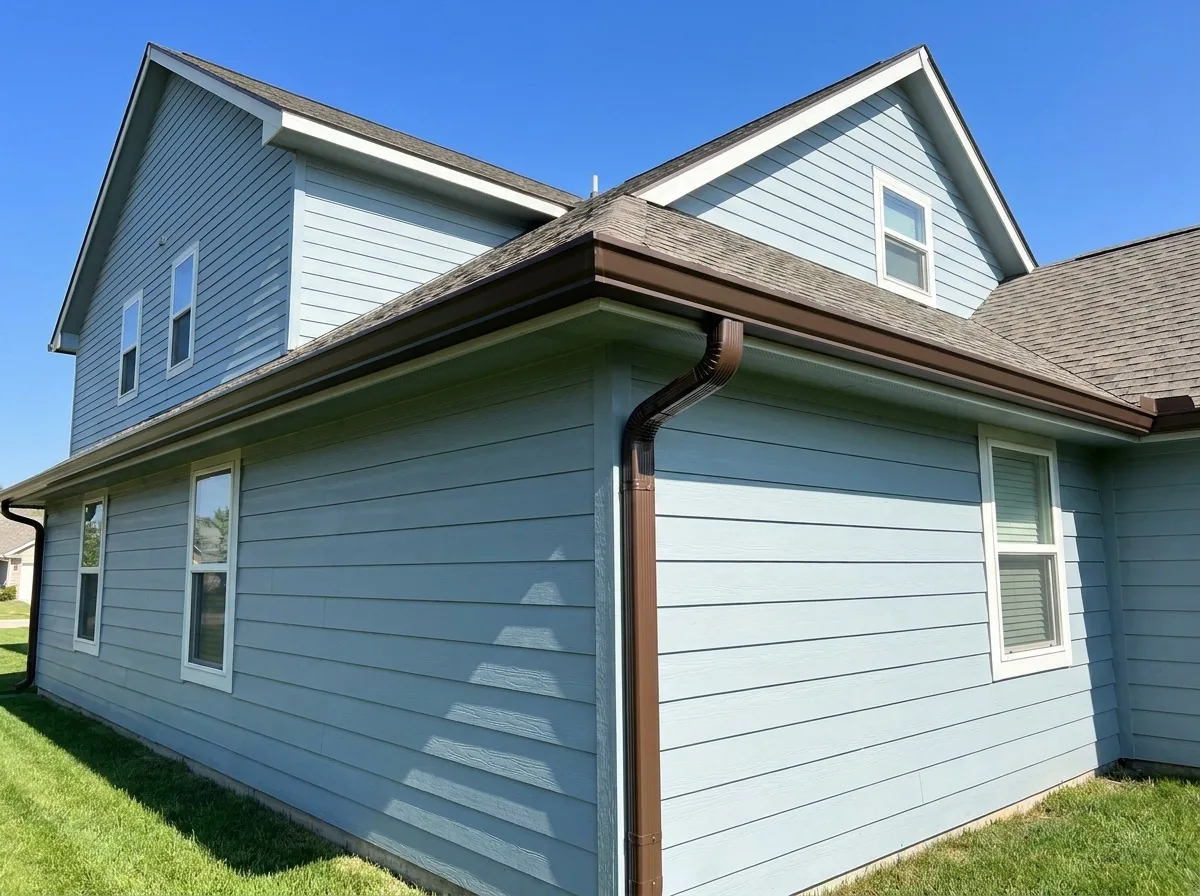
Walk the dripline after the next thaw: look for mid-span droop, daylight at the back edge, or stain lines on siding under the trough. Those are spacing-or-fascia symptoms, not “wait until spring” cosmetics. Photograph the back edge from a ladder only if it is safe; otherwise wait for the on-site measure. A 10-minute walkaround after a thaw often tells us whether you need hangers, fascia work, or a full seamless swap.
How this supports the installation articles you already see
Search results often surface our cost guide for queries like “seamless gutter installation.” Cost bands matter—but hanger centers, outlet placement, and fascia strength are what make an install survive Minnesota snow. Pair this page with when to replace seamless gutters when you are choosing scope, and with spike vs hidden hangers when you are choosing hardware type.
Ready for a free inspection?
EaveX will measure your eaves, check fascia, and map hanger spacing for Minnesota snow load—then quote the right rehang or seamless install. We bring 1200+ projects, a 5.0 rating, 13+ years local, and license BC808261. Financing is available from 0% APR (0.00–9.99%) with GreenSky plan 6124 when you qualify—never a blanket 0% promise. Call (763) 313-8516 or request a free on-site measure.