What's Included in a MN Seamless Gutter Install? (2026)
A complete seamless gutter installation in Minnesota usually includes on-site roll-forming, hidden hangers into solid fascia, sized downspouts with kickouts, end caps and outlets sealed at the seams, haul-away of the old troughs, and a walkthrough of pitch and discharge—not just a sticker price per foot.
Key takeaways
- Seamless means the long runs are formed on your driveway from coil; joints show up mainly at corners, end caps, and outlets.
- A real Twin Cities install prices the hangers, outlets, elbows, and fascia check—not only the trough.
- Typical market range for aluminum seamless work in the Twin Cities (2026) is about $8–$14 per linear foot installed; final cost depends on run length, stories, fascia condition, and roof edge type. Free measurement decides the number—this is not an EaveX price list.
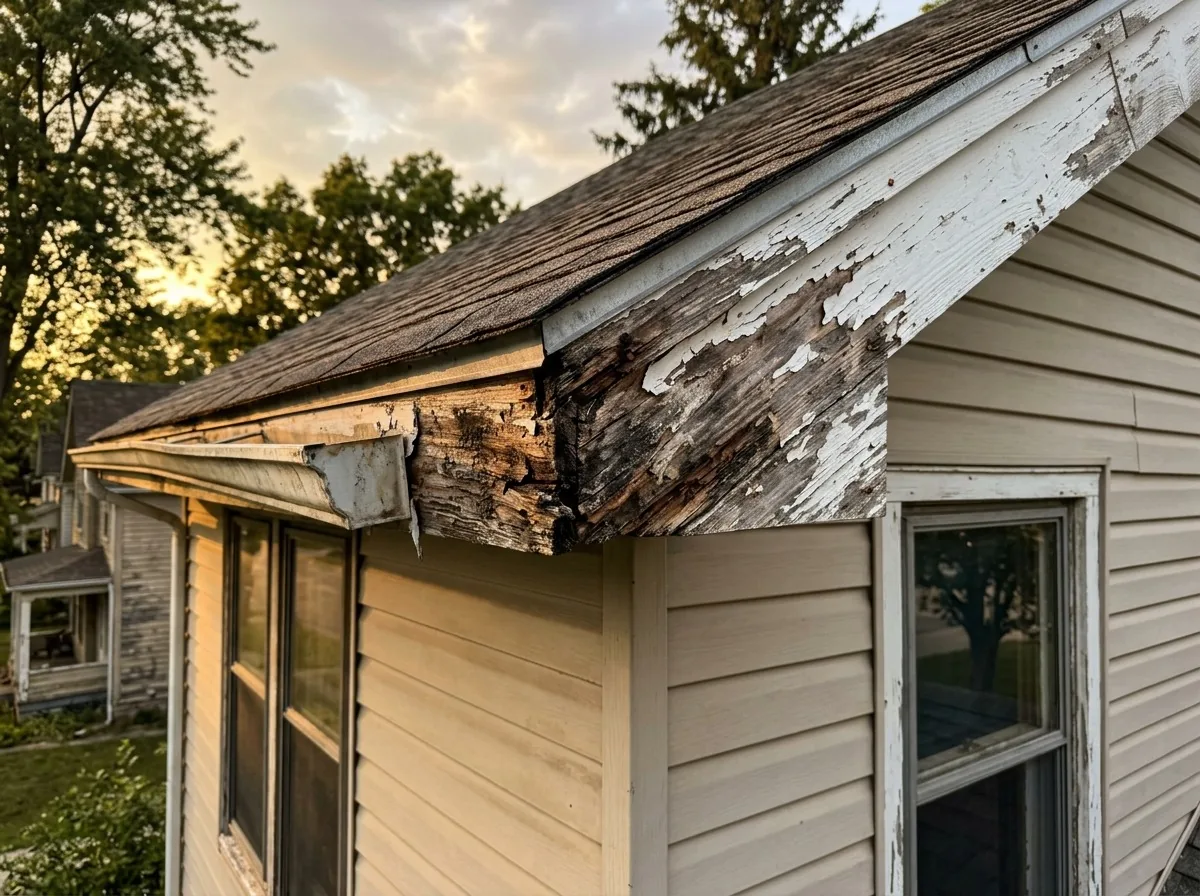
- Soft or painted-over fascia gets repaired or wrapped before new hangers go in; hanging on rot fails the first freeze–thaw cycle.
- Financing is available from 0% APR (0.00–9.99%) with GreenSky, plan 6124 (not every buyer qualifies for 0%). License BC808261, 13+ years, 1,200+ projects, 5.0 rating.
What "seamless gutter installation" actually covers
Homeowners searching seamless gutter installation usually want the full hang—not a coil drop. On a Minnesota house that means measuring every eave, choosing 5-inch or 6-inch K-style, forming continuous runs on site, fastening with hidden hangers into sound wood or wrapped fascia, cutting outlets, hanging downspouts, and testing flow with a hose when weather allows.
Sectional "box store" troughs with seams every 10 feet are a different product. If you are comparing options, start with what the crew forms and seals in one day, then look at downspout count and where water leaves the foundation.
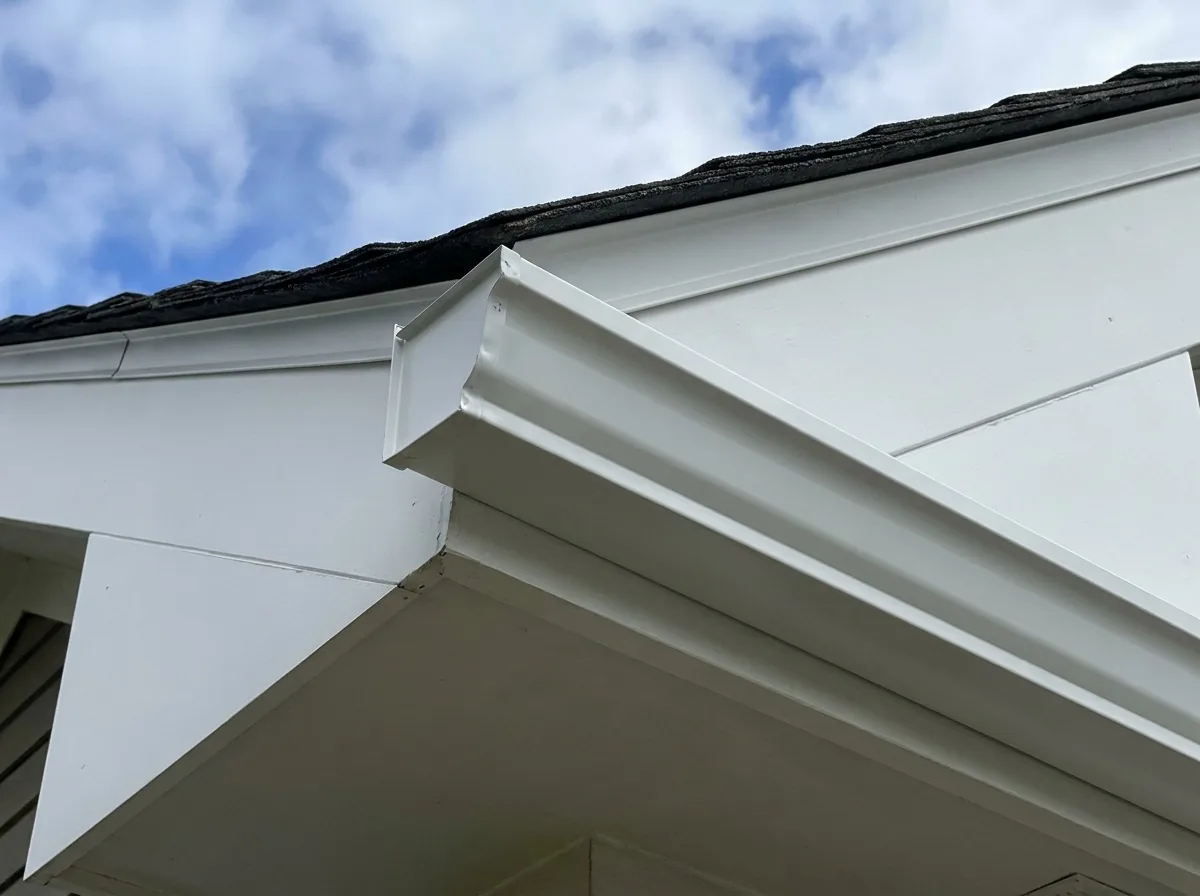
On-site fabrication: coil, brake, and continuous runs
The crew brings painted aluminum coil (commonly 0.027-inch or 0.032-inch) and a portable former. They feed the coil through the machine so each long run matches the eave—fewer mid-run joints than sectional pipe. Corners still get mitered or box-cut; end caps and outlets are sealed because those are the leak points Minnesota freeze–thaw finds first.
Gauge and color get locked before the former starts. Darker colors show dirt less on north faces; lighter colors hide chalking longer in full sun. Ask what thickness they stock for two-story and long west-facing runs—wind and ice load are real on Twin Cities eaves.
Hangers, fascia check, and why spikes fail here
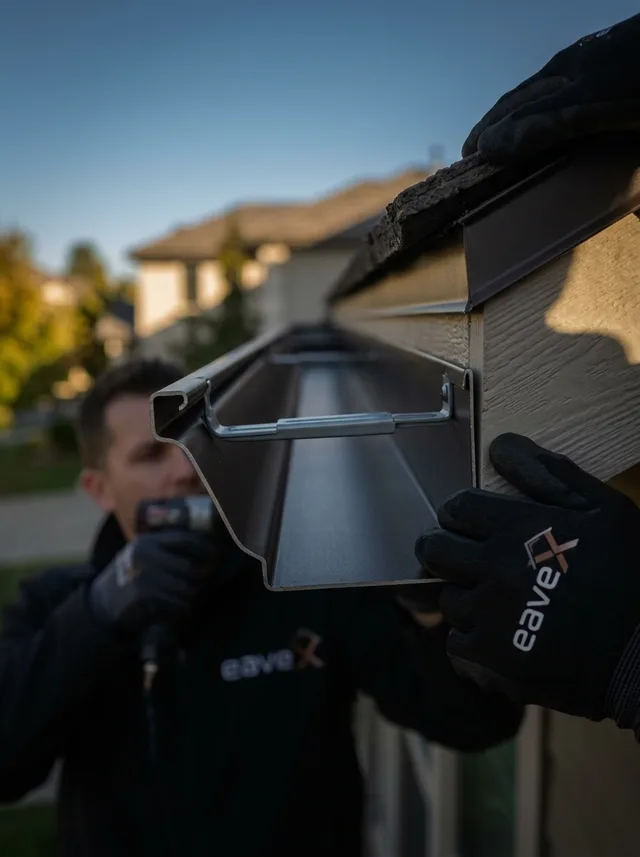
Hidden hangers screwed into solid fascia every ~24 inches (tighter on long spans and corners) are the Minnesota standard for a reason. Old spike-and-ferrule installs loosen when ice loads the trough and the board softens. A proper install includes a fascia check: soft spots, peeling wrap, and popped nails get fixed before new hangers go in. Pair the hang with fascia and soffit repair when the board will not hold screws through winter.
If the previous gutters pulled away, expect board work in the quote—not a surprise change order after the coil is already formed. Hanging new aluminum on rotten wood is how "brand new" gutters sag by February.
Downspouts, outlets, and discharge away from the slab
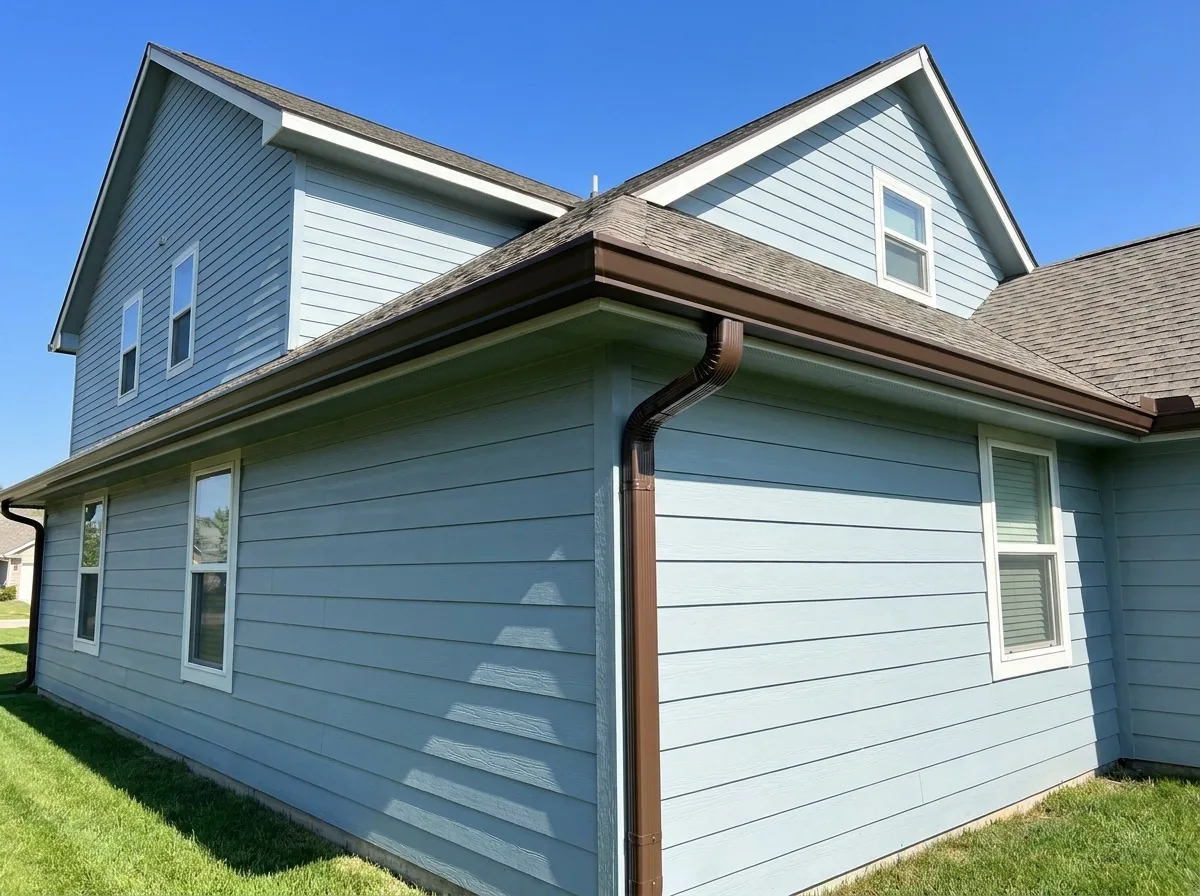
Seamless troughs only protect the foundation if melt and rain leave the eave. A typical single-story Twin Cities ranch still needs enough 2×3 or 3×4 downspouts so a thaw cloudburst does not waterfall at mid-span. Outlets get cut into the run (not cramped into a weak corner), elbows match the color, and extensions or buried drain tile carry water several feet off the slab.
November installs often add or reset extensions before the first deep freeze so roof melt does not sheet across walkways. If you already own micro-mesh covers, outlets and end caps still need a clear path—covers do not replace discharge planning.
5-inch vs 6-inch and when upsizing shows up on the ticket
Most Minnesota homes run 5-inch K-style. Steep roofs, long valleys, and heavy leaf loads push crews toward 6-inch troughs and larger downspouts. Upsizing adds coil width and sometimes hanger count; it is a capacity choice, not a luxury trim line. If your open 5-inch troughs overflow in summer storms, ask for a capacity check before you reuse the same size on a reroof hang.
Wooded lots in Maple Grove and similar canopy suburbs often combine 6-inch runs with gutter guards after a clean trough—covers go on clean metal, not on packed debris.
Twin Cities market ranges for a full install (2026)
| Line item (market average) | Typical Twin Cities band (2026) | What changes the number |
|---|---|---|
| Aluminum seamless trough installed | $8–$14 per linear foot | Stories, access, color, gauge |
| Fascia repair / wrap with new hang | $15–$40 per linear foot | Soft board length, wrap vs replace |
| Downspout run with elbows | Often bundled per spout | Height, buried drain, decorative wraps |
| Micro-mesh covers (optional add-on) | $8–$20 per linear foot | Mesh type, roof pitch, clean-out needs |
| Haul-away of old gutters | Usually included on full replace | Two-story tear-off time |
These are Minnesota market averages for 2026 planning—not an EaveX price list. Linear footage, stories, fascia condition, and roof edge type set the final number after a free on-site measure.
What is usually not included (ask before you sign)
- Full roof tear-off or shingle work (different trade unless you bundle a reroof day).
- Structural rafter or soffit rebuild beyond the fascia board at the eave.
- Interior water remediation or foundation crack repair.
- Landscaping restoration if buried drains cross beds.
- Brand-name cover systems you saw on TV—EaveX sizes generic micro-mesh / stainless mesh in an aluminum frame to the house, not a franchise brand.
If a bid is only "gutters $X/ft" with no hanger spacing, outlet count, or fascia note, you are comparing apples to a partial scope.
One-day timeline on a typical Twin Cities house
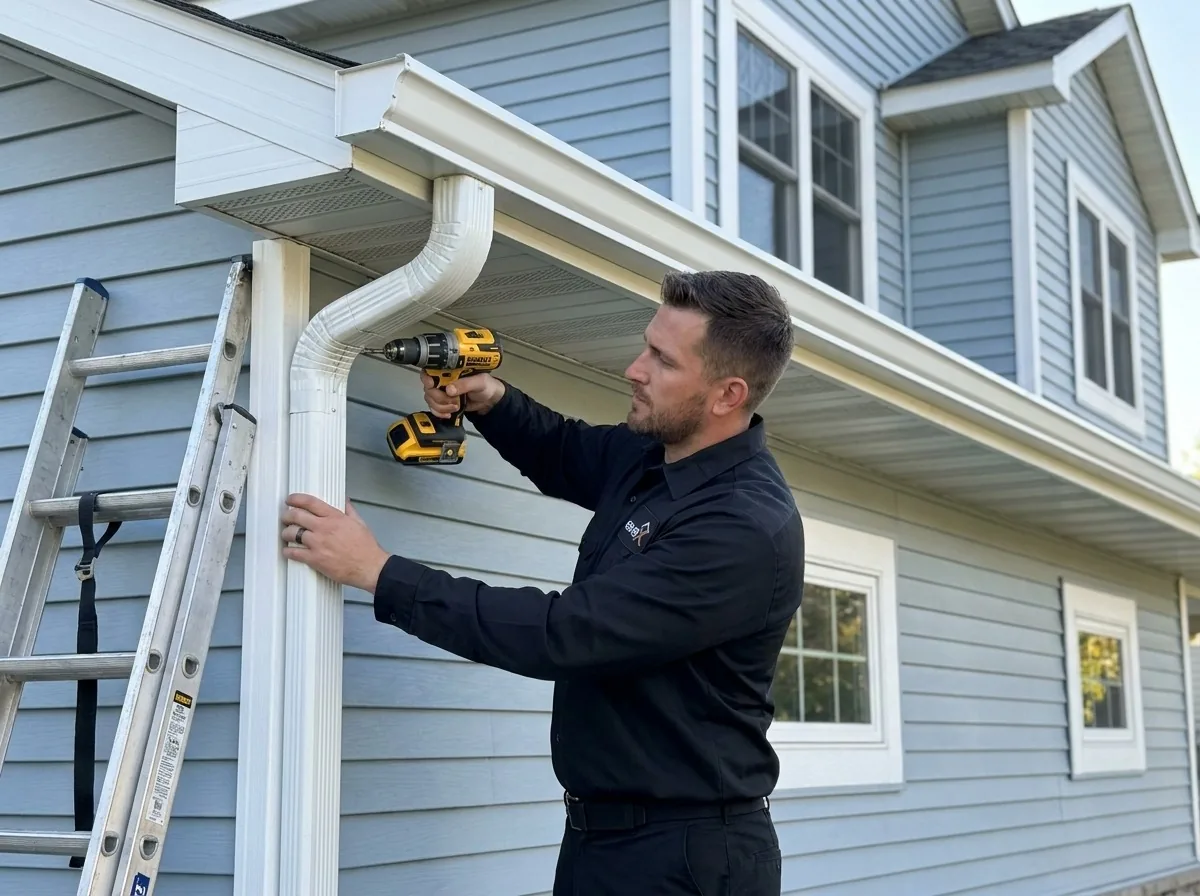
Most single-story homes finish in one day once fascia is sound: morning measure and tear-off, midday forming and hang, afternoon downspouts and cleanup. Two-story or soft-fascia jobs spill into a second visit. Cold snaps below safe sealant temperatures pause adhesive work; crews still hang metal on clear, above-freezing days in November when ladders are safe.
For seasonal timing detail, see our guide on installing gutters in November in Minnesota. If you are swapping troughs during a roof tear-off, same-lift hanging saves a second mobilization—ask for that line on the ticket.
How this ties to cost pages you already see in search
Search often mixes "seamless gutter installation" with pure cost queries. Price-per-foot guides answer the budget question; this page answers what that foot of trough must include to survive Minnesota winters. When you compare bids, line up scope first—then the dollar band from a Twin Cities cost guide makes sense.
Ready for a free inspection?
EaveX measures your eaves, checks fascia, and writes a scope you can compare—trough size, hanger plan, downspouts, and optional micro-mesh—without a surprise winter callback. Call (763) 313-8516 or request a free on-site estimate. Licensed BC808261, 13+ years in Minnesota, 1,200+ projects, 5.0 rating. Financing from 0% APR (0.00–9.99%) with GreenSky, plan 6124 (not every buyer qualifies for 0%).